Solid lubricants
TLT Sounding Board December 2026

Executive Summary
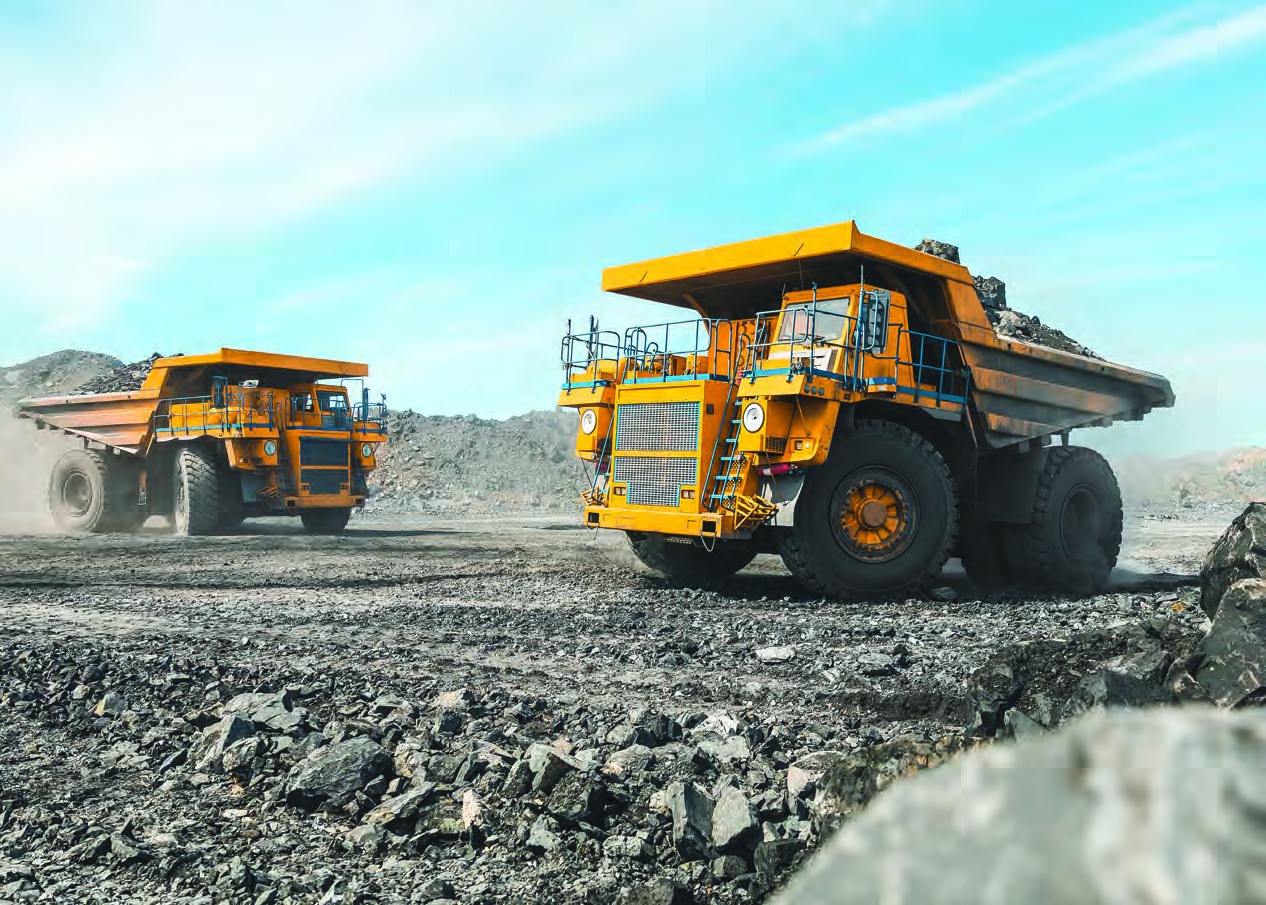
Most TLT readers see the greatest potential for solid lubricants in mining, steel, construction and aerospace, where high loads, low speeds, extreme temperatures or hard-to-reach components make it difficult to maintain a fluid film. Molybdenum disulfide (MoS
2) is the most widely used solid lubricant among respondents, though readers say keeping particles dispersed, ensuring coating adhesion and durability and navigating tightening regulations remain persistent challenges. Looking ahead, most readers expect solid lubricants to complement liquid lubricants or remain niche solutions rather than replace oils and greases outright.
Q.1. What industries or applications do you think could benefit most from the implementation of solid lubricants?
Mining, steel mills, railroads.
Forest work.
All, as long as there is no food or other critical injection risk.
Heavy-duty slide bearings (pin/bush).
Mining and construction.
Robotics. Electrified systems. Even slow moving large structures such as in wind turbines.
Like polytetrafluoroethylene (PTFE) can be used as a gasket or as a shaft seal, the food industry uses these but could also be considered on process pumps for water systems on Navy ships.
Construction.
Chain drives and any slow speed sliding application.
Heavy-duty industries: mining, dredging, steel, cement.
Very little in trucking but manufacturing could benefit.
The industries that could benefit most from solid lubricants are generally those involving equipment that routinely operates in boundary or mixed-lubrication regimes, particularly where high loads, low speeds, oscillating or reversing motion, shock loading or intermittent lubricant supply make it difficult to maintain a full fluid film. This can include mining and heavy equipment, steel and metals processing, construction and off-highway machinery, certain manufacturing applications and selected aerospace or extreme-environment applications. However, I would qualify that answer carefully. The presence of a solid lubricant such as molybdenum disulfide or graphite does not automatically make a lubricant better, nor does increasing its concentration necessarily increase protection.
Drilling for oil.
Applications involving low sliding speeds and high pressures: metal forming, slow-running gearboxes, plain bearings, anti-friction coatings.
In my opinion, the mining industry is one of the most benefitted industries due to the work on limits or out of limits on velocity and load. Other industries who experience the benefits are the food industry that use PTFE solid lubricants.
Heavily loaded applications that require high extreme pressure (EP) protection (mining, gears, etc.) or applications that require a running-in period to polish the surfaces of new components (constant velocity joints).
Open gear applications: mining, mills.
Grease of open gear.
Automotive, industrial lubricants, household products.
Specialty aerospace, mining and some specialty heavy industrial applications.
Grease.
Special lubricants like grease or pastes.
From my experience in the mining industry, heavy-duty machinery and turbines often face environments where frequent lubrication is difficult to apply.
Applications where friction is critical.
Off-highway pins and bushings.
Drawing and stamping.
Aeronautical, and iron and steel industry.
Mining, rail, construction and quarry and aerospace.
Mining and construction.
High pressure open gear applications. Applications that must stay "dry" for operational reasons. Lifetime applications where the option to replace the lubricant is not feasible. Solid lubricants can outlast fluid lubricants if operation parameters are controlled.
Grease and lube for life applications.
Mining.
Heavy-duty sliding plain bearings.
They are frequently used in aerospace applications already. I could see strong benefits in the automotive industry for the same reasons: reduction of fretting corrosion between parts, and reduction of buzz, squeak and rattle (BSR) vibration.
Aerospace, cryogenic and high-temperature applications.
Aerospace, aeronautics, transportation in general, energy production.
High temperature/pressure, dusty environments, metal extrusion, food industries.
Grease and metalworking fluids.
Vacuum, space and (pure) gas-technology; all applications where contamination by oils or greases must be avoided, e.g., food industry.
Drone technology, self-driving vehicles and taxis, small-form electromechanical devices, toys. The use of solid film lubricants (SFLs) is already heavy in aerospace and defense.
Semiconductor.
Space and railway.
Aerospace and defense.
Aerospace, mining, high loading bearings or other severe contacts could use solid lubricants. Materials outside the normal transition metals parts could use solid lubricant effectively.
1.) Food and beverage manufacturing where wash down of applications is common. 2.) Heating, ventilation and air conditioning (HVAC) where there are difficult to reach fan units. 3.) Wastewater treatment where water ingress is common and sometimes the application is difficult to service.
Aerospace.
Any industry that operates rotary kilns and ball mills requires solid lubricants, usually graphite blocks, for their riding rings.
I think aerospace or automotive industries are the most.
Metal factories that manufacture ram liftings fixtures. Heavy load turning gears.
High load and applications where fluids are under gravitational forces.
Automotive, heavy duty.
Space, robot, marine.
Mines and steel industries.
Older open gear applications in heavy industries such as mining.
There are many; that is my field. Most of my work is in dry film lubricants. They are used mostly in business processes and a little in consumer applications. In business processes, it's usually the movement of materials, along with non-stick properties. Low friction means non-stick as well. Metallurgy, glass fabrication, chains, gates, conveyors, chutes and switches are some examples. Reducing friction and reducing wear are very important wherever metals meet.
Aerospace, electric vehicles, cryogenic applications, miniature precision gearboxes and mechanical assemblies.
In the aerospace or space industries which require extreme operation conditions like high temperatures or vacuum, solid lubricants are suitable candidates. In the grease industries or metal forming operations and other industrial applications requiring high EP and antiwear (AW) performances, solid lubricants are often used.
Definitely grease, then metalforming, somewhat rolling oils and a little bit metalcutting fluids. It is better to use nano particles or submicron particles.
Automotive and rail brakes, defense sectors, aerospace.
Sealed for life or hard to service equipment and assemblies.
Aerospace industries. Defense industries.
The industries in the next five to 10 years focus on the higher efficiency of using green energies involving wind, solar, nuclear and water.
I am in the defense/aerospace industry where we already use solid lubricants. I think that more of the transportation industry could benefit from lessons learned and employ them.
Mining.
High-temperature applications would seem to be a good fit for solid lubricants, depending on their composition, as higher temperatures typically lead to rapid denaturing or oxidation of most liquid lubricants. Machine configurations or remote facilities that are difficult to access for relubrication would also make sense as a primary use instance. From my limited observations, solid lubricants tend to be more thermally/mechanically stable over longer periods of time than the liquid alternatives, but their load carrying capacities seem to be typically lower than oils or greases, especially when factoring in forced lubrication systems.
The space industry. In high-load, low-speed applications typical to the mining and construction industries, where greased gears, bushings and even rolling element bearings cannot establish a fluid film.
Steel industry, forming processes, mining.
Applications where there are considerable heavy shock loads.
Solid lubricants are beneficial for the journal bearings of heavy-duty rotating equipment, particularly in applications involving high-temperature operating conditions.
Automotive valvetrains could benefit from solid lubricant coatings or protective tribofilms used alongside a continuous oil supply. These films can reduce friction and protect contacting surfaces, while the circulating oil provides lubrication, cooling and removal of wear debris.
Gear oils, greases, chain lubes.
Which of the following solid lubricants have you found to be the most effective in your applications?
Graphite 49%
Molybdenum disulfide (MoS2) 73%
Polytetrafluoroethylene (PTFE) 33%
Other 28%
Based on an informal poll sent to 15,000 TLT readers. Total exceeds 100% because respondents were allowed to choose more than one answer.
 Q.2. What is the biggest challenge you face when using solid lubricants in your applications?
Finding the most efficient treat rate in fluid lubricants and greases.
Aircraft bearings.
Durability for decade-plus vehicle durability without replacement costs.
Limitations due to use of central lubrication systems.
Incorrect application, which means components damage.
The biggest challenge is educating the consumer and users of all market segments on the role and importance of lubricants in everyday use.
I don't use them. I test them. Determining the minimum lifetime is a challenge for applications.
Heat distillation and cleaning of metal surfaces via lubricant circulation and filtration.
Typically use a PTFE as a mechanical seal around rotating pump shaft. Everything works fine but can tear easily if pump runs dry.
Cost.
Periodic reapplication..
Solid material build up, and with that misalignment, wear and damage.
Mindset. People need to be educated more on this and get away from grease and oil.
The biggest challenge I face with solid lubricants is determining whether they are actually improving performance in the application rather than simply being present in the formulation. Molybdenum disulfide, graphite and other solid lubricants have well-established mechanisms that can be beneficial under boundary-lubrication conditions. That does not mean their presence automatically improves wear protection, friction, seizure resistance or component life; those are different performance outcomes, and improvement in one does not necessarily mean improvement in another.
Quality of materials.
Without a carrier medium, there is no relubrication. Unreliable transfer film formation when solid lubricants are incorporated; lack of robustness.
In mining applications, when greases using black solid lubricants (graphite) is used, trying to overcome the resistance of OEMs given preference for molybdenum disulfide.
Creating a low-noise grease using solid lubricants for applications like electric vehicle motor bearings.
When using it, the dust may be harmful to your body.
Regulations.
Most challenges revolve around material handling and are operational issues.
1.) Environmental, health and safety (EHS) concerns. 2.) Stability in liquid formulation.
Make them stay in place. Heat transfer. Black/dark color.
Achieving cleanliness or sourcing raw material with the correct particle size.
Balancing efficiency and compromising protection.
Lack of mobility for application. Solids tend to plug auto grease systems and starve the bearing of lubrication altogether.
Keeping the particles in suspension for long periods of time.
Continuous flow.
The biggest challenge is the right application of the lubricant.
Having folks under needed dispersion and shear to get the appropriate dispersion that can be maintained.
For greases there should be no challenges. Lubricant oils need to deal with sedimentation of the solids.
Keeping the "solids" from agglomerating into oversized particles. Keeping the solids from breaking down in size to the point they can no longer separate or escape the contact area. Keeping the solids in suspension/evenly dispersed in the carrier fluid/media.
Dispersing and fallout.
When the environment is dusty.
Wear resistance at high unit loads.
Application of the films can be difficult.
Controlling the quality of surface preparation and deposition processes.
Durability/lifetime.
Difficult replenishment, finite wear life.
Stability in metalworking fluids and functionality in grease.
Delamination, excess wear by hostile environment (e.g., humidity for MoS
2 coatings); substituting PTFE in seals.
Following the rules (ex., REACH).
Nanomaterial.
Maintaining effective lubrication in situations where normal liquid lubricants would not work.
Adoption rate/commonality of use among product manufacturers.
Limited life.
Contamination with paste-like or liquid lubricants, e.g., due to leaks at the support rollers of the riding rings. This causes spalling on the surface of the riding rings due to hydraulic fracturing along surface cracks and notches.
Solid lubricants are required to provide improved durability and durability assurance under increasingly severe operating conditions characterized by higher speeds, higher contact pressures and higher temperatures.
Require long lasting operations and high costs.
Cost.
A good homogenization in the lubricant.
Lifespan is limited.
Proper and parallel application and approach would be the most coveted and at desired level. Its uses will depend upon the severity of the issue.
Raw materials escalating cost.
When to re-apply them to avoid applications running dry.
Solid lubricant adhesion to the substrate and durability through the life cycle of the application.
How to make an effective solid lubricant films on the rubbing surfaces can be challenging.
Dispersion stability and cleanliness. Not easy and there are definitely some technologies that can help.
Again if they are solids dispersed in a liquid it is usually: 1.) keeping them in/at the interface or mesh, 2.) implementing filtration/dealing with wear byproduct, 3.) dealing with their competition for the interface with chemical agents and 4.) containing the byproducts of the used material.
Composition balance for specific applications.
Regulations around the use solid lubricants, such as products containing PFAS.
The adaptability and reliability toward surrounding environment.
Toxicology. Some of the best solid lubricants are also rather toxic. However, there is a balance where it can be a positive risk/reward balance (defense industry).
Clogging of lubrication pipe, tackiness.
We don't use many solid lubricants on my site, but in the places that we do use them, quality control during installation/dispensing is a challenge. Our typical use cases are prone to dust contamination, and the solid lubricants can't always exclude that particulate contamination during application of the lubricant.
The method used to apply the coating (by deposition, spraying or impregnation) directly affects coverage and durability. Contamination control.
Using the right lubricant for the right equipment.
Wear scar and conflicts with other surface active additives.
We face difficulty with the proper lubrication procedure.
The main challenge is maintaining a durable lubricating film under repeated loading and changing operating conditions. In valvetrain applications, friction reduction must also be assessed alongside its effect on shim and tappet rotation.
Proper application.
Minimal contamination and minimal wear.
Do you believe advancements in solid lubricant technology will lead to a major shift in the lubricants industry in the next five to 10 years?
Yes, I think solid lubricants will become the preferred option in many industries. 14%
Yes, but they will complement rather than replace liquid lubricants. 37%
No, solid lubricants will remain niche solutions for specific applications. 41%
I'm unsure about the future of solid lubricants. 8%
Based on an informal poll sent to 15,000 TLT readers.
Editor's Note: Sounding Board is based on an informal poll sent to 15,000 TLT readers. Views expressed are those of the respondents and do not reflect the opinions of the Society of Tribologists and Lubrication Engineers. STLE does not vouch for the technical accuracy of opinions expressed in Sounding Board, nor does inclusion of a comment represent an endorsement of the technology by STLE.