No rash decisions
By Hannah Musgrove, Contributing Editor | TLT Cutting Edge December 2026
Here's how to use machine learning and tribology to create better skin care products.

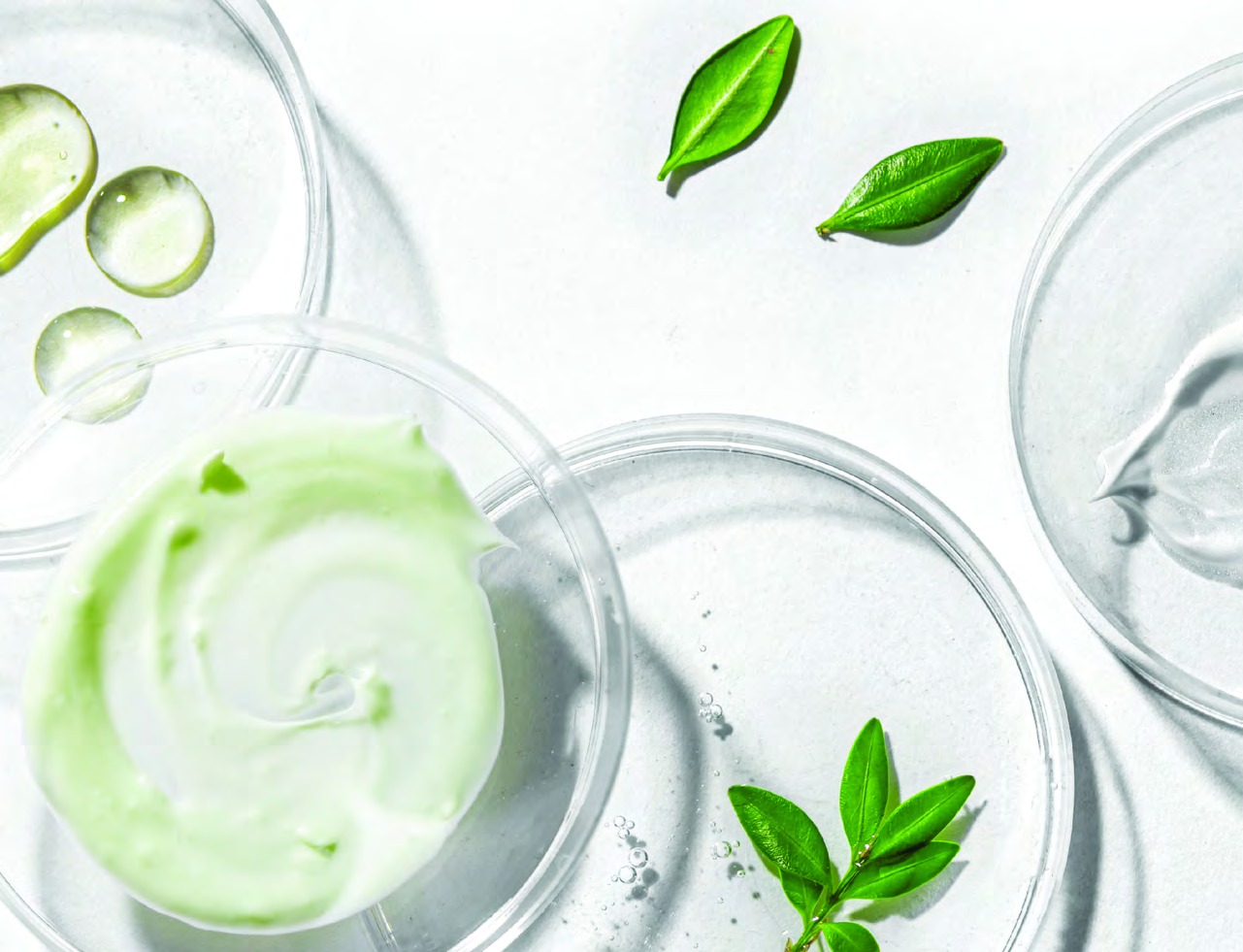
Product turnover in the health and beauty crossover space is a whirlwind. Between constantly changing social media branding and seasonal waves, it can be difficult to compete for staying power in the world of off-the-shelf dermatology. So, what helps make a product really stick in this ever-evolving industry? Possibly, tribological analysis entering into Industry 4.0 with machine learning (ML).
Cosmetic tribology is needed to better understand the dynamic contact system and application mechanics of creams, oils, balms and more. For medicinal or cosmetic products, resulting films need to achieve the appropriate absorption or adsorption onto skin for delivery of treatments or pigments (and stay only where placed). For skin protection, products require durability and the ability to spread easily. Then there is an incredibly important product parameter: the user experience from sensory perception. New products usually require extensive panel testing to balance both function and rising consumer expectations. This process can be time consuming and expensive, leading to limitations in innovation as formulators rely on traditional base materials for better predictions. However, a booming era of discovery is occurring as researchers use machine learning to bring out emerging patterns between physical properties of topical balms and applications.
1,2
Using detailed, multivariable datasets, connections are being made between friction and lubricity of products with sensory perception data, with the aim to add a new efficiency to skin care and cosmetic product design. For example, Jingru He, et al. recently shared their work where they used an ML framework with multivariate analysis (i.e., comparing many variables at once using one set of predictor values).
3 In this work, they showed how tribological, rheological and texture data could predict 22 different sensory descriptors over the categories of appearance, first-use, in-use and after-use experiences. Using supervised algorithms, they were able to predict ~80% of the sensory properties with >95% accuracy.
3 This work, and others like it, have big potential to expedite data informed decision making for creating new products.
1
Implementing these platforms will be no small feat, though, as they have a long way to go before the connections between material properties and user-experience can be truly predictive. One reason is that there are many moving parts involved during the use cycle of topical products. Skin care products need to spread well onto skin while not falling off or feeling greasy over time; and the product will need to behave similarly over a wide range of skin-types that will vary in tribological properties and sensory experiences.
4 They also need to stay consistent through storage and all points of use.
1 Current models create patterns trained on small datasets that do not capture variations through a larger audience and can result in overfitting of information. Also, differences in measurement techniques will be required to better compare between multiple datasets.
1 This field is just emerging, though, and the progress these tools are already making could result in broader skin healing options, or the next viral product.
REFERENCES
1.
Tafuro, G., Costantini, A. and Semenzato, A. (2026), "Rheology, texture analysis and tribology for sensory prediction and sustainable cosmetic design,"
Cosmetics, 13, 25,
https://doi.org/10.3390/cosmetics13010025.
2.
Solarte, S., Porras, A., Pradilla, D. and Alvarez Solano, O.A. (2025), "Current perspectives on emulsified cosmetics: Integration of artificial intelligence into product design,"
ACS Omega. 10, 36788-36803,
https://doi.org/10.1021/acsomega.5c03316.
3.
He, J., Qian, X., Huang, H., Lin, B., Zhang, J., Zhang, C. and Chen, Y. (2025), "Construction of a model for predicting sensory attributes of cosmetic creams using instrumental parameters based on machine learning,"
Applied Rheology, 35, 20250044,
https://doi.org/10.1515/arh-2025-0044.
4.
Pal, A., Gour, R., Kumar, A., Kumar, A., Kumar, A. and Chowdhury, N. (2024), "Tribological measurements of human skin." In: Kumar, A., Kumar, A. and Kumar, A. (eds.),
Applications of Biotribology in Biomedical Systems, pp. 149-165, Springer Nature Switzerland, Cham.
Hannah Musgrove is a postdoctoral researcher at Oak Ridge National Laboratory in Oak Ridge, Tenn. You can reach her at hmusgrove@outlook.com.