Axial flux motors for electric vehicles
By Tyler Housel, Contributing Editor | TLT Automotive Tribology December 2026
A disc-shaped motor design that delivers more torque and efficiency in a smaller package could give electric vehicles extra range, if manufacturers can bring down the cost.

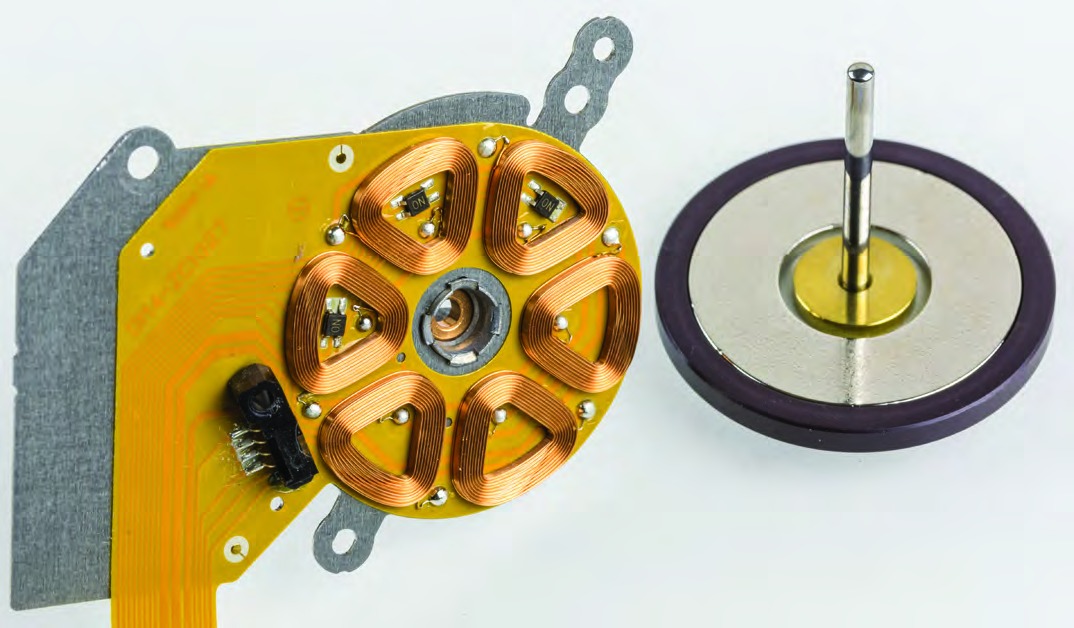
Did you ever learn something new and then bore all your friends telling them about it? Axial flux motors (AFM) are a newfangled type of electric motor bursting on the automotive scene because of their distinct characteristics that make them particularly well suited for electric vehicles (EVs), motorcycles and even aerospace applications. If you don't share my newfound enthusiasm toward AFM, it won't be rude to turn the page.
Readers may remember the November 2025 TLT Lubrication Fundamentals article that described the physics behind electric motors.
1 That article focused on radial flux motors, which are by far the most common type of electric motor in use today. Simply put, current flows back and forth through coils of wire in the stator, which creates alternating magnetic fields that point radially (inward) toward the hub, and repeatedly push the rotor's permanent magnets around in a circle.
AFMs operate on the same principle, but as you might guess, they are called
axial flux motors because the alternating magnetic flux points axially (parallel to the axis) around the rotation hub. The permanent magnets are now in a thin, disc-shaped rotor, which is sandwiched between two stators that hold the electromagnets
(see Figure 1). Speaking of "sandwiched," an AFM is shaped more like a hamburger instead of the more familiar hot dog shape of a radial flux motor.

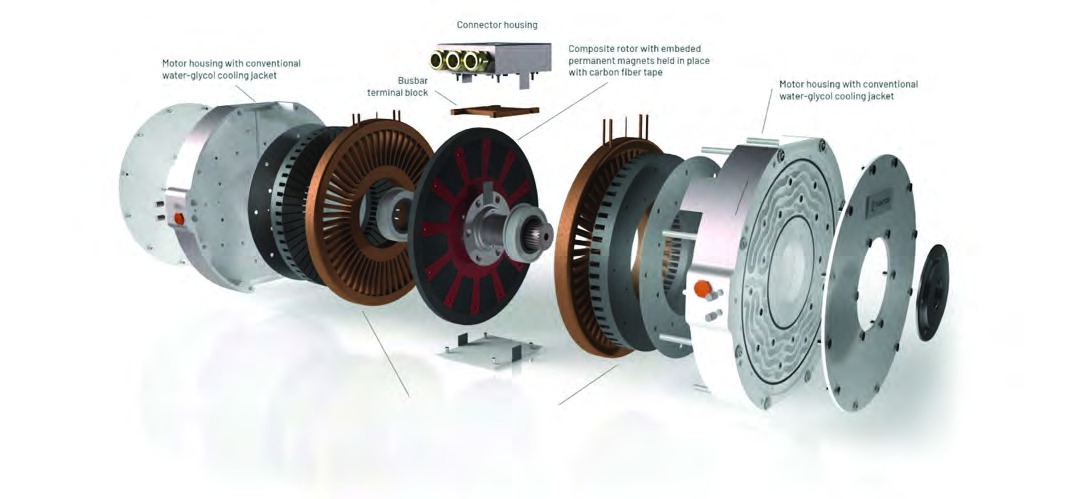 Figure 1. Typical configuration of an axial flux motor. Figure courtesy of Turntide Technologies.
The AFM configuration has a more direct magnetic flux path and shifts the motive forces farther from the hub (increasing R). The larger radius generates more torque because torque is the product of force and radial distance (
τ =
RF). This allows AFMs to operate at lower rotational speeds (typically below 8,000 RPM) than radial flux motors, which puts less stress on the lubricants and gearset. Thermal management can also be easier as there is more surface area to allow cooling fluids to draw heat away.
2 As a result, AFMs provide higher energy efficiency, power density and torque so engineers can reduce the size and weight of the drive unit without sacrificing performance.
3 Radial flux motors already generate plenty of torque for EV applications, so an AFM's biggest benefit may be 5%-10% of additional range that comes from lower weight and better efficiency.
So why aren't AFMs used in all EVs?
The radial flux design has been the industry standard for electric motors for more than 100 years and are widely available, durable and inexpensive to produce. The first generations of EVs used off-the-shelf radial flux motors, allowing designers to focus on other aspects that differentiate internal combustion and electric vehicles. Readers are surely familiar with the many STLE resources that address engineering and tribological challenges associated with EVs.
The AFM concept has been around for decades, but they have tight tolerances that require precision manufacturing and must last for years in an environment with vibration and temperature swings. These engineering challenges make AFM more expensive and therefore have been impractical for most automotive applications. Today, AFMs are used in some high-end automobiles that focus on performance over cost. As the technology matures, we can expect that AFMs will be increasingly common, and someday mainstream EVs will be available with an AFM under the hood. Or maybe not: one company is even developing prototypes that mount an AFM directly to each wheel, eliminating the need for drive shafts, gearboxes and brakes.
4 I can only imagine what topics the STLE conferences on e-mobility will cover in 2030.
REFERENCES
1.
Housel, T. (2025), "Electric motors," TLT,
81 (11), pp. 24-28. Available at
www.stle.org/files/TLTArchives/2025/11_November/Lubrication_Fundamentals.aspx.
2.
www.carsandhorsepower.com/featured/axial-flux-vs-radial-flux-the-silent-motor-war-shaping-your-electric-car-s-future
3.
https://turntide.com/community/why-axial-flux-motors/
4.
www.electrive.com/2025/12/03/yasa-develops-axial-flux-in-wheel-motor/
Tyler Housel is a technologist for Hnuco Technologies and is based in Lansdale, Pa. You can reach him at tylerhousel@comcast.net.