Busting the shop floor myths of chlorinated paraffins in modern metalworking fluids
By Mark Gregory Catano | TLT Shop Floor November 2026
Chlorinated paraffins are often viewed as a single chemistry, despite significant differences in performance among their various types.

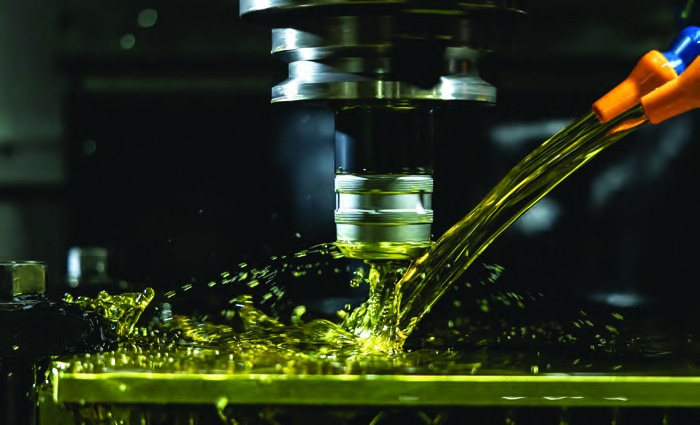
Having worked in machine shops throughout the western U.S. as a metalworking fluid specialist, providing training, sales support and troubleshooting, I have encountered many opinions about metalworking fluids (MWFs). Some of the strongest beliefs in our industry are often based on outdated information, isolated experiences or broad assumptions. Few topics illustrate this better than the "myths" of chlorinated paraffins (CPs).
Over the years, I have heard claims that CPs "destroy CNC machines," "stain metals," "damage seals" or "cause corrosion." In my opinion, many of these misconceptions stem from industrial distribution channels that focus primarily on cutting tools rather than lubrication chemistry or tribology. While many sales representatives understand tooling and machining processes, fewer have formal training in lubricant chemistry or know the differences among CP technologies.
One of the biggest misunderstandings is the assumption that all chlorinated paraffins behave the same. They do not. CPs are classified by carbon chain length, including short-chain (SCCPs), medium-chain (MCCPs), long-chain (LCCPs) and very long-chain chlorinated paraffins (vLCCPs). This distinction is critical as it pertains to how different CPs interact with materials.
Historically, some SCCPs and older chlorinated chemistries contributed to staining, corrosion, seal-compatibility concerns and machine degradation, particularly under poor maintenance conditions or excessive heat. Their lower molecular weight made them more volatile and chemically reactive.
Modern vLCCPs, however, behave differently. Their larger molecular structure provides greater thermal stability, lower volatility and improved staining resistance. When incorporated into properly engineered formulations, they deliver excellent extreme pressure lubrication while remaining compatible with machine components, coatings, elastomers and workpiece materials.
I currently represent a company focused on performance machining solutions, and vLCCP technology is utilized because it provides exceptional boundary lubrication without many of the concerns associated with older chlorinated chemistries. In demanding machining operations involving stainless steels, nickel alloys, titanium and other difficult to machine materials, vLCCPs can reduce adhesive wear, minimize built-up edge, improve tool life and lower cutting forces.
The reality is that tribology is not widely understood outside the lubrication and manufacturing industries. As a result, CPs are often viewed as a single chemistry, despite significant differences in performance among their various types.
When properly formulated and maintained, vLCCP-containing metalworking fluids are not the machine-damaging products they are often portrayed to be. Instead, they remain one of the most effective extreme pressure technologies available for demanding machining operations. "Myth busted!"
FOR FURTHER READING
1.
Hangsterfer's Laboratories, Inc. "Internal technical training materials on vLCCP technology."
2.
"Safe chlorine – vLCCP," Hangsterfer's Technical Bulletin.
3.
"Chlorine seal compatibility," Hangsterfer's Laboratories Technical Report.
4.
ASTM D-130 Copper Strip Corrosion Testing Standards.
5.
Byers, J. P., ed. (2018),
Metalworking Fluids, Third Edition, CRC Press.
6.
U.S. EPA documentation regarding SCCP and MCCP regulatory classifications.
Mark Gregory Catano is district manager for Hangsterfer's Laboratories, Inc. in Mantua, N.J. You can reach him at mark@hangsterfers.com.