KEY CONCEPTS
-
Circularity isn't just about recycling; it's also about sustainable sourcing, extended lubricant life, waste reduction, cost containment, quality standards and customer acceptance.
-
A circular economy encompasses sub-circles at the machine, plant and regional levels.
-
Unexpected events on the global stage can drive significant shifts in supply and demand.
"Lubricants are not consumables. They are assets, and assets should never be wasted," says Anshuman Agrawal, founder and managing director of Minimac Systems Pvt. Ltd. "Build a world where no lubricant is wasted, and no machine fails because of it."
One way to reduce waste is to use the least amount of lubricant necessary to perform a given function. Another way is to formulate lubricants with the longest feasible service life. A third way is to recycle, recondition or re-refine used lubricants so that they can be used again and again. This third way, a closed-loop system that extracts the greatest use from an initial input of raw materials, is the basis of a circular economy. In 2024, circular economy efforts across a wide swath of industrial sectors around the world generated more than $650 billion, and this number is expected to grow to more than $2.6 trillion by 2035, driven in a large part by government policies and regulations and the high cost of extracting and transporting new resources.
1
Moving away from a "take-make-dispose" approach that relies on a constant stream of raw materials and finished products that are used once and then discarded requires participation along every step of the cycle. Lubricant manufacturers incorporate more recycled base oil into their lubricant products. Customers drive a demand for these products and perform proper maintenance to ensure that lubricants perform well over extended drain intervals. Then, they collect the used lubricants, segregating them by type, and pass them along to re-refining operations that restore the base oils to near-new condition and sell them to lubricant manufacturers, and the cycle begins again. Used oil that must exit the loop can be used as fuel or made into petrochemicals rather than being discarded.
2
Circular systems conserve natural resources, reduce energy use during oil refining and lubricant manufacturing, reduce pollution and waste generation and make more productive use of manufactured products. Further, circular systems promote national self-reliance as a shield against instabilities in prices and supply chains. An increasing awareness of the finite nature of input resources and output sinks is one driver toward circularity in general. In the lubricants industry, another driver includes increasing customer confidence as a result of advances in feedstocks and formulations, condition monitoring technology and reconditioning and re-refining methods.
3
Several steps characterize the transition from thinking of lubricant oil as a consumable commodity to an asset in a value chain. Natural resources mark the entry point, providing the feedstocks that are refined and formulated into finished lubricants. High-quality lubricants reduce waste by offering longer service life and better performance. They also contribute to a better quality of used oil, which makes for a more efficient, productive re-refining process, resulting in a better quality of re-refined base oil.
However, collecting, segregating and storing used oils in preparation for re-refining remains a bottleneck in the circularity process. Fragmented collection systems and a lack of efficient infrastructure and procedures hamper traceability of sources and quality assurance for the re-refined products. Disposal methods vary widely across geographic regions and industry sectors. Used oil can be burned as fuel, reconditioned and recycled in-house or re-refined into base oils with a quality that often meets, or even exceeds, that of the original virgin oil.
4
Re-refining remains a small part of the lubricant market. In 2024, users around the world bought some 39 million tonnes of finished lubricant, generating more than 21 million tonnes of used oil. Of this, only 6.5 million tonnes were re-refined into base oils (RRBOs). Germany and Italy lead in the percentages of oil that they re-refine. France has access to an ample supply of high-quality feedstocks but limited capacity for producing high-grade base oils, while the U.S. leads in the total production and supply of high-quality RRBOs. India has lagged in re-refining efforts, but it is now investing heavily in an effort to become more self-reliant amidst disruptions in its supply of imported oil. China has substantial capacity to re-refine oil, but only a few facilities can produce high-quality RRBOs.
4
Feedstocks: Starting the cycle
Even the most advanced closed-loop systems can't make something from nothing—something has to serve as an initial input. Given the cost, supply instabilities and environmental drawbacks associated with petroleum, lubricant formulators and manufacturers have begun to look farther afield to find sources of input for their own cyclic economies. Two emerging sources take their inspiration from different points in the cycle: synthetic feedstocks that mimic natural substances and feedstocks upcycled from materials commonly regarded as waste by other industry sectors.
Bioinspired automotive lubricant formulations, including fully synthetic estolide compounds (fatty acid oligomers), mimic oils derived from plant sources without depleting supplies of food plants.
5,6 Bioinspired base oils based on advanced polymer chemistry provide vehicles with needed engine power retention and shear stability, says Dr. Kalpendra Rajurkar, head of technology and services for Veedol Corp. Ltd. Friction control formulation components ensure instant throttle response, smoother gear shifting and stronger pickup under load and traffic conditions.
The goal in using biomimicry is to formulate fully synthetic lubricants with the same advantageous properties as their natural analogues, Rajurkar explains. Desirable properties include base oils with a high viscosity index that enables the lubricant to function well across a wide range of temperatures and additives that work synergistically with the base oil to form a strong surface layer. Preserving performance over a long service life, thus extending drain intervals, is a critical property. He cites field tests involving motorcycles using a fully synthetic biomimetic lubricant.
7,8 The motorcycles, he said, traveled 250 kilometers per day over rough, high-altitude terrain for at least 20,000 kilometers without losing engine power and pickup.
Meanwhile, Dr. Robert Kennedy, founder of startup company Aeternal Upcycling, is turning trash into what he hopes will become treasure.
9 A circular economy "is my focus," he says. Kennedy is working on developing a hydrogenolysis-based method for converting plastic waste materials into salable base oils based on his postdoctoral research work at Argonne National Laboratory
(see Figure 1). "What I'm looking at, from a technology side, is what is the most valuable and high-performance thing I can turn plastic waste into. On the product side, it's what is the highest performance and cheapest product I can make for the lubricant space, and it turns out that that is Group III base oils."

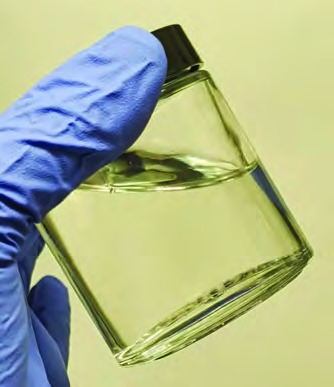 Figure 1. A sample of base oil made from plastic waste. Figure courtesy of Aeternal Upcycling.
Kennedy, with assistance from Argonne Lab and Chicago's mHub innovation center, is currently producing base oils on a laboratory scale
(see Figure 2).

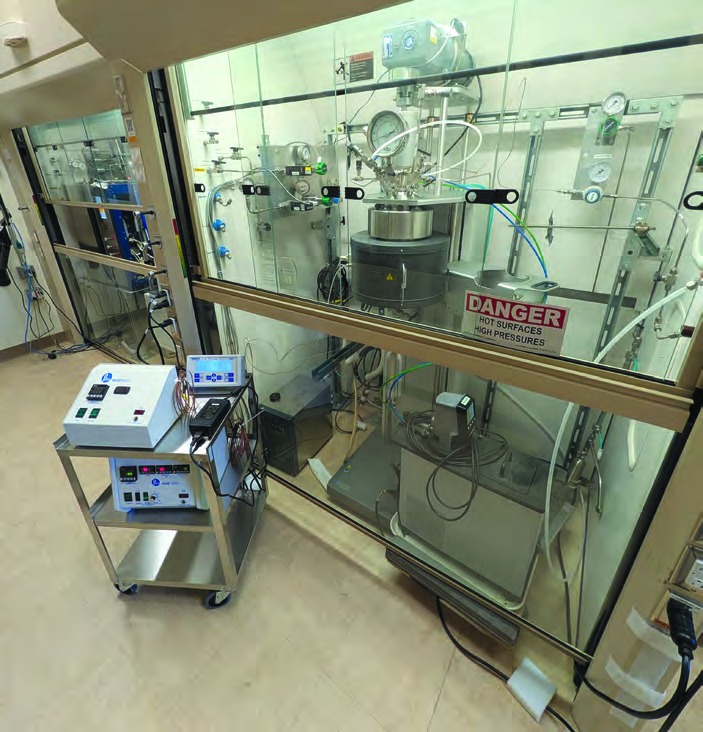 Figure 2. A large pressurized batch reactor mounted in a walk-in hood is used for process scale-up for making base oil products from plastic waste materials. Figure courtesy of Aeternal Upcycling.
At present, Kennedy is focusing on polyolefin feedstocks like high and low density polyethylene (HDPE and LDPE) and polypropylene (PP), which represent about 60% by weight of all the plastic that is discarded every year, rather than common non-hydrocarbon polymers like polyethylene terephthalate (PET), polyvinyl chloride (PVC) and polyurethane. In particular, he is interested in plastic feedstocks that are challenging to recycle using mechanical processes like shredding. These challenging materials include strongly pigmented plastics, flexible plastics like bags and films, multilayer plastic materials and containers like motor oil bottles that are coated in oily residues.
Kennedy notes that these are the kinds of plastic that don't typically get recycled into consumer products. Rather, they are sent to a landfill, incinerated or, at best, downcycled into less valuable products. Downcycled products include the plastic bags that are recovered from grocery store recycling barrels. These are mixed with sawdust to make plastic lumber for items including decking material and outdoor furniture. Another example is drainpipes made from highly pigmented HDPE and PP, commonly used for detergent bottles.
10 Both of these applications involve lower profit margins than the initial use as food and beverage packaging, Kennedy says.
Hard-to-recycle plastics are available at a lower cost than more easily recycled plastics—in fact, they are cheaper than crude oil, Kennedy says—which creates a cost advantage in comparison to petroleum and conventional petrochemicals. He adds that the technology to hydroprocess and filter out undesirable components like motor oil additives already exists.
The process that Kennedy uses takes advantage of hydrogenolysis, a phenomenon that is viewed as a problem in hydrocracker units at oil refineries. Whereas hydrocracking adds significant value to a barrel of crude oil by turning heavy fractions into gasoline and diesel, hydrogenolysis instead makes methane gas. "If you've got a hydrocracking catalyst that has gone off, it'll start doing hydrogenolysis, and that shifts the product distribution in your hydrocracker and lowers your yield," Kennedy says. He cites decades of literature addressing methods for preventing hydrogenolysis, but his process purposely cleaves long polymer molecules into shorter chains using a single-functional hydrogenolysis catalyst. Further, while hydrocracking uses metal and acid catalysts that inevitably produce some isomerization and cyclization, the simpler catalyst used for hydrogenolysis produces at or near 100% alkanes, and the distribution of alkane types can be tuned to the desired range. The resulting Group III oils can be incorporated into existing lubricant formulations and industrial processes.
Kennedy foresees further reducing his company's production costs by working with a partner to launch a branded product line with production plants located close to feedstock sources to reduce transportation costs. Transportation can represent a significant fraction of the overhead expenses because plastic waste tends to have a low density. "If you're shipping plastic waste too far, it starts costing a lot more to ship it than it costs to buy it," Kennedy says. "If we can make high viscosity index base oils from plastic waste at the right price, I think that people are going to want it everywhere." The challenge, he says, is figuring out how to balance the cost of shipping a feedstock to a facility against the cost of building and operating a new plant.
In addition to the low viscosity Group III oils on the market today, Kennedy is also looking at producing high viscosity Group III oils. "We're starting with a very heavy feedstock and breaking it down," he says, in contrast with processes that start with natural gas or light alkanes and build them up. Applications that require good boundary lubrication layers, and thus heavier base oils, include industrial fluids, gear oils, greases and hydraulic fluids. Even lower viscosity fluid formulations use higher viscosity oils as viscosity index modifiers to ensure that the fluid has the right viscosity at the right temperature, he adds.
Upcycling low-value plastic waste leaves more room to earn profits on the finished product. "One of the reasons I'm focusing so heavily on high-grade base oils is that it can be a relatively high-margin business for us," Kennedy says. In contrast, mechanical recycling businesses, whose products often sell at or above the costs of virgin polymer, tend to rely on a "green premium" for customers who cite the recycled content of their products as a marketing strategy.
Upcycling plastic waste also bypasses the price uncertainties and supply chain instabilities currently plaguing the global petroleum market. Kennedy adds that prices for plastic film and mixed plastic bales have been holding steady over the first part of 2026, in contrast to the high-grade plastic waste used to make consumer products, which has seen recent price hikes.
As with any new product or process, Kennedy has encountered some skepticism. "The biggest concern is that I'm trying to make a product out of waste," he says. "I'd flip that around and say, from a certain point of view, crude oil is also waste from creatures and plants from millions of years ago, and we figured out how to use that pretty well."
Kennedy notes that although plastic wastes and crude oil have different contaminants, they both have similar heavy, hard-to-process components. The technologies that have been developed to process marginal crude oils could also be adapted to handle contaminants in plastic waste, Kennedy says. Although the concentrations of specific elements in plastic waste differ from those in crude petroleum, the common elements are very similar.
11 Both have a significant amount of sulfur. Plastic waste has more nitrogen than crude oils usually have, often from organic dyes. Plastic waste also contains some phosphorus, chlorine and various metals from additives or trace amounts of the catalysts that were used to make the polymers. However, he adds, the energy cost of diverting plastic waste from disposal or incineration is lower than that of converting crude petroleum into a base oil, bringing oil from upcycled plastic waste closer to having a negative carbon footprint.
Reduce, recycle, recondition, re-refine
Waste minimization is a key component of a circular economy, Rajurkar says. Natural resource extraction often serves as the entry point to the cycle, and some materials inevitably exit the cycle as disposable waste. Thus, "the best oil change is often the one that you avoid," he adds. Condition-based lubricant monitoring is one way to avoid unnecessary lubricant changes, reducing resource usage, downtime and expenses
(see Figure 3). Going from a strictly calendar-based maintenance schedule to condition-based maintenance requires some way to monitor the machinery. Digital monitoring tools can monitor lubricant levels, oxidation status, viscosity, contaminant levels and wear particles on a continuous basis, with real-time or near-real-time feedback. This helps operations safely extend lubricant life, reduce waste generation and reduce maintenance costs overall.

 Figure 3. Condition-based asset monitoring reduces waste, while providing early warning of problems in the making. Figure courtesy of U.S. Army, Sgt. 1st Class Guido Fermi.
More operations are adopting condition monitoring practices and in-line conditioning devices to extend drain intervals and reduce waste, Agrawal says. Condition monitoring using laboratory testing or in-line sensors allows machine operators to extend drain intervals under normal operating conditions and detect problems in the early stages. He adds that condition monitoring data can be entered into artificial intelligence (AI) systems, which monitor trends in lubricant performance in specific machines, under specific operating conditions, and alert users to potential problems or when a lubricant is reaching the end of its service life.
Agrawal refers to this approach as "nano-circularity;" that is, the lubricant is being recycled at the machine level while taking steps to extend its service life.
12 By reusing lubricants rather than incinerating them as waste, "we are not capturing CO
2 emissions—we are avoiding emissions," he says.
Micro-circularity refers to the next step: restoring used lubricants in-house to near-original performance levels.
12 In-line reconditioning systems function like kidney dialysis machines, Agrawal says, reconditioning the lubricant while it circulates through the mechanical system, enabling it to remain in service longer. Reconditioning involves removing water from the lubricant, filtering it and applying restorative chemical treatments
(see Figure 4). Thus, even if a lubricant is approaching its end of service life, reconditioning "turns back the clock" and gives the lubricant a new lease on life. Micro-circularity enables closed-loop lubricant management within a facility, reducing both operational costs and the facility's environmental footprint.

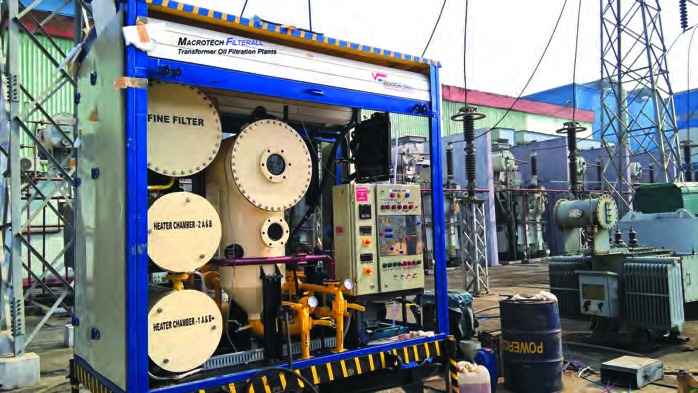 Figure 4. This filtering apparatus restores transformer oil onsite. Figure courtesy of Arghyakamal.ray/Wikimedia Commons, CC BY-SA 4.0.
Macro-circularity brings in companies that collect and re-refine used lubricant oils for use in other operations and applications.
12 Because these operations are not contained within the initial user's plant, efforts at this level require a coordinated infrastructure of lubricant collection and segregation at the user level, businesses that transport the lubricants to a re-refining facility, customers for the re-refined product and industrial and governmental policies that support and encourage these practices. Re-refining used oil conserves more energy than reprocessing used oil for use as fuel, and the energy used for manufacturing re-refined base oil using used oil as a feedstock is about one-third of the energy required to refine crude oil to produce virgin base oil.
3
Companies that might not have taken an interest in recycling and reconditioning in the past are increasingly adopting these practices, Agrawal says. Cost reduction, including costs for waste disposal, is one major driver, and green mandates in the form of government regulations and consumer demand is another. Many government entities are adopting Extended Producer Responsibility (EPR) mandates, which dictate that producers are responsible for end-of-life disposal or recycling of their products. EPR mandates hold company managers responsible for producing end-of-life plans for their products and for documenting and reporting the results of their program.
Confidence and coordination
Sustainability requires learning how to source materials as well as how to use them: how much, how to recycle and how to ensure this complete life cycle. Traditionally, Rajurkar says, OEMs drove formulation priorities. They primarily emphasized performance, along with equipment protection, durability and cost optimization. These things remain essential, he adds, but now sustainability is entering into the design process
(see The 5 Es). Tomorrow's lubricants must be designed for a circular economy, and this transition is currently in process. "The challenge [to circularity] is not technology; the challenge is confidence," he says. "If I use this [re-refined product], what will happen?"
Most regeneration technologies today are technically capable of restoring lubricant quality for many industrial applications, Rajurkar says, but adoption remains slower than expected because of the concerns about reliability, contamination management, operational complexity and perceived risk to the equipment. "The [lubricant] industry must establish trust through establishing and meeting trusted standards and demonstrating performance in real-life examples."
Customer intent also factors in, Rajurkar continues. Do they only want performance, or do they want performance plus sustainability and circularity? The typical user in the market should understand what specific products are used for and under what conditions. Re-refined base oils can reduce costs and still meet the same specifications and quality standards as the virgin oil. He notes that positive feedback from early adopters of high-performance next-generation synthetic lubricants can encourage others to follow suit. Credibility and acceptance are important, he says. "It's really important to educate the market. For re-refined base oils, trust will drive circularity faster than any technology you may talk about."
One example of a concerted international effort to support circularity was the 2023 launch of the Resource Efficiency and Circular Economy Industry Coalition (RECEIC).
13 In India, this launch marked the start of an industry-driven initiative under the Federation of Indian Chambers of Commerce & Industry to promote global sustainability, resource efficiency and the transition to a circular economy.
RECEIC's Used Oil Working Group has been tasked with organizing India's fragmented used oil sector.
14,15 RECEIC and its partners are working to establish the National Used Oil Management Association, an industry body that is working to formalize the ecosystem and foster collaboration between public sector undertakings and private entities, with the goal of transitioning from an ad hoc waste disposal system to a structured resource recovery system. This association involves stakeholders including re-refiners, recyclers, collectors and oil producer or generator OEMs. The goal is to have uniform practices and operational support for transitioning to an integrated system that rewards behavior, education and value chain creation.
Centralized data is important to forming uniform, data-informed policies, Rajurkar says. Further, having the right policies in place and advocating for those policies is important for a single-point entity that represents all the stakeholders in an ecosystem: the mechanic, the workshop, the collector, the re-refiner, the oil producer. That's where the building of institution is important, he adds—and this requires a collective commitment to a greener lubricant industry through association, transforming used oil collection into scalable, sustainable and transparent operational reality.
The key challenge to achieving this transition in the lubricants industry, Rajurkar says, is not the used oil itself or the concept of the circular economy; it's the mental gap that impedes people from realizing the value that can be unlocked by reusing oil. Thus, the first step is to "mind the gap" (to borrow an expression from the London Underground). We must be aware that this gap exists, he says, and then we must bridge this gap. Collectors pick up used oil from the workshops and bring it to the refiners. Lubricant companies are users as well as producers, in that they buy re-refined oils to use for making their products. These people are on different platforms, he says, and we need to understand the gaps between the platforms before we can begin to bridge those gaps, ensuring that materials travel unimpeded around the cycle. "Only then can we create a framework where everybody can contribute."
The various stages in a circular economy do not form well-defined, well-separated compartments, however. "Sustainability is sequentially random," Rajurkar says. That is, at every stage of the process (raw materials, blending and formulating, manufacturing a product, getting the product to market, disposing of or recycling the product), various factors interact with each other and sometimes conflict with each other (e.g., energy usage, resource usage, transportation).
For example, "I have created one liter of lubricant from a green source," Rajurkar says. "I have used esters, I used this bio-derived material, I used solar energy to blend it, I used electric energy to transport it. Then I ensure that it is in the market and is being used correctly." However, he continues, "I will be able to circulate back probably 30% of the oil," noting that this low percentage does not meet his initial specification, which was to use a sustainable source of raw material. Thus, the starting point conditions for the next iteration of the cycle are not identical to the conditions where the cycling began. "In every stage there is a randomness," he says. "It is important to address that randomness in view of sustainability to achieve our goal."
India is one of many regions around the world where industries are confronting the need to change their approach to manufacturing. As recently as a decade ago, Agrawal says, industrial users in India resisted recycling or reconditioning their lubricants because OEMs and lubricant manufacturers advised against it. However, with the adoption of international, application-agnostic quality standards, such as the ISO standard 4406 for fine particulates, it has become easier to document the quality of recycled, reconditioned or re-refined lubricants and provide assurances that these products meet OEM requirements.
The collection mechanisms in Europe are very streamlined,
14 but in India, Rajurkar says, oil changes are done in large workshops as well as many very small shops. The smaller shops typically do not have an infrastructure that enables them to segregate engine oil, gear oil, hydraulic oil or different types of greases, so they tend to mix these into one container. "We need to understand the different elements and really work on this," he says. "The challenge is to set up collection mechanisms and infrastructure. After we have these set up, we collect specific used oils from mechanics, workshops, franchisees or industries and bring it to the refiners. Then if the refining technology is in place to produce a better quality of used oil, we get a re-refined base oil that customers can use without hesitation."
Global events: An unexpected driver
It takes more than an assurance of acceptable quality to drive a major change in a company's approach to maintaining their machines. All lubricants are designed to have a service life, Agrawal says, during which they can be expected to perform their assigned function. During usage, physical and chemical changes occur that eventually make it necessary to take the lubricant out of service. When lubricant components are in plentiful supply at an affordable price, users can simply replace the lubricant with a fresh supply, often at predetermined intervals, regardless of the condition of the lubricant. In Asia and in some developing countries, he says, lubricants are being changed out after serving only about 40% of their potential service life.
Recent restrictions in lubricant supply and increasing petroleum prices are adding urgency to an existing change in attitudes about replacing lubricants. The full effects of inventory draw-down as a result of the closure of the Strait of Hormuz had not been fully felt as of summer 2026, and oil supply disruptions in the Middle East are expected to produce ripple effects well into 2027. Shortages of Group III base stocks are driving formulators to increase demand for Group II base stocks, and competition from more-profitable fuel production limits the supply of lubricant base stocks still further. Shortages have also been felt in the supply of petrochemical-based lubricant additives.
16
India has been driving significant efforts to reduce hydrocarbon usage, Agrawal says, because the country imports most of its petroleum and petroleum products, including about 70% of its lubricant base oils. (India's total domestic grease and oil consumption in 2025 was 4.83 million tonnes, of which approximately 4.3 million tonnes was base oil. About 3 million tonnes of this base oil was imported.
17) This puts India into competition with other oil-importing countries, making it vulnerable to price shocks in the world market. Indian refineries produce their own Group I base oils, he explains, but the use of these oils is declining.
India must import most of its Group II and Group III oils, which are increasingly used for lubricant manufacturing, but current events in the Middle East and the resulting shortages of crude oil supplies have sent ripple effects throughout many industry sectors. Government mandates aimed at reducing India's dependence on imported petroleum are driving efforts to extract the maximum usage from every barrel. Price increases and supply limitations are driving an increased interest in decreasing waste and increasing lubricant service life, Agrawal says, citing discussions at a recent Independent Commodity Intelligence Services (ICIS) Asian Base Oils & Lubricants Conference, where the main topic of discussion was finding ways to stabilize lubricant base oil prices.
18
The COVID-19 pandemic in the early 2020s was another unexpected event that disrupted supply chains and manufacturing operations around the world. "COVID-19 was an inflection point where everything changed," Agrawal says. "Since COVID-19, a lot of new thoughts have come into the market. People are ready to take challenges. They are ready to do something different."
Before the COVID-19 pandemic, Agrawal continues, "the world economy was seen as a global village with regard to many supplies." Since the pandemic, and even more during recent conflicts, he says, nations have focused to a greater extent on self-sufficiency and on using the resources they have to their maximum extent. This applies not only to the lubricant industry, but also to plastics, batteries, rubber, e-waste and other industrial sectors.
A push for adopting environmental mandates has little support when the only motivation is resource conservation or environmental protection, Agrawal says, especially when these mandates involve technologies that are only available in developed countries. The real impetus for developing countries, he says, comes when environmental protection is accompanied by a push for minimizing cost and waste and maximizing use of the available resources. Large companies with a high visibility in the marketplace tend to be the first adopters of environmentally responsible technologies and processes, he says. These companies recognize the impact of their decisions earlier, and they might be more willing to experiment with new approaches. Medium-sized companies follow suit when they see evidence not only of the environmental effects, but also the cost benefit of sustainability efforts.
Agrawal has also seen a post-COVID-19 trend toward renting lubricant reconditioning hardware rather than buying it. "People don't want to invest in assets, but they want to get the job done." This trend has opened an opportunity for companies that provide equipment rentals and support. "There's a shift toward getting things done through services rather than doing it yourself," he adds. This trend is more pronounced for companies with existing production operations, he says, while companies that are starting or expanding their operations still purchase reconditioning equipment.
Data centers that support AI, one such rapidly expanding industry, represent a significant new source of demand, Agrawal says. Early data centers used air cooling systems, but immersion fluids are becoming more prominent. "Immersion fluids are the highest grade of lubricant that we have encountered," he says, adding that immersion cooling fluids must be electrically nonconductive but thermally conductive. These fluids are mostly or all synthetic, and they require advanced formulation and manufacturing methods, which makes them expensive. The cost of these fluids, coupled with the criticality of the computer hardware they protect, makes it vital to ensure that the fluids maintain optimum performance over the longest possible service lifetime.
The combination of increased demand across multiple industry sectors and disruptions in major sources of supply is driving price increases that encourage customers to get the maximum usage out of the lubricants they purchase, Agrawal says. Companies that supply lubricant recycling and reconditioning systems must adopt more advanced technologies to keep pace with advances in lubricant formulations, as well as dealing with the types of lubricant aging and contaminants associated with new applications.
Completing the circle
The drive toward a circular economy is often presented as a matter of conserving natural resources and minimizing the release of pollutants and waste back into the environment. To be sure, these are vital, desirable outcomes, but they aren't the only drivers of the move away from "take-make-dispose." Increasingly, stakeholders all along the value chain are also beginning to regard sustainable sourcing, reconditioning, recycling (and upcycling) and re-refining as a means to reduce costs without sacrificing performance and to shield themselves from market and supply chain instabilities. In true cyclic fashion, Rajurkar returns to a point that he and Agrawal both emphasized: "The greenest liter of lubricant is often the liter that does not need to be replaced."
The 5 Es
Establishing a fully functional circular economy requires concerted efforts from all the stakeholders:
-
Engagement with oil producers and refiners, product users, used oil collectors and OEMs who set product specifications achieves buy-in at every stage of the process.
-
Education for each section of stakeholders ensures that the process is viable. For example, the mechanic must understand how to segregate used engine oil, gear oil, hydraulic oil and different subsections of each type of oil to enable recycling and re-refining.
-
Excellence involves setting specifications, best practices and lessons learned at each stage. Best practices for segregating and storing various types of oil in the shop and for re-refining used oil and evaluating formulations ensure usable feedstocks. Effective transportation systems take used oil from the shop to the collection facility to the refinery to the lubricant manufacturer, and then to the next customer.
-
Economic considerations ensure reasonable costs compared with benefits provided. This, in turn, encourages customer adoption and demand, which drives the whole process.
-
Expansion of the market occurs when used oil supplies and collection increase, re-refiners and lubricant manufacturers step up production, and customers increasingly demand and use re-refined products.
Source: Kalpendra Rajurkar
REFERENCES
1.
Spherical Insights (July 2025), "Top 25 industries in circular economy market (2025-2035): Expert view by spherical insights." Available at
www.sphericalinsights.com/blogs/top-25-industries-in-circular-economy-market-2025-2035-expert-view-by-spherical-insights.
2.
SKF knowledge hub, "Oil reclamation and regeneration: Treating lubricants as an asset." Available at
www.skf.com/us/products/lubrication-management/recondoil/knowledge-hub/recondoil-articles/oil-reclamation-and-regeneration-treating-lubricants-as-an-asset.
3.
Aayog, N. and Ministry of Petroleum and Natural Gas (August 2021), "Report of the expert committee. Circular economy in used oil waste," pages 4, 8. Available at
www.eosa.in/circulareconomy.pdf.
4.
Singh, A.K. (January 16, 2026), "From waste to worth: Sustainability, used oil, and the rise of re-refined lubricants," Kline Group blog post. Available at
https://klinegroup.com/energy/re-refined-lubricants-circular-economy-sustainability/.
5.
Isbell, T.A. and Cermak, S.C. "Estolides a developing versatile lubricant base-stock," STLE Environmentally Friendly Fluids Technical Newsletter. Available at
www.stle.org/Images/pdf/LubeCafe/LubeFundamentals/BaseOils/Estolides_A_Developing_Versatile_Lubricant/Estolides_a_Developing_Versatile_Lubricant2.pdf.
6.
Van Rensselar, J. (2021), "Biobased base stock," TLT, 77 (4), pp. 44-48. Available at
www.stle.org/files/TLTArchives/2021/04_April/Feature.aspx.
7.
Veedol SWIFTPOWER 70 5W-30 SP/MA2 fact sheet. Available at
www.veedolindia.com/sites/default/files/assets/pdf/SWIFTPOWER%207θ%205W-30%20SPMA2.pdf.
8.
Veedol SYNTHGLIDE 8β 0W-20 fact sheet. Available at
www.veedolindia.com/sites/default/files/assets/pdf/SYNTHGLIDE%208β%200W-20%20SQ%20ILSAC%20GF-7A_0.pdf.
9.
Neil Canter, et al. "Sustainable use of plastic waste in the production of fuels and lubricants," Perfecting Motion® — Tribology and the Quest for Sustainability, Episode 6. Available at
www.stle.org/podcast.
10.
Smith, A. (October 8, 2025), "ADS recycled plastic purchases share sinks to 3-year low," Resource Recycling, Inc. Available at
https://resource-recycling.com/plastics/2025/10/08/ads-recycled-plastic-purchase-share-sinks-to-3-year-low/.
11.
Schmuck, A. et al. (2026), "Analysis of trade-offs of post-sorting plastic packaging,"
Nature, 654, pp. 383-390,
https://doi.org/10.1038/s41586-026-10606-4.
12.
Team Minimac. (August 2, 2025), "Understanding the circular economy." Available at
www.minimacsystems.com/understanding-the-circular-economy-origins-principles-4Rs-and-minimac-role-in-sustainability.
13.
PIB Delhi. (July 27, 2023), "Union minister launches resource efficiency circular economy industry coalition in Chennai." Available at
www.pib.gov.in/PressReleasePage.aspx?PRID=1943413®=48&lang=2.
14.
Resource Efficiency and Circular Economy Industry Coalition, FICCI Centre for Sustainability Leadership. (2025), "Advancing India's self-reliance: Enhancing circularity in used oil management." Available at
https://receic.com/wp-content/uploads/2025/03/Used-Oil-Online.pdf.
15.
Resource Efficiency and Circular Economy, 2026. LinkedIn post. Available at
www.linkedin.com/posts/receic_we-are-pleased-to-announce-a-focused-session-activity-7446821310896431104-_hVW/.
16.
Doug Sackett, et al. (August 2026), "The lubricant supply crisis: What the industry needs to do now," Panel discussion, TLT Bonus Content. Available at
www.stle.org/files/TLTArchives/2026/08_August/Lubricant_Supply.aspx.
17.
Import/export of crude oil and petroleum products, 2026-2027. Petroleum Planning and Analysis Cell, Ministry of Petroleum and Natural Gas, Government of India. Available at
https://ppac.gov.in/import-export.
18.
18th ICIS Asian Base Oils and Lubricants Conference, June 2026. Available at
https://events.icis.com/website/9171/.
Nancy McGuire is a freelance writer based in Albuquerque, N.M. You can contact her at nmcguire@wordchemist.com.