20 Minutes With Ajay Kumar Harinarain
By Nicole Gleeson, Editorial Coordinator | TLT 20 Minutes November 2026
This career tribologist at Indian Oil Corporation Ltd. discusses tribotesting, the challenges of e-mobility and his work with the Tribology Society of India.
Ajay Kumar Harinarain - The Quick File
Ajay Kumar Harinarain has been a career tribologist responsible for the work of developing methodologies for lubricant development and their introduction in a variety of automotive and industrial field applications. He has a bachelor's degree in mechanical engineering and completed his master's degree in industrial tribology from the Indian Institute of Technology, Madras, Chennai, India. Subsequently he completed his executive master's degree in business administration from a premier business school, S P Jain Institute of Management and Research, Mumbai, India.
Ajay started his career in 1990 at the Indian Oil Research and Development (R&D) Centre, a public sector government organization. He is currently working there, having completed more than 36 years in various roles across different departments. He has been primarily instrumental in the creation of a variety of novel tribotesting lab facilities for lubricant development and developing expertise for associated customer support and technical services. Under his leadership, the industrial lubricants and grease departments have developed several groundbreaking products. He has been instrumental in the creation of a novel tribotesting protocols in readiness for development of hydrogen internal combustion engine lubricants.
He has been in several leadership roles such as for the automotive research and engineering projects functions and is currently in charge of teams responsible for refinery equipment inspection for improvement of their reliability and efficiency. He has been working on new initiatives for automation of refinery inspection tools and methodologies, ESG (Environmental, Social, Governance) frameworks, sustainability, etc.
He has been at the forefront of Tribology Society of India in several roles and has taken several of its initiatives further, including organization of the national and international conferences to bring the tribology research together from academic and research institutions with the user industries. One of the success stories of this endeavor has been the organization of the annual summer school in tribology covering every aspect of the multi-disciplinary subject that sensitizes the researchers and industry users alike on its importance. This summer school is an eagerly awaited event and is now into its 18th year since its inception in 2009.
He has been associated with several other initiatives, including the work on co-authoring a chapter of the 7th edition of the NLGI Lubricating Grease Guide in 2022. He was honored with the Golden Grease Gun award for this contribution at the NLGI Annual meeting in Toronto in 2022. He was associated with TLT magazine as a technical editor for the years 2023 and 2024. He has presented several papers on various topics at national and international tribology and lubrication conferences such as STLE, NLGI, Leeds Lyon, World Tribology Congress, etc., on diverse topics such as energy efficient gear and hydraulic oil, greases, electric vehicle (EV) lubrication, sustainability through tribology and more.
He is active in the Bureau of Indian Standards as a member of its committees and has been convening the panel for developing of base oil standards.
He takes keen interest in nature photography focusing on diversity of subjects like birds, butterflies and insects.

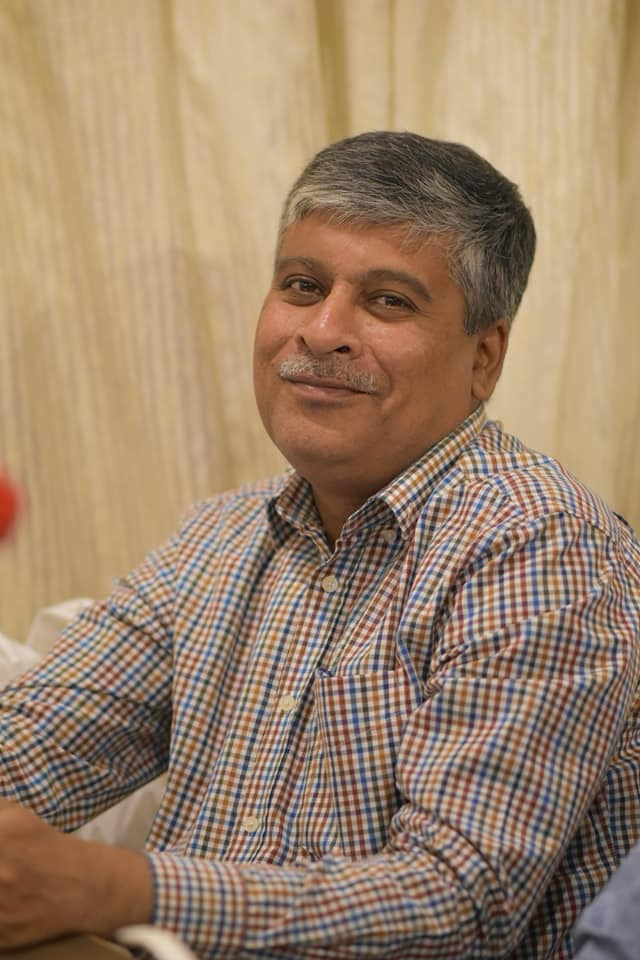 Ajay Kumar Harinarain
TLT: How long have you worked in a lubrication-related field, and how did you decide to pursue a career in the lubricants industry?
Ajay Kumar Harinarain: I have worked for over 35 years in a lubrication related field after completing my tribology education. When I was in a process of my master's degree, I realized that there is a lot of potential in research work in lubrication in industry to be able to develop better lubricants for energy efficiency and long life, besides solving tribology problems. I realized I could make a significant contribution by pursuing a career in this area and I now feel I was right in this endeavor.
TLT: What has been your most rewarding accomplishment throughout your career in the lubricants industry?
Ajay Kumar Harinarain: My most rewarding accomplishment has been to contribute towards developing several energy efficient grades using the novel test methods in our labs—the confirmation of these credentials by the end-user, be it various customers at power plants, steel plants, coal mines and cement plants after extensive trials, was the reward I was looking for. Another accomplishment has been developing an extra long life grease for a commercial vehicle manufacturer customer using laboratory grease life protocols instead of resorting to long field trials on road for the life assessment.
TLT: What is the No. 1 piece of advice you would give to a person who might be interested in starting a career in the lubricants industry?
Ajay Kumar Harinarain: I keep telling anyone starting a career (including several of my newly recruited colleagues) to read and keep abreast of the body of knowledge in existence as well as the industry requirements and the governing regulations.
I advise a habit that I have developed of assimilating and analyzing the papers I read and the test results I get in the lab to be able to understand how it fits into resolution of the various problems. I encourage them to interact with specialists from different disciplines across departments to understand perspectives from different points such as those of formulators and the material scientists and the technical service personnel working with the customers in the field.
TLT: Throughout the different segments within your career, which one has been the most interesting, challenging and/or rewarding?
Ajay Kumar Harinarain: During my career, we entrusted a project with a premier research institution to understand the concept of boundary lubrication from the fundamental point of view. The different tools employed during the project at the asperity level using a range of nano-tribology techniques and tools fabricated to simulate as well as the molecular modeling to analyze this aspect were very different from those employed at my lab using standard tribotesting machines. This enabled me to understand the way interactions happen at the molecular level and develop better perspectives that have come in handy for all future projects. I realize that every development project, if taken through this fundamental approach, would enable us to get to a better solution, and this has been the most rewarding experience.
TLT: What are some of the most technical lubrication-based concepts or topics that you have encountered throughout your career?
Ajay Kumar Harinarain: Some of the most technical lubrication-based concepts include devising test methods for evaluation of metalworking fluids—for which every contact between the tool (cutting tools or roll) and the workpiece (the metal block or the rolled sheet) involves a fresh surface which has limited opportunity to form a film before this contact occurs. Besides the multi-phase lubrication with emulsions involving both cooling and lubrication is still extremely challenging to replicate in the laboratory.
Some other challenges have been the work on developing tribo-simulations for e-mobility, especially the high-speed applications involving the entrainment and the thermal aspects thereon besides the possibility of current leakage through the components. This will require a newer approach and has proven to be quite interesting to take up for me and my team.
TLT: What is the one thing you wish you would have learned earlier in your career?
Ajay Kumar Harinarain: I wished I had the benefit of access to the wealth of information that technology makes possible in the current times. I wish also that I could have interacted with more experts in the field through conferences, seminars and symposiums earlier in my career. As a learning from this personal experience, I try and give this opportunity to my team members so that they have the benefit of these rewarding and enriching interactions.
TLT: We note that you have been actively associated with the Tribology Society of India. What are the some of your achievements in that role and the challenges that you have faced in this regard?
Ajay Kumar Harinarain: I have been associated with the Tribology Society of India (TSI) for more than 20 years in promoting the research in tribology and facilitating its use in solving problems faced by industry. There is still a lot of work to be done in getting these objectives through and bringing the researchers in academic/research institutions to work together with industry users who could benefit from these interactions. Some ground has been made, primarily through the conferences and seminars we have organized and the successful organization of 16 editions of the summer school in tribology. We feel proud that many industry users have begun to apply tribology for their problem solving as well as benefit from improvements in energy efficiency and longer life of components—this has become possible through lubricant interventions as well as design and operational aspects. However, a lot still needs to be done in the country for which efforts are being made by our team at the society.
TLT: What do you think about the path that tribology research will pursue in the future? How will it be different from the road taken so far?
Ajay Kumar Harinarain: Tribology, with the challenges posed by e-mobility and the use of newer fuels like hydrogen, will focus more on solving problems in those applications. It will be quite different from those used for internal combustion engine tribology and those for conventional hydraulic applications. It will be interesting to watch over and be involved in this change brought about by the energy transition. Tribology with its core focus on efficiency and life improvements holds a lot of promise in acting as the enabler for one of the pathways being adopted for mitigating the effects of climate change.
You can reach Ajay Kumar Harinarain at kumarajay@indianoil.in.