KEY CONCEPTS
-
Gear lubricants have evolved from focus on wear to a multidisciplinary problem; formulators balance multiple requirements simultaneously.
-
Electrification and new drivetrain materials are constantly evolving, redefining gear oil requirements.
-
Future gear lubricants will depend on chemistry and tribological performance requirements as much as on sustainability, materials availability and materials compatibility.
Gear oils are the unseen workhorses of the automotive lubricants. Lacking the advertising clout and consumer attention that engine oils command, they are the lubricants for the remainder of the automotive power train. The equipment utilizing automotive gear lubricants includes manual transmissions, drive axles, power take-offs and non-drive applications. Other automotive applications using gear lubricants are front steer axles in rear-drive vehicles, trailer axles being pulled or articulated with the drive tractor, power take-off assemblies for transferring engine power to drive auxiliary equipment and the rear bearing axle assemblies on front-wheel-drive vehicles.
1 The first defining category for the design and formulation of an automotive gear lubricant is viscosity. The American Petroleum Institute (API) designates service categories for automotive gear oils based on the level of antiwear or extreme pressure (EP) protection required of lubes.
2
In the past decade the gear lubricants have been massively redesigned and redeveloped due to changes in regulatory guidance, OEM requirements and an increased emphasis on sustainability in many global regions simultaneously. The objective of this article is to cover challenges faced by formulators and how industry goes about addressing these new demands and requirements.
Evolving gear lubrication
The evolution of gear lubricants is driven by several overlapping factors: improving drivetrain efficiency, electrification and sustainability. Each factor has introduced multiple technical challenges that compete among themselves and require formulators to satisfy all requirements simultaneously without any compromises. To better understand how these trends have been shaping gear lubrication, Sonia Oberoi, head of Enabling Technology — Driveline, Infineum, shares her perspective on how requirements have evolved in the past decade and on changes that are coming up in the next five years: "Over the past decade, the requirements for gear lubricants have expanded dramatically. Once valued primarily for their ability to prevent wear and scuffing under harsh loads, today's gear oils must serve as multifunctional fluids that boost machine efficiency, prolong equipment life and help meet sustainability goals. This marks a striking shift from a decade ago, when gear oils were simpler products focused mostly on durability. Now, gear lubricants have become far more advanced and specialized 'enablers of efficiency, reliability and sustainability' in line with the evolving demands of modern gearboxes and driveline systems."
While Oberoi discusses the broader evolution of gear lubricants design, Adrian Fok, Driveline product manager SEA & Australia, Lubrizol Southeast Asia (Pte.) Ltd, highlights several specific technical themes which are shaping future gear lubricants formulations. According to Fok, there are three major influences: "Firstly, fuel efficiency which has been driving gear fluid development toward ultra-low viscosity. Secondly, improvements on gear fluid durability which helps extend oil drain intervals. Thirdly, New Energy Vehicle (NEV) transition and last but not least, regulatory constraints which influence component selection when formulating gear fluids." NEVs are battery electric, plug-in hybrid and fuel cell powered.
Lower viscosity and efficiency
Oberoi says: "A key trend has been the move toward lower viscosity multigrade oils in place of the heavier, single-grade products of old. For example, where an SAE 80W-90 might once have been standard in an axle or gearbox, many equipment manufacturers now specify lighter grades such as SAE 75W-90 or even 75W-80 to reduce internal fluid friction and churning losses. By switching to these thinner, higher-viscosity-index oils, manufacturers and fleet operators can gain measurable energy efficiency improvements translating to better fuel economy in vehicles and lower power consumption in some industrial gearboxes. However, using lighter oils means gear lubricants must work harder to maintain protective films under extreme pressures. The latest gear oils contain robust EP and antiwear additives to compensate for thinner oil films, ensuring that heavily loaded gear teeth still resist scuffing and micropitting (the surface fatigue of gear metals) under greater stress. These shifts toward lighter, longer-lasting oils have been driven partly by OEMs and regulators pushing for better fuel efficiency and lower emissions, and partly by customers seeking to reduce downtime and maintenance costs."
Fok says: "On fuel efficiency, standard gear oils were typically higher viscosity (e.g., 80W-xx) in the past to handle heavy mechanical loads and extreme pressures. Automakers in present day mandate thinner, low-traction fluids (such as 75W-90 fluids or even lower viscosities) to reduce viscous drag, which improves fuel economy"
(see Figure 1).
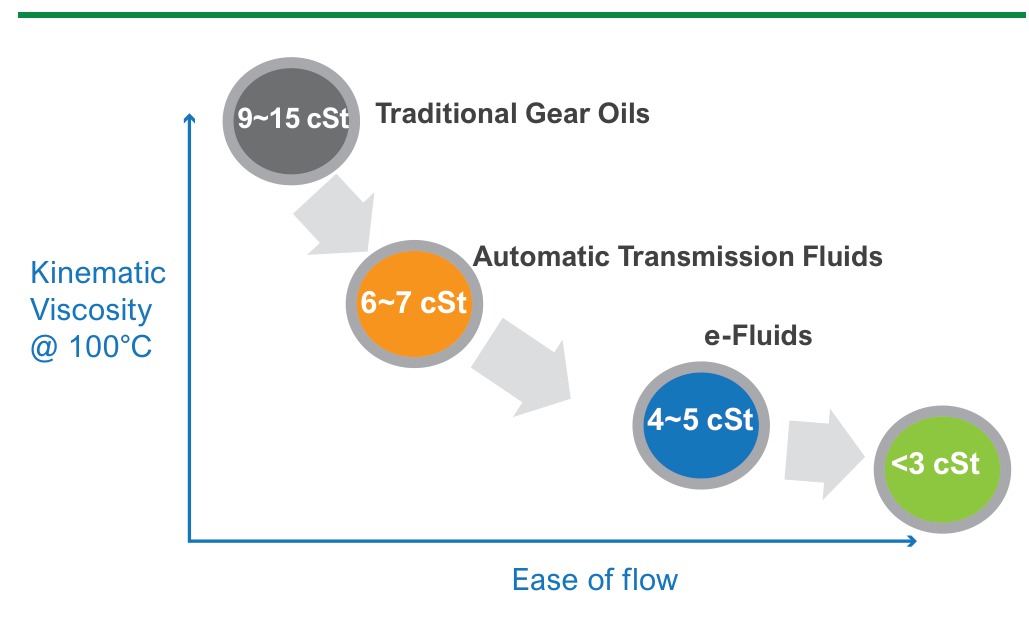 Figure 1. Viscosity evolution toward lower viscosity fluids. Figure courtesy of Lubrizol.
Electrification and electric vehicle gear lubricants
Figure 1. Viscosity evolution toward lower viscosity fluids. Figure courtesy of Lubrizol.
Electrification and electric vehicle gear lubricants
Per Oberoi, in automotive drivelines especially, electrification has been a game-changer influencing gear lubricant design. Electric vehicle (EV) powertrains use high-speed electric motors coupled with reduction gear sets, which create new conditions that gear oils must navigate. Compared to traditional combustion vehicles, EV gearboxes run at higher rotating speeds and often at lower temperatures, and the lubricant may also serve as a coolant for e-motors or power electronics. This means the oil must have excellent thermal properties and be compatible with electrical components, for instance, controlling electrical conductivity to avoid harmful currents, and preventing copper corrosion or short-circuits within the motor. Additionally, the absence of engine noise in EVs means any gear whine or vibration is more noticeable. Thus, gear lubricants are being formulated to help dampen noise (for example, through optimized frictional characteristics) and to manage air entrainment and foam, so the gears operate quietly and smoothly. In summary, while EVs may reduce the total volume of gear oil each vehicle needs, they demand highly specialized "e-axle" fluids that combine the roles of gear lubricant, coolant and electrical insulator. These specialized e-driveline oils are already emerging to ensure protection of gears and bearings under unique loads while also meeting new requirements for electrical properties and material compatibility.
Fok explains: "In NEV transition, from internal combustion engines (ICE) to hybrids and now EVs have also evolved gear fluid development. Standard gear oils previously required basic antiwear and EP additives, often phosphorus and sulfur based. Historically, dedicated manual transmission fluids (MTFs) are highly formula-specific to protect yellow metals like brass/bronze synchronizers, while improving pitting resistance. Dedicated hybrid transmission fluids (DHTFs) and e-axle fluids are developed to be more compatible with motor copper wirings and other polymer materials in this new hardware.
He explains: "While battery electric vehicles (BEVs) are gradually gaining traction in recent years, fuel cell EVs are also emerging in heavy-duty commercial applications. During NEV operation, significant heat is generated and that must be regulated to maintain peak efficiency. Future e-fluid development therefore centers around thermal management that can safely dissipate heat without causing issues in hardware protection. Meanwhile, optimizing thermal management can be effectively achieved by lowering the viscosity. In addition, as viscosity is reduced, appropriate gear and bearing protection must be enabled by expertly formulated additive packages. The electrical properties and material compatibility of the fluid are also taken into consideration during formulation. At the same time, the fluid needs to be compatible with Room Temperature Vulcanizing (RTV) sealant in electric drive unit (EDU) casings, as well as aluminum in battery casings and cooling plates preventing galvanic corrosion. Other than that, formulation of NEV fluids needs to have controlled aeration at high speeds as well as low noise vibration harshness. In BEVs, there's no engine noise masking gearbox sound, gear noise has become much more noticeable. Hence e-axle fluids may need to control friction, to reduce gear whine and vibration if there is no hardware improvement to prevent it."
STLE member Dr. Marc Ingram, engineer and owner, Ingram Tribology, Carmarthen, Wales, UK, adds a different layer of perspective: "EVs also introduce a new operating condition for gears and lubricants; at startup, the torque is high and the speed and therefore the lubricant film thickness is low. So, you have maximum pressure on the gears with only a very thin protective film. This condition is short lived, and a film builds up quickly as the car accelerates. Then at the other end, the EV can reach much higher speeds (>20k rpm) than conventional ICE. Thankfully, the lubricant film is high enough to provide adequate protection under these conditions, but there is still a concern that lubricant may not be supplied to the gear contact at the optimal rate to substantiate the required film. There are also concerns about how high-speed contacts could fail and how to protect them; this remains an area of ongoing research. At these very high speeds the lubricant can't be supplied into contact at a sufficient rate to maintain a theoretical film thickness, leading to a small drop. The film is still more than sufficient to prevent metal-metal contact, but research is ongoing to ensure it remains this way. The push to lower viscosity fluids will push us closer to the danger zone. Also, in EVs, there is a greater speed difference between the input and output shafts compared to ICE transmissions. So the lubricant needs to work over a larger range of conditions."
Durability and long life performance
Oberoi says that end-users also demand extended drain intervals and even "fill-for-life" gearboxes in some applications, which forces lubricant formulators to further improve oxidation stability, deposit control and overall long-term durability. She adds: "To meet these expectations, gear lubricants must exhibit exceptional thermal stability and resistance to oxidation, along with advanced antiwear chemistry to prevent microscopic surface fatigue (micropitting) over long periods. Condition monitoring technology is increasingly integrated into these critical systems, which puts additional focus on the lubricant's ability to stay 'in grade' and retain performance for extended lengths between oil changes. It's not just about protecting gears from scuffing anymore; today's industrial gear oils are also a vital part of reliability programs, feeding data to predictive maintenance systems (through oil analysis sensors, for example) and contributing to overall equipment uptime and asset life. This means consistency and cleanliness are more important than ever: gear oils need to resist contamination by water and dust, minimize foam and keep the internal parts free of sludge or varnish."
Per Fok: "Also in the past 10 years, OEMs and operators expect extended service intervals, sometimes 'fill-for-life.' This has led gear oil fluid development to be more oxidation stable over high temperature operating conditions, having improved deposit and sludge control to protect hardware needs. Gear fluids are also expected to have good shear stability where fluid viscosity still stays in grade throughout its service life."
Sustainability and formulation challenges
Beyond balancing technical performance requirements, sustainability is also driving and influencing raw material selections, and therefore tribological performance increasingly depends on the materials that are available to use.
Sustainability as a formulation design constraint. Oberoi explains how sustainability has shifted from a marketing buzzword to a core design constraint for gear lubricants: "Lubricant formulators and end-users now consider not just how a gear oil performs in the lab or in the field, but also how it affects the environmental footprint of machinery operation. This emphasis on sustainability is reshaping gear oil chemistry in a few ways. First, there is a push to use base oil raw materials with a lower lifecycle carbon footprint. In practice, that means rising interest in re-refined base stocks (processed from used oils) and bio-derived oils to replace a portion of virgin mineral oil usage." She continues: "Thanks to modern refining methods, quality re-refined base oils can achieve purity and performance comparable to Group II and even Group III 'virgin' mineral oils, depending on feedstock quality and segregation practices, and re-refining process, making them suitable for high-performance formulations. Using these recycled base stocks can significantly reduce waste and greenhouse gas emissions, studies show anywhere from a 50% to 80% lower carbon footprint compared to refining base oil from crude."
Lower carbon intensity based oils. Another sustainability angle is the increased usage of re-refined based oil (RRBO) and other biobased oils that have become more common as compared to petroleum lubricants within the next 10 years.
Oberoi says: "Re-refined and biobased oils are already being blended into some commercial and industrial gear lubricants to meet voluntary eco-label specifications, and this trend is expected to grow. For example, the European Union has contemplated policies to mandate a minimum level of recycled content in lubricants by the end of this decade, potentially on the order of 25% re-refined base oil content by 2030. Second, beyond base oils, additive chemistry is being re-optimized for environmental performance. This includes eliminating or reducing substances flagged for health or ecological risks (like certain metals or sulfurized additives) and developing ashless, low-toxicity antiwear and EP additives that maintain performance while being more environmentally benign. Third, sustainability goals are pushing gear oil developers to maximize the in-use resource efficiency of their products. By formulating oils that last longer and help reduce energy losses, companies can help their customers cut both oil consumption and CO
2 emissions. For instance, a gear lubricant that runs cooler and lowers friction inside a gearbox can directly improve energy efficiency and reduce greenhouse gas (GHG) emissions over the equipment's life. The overarching challenge is that these 'green' enhancements must not compromise the core protective functions of the lubricant. So far, the good news is that sustainability priorities are stimulating innovation across the board from exploring new base stock combinations to rethinking additive technology so that gear lubricants become part of the solution for energy savings and the circular economy, not just a necessary maintenance item."
When asked whether re-refined oils will become more used in the next decade, Oberoi says: "I anticipate re-refined and biobased base oils will become steadily more common in gear lubricants, though they likely won't entirely displace conventional petroleum oils in the next decade. On one hand, the case for sustainable base stocks is strong: modern re-refined oils can offer near-virgin quality in well-controlled cases and fit well with circular economy goals, cutting waste and reducing GHG emissions by roughly 50% compared to refining crude. Biobased esters and other renewables are improving in performance and will continue to gain traction, especially in environmentally sensitive applications that prioritize biodegradability (like forestry, marine or wind power). Regulatory and market pressures such as anticipated EU measures that could introduce ~20%-30% recycled content expectations for lubricants over the next decade will encourage greater use of these alternatives. On the other hand, mineral and synthetic petroleum base oils will remain indispensable for many high-stress applications due to their consistent performance, cost-efficiency and established supply chains. A likely outcome is a hybrid approach: in the coming decade, more gear oil formulations will blend re-refined or biobased components with traditional stocks, achieving a balance between sustainability and robust performance. By 2036, we could expect sustainable base oils to represent a much broader share of the gear lubricant market, but petroleum-derived Group II/III and PAO will still account for a large portion in critical applications where cost, availability and track record remain paramount. In short, the next 10 years will see a mixed base oil landscape gear oils progressively 'greener' but still relying on proven conventional base fluids for the toughest jobs."
Fok explains that the increased significance of sustainability efforts also come with multiple challenges: "RRBO offer a pathway for companies to reduce carbon footprint and meet corporate ESG targets. However, challenges do remain. First is the feedstock availability and collection infrastructure. Supply of RRBO largely depends on collection of available used oil for re-refining; supply isn't consistent and it fluctuates. Sometimes the price of RRBO could be higher than virgin base oils due to low supply availability. Another challenge to note is also the RRBO's quality consistency and impurity control. Virgin base oil quality is generally quite consistent, however RRBO's quality could fluctuate as it is also dependent on the quality of the used oil that had been collected."
Biobased fluids and environmental standards. Fok says that biobased lubricants present another sustainable option: "At present, they are mostly used in industrial applications like hydraulics, grease, railroad lubricants as well as bar and chain oils. Biodegradable tractor fluids are also being adopted for agriculture usage. Re-refined, bio-derived esters, plant or biobased base stocks as well as esters can be formulated with appropriate additives to meet biodegradable standards. Regular biodegradability and carbon footprint standards are OECD 301, OECD 201/2/3, ASTM D5864 and CEC L-33-A-93
(see Figure 2). For more stringent ecological labeling like Blue Angel and EU Ecolabel, esters would need to be used. Meanwhile, Blue Angel and EU Ecolabel are considered more stringent ecological labeling standards.
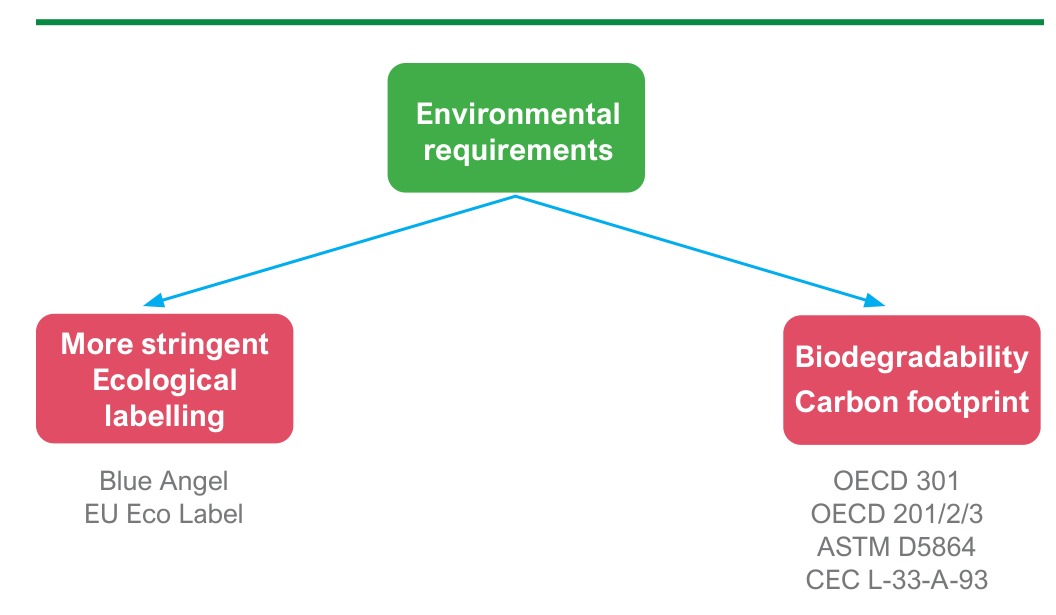 Figure 2. Environmental performance and labeling requirements. Figure courtesy of Lubrizol.
"However, at the supply end, production capacity of biobased oils remains limited. Farmland production and yield from producing biobased base oils is insufficient for the industry to mass adopt across the board. In addition, cost of biobased oils is also significantly higher than conventional base oils. For example, the cost of biobased grease or hydraulic fluid could be one to two times more than conventional mineral based lubricants. While biobased oils seem promising, widespread adoption to automotive gear oils remains unlikely in the short term," says Fok.
Formulation tradeoffs and other challenges. Oberoi identifies the main challenge is balancing multiple competing reequipments within a single formulation: "With greater demands placed on them than ever, gear lubricants face a set of complex development challenges. The primary technical hurdle is balancing multiple competing requirements in a single formulation. For example, lowering viscosity is excellent for reducing fluid friction and delivering efficiency gains but a thinner oil film can provide less cushioning between gear teeth, potentially increasing wear risk. This tradeoff forces lubricant developers to rely on more sophisticated antiwear and EP additive systems to prevent scuffing and pitting when oil films are at their thinnest. Similarly, adding re-refined or biobased components for sustainability might influence an oil's oxidative stability or seal compatibility, requiring careful formulation adjustments and extensive testing to avoid any performance surprises (such as weaker resistance to moisture or changes in additive solubility). The degree of this challenge depends strongly on the base oil chemistry, feedstock quality and formulation approach.
"Another major challenge lies in test development and standardization. Many traditional gear oil tests designed for older, lower-speed axles and transmissions are being pushed to their limits by modern hardware. The industry is working to develop new bench and rig tests that can simulate conditions like the ultra-high speeds of electric motors or the increased foam tendency in compact gearboxes. For example, specialized test rigs are under development to evaluate lubricant impact on electric motor insulation and copper corrosion under high-voltage conditions, as well as to measure anti-foam and air release performance at extreme speeds. At the same time, cost and market acceptance remain important non-technical hurdles. Advanced synthetic base oils, novel additive chemistry and sustainable ingredients can be more expensive than conventional materials. Equipment operators conscious of their budgets need clear evidence of total cost-of-ownership benefits (such as demonstrable energy savings, longer component life or reduced maintenance) before they will switch from tried-and-true products. This means lubricant suppliers must not only innovate but also validate performance through real-world field trials and work closely with equipment OEMs to secure approvals."
Fok explains that the global trend for increasing regulation of chemicals has also shaped how lubricant additives are being developed. Regulation on substituted diphenyl amine (SPDA), para-dodecylphenol (PDDP) and aryl thiophosphate (TPPS), for example, has made it increasingly more constrained for suppliers to remain compliant on regulatory guidelines and operate.
 Looking ahead
Fok identifies four major trends coming up in the next five years to shape gear lubricant development:
-
Improved drivetrain efficiency
-
Higher power density requiring greater durability
-
New lubricant requirements driven by electrification demands
-
Greater focus on noise, vibration and harshness (NVH) control
Fok explains: "Lower emissions has always been the recurring theme as the goal to progressively reduce GHG emissions is by improving energy efficiency, reducing fuel consumption and ultimately eliminating tailpipe emissions has let vehicle platforms evolve from ICE to modern day hybrid vehicles. Meanwhile, the emergence of EVs eliminates tailpipe emissions completely. As vehicle platform evolves, so does the driveline hardware, too. Manufacturers are shrinking vehicle gearboxes while maintaining same or more powerful output. This helps save space and weight, especially in passenger cars, which makes the cars lighter, and that contributes to fuel efficiency. As the saying goes, doing more with less."
Fok adds: "When we have high load and power density in modern gearboxes, there's industrywide adoption of full synthetics and advanced EP chemistries to prevent pitting, gear distress and rapid oxidation at higher torque and stress load operation. Additive packages have been optimized (sulfur-phosphorus chemistries, surface-active additives) to protect gears under higher stress while minimizing corrosivity."
Per Fok, the biggest challenge in the development of future gear lubricants development is achieving multiple, often conflicting properties simultaneously. Formulators must balance the expectation of ultra-low viscosity requirements from OEMs for efficiency, while incorporating chemistries that have high load-carrying capability for durability. The fluid also needs to be compatible with various materials in the NEV, like copper wiring, seals and other sensitive materials: "For example, sulfurized EP additives improve load-carrying ability but can harm copper components. Reducing viscosity improves efficiency but increases the risk of wear under boundary lubrication conditions. As a result, the formulation window has become increasingly narrow, demanding precise optimization of base oils, additives and polymers to provide the right balance needed to meet bespoke OEM requirements."
Oberoi expects gear lubricants to become even more specialized. Oberoi says: "Looking ahead, gear lubricants are expected to continue on this trajectory of greater sophistication and specialization. The next five years will likely see further reductions in viscosity to eke out every bit of efficiency, enabled by high-viscosity-index synthetics that maintain sufficient film thickness under stress. Modern gear systems demand lubricants with an unprecedented combination of performance traits. For new-generation transmissions and gearboxes, the essentials remain exceptional load-carrying (EP) and scuffing protection, outstanding wear and micropitting fatigue resistance, and extreme thermal/oxidation stability for long service life. Durability is critical especially in applications like EV e-axles, which are designed to last a decade or more so oils must resist breakdown and deposits even under continuous high heat and stress. Material compatibility has become a top priority too: Gear lubricants must not degrade seals, protect yellow metals like copper in electric motors and be compatible with new polymer and coating technologies. Efficiency factors remain at the forefront; that means optimizing viscosity (and shear stability) so lubricants give low fluid friction and minimal churning losses without sacrificing protective film strength. Frictional properties are engineered to ensure smooth gear and synchronizer operation in vehicles (for instance, fine-tuning friction modifiers for quiet, seamless shifts and reduced NVH) while meeting energy efficiency targets. Cleanliness and oil control are also vital; gear oils must maintain clean gears and bearings, have excellent foam and air release to function in high-speed or small-reservoir systems and often resist water contamination in industrial settings. In summary, top-tier next-generation gear lubricants need to do it all: deliver extreme and long-lasting protection for gears and bearings, maintain stability and compatibility under extreme conditions and actively contribute to the efficiency and reliability of advanced gear systems. We'll also see a wider adoption of re-refined and renewable base stocks to meet corporate and regulatory sustainability targets. Traditional segments aren't standing still either; truck and off-highway manufacturers are introducing more demanding proprietary specifications, reflecting the need for oils that can ensure ultra-long life in severe environments while also potentially contributing to fuel savings. It's an exciting but challenging time for gear lubricant development with success hinging on new 'ultra-durable' chemistries, cleaner additive technology and EV-ready fluid solutions that together define the new era of advanced gear lubrication."
Ingram emphasizes that despite these new challenges and requirements, the fundamental mechanical challenges remain: scaffing, micropitting, spalling. "If any lubricant can enhance the performance of these it will allow the gear designers to increase the power density of the gearbox with greater confidence." Ingram says that in the next five years electrification will also have an effect, particularly on bearings, which needs to be monitored and, if necessary, test methods will evolve to counter any issues. He adds: "Protecting against any electrically induced damage on bearings may be a future requirement, which will provide built in protection and provide peace of mind to the OEMs."
From Ingram's perspective, the biggest challenges in the development of future gear lubricants is a balancing act for the formulators: "In having many competing needs, the significant ones being preventing micropitting on the gears, wear on the bearings, but without significantly affecting the seal chemistry. These challenges will remain but will likely intensify."
Summary
Gear lubricants have evolved from products primarily focused on wear and application protection to multifunctional fluids that influence durability, drivetrain efficiency, thermal management, NVH and sustainability. Future development will be driven by multiple competing requirements such as lower viscosity, materials compatibility and even more suitable materials usage that are also layered with the objective of delivering reliable performance and extremely extended service drain intervals, including fill-for-life requirements. As applications become more compact and power dense, success will depend on advanced balance and carefully designed formulations.
REFERENCES
1.
Rudnick, L. R. (ed.). (2020),
Synthetics, mineral oils, and bio-based lubricants: chemistry and technology, CRC Press.
2.
Holdmeyer, D. (2024), "Industrial and automotive gear oil tests and specifications," TLT,
80 (7), pp. 26-28. Available at
www.stle.org/files/TLTArchives/2024/07_July/Lubrication_Fundamentals.aspx.
Dr. Yulia Sosa is a freelance writer based in Peachtree City, Ga. You can contact her at dr.yulia.sosa@gmail.com.