20 Minutes With Dr. Agnieszka Maria Tomala
By Nicole Gleeson, Editorial Coordinator | TLT 20 Minutes October 2026
This researcher at the Cracow University of Technology discusses nanomaterials, biotribocorrosion and the importance of inter-institution collaboration.
Dr. Agnieszka Maria Tomala - The Quick File
Dr. Agnieszka Maria Tomala is an experienced researcher at the Cracow University of Technology (CUT) within the Faculty of Materials Engineering and Physics. She has led numerous industrial and scientific projects, initially at AC2T Research GmbH, the Austrian Excellence Center for Tribology, later at Łukasiewicz Research Network – Institute for Sustainable Technologies and now at CUT. Dr. Tomala received her doctorate in physics from the Vienna University of Technology (TUW) at the Institute of Applied Physics in 2011. Her doctoral work was supported by the EC Marie Curie Actions through the project "WEMESURF," which involved collaboration among 14 international partners in multiple fields related to tribology. As a result of this work, she has established an international and interdisciplinary scientific network, creating connections with leading universities and research and development industries. She has also conducted several doctoral exchange programs, including secondments at the SKF Engineering and Research Centre and Imperial College London. Dr. Tomala has published over 40 peer-reviewed papers in engineering, materials science and tribology (h=16). Currently, she is focusing on transferring her knowledge and professional experience to university students and fostering partnerships in research and development projects. Since 2023, she has been leading the EU M-era.net project in collaboration with Tallinn University of Technology (TalTech), the University of Ljubljana and the industry partner ATMAT in the field of biotribology of implants. Additionally, she is involved in the scientific project OPUS LAP, funded by the National Science Centre in Poland, in partnership with the Vienna University of Technology and the University of Łódź, which focuses on novel Ti/HAp/MXenes biomaterials.

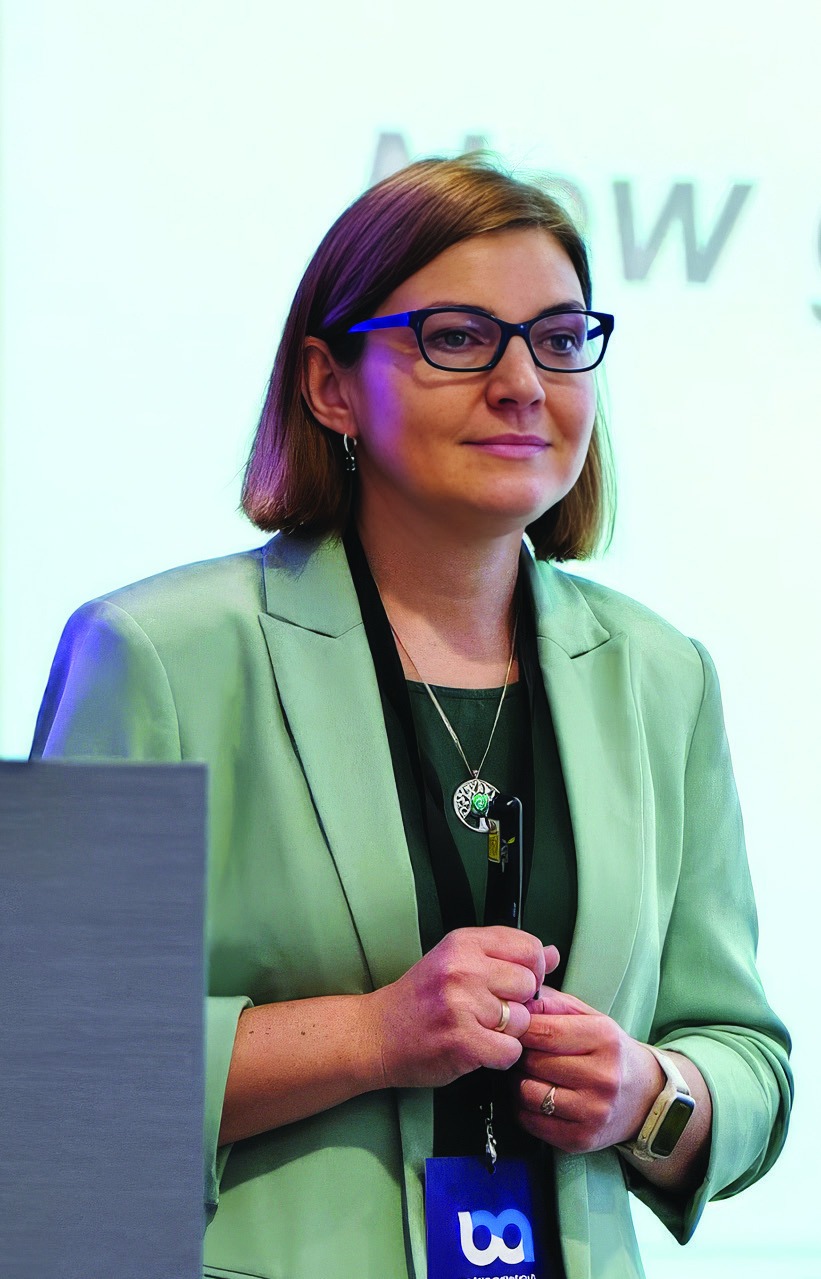
Dr. Agnieszka Maria Tomala
TLT: How long have you worked in a lubrication-related field, and how did you decide to start working in tribology?
Tomala: My first experience with tribology occurred during my master's studies in 2007, when I worked on a project involving diamond-like carbon (DLC) thin films produced using PVD/CVD methods. We developed hydrogen-free DLC films through PVD/CVD techniques to serve as resistive layers in modern resistive micro-pattern gaseous detectors designed to operate in extreme radiation environments at future colliders. During this time, I learned about the numerous applications of DLC. After completing my master's degree, I applied for a doctoral position as a Marie Curie Fellow in the WEMESURF Research Training Network, which focuses on characterizing wear mechanisms and surface functionalities related to lifetime prediction and quality criteria from micro to nano scales. The WEMESURF consortium comprised teams from eight countries, involving 14 institutes and companies, with 11 early-stage researchers and five experienced researchers. Networking among these teams was a key aspect of the project. My doctorate at the Vienna University of Technology centered on the molecular processes that influence the macroscopic tribological behavior of surfaces and lubricants. I investigated how antiwear (AW) and extreme pressure (EP) additives, as well as corrosion inhibitors, form tribological layers on surfaces during tribological tests. As a result, I have spent over 20 years focused on tribology and lubricant-related topics.
TLT: What has been your most rewarding accomplishment throughout your career in the lubricants industry?
Tomala: It was when I was still working at AC2T Research GmbH, where we collaborated with industry companies on metalworking fluids, that various nanoparticles were introduced into fully formulated micro-cutting fluids. We have also been collaborating on synthesizing TiO
2 and other transition metal dichalcogenides (TMD) nanoparticles in various forms (nanoparticles, nanostars or nanotubes). We achieved some nice results, both scientifically and in terms of implementation.
Later on, together with my office-mate Dr. Manel Rodriguez Ripoll in collaboration with Solid State Physics Department, Jozef Stefan Institute, Ljubljana, Slovenia, we further continued working on nanolubicants including MoS
2, MoO
3, WS
2 and C-nanodots and their interactions with most conventional AW additives, extreme pressure additives (EP), dispersants and detergents. The interaction of these nanoparticles with other lubricant components is pivotal for optimizing their performance, and for developing more effective lubricant formulations that harness the unique properties of selected nanoparticles. For example, we have found that MoS
2 nanoparticles with different morphologies and chemistries synergized with ZDDP pre-formed tribofilms. Moreover, we have observed a synergistic effect between WS
2 enhancing the AW properties of ZDDP and ZDDP protecting WS
2 particles from oxidation and increasing their friction-reducing properties. One particularly intriguing discovery from our research pertains to the behavior of MoO
3 nanotubes. It was observed that during sliding contact under operational conditions, MoO
3 nanotubes undergo in situ sulfurization. This transformation yields exceptional friction and wear performance, which can be comparable to or even exceed the performance of MoS
2 nanotubes, depending on the severity of the contact conditions. The enhanced capabilities of MoO
3 are attributed to its capacity for maintaining a stable sulfurization process, which is critical in environments where MoS
2 nanotubes are susceptible to oxidation
(see Figure 1). Using the four-ball testing machine, the carbon nanodots CDs lubricant exhibited superb EP performance compared to the best fully formulated synthetic gear oil with GL-4 class (containing environmental unfriendly additive packages).

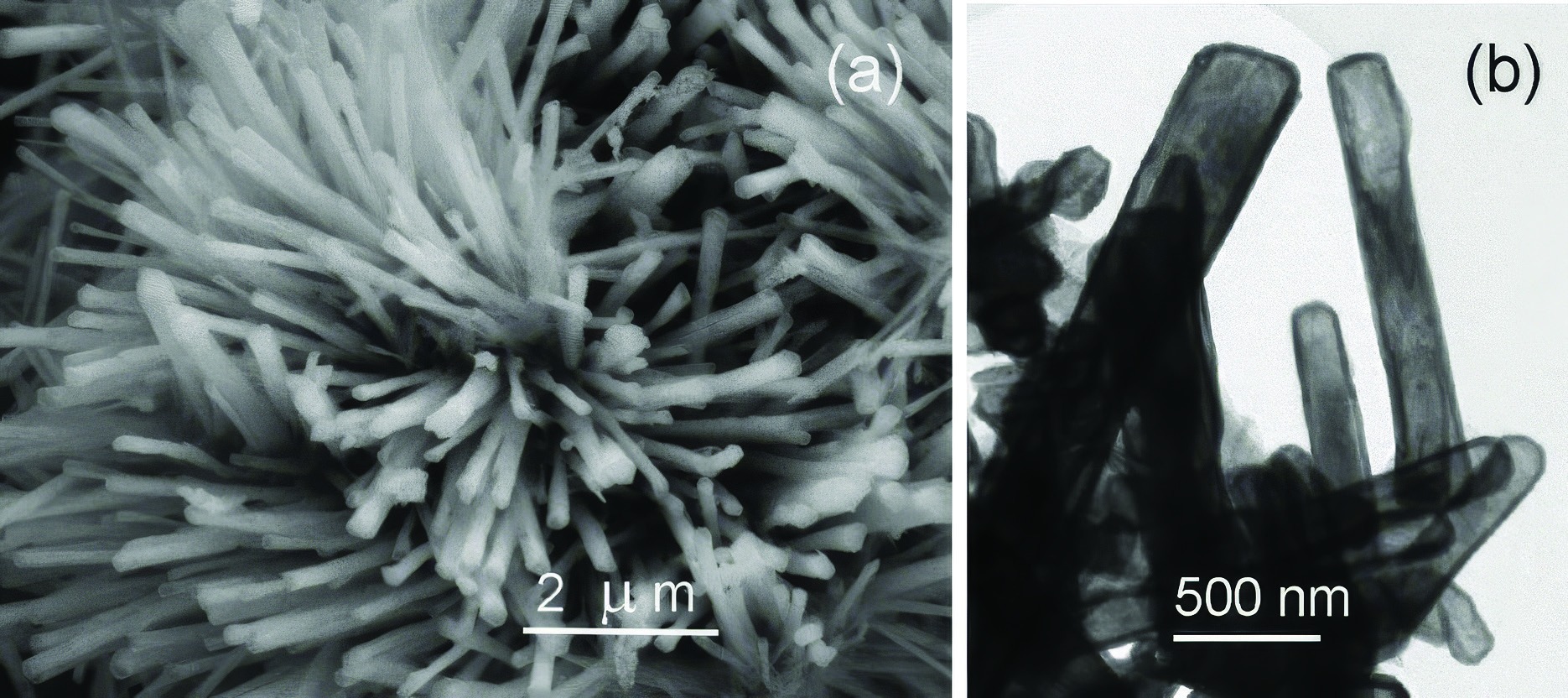
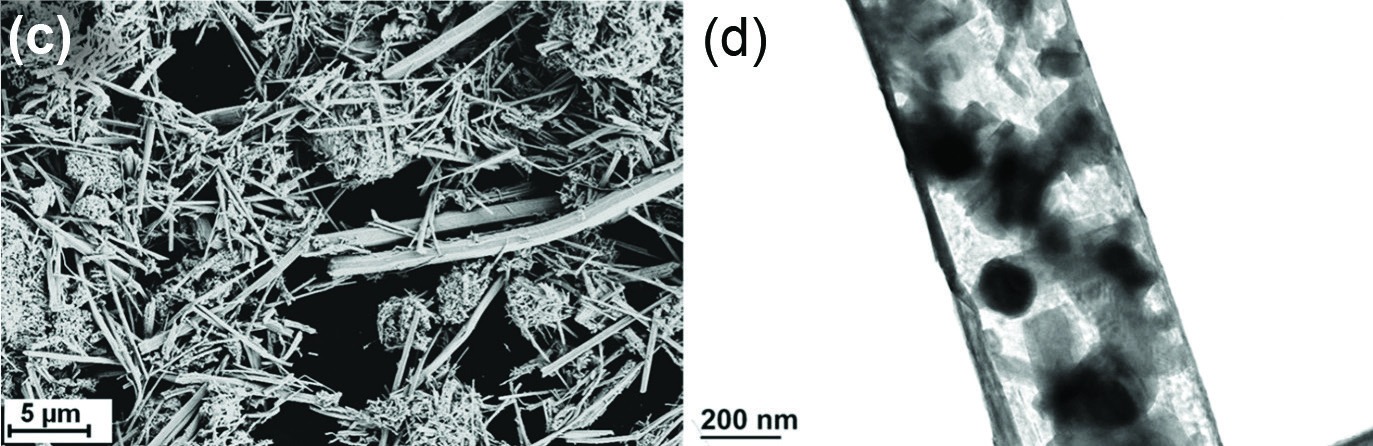 Figure 1. SEM (a, c) and TEM (b, d) images of mixture of co-axial nanotubes and ''mama''-tubes with MoS2 nanoonions inside MoS2 nanotubes [doi:10.1007/s11249-015-0552-z], [doi:10.1016/j.triboint.2017.01.036].
Doping of CDs with various elements can be used for preparation of lubricants with desired tribological performance, not only for the AW and EP properties but also for tribo-corrosion or cooling.
TLT: What is the No. 1 piece of advice you would give to a person who might be interested in starting a career in the lubricants industry?
Tomala: My advice for someone interested in starting a career in the lubricants industry is to network with institutes, other doctoral students and professionals in the field and stay informed about sustainability practices and environmental regulations, as these are increasingly important in the lubricants industry.
Educational background is equally crucial to understanding the science behind lubricants and their applications. Stay curious and engage in research opportunities. Understanding the latest developments in lubricant formulations and applications can set you apart. Joining professional organizations such as STLE offers valuable resources, networking opportunities and access to industry events. Participate in conferences and trade shows related to lubricants. These events are excellent for networking and learning about the latest innovations and trends.
Develop skills in areas such as project management, data analysis and communication. These skills are valuable in any technical field and can enhance career prospects.
TLT: What kind of lubricant topics or problems are you currently dealing with?
Tomala: Currently I am focused on biotribology and biotribocorrosion of medical implants. It encompasses the interactions between implant materials and biological tissues, fluids and cells. Different materials (like titanium and its alloys, cobalt-chromium alloys and polymers) have varying tribological properties that affect their performance in the body. A combined process of tribological wear and electrochemical corrosion occurs at the interface of medical implants and biological environments. Understanding biotribocorrosion is crucial for predicting the lifespan of implants and ensuring patient safety. It helps in designing implants that resist both wear and corrosion. Similar principles apply for dental implants where the interaction with oral fluids and mechanical loads can lead to wear and corrosion.
In the current project, we are working with Ti
6Al
4V and hydroxyapatite (HAp) to create a Ti/HAp composite biomaterial. This combination aims to enhance biocompatibility and extend the longevity of surgical implants. Our project goes beyond the current state of the art by incorporating laser surface treatment and a new two-dimensional material called MXene, which has easy shearing properties
(see Figure 2). Using laser radiation offers several advantages. It can create well-defined, long-range ordered tiny pockets on the material's surface. This process can also open up the underlying porosity of the Ti/HAp composite, improving cell transport and growth in the treated areas. Furthermore, these laser-created pockets can serve as small storage sites for lubricants, reducing friction and wear between the surfaces involved. In this research, the lubricant of interest is MXenes, which have a two-dimensional structure similar to a stack of papers, allowing individual sheets to shift easily with respect to one another. The most well-known type of MXene is layered titanium carbide (Ti
3C
2Tx), which consists primarily of titanium, with carbon as the secondary element. MXenes have already demonstrated superior properties for various technical applications.

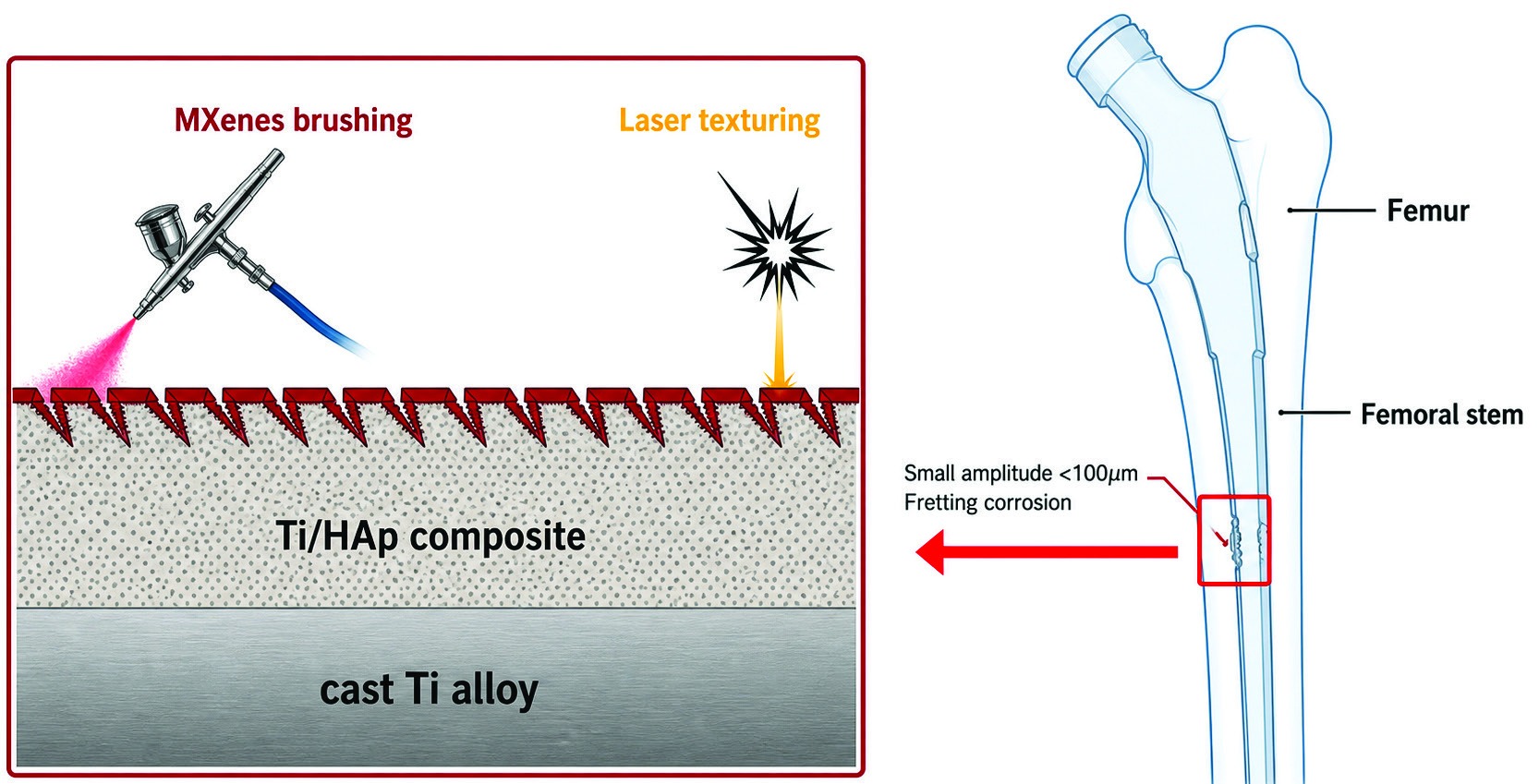 Figure 2. Schematic illustration of the Ti/HAp/MXene biomaterial and its potential application region within a hip prosthesis (original depiction).
You can reach Dr. Agnieszka Maria Tomala at agnieszka.tomala@pk.edu.pl.