The early history of the Certified Metalworking Fluids Specialist™ (CMFS) program
By Robert Austin, CMFS, senior technical support chemist, Qualichem (retired), and John Burke, CMFS, STLE Fellow, consultant to Quaker Houghton | TLT STLE History September 2026
This certification was developed to qualify individuals to the level of expertise needed to perform chemical management activities.
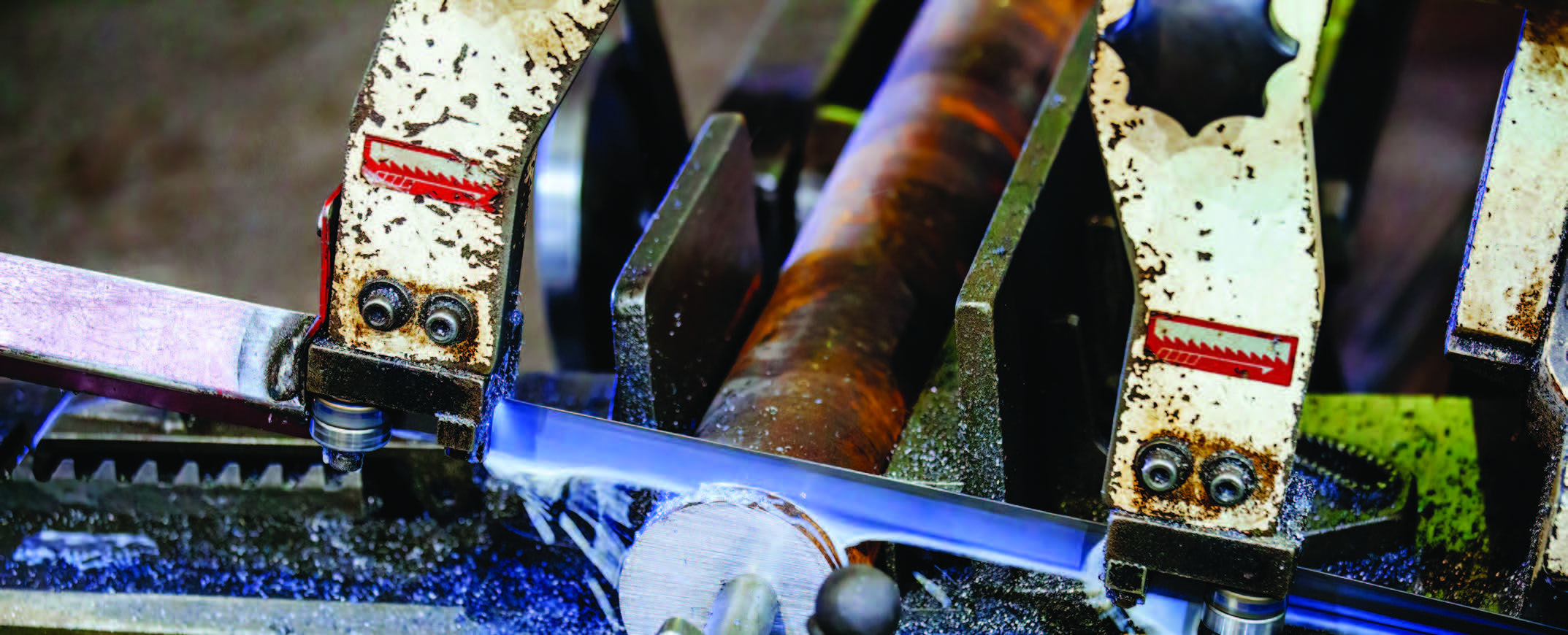
In the 1980s, companies in many manufacturing industries began to focus on core aspects of their businesses. Peripheral product lines and activities were relinquished to optimize the utilization of resources of all types (financial, human, technological, etc.) in favor of those activities that contributed directly to the companies' generation of profit. Among the peripheral activities that were relinquished in manufacturing industries was the management of the purchase and use of metal removal fluids and related fluids. These fluids enabled the companies to optimize the life of tooling used in the manufacture of parts, as well as enhance the quality of the parts produced and reduce waste. As an alternative to performing the fluid management activities themselves, companies in many industries, such as automotive powertrain manufacturers, outsourced these activities. In this way, the chemical management industry began. Companies specializing in metal removal fluids and related fluids were contracted to optimize the purchase and use of these fluids.
Along with the purchase and use of metal removal fluids and related fluids came the responsibility to troubleshoot issues that inevitably occur. The need to have competent individuals not only manage the purchase and use of these fluids, but also troubleshoot them, became evident. In the early years of chemical management, individuals, as well as companies, provided individuals to perform these activities; the levels of competence of the individuals and companies ranged from expert to less than competent. A means of impartially qualifying individuals as to the level of expertise needed to perform the chemical management activities was needed.
Enter STLE. In late 2002, a recommendation was made to form a committee whose responsibility was to develop such an impartial means of evaluating individuals' level of competence. An interdisciplinary blue-ribbon team of individuals who were either self-employed or employees of manufacturing companies or suppliers of metal removal fluids was assembled.
1 Beginning in 2003, this team began developing exam questions designed to test candidates for positions in chemical management. The questions covered the topics of metal removal applications, basic chemistry, fluid chemistry, fluid troubleshooting, health and safety and aspects of the disposal of these chemicals. This group had regularly scheduled meetings to review and discuss proposed exam questions written by committee members. They were evaluated for correctness as well as the level of expertise needed to answer the questions. They included case studies followed by a series of questions about the situation described in the case study. The objective was to develop an exam that not only evaluated a prospective chemical manager's basic knowledge of these topics, but also their ability to solve questions in a real-world environment.
In early 2005, the committee that prepared the questions was allowed to take the beta exam that had been prepared to that point. If the individual was determined to be reasonably competent, they were "grandfathered" into an initial group of certified individuals. The certification was named the STLE Certified Metalworking Fluids Specialist™ (CMFS).
In May 2005, the first "real" exam was administered at the STLE Annual Meeting in Las Vegas, Nev. Approximately 30 individuals took this test. A fraction of them passed the test and became the first group of CMFS holders.
During subsequent years, a chemical company that produced the metal removal products requested an onsite training session and subsequent test (despite admonitions from STLE that taking the test immediately following the training was not recommended). Approximately 30 individuals participated in this onsite event. The results of the exam were as STLE predicted. Very few individuals passed the exam that followed the training. The exam acquired a reputation for being too difficult, and fewer individuals applied for and passed the certification exam. Early in the decade of the 2020s, questions were exhaustively reviewed by the committee for accuracy and relevance, as well as updated to reflect modern operations and regulation, and the revised exam was determined to be appropriately challenging. The number of questions was reduced, although the number of questions and the need to determine the best—not just correct, but best—answer remained the same.
STLE History Interest Group
STLE has the History Interest Group to share historically important topics with the readership. The STLE History Interest Group explores the people, discoveries and events that have shaped STLE and the field of tribology and lubrication engineering. By sharing historically significant topics, the group helps preserve our community's rich technical heritage and highlight innovations that continue to influence the industry today. Watch for occasional articles from the group in TLT.
NOTES
1.
Initial committee members were John Burke, Houghton International (Chair); Dwayne Atkins (Ford Motor Company); Dr. Neil Canter, Chemical Solutions; Dr. Bob Evans (Quaker Chemical); Thomas Hanlon (Pratt & Whitney Aircraft); Jack Hartwig (Daimler Chrysler); Milton Hoff (Master Chemical Corp.); Dr. John Howell (DA Stuart Co.); Douglas Hunsicker (Caterpillar Inc.); Dr. William Lucke (Consultant); Dr. Fred Passman (Biodeterioration Control Associates Inc.); Dr. Don Smolenski (General Motors Corp.); and John Steigerwald (Etna Products Inc.). Michael Anderson (Falex Corp) – STLE Board of Directors liaison; Dr. Bob Gresham (STLE staff); Barb Rapacz (STLE staff).
Robert Austin is retired from Qualichem. You can reach him at raustin22354@gmail.com.
STLE Fellow John Burke is consultant to Quaker Houghton. You can reach him at john.burke@quakerhoughton.com.