Tribology Transactions accelerates scientific communication
By Rachel Fowler, TLT Publisher/Editor-in-Chief | TLT Publisher's Pen September 2026
Two new initiatives aim to amplify the reach and speed of tribology research.

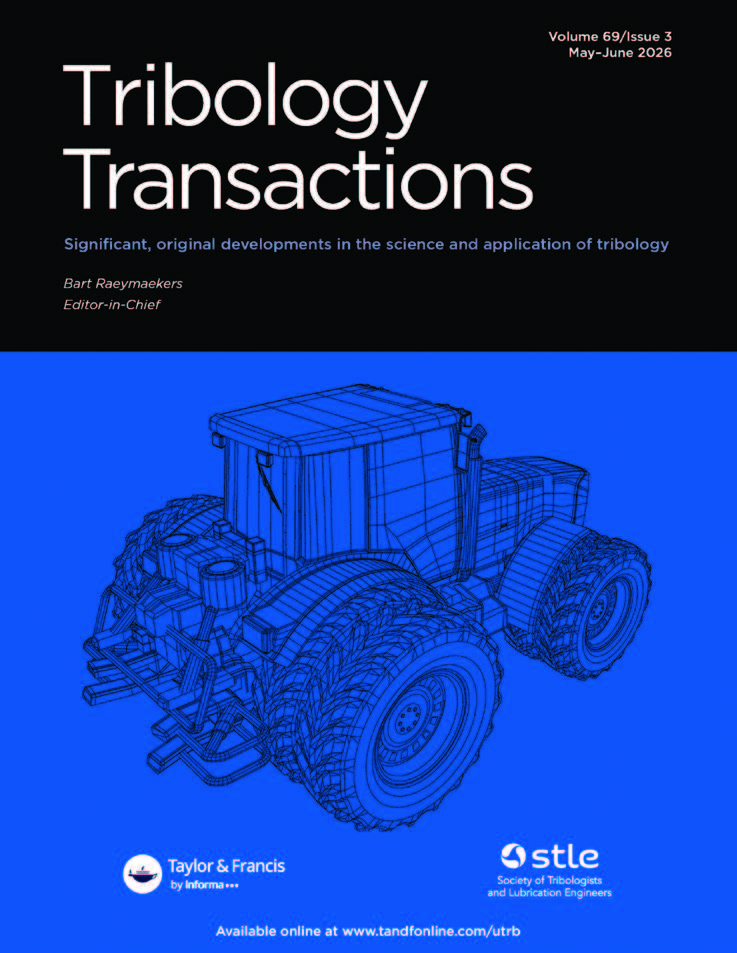
Tribology Transactions is STLE's bi-monthly scientific journal that contains peer-reviewed experimental and theoretical technical papers on lubrication, friction and wear of materials from the macro- to the nano-scale. STLE members receive free access to this great publication. The journal is evolving, and the changes are worth noting.
The journal is launching two new initiatives this year: Tribology Transactions Rapid Communications (TT-RC), a new article format designed for expedited publication, and Tribology Transactions Cover Art (TT-CA), a program that invites authors to submit images for consideration on future journal covers. Together, these additions reflect a commitment to getting significant research into readers' hands faster and making it more visible when it arrives.
The traditional full-length article format serves science well, but it isn't always the right tool for every discovery. Sometimes researchers generate findings that are immediately relevant to the community with breakthrough experimental results, significant theoretical advances or cross-disciplinary insights that open new research directions, and a lengthy timeline simply doesn't serve the moment. TT-RC addresses this gap.
The format is intentionally concise: manuscripts are limited to approximately 3,000 words (about four published pages), four figures and 25 references. The peer-review process is accelerated, with a target review cycle of roughly one month. Authors must also include a significance statement, published beneath the abstract, that explicitly articulates why rapid dissemination is warranted.
The format is not intended for incremental work or routine applications of established methods. TT-RC is reserved for research that represents a genuine and substantial advance: something the field needs to know about now.
The cover art initiative (TT-CA) speaks to a different but equally important challenge: visibility. In an environment where researchers are competing for attention across an ever-expanding landscape of publications, visual communication matters. A compelling image on a journal cover doesn't just catch the eye, but it communicates the creativity and significance of the science behind it.
Authors of accepted manuscripts will be invited to submit images for consideration as cover artwork. The strongest submissions will be both scientifically meaningful and visually striking, for example, illustrations of tribology phenomena, contact interactions, surface topography, lubrication mechanisms or other aspects of the field that translate well to a visual medium. Detailed submission requirements are available in the author guidelines.
Tribology Transactions occupies a distinctive position in the publishing landscape. Through its close relationship with STLE, the journal serves a community that spans researchers, engineers, practitioners, equipment manufacturers and technology leaders. By accelerating publication timelines and raising the visual profile of published research, TT-RC and TT-CA help authors maximize the reach of their work across both the scientific community and the broader industry audience that STLE serves.
We encourage members to explore both initiatives. If you're working on something significant, consider whether TT-RC is the right vehicle. And if your research has a compelling visual dimension, start thinking about what that cover submission might look like. Learn more about Tribology Transactions and these initiatives at
www.stle.org/tribologytransactions.
You can reach TLT publisher/editor-in-chief Rachel Fowler at rfowler@stle.org.