Organic and polymeric friction modifiers
By Mark Devlin, Contributing Editor | TLT Lubrication Fundamentals September 2026
These have a significant impact on the macroscopic performance of lubricants.
One of my passions is to go hiking in national or state parks, and I want to visit at least one national park or monument in each of the 50 states in the U.S. During one of my hiking trips, I visited Tallgrass Prairie National Preserve in Kansas. There are beautiful hikes through the grazing grounds of several herds of bison with fields of flowers and various grasses. When the wind blows all of the grasses and flowers in the fields move together. When you look at each individual plant, they are quite different but are rooted in the ground with their stalks growing toward the sun. They move together in the wind because they each have a small space to grow and are close to one another, so they become intertwined. This description of the grasses in the prairie is one that tribologists often use to describe organic “friction modifiers” (OFMs) on surfaces.
Organic and polymeric “friction modifiers” generally consist of just C, H, O and N atoms, so they appear to be very simple molecules. We refer to them as surfactants (surface active agents) that are amphiphilic, which means they have sections that have an affinity for polar environments and sections that have an affinity for non-polar environments. The portions of the surfactants that have an affinity for polar environments are hydrophilic—“water-loving” with water or a charged surface being a polar environment. The portions of the surfactants that have an affinity for non-polar environments are lipophilic—“fat-loving” or hydrophobic—“water repelling.” The hydrophobic sections of the surfactants consist of just C and H. The hydrophilic sections can contain hetero (not C) atoms, such as O and N. The bonds between C and the heteroatoms creates a partial separation of charges with the heteroatom being slightly more negatively charged. Therefore, the hydrophobic sections of surfactants are polar. Tribologists use a simple cartoon of these molecules that consists of a circle at one end of the cartoon (polar section) and a “squiggly” line that is the hydrophobic end of the surfactant.
1-5
Like the plants on the prairie, the hydrophilic portions of the surfactants are bound to the surface, but only loosely. The surfactants can move on and off the surface. The hydrophobic portions of the surfactants extend into the fluid near the surface. The surfactants then pack close to one another depending upon their detailed structure with van der Waals (weak electrostatic forces between the hydrocarbon chains) controlling the interactions between surfactants.
1-5 If we then take two surfaces covered with surfactants and bring them close to one another, the “fields” of surfactants interact. When one surface slides against another, the ability of the surfactants to reduce friction depends upon their ability to bind to surfaces and to pack in such a way that shear forces parallel to the surface are reduced. One can also imagine that these physical films separate the surfaces on a molecular level and friction is reduced just by the prevention of contacts between asperities.
This sounds like a very easy way to understand the activity of OFMs. However, a more detailed description of each surfactant will show that the activity of OFMs (and polymeric FMs) is not as simple as one would first imagine. Often times the generic view of OFMs on surfaces shows all of the same type of surfactants packed into an orderly film. However, in fully formulated lubricants, the polar groups on different surfactants are different
(blue versus black circles in Figure 1) and have different surface binding affinities. In addition, the hydrocarbon chains can be different, so the packing of these chains is not always ideal. The hydrocarbon chains in OFMs are typically from naturally occurring oils. Table 1 shows the major fatty acid components found in several of these oils.
6 (The designation C14:0, for example, stands for a 14-carbon chain with no double bonds.) In each naturally occurring oil, there is a mixture of fatty acids with different chain lengths, and there can be double bonds in the hydrocarbon chains. The double bonds can be in either the trans (C chains are on opposite sides of the double bond) or cis (C chains are on the same side of the double bond) configurations. There is also no free rotation around a double bond so the cis double bond will add a “kink” in the hydrocarbon chain. When the double bonds are in the cis configuration, the chains may not protrude from a surface in a linear fashion. This mixture of chain lengths and presence of double bonds disrupts the long-range structure of the OFM film, which affects the frictional properties of the OFMs.
1-5

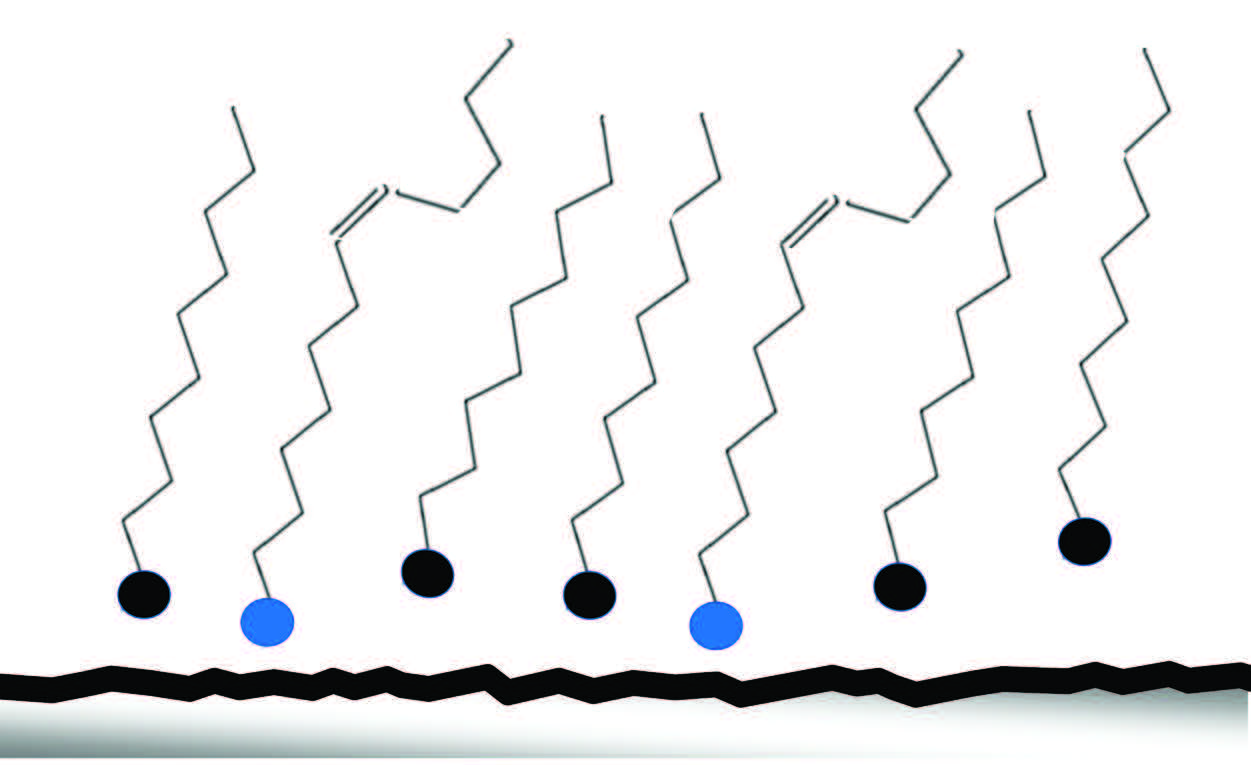 Figure 1. Cartoon depicting OFMs near a surface.
There can also be a variety of chemical structures in the polar head group of the OFMs.
7 The fatty acids have a carboxylic acid group (O=C-OH) that can bind to the surface. Fatty acids can also be reacted with glycerol (3 carbon chain with OH attached to each C) with one, two or three hydrocarbon chains attached to glycerol. If the hydrocarbon chain is oleic acid (C18:1 with one cis double bond) and one oleic acid is attached to glycerol the OFM is called glycerol mono-oleate (GMO). Molecules where two or three oleic acids are attached to glycerol are named glycerol di-oleate (GDO) and glycerol tri-oleate (GTO), respectively. A few additional polar groups that can be attached to the fatty acids include amines (N-H
x), amides (O=C-N-H
x) and amine-diols (HO-C
2-N-C
2-OH). The different polar groups affect the strength of the bond between the OFMs and the surface and the frictional properties of the OFMs.
1-5
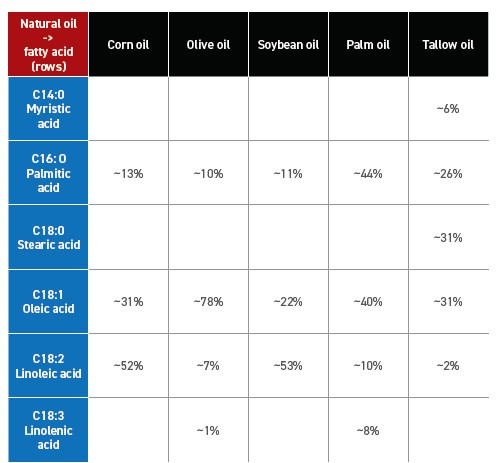 Table 1. Typical fatty acid distributions in a few naturally occurring oils. Compositions in the columns do not add to 100% since some minor components are not shown.6
Figure 2 gives an example of the effect of the polar group on the friction reducing properties of OFMs made from oleic acid.
7 Friction coefficients were measured in a high frequency reciprocating rig (HFRR) operated at 100°C with a 4 N load applied between a steel ball and disk. In Figure 2, the blue bars show friction coefficients when the various OFMs are added to a base oil with no other additives present. The red bars show friction coefficients when the various OFMs are added to the same base oil that also contains zinc (Zn) dialkyl dithiophosphate (ZDDP). The first pair of bars to the left-hand side of the graph show that the base oil produces a friction coefficient of ~0.22 and the addition of ZDDP lowers the friction coefficient to ~0.16. ZDDP does form a tribofilm on the surface preventing the asperities from coming in contact, so it is not surprising that the friction coefficient decreases.
8-13
In the absence or presence of ZDDP all OFMs reduce friction. In addition, in the presence of ZDDP, OFMs produce lower friction coefficients than in the absence of ZDDP with the exception of GMO and oleylamide. In the absence of ZDDP (blue bars), the ranking of OFM's effectiveness in reducing friction is GMO ~= oleylamide ~= oleic acid > oleylamine diol > oleylamine ~= GDO > GTO. In the presence of ZDDP (red bars), the ranking of OFM's effectiveness in reducing friction is oleic acid > oleylamine diol ~= oleylamide ~= oleylamine ~= GMO > GDO = GTO. OFMs clearly perform differently in the absence and presence of ZDDP. One explanation is that the binding of the OFMs to steel is different than the binding of OFMs to a ZDDP film. However, another explanation is that the OFMs change the structure of the ZDDP film changing the frictional properties of the film.
7,14

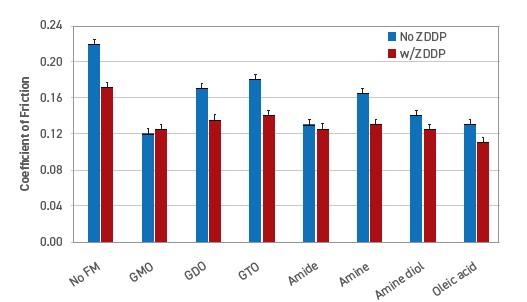 Figure 2. Effect of organic friction modifiers on friction in the absence and presence of ZDDP.7
Polymeric friction modifiers
In lubricants, polymers are used to adjust the viscosity of the fluid and are called viscosity index improvers (VII).
15 VIIs for lubricants typically include olefin co-polymers (OCP) consisting of ethylene and propylene monomers or polymethacrylates (PMA) consisting of methacrylate monomers with varying hydrocarbon chain lengths.
15 Polymeric friction modifiers can be synthesized from OCPs and PMAs by grafting polar (N-containing) side chains onto the OCPs or by using polar (N-containing) methacrylate monomers when synthesizing PMAs. Polymeric friction modifiers are most effective if the polar groups are in a block near one end of the polymer molecule. This polar block binds to the surface, and the rest of the molecule protrudes from the surface to form a film that creates a physical barrier between surfaces. These films can be similar to those formed by OFMs, but the number of molecules closely packed near one another on the surface is significantly lower due to steric hindrance as a result of the large hydrocarbon chains in polymeric friction modifiers.
1,2 There are also classes of polymeric friction modifiers specifically designed to modify friction that do not impact the viscosity of the oil due to their low molecular weight. These polymeric friction modifiers typically contain polyethylene glycol or esters. Similar to OFMs, the hetero atom portion of the polymer is surface active, and the remaining polymer molecule acts to form a polymeric mass that separates metal surfaces, specifically at low speeds. This “protective film” formed by polymeric friction modifiers can be observed by various analytical techniques.
1,2,16
It is critical to point out that OFMs and polymeric FMs have a significant impact on the macroscopic performance of lubricants. In engine oil fuel efficiency applications, OFMs and polymeric friction modifiers can improve passenger car fuel economy by as much as 1.2%.
15,17 However, how these fuel economy benefits are measured is not always easy to understand, and that is the topic of our next TLT Lubrication Fundamentals article. So, for homework, please take a look at the article written by STLE Past President Ed Becker describing the fuel economy label that is shown on new vehicles.
18 I will describe how the fuel economy values are determined and give a perspective on whether a 1.2% fuel economy improvement is significant.
REFERENCES
1.
Spikes, H. A. (2015), "Friction modifier additives,"
Tribology Letters,
60 (5).
2.
Tang, Z. and Li, S. (2014), "A review of recent developments of friction modifiers for liquid lubricants (2007–present),"
Current Opinion in Solid State and Materials Science,
18, pp. 119-139.
3.
Ewen, J. P., Gattinoni, C., Morgan, N., Spikes, H. A. and Dini, D. (2016), "Nonequilibrium molecular dynamics simulations of organic friction modifiers adsorbed on iron oxide surfaces,"
Langmuir, 32, pp. 4450-4463.
4.
Doig, M., Warrens, C. P. and Camp, P. J. (2014), "Structure and friction of stearic acid and oleic acid films adsorbed on iron oxide surfaces in squalene,"
Langmuir, 30 (1), pp. 186-195.
5.
Martin, J. M. (2008), "Mechanisms of friction reduction under boundary lubrication," presented at 16th International Colloquium Tribology, Ostfildern, Germany.
6.
Scrimgeour, C. (2005), "Chemistry of fatty acids,"
Bailey's Industrial Oil and Fat Products, Sixth Edition, Six Volume Set. Ed. F. Shahidi, John Wiley & Sons, Inc.
7.
Guevremont, J. M., Garelick, K., Loper, J. T., Lagona, J., Sheets, R., Hux, K. and Devlin, M. T. (2010), "Influence of friction modifiers on boundary film formation properties," presented at the 65th STLE Annual Meeting, Las Vegas, Nev.
8.
Spikes, H. A. (2004), "The history and mechanism of ZDDP,"
Tribology Letters, 17 (3).
9.
Taylor, L., Glovnea, R., Ribeaud, M. and Spikes, H. A. (2000), "The nature and properties of antiwear additive films," presented at the International Tribology Conference, October 2000, Nagasaki, Japan.
10.
Taylor, L., Spikes, H. A. and Camenzind, H. (2000), "Film-forming properties of zinc-based and ashless antiwear additives," SAE 2000-01-2030.
11.
Zhang, J. and Spikes, H. A. (2016), "On the mechanism of ZDDP antiwear film formation,"
Tribology Letters, 63 (24).
12.
Gosvani, N. N., Bares, J. A., Mangolini, F., Konicek, A. R., Yablon, D. G. and Carpick, R. W. (2015), "Mechanisms for antiwear tribofilm growth revealed in situ by single-asperity sliding contacts,"
Science, 348, pp. 102-106.
13.
Mosey, N. J., Muser, M. H. and Woo, T. K. (2005), "Molecular mechanism for the functionality of lubricant additives,"
Science, 307, pp. 1612-1615.
14.
Dawczyk, J., Russo, J. and Spikes, H. A. (2019), "Ethoxylated amine friction modifiers and ZDDP,"
Tribology Letters, 67, 106.
15.
Canter, N. (2013), "Special Additive Report: Fuel economy: The role of friction modifiers and VI improvers," TLT,
69 (9), pp. 14-27. Available at
www.stle.org/files/TLTArchives/2013/09_September/Tech_Beat.aspx.
16.
Devlin, M. T., Li, S., Burgess, T. and Jao, T-C. (2002), "Film formation properties of polymers in the presence of abrasive contaminants," SAE 2002-01-2793.
17.
Devlin, M. T. (2018), "Common properties of lubricants that affect vehicle fuel efficiency: A North American historical perspective,"
Lubricants, 6 (3), p. 68.
18.
Becker, E. (2022), "The Monroney label," TLT,
78 (2), p. 76. Available at
www.stle.org/files/TLTArchives/2022/02_February/Automotive_Tribology.aspx.
Mark Devlin is a retired chemist and STLE Fellow living in Richmond, Va. You can reach him at markdstle@gmail.com.