KEY CONCEPTS
-
Tribology can explain asphalt properties and mechanisms that rheology does not address.
-
Research is beginning to define the parameter ranges needed to optimize warm-mix asphalt production.
-
Testing and modeling assist the effort to push the envelope on asphalt recycling.
Every day all over the world, commuters, truckers, emergency vehicle drivers and tourists take to the streets and highways. Chances are, they are driving on asphalt pavement. Unless these drivers hit a pothole or a rut, they probably don't give much thought to the pavement beneath their vehicles because it's always there, providing a smooth ride to their destination.
In the 1960s and 1970s, when the U.S. interstate highways were under construction and being upgraded, a viscosity-based grading scheme was used for the bitumen binder materials used in making pavement, says Aravind K. Swamy, professor in the Department of Civil Engineering at the Indian Institute of Technology Delhi. The expectation was that using a binder with a suitable viscosity would produce a long-lasting pavement, he says. However, by the late 1980s, several pavement sections showed significant deterioration.
The Strategic Highway Research Program developed a new set of performance-based specifications, introduced in the 1990s.
1,2 These specifications met with limited support from producers who were accustomed to the existing grading scheme, says Swamy, but training programs over the next decade led to more widespread adoption.
Now, another advance in asphalt characterization is emerging. Tribological testing, a fairly new concept in asphalt testing, provides information on material properties beyond bulk viscosity, and it could provide new insights into the weathering, aging and wear behavior of highway surface materials. In addition, it is used to evaluate additives for warm-mix asphalt binder formulations, in which binder lubricity plays a significant role, and for evaluating the rejuvenating additives used in recycling aged asphalt paving materials.
Swamy predicts that it might take another decade for tribological asphalt testing to gain widespread acceptance in the industry, adding that although the petroleum industry currently uses tribological testing for their lubricant products like oils and greases, application to asphalt is still in the exploratory stages. Industrial users tend to want simplified tests that they can use on site in the field, he says, so at present, asphalt tribology is mainly an academic endeavor.
Bitumen basics
Tribology studies involving asphalt paving materials are complicated endeavors. The basic components are natural materials that vary in composition and physical properties. More recent formulations use polymer additives that reduce energy consumption during pavement application and rejuvenating oils that enable old, weathered asphalt to be recycled and used again on road surfaces. These widely varying combinations of components and a lack of standard tribological testing methods present a wide field of unexplored territory.
What exactly is "asphalt"? Asphalt paving materials consist of bitumen, a viscous, sticky byproduct of petroleum processing, mixed with gravel or other aggregate fillers. "Asphalt" is also sometimes used to refer to the bitumen itself, and the mixture of bitumen and aggregates is referred to as "asphalt concrete" or "bituminous concrete." Bitumen acts as a binder for the aggregates in the finished paving product, but it also lubricates the aggregate particles so that they can slide past each other more easily as the heated road surfacing is being applied. Bitumen also fills the air voids between aggregate particles, which aids in compaction and creates a longer-lasting road surface.
Asphalt concrete products do not follow a set formulation. Rather, they differ by location and application, says STLE member Kartik Pondicherry, principal scientist for analytical instrument maker Anton Paar, GmbH. Road surfaces are typically made using local aggregate materials to save on shipping costs. Because aggregate particles are natural stones or gravel, they can vary in their size, shape and hardness. Bitumen is also a natural product, and it varies in composition and viscosity.
Pavement types must withstand various types of loading and vehicle speeds, so asphalt pavement products must be customized to fit traffic patterns as well. Remote highways, which see little traffic and vehicles moving at high speeds, have different requirements than congested urban freeways, where hundreds of passenger vehicles and heavy trucks crawl along bumper-to-bumper during rush hour. Roads in hot, humid climates have different requirements than desert roads or Arctic highways.
Additives that change bitumen's lubricity present another complication. Warm-mix asphalt, processed and applied at lower temperatures than hot-mix asphalt, is gaining in popularity. Polymers and other additives are mixed with bitumen to form modified bitumen (MB), primarily to enhance engineering performance and reduce the mixing and compaction temperatures required. Lower temperatures reduce energy consumption, as well as reducing thermal aging of the bitumen binder, which increases the service life of the road surface.
"Road construction is very energy-intensive," says Runhua Zhang, associate director of the Smart Highway Research Center at the University of Wisconsin. He adds that small temperature differences matter: even the difference between 120℃ and 140℃ is significant. More than 400 million tons of asphalt are produced every year
3 to cover the more than 3 million miles of road in the U.S.,
4 he says, so reducing the temperature needed to heat the asphalt by just 10 to 20 degrees during construction can save significant amounts of energy. Another benefit of warm-mix asphalt is that it releases less heat and fewer volatile fumes as it is being applied to the road surface, which helps protect the health and comfort of the road crew.
Another evolving field is the study of recycled asphalt (sometimes called reclaimed asphalt pavement or RAP) and associated additives, says Saqib Gulzar, assistant professor and research director at the Southern Colorado Institute of Transportation Technology, Colorado State University Pueblo. "Asphalt is the most recycled material in the U.S.," he says. "We mill it, we scratch it off the road, mix it with fresh asphalt and put it back on the road." However, weathered asphalt must be rejuvenated with various oils to restore its lubricity during application and resilience under loading.
Asphalt recycling in the U.S. dates back more than 100 years, but it came into widespread use in the 1970s, amid petroleum shortages and with the introduction of modern milling machines. Today, more than 80% of the 90 million tons of asphalt pavement reclaimed each year in the U.S. is recycled and put back into use on roadways.
5,6 Although research on recycled asphalt materials has emerged only relatively recently, this research could contribute to finding additives for more durable roadways and more efficient processing and application methods.
Laboratory testing
Before any novel type of asphalt concrete sees an actual road surface, it undergoes extensive laboratory testing to assess its properties under various conditions. "They do a lot of lab tests before they actually let a novel material go into the field, because once you put it there, it's going to be a headache to get rid of it at some later date. Disposal of these things is not easy either," Pondicherry says.
Organizations like the Strategic Highway Research Program in the U.S. have developed various methodologies for assessing various asphalt characteristics. These characteristics help determine how asphalt concrete materials perform under given weather and load conditions. However, Pondicherry says, there are no standard tests or standard practices across the industry for tribological evaluation of asphalt.
Successful implementation of warm mix asphalt technology depends on accurately determining production temperatures, but as of 2024, no standard protocol had been developed to determine this temperature.
7 The best production temperature varies with the amount of friction between the aggregate and the asphalt binder, and thus lends itself to tribological research. Temperature data obtained using ball-on-three-plate testing shows better agreement with observed pavement application than data obtained using an equi-viscous method typical of rheological testing.
8
Conventional bitumen grading schemes for mixing and compaction rely mainly on high-temperature rheological and viscosity testing, but bulk viscosity measurements by themselves do not give a complete picture of how bitumen–aggregate interactions occur during mixing and compaction and the corresponding performance in the field. Small amounts of additives can influence interfacial forces and, thus, bitumen tribology, without necessarily having a significant effect of the rheology of the material.
9 Rheology quantifies the inherent flow properties of one material, the binder, by measuring its bulk viscosity and shearing properties. Rheological studies typically generate plots of dynamic modulus versus frequency or dynamic modulus versus phase angle using data obtained with a dynamic shear rheometer (DSR)
(see Figure 1).
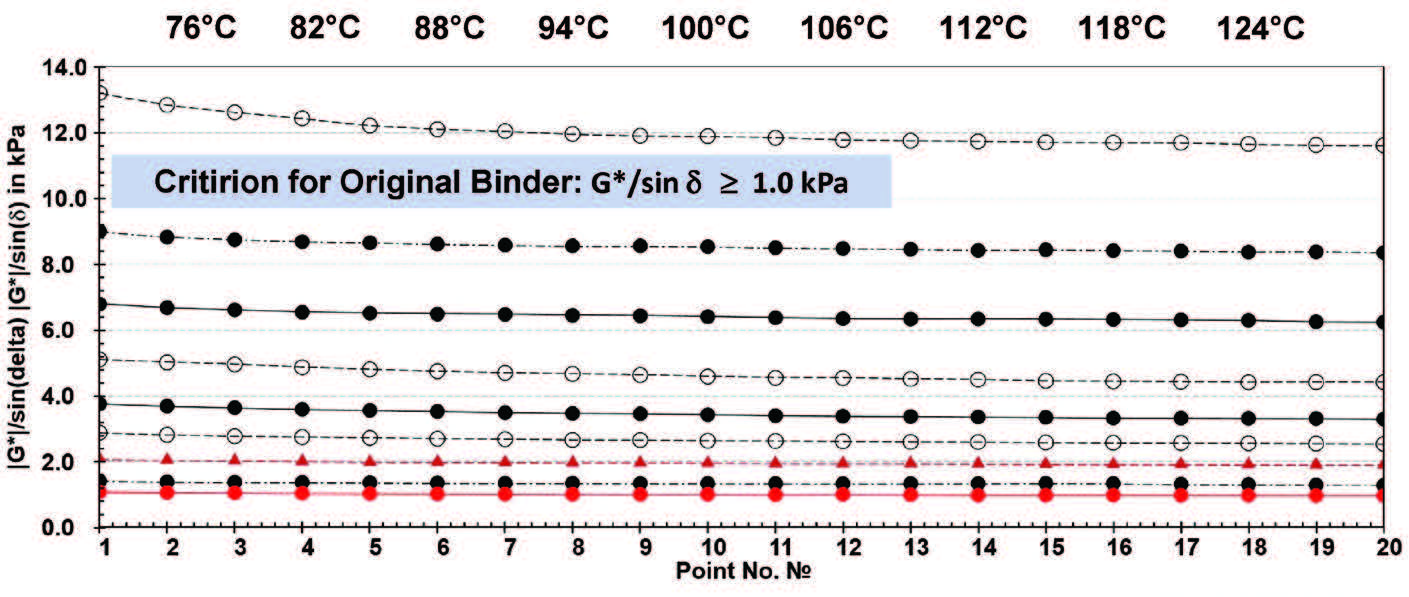 Figure 1. Dynamic shear rheometric (DSR) tests determine the linear viscoelastic properties of asphalt binders as a function of temperature using method AASHTO T315. Figure courtesy of Anton Paar.
G* is the complex shear modulus.
δ is the phase angle (time lag between applied shear stress and resulting strain).
G*/sin δ is the asphalt rutting parameter, used to assign a grade to the asphalt.
Workability testing, another means of evaluation, has shown that the ability of warm mix asphalt formulations to reduce mixing and compaction temperatures depends on the type and amount of polymer additive used and the properties of the aggregate materials. Compaction tests measure how many times the pavement must be rolled to bring the air void volume below a specified minimum, typically about 8%. Reducing air voids helps to prevent the formation of ruts when moving vehicles repeatedly load the same parts of the road surface. Rutting, Pondicherry says, is a type of fatigue wear, where the deformed areas of the road surface fail to recover after the vehicle load is removed
(see Figure 2). Fatigue wear is especially pronounced, he says, when vehicle loading occurs too frequently to allow sufficient time for viscoelastic recovery of the asphalt concrete. Traffic that is standing still produces different stresses than traffic that moves slowly, shearing the asphalt over a longer time than traffic that moves over the surface quickly.
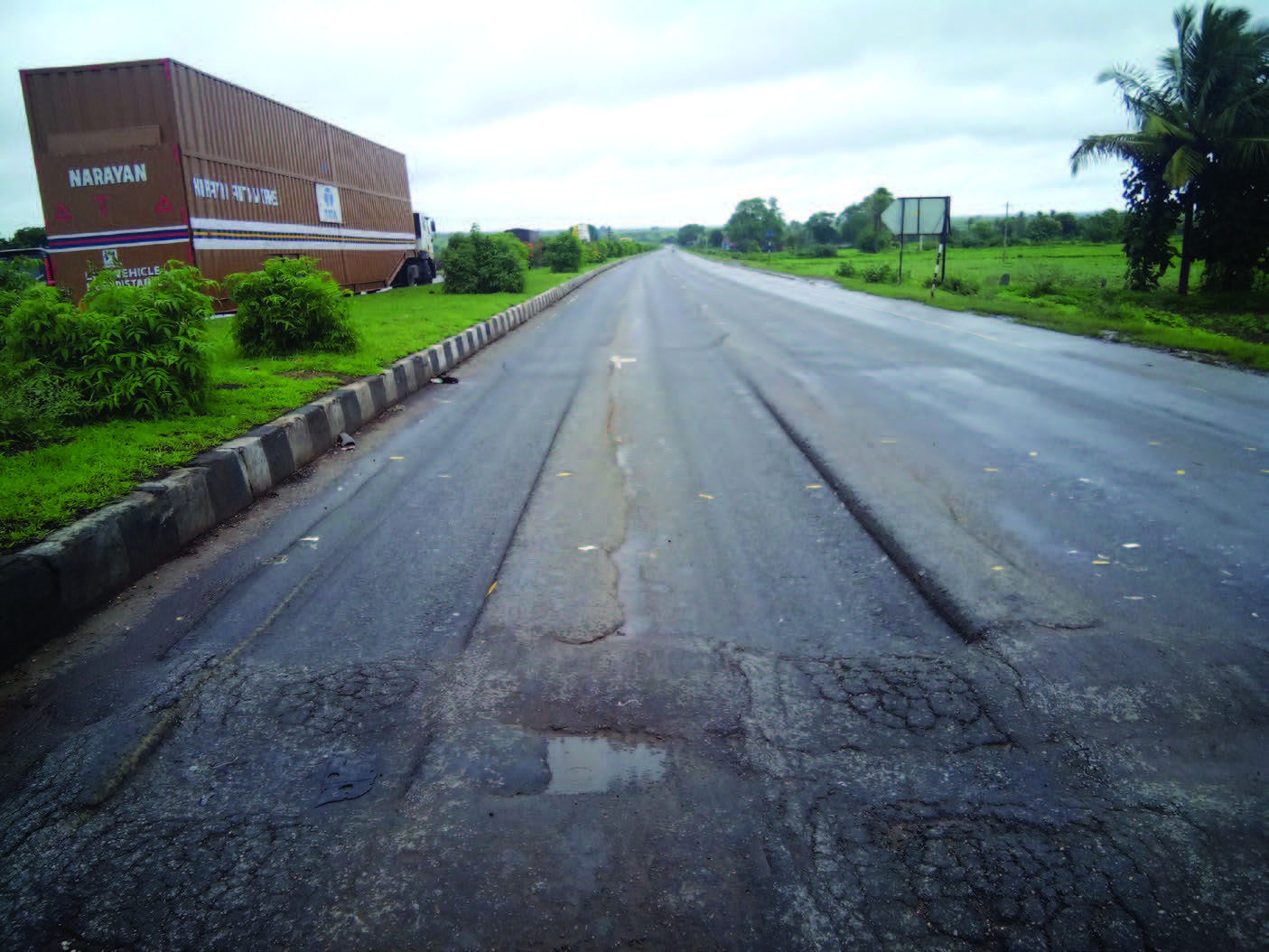 Figure 2. Rutting, a type of fatigue wear, occurs where the deformed areas of the road surface fail to recover after the vehicle load is removed. Figure courtesy of Aravind Krishna Swamy.
Tribology deals with the friction behavior of the whole system of materials, including not only viscosity, but also contact load and lubricant (bitumen) entrainment speed. These properties vary with temperature, interaction at various types of interfaces, and the shape and hardness of the solid particles. Unlike rheology, which has standard test methods for various materials (e.g., ASTM D7175-23), no standard tribological methods or specifications have been established for asphalt or mixtures of asphalt binders and aggregates.
Multiple contacts happen at the same time from different directions during asphalt mixing and application, so the relative speeds are different, Pondicherry says. This difference affects the way that bitumen types with different viscosities transition into the hydrodynamic regime, as well as how easy it is to entrain the bitumen into contact regions at mixing temperatures. "We try to look at the evolution of friction at different speeds," he adds.
"You want to ensure that friction is optimum and that certain transitions occur at the desired temperature," Pondicherry says. "You can run tests at a constant temperature, a constant speed or hold one constant while you vary the other one
(see Figure 3)." He adds that laboratory tests are run at elevated temperatures, where the viscosity of the bitumen is significantly less than it would be under operating conditions. "It's liquid, like honey," he says, adding that asphalt does shear thin, but not to the same extent that greases do.
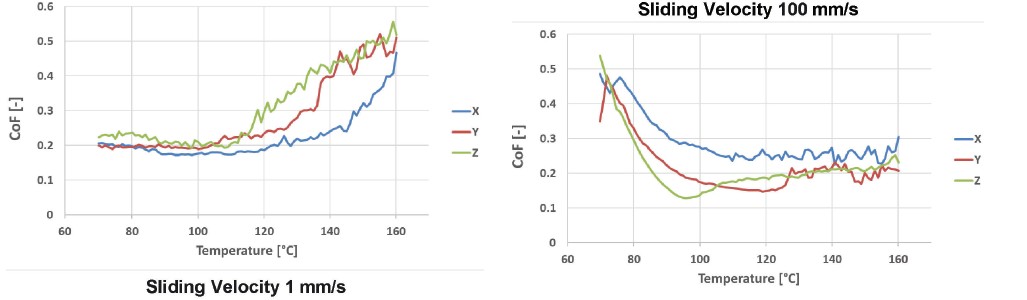 Figure 3. Coefficient of friction as a function of temperature at two sliding velocities for three samples. Figure courtesy of Anton Paar.
"You have to consider certain nuances during the measurements," Pondicherry says. For instance, a friction test that involves a ball on three pins requires using the same amount of sample for every test to ensure that the amount of drag, and thus the torque resistance remains constant. The sample must be heated to the same temperature every time, and the measurement must be run immediately after that temperature is reached to avoid keeping the sample under thermal stress for an extended period. Even small misalignments can result in a scratching surface rather than flat-on-flat surfaces, so attention to detail is critical. Using aggregates for one surface complicates this effort at standardization, but using a Hertzian contact configuration (e.g., ball-on-plate) enables a standardized contact between the metal ball and an aggregate plate surface. Although the bitumen between the surfaces acts as a lubricant at high temperatures, boundary friction can introduce wear. Tribology tests can evaluate the effects of additives that help reduce this boundary friction.
"Every bitumen lab has a rheometer," says Gulzar. Although tribological testing is less common for asphalt, he notes that standard laboratory rheometers can be equipped with fixtures for performing tribology tests.
10 His lab's dynamic shear rheometer has fixtures for ball-on-three-plate tests and pin-on-flat (or pin-on-disk) tests
(see Figure 4). Another attachment is used for four-ball asphalt lubricity tests, using a method developed at the University of Wisconsin–Madison.
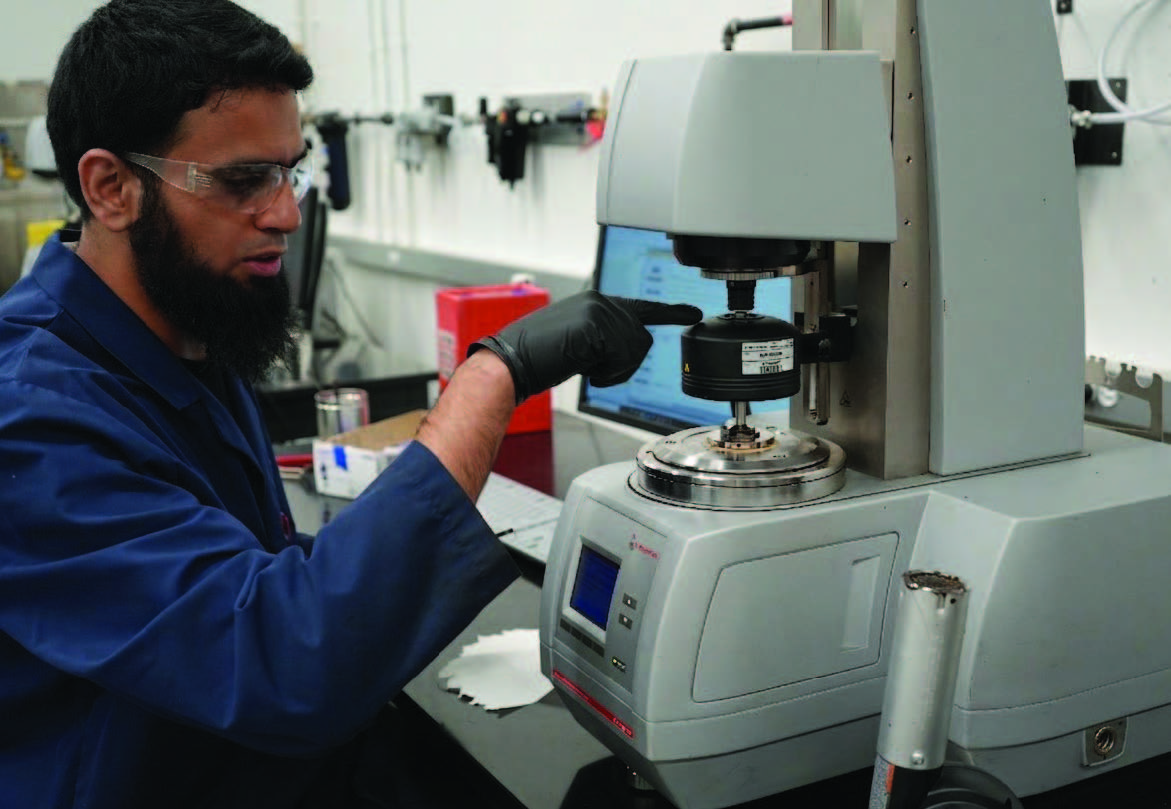 Figure 4. Saqib Gulzar demonstrates a tribology test attachment on a dynamic shear rheometer. Figure courtesy of North Carolina State University.
In the asphalt industry, the most common hot mix asphalt compaction temperature is around 135°C, while it is about 165°C for mixing and production. Several pertinent test standards are available for determining the best mixing and compaction temperatures of an asphalt mixture to achieve a low binder viscosity range, which is assumed to achieve ideal mixture workability. The assumption is that binders with low viscosity at elevated temperatures have less resistance to aggregate coating and mixture compaction, leading to a better mixture workability. However, recent studies, including those from Zhang's team, have indicated that the reduction of binder viscosity might not be the sole mechanism responsible for mixture workability improvement.
Generally, asphalt lubricating properties can be expressed by the Stribeck curve, which describes the change of coefficient of friction (μ) with the change in lubricant viscosity (η) or Hersey number (HN)
(see Figure 5). If the asphalt lubricating properties can be optimized, the temperatures as well as the compaction efforts for asphalt paving can also be optimized accordingly. The types of polymers used to modify asphalt play an important role in determining the base binder's lubrication properties, with different polymers producing negative or positive effects.
11

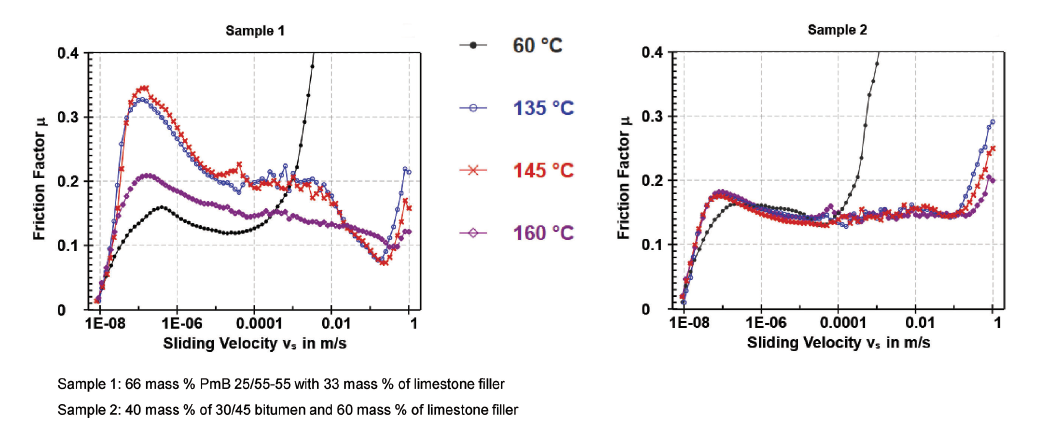 Figure 5. Stribeck curves for polymer-modified bitumen (PmB) and plain bitumen binders, both with limestone aggregate filler. Figure courtesy of Anton Paar.
Zhang explains that his group focuses on properties and behavior of bitumen binders. One type of testing they use is to run a sweep over a range of temperatures to determine the temperature that produces the least friction in the asphalt layer. They also test the ways that various binder additives affect this "best temperature" as a part of their development work on warm or low-temperature mix asphalt formulations.
This type of research is still in a lab evaluation stage, Zhang says, although several groups in the U.S., India and elsewhere are publishing their studies on asphalt tribology. Field-scale tests are quite expensive, he adds, so his group's current efforts deal with laboratory-scale testing.
Adding solid aggregate particles into the equation greatly increases the complexity, Zhang says. "It's very difficult to evaluate the interactions and their impact on the asphalt's lubricity." During compaction, he says, solid particles have various shapes, surface textures and sliding behaviors in ways that are difficult to evaluate
(see Figure 6). For that reason, tribological testing of the mixture of aggregate particles and asphalt binder is more difficult than, for example, testing steel bearing components or gears.
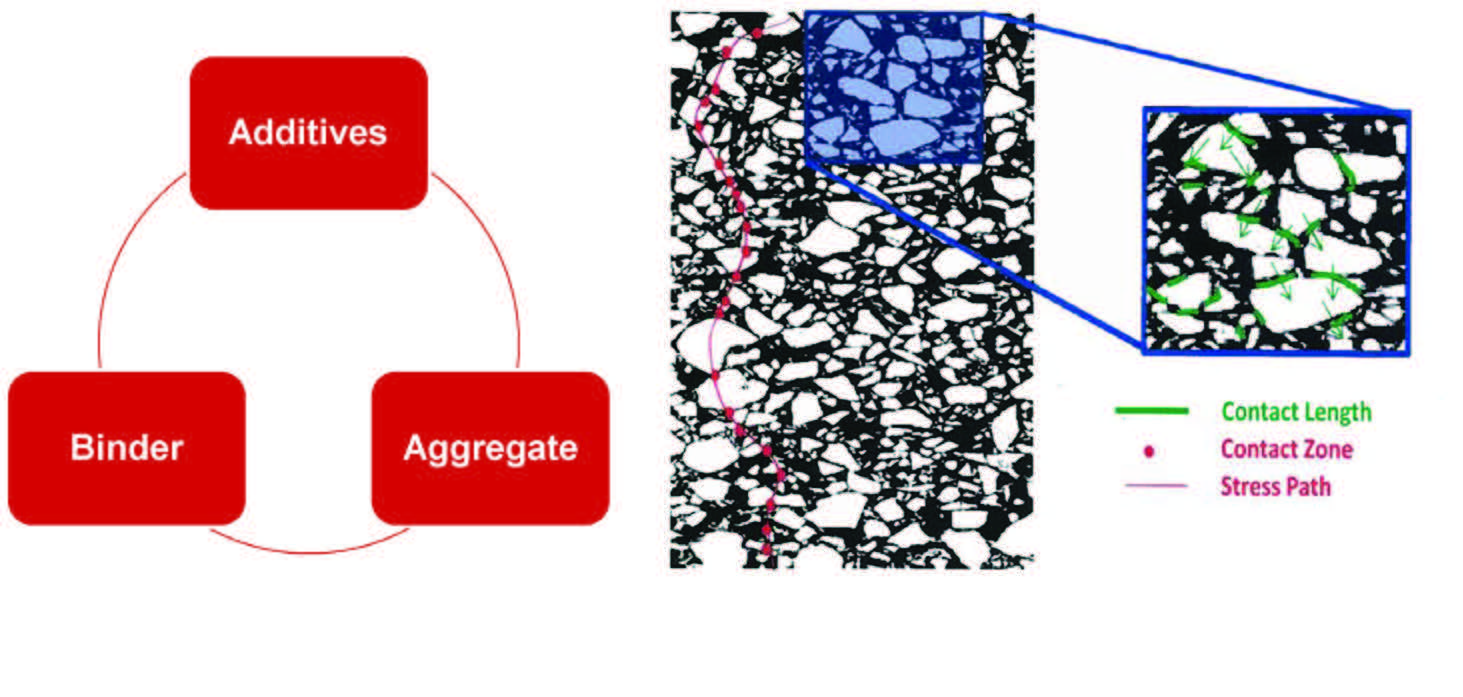 Figure 6. Solid particles with flat surfaces and edges exhibit varying contact lengths and angles. Figure courtesy of Anton Paar.
Swamy's group largely focuses on the rheological properties of binder samples, but they also measure shear modulus, creep compliance, relaxation modulus and other material properties. Their rheology samples are 8 to 25 mm in diameter by 1 or 2 millimeters thick. They can also work with compacted mixtures, measuring properties on a larger scale. Most of their lab samples for mixture-level testing are about 6 to 7 inches tall and 2 to 4 inches in diameter. However, even with binder-only samples, tribology testing using three-ball, pin-on-disc and ball-on-disc methods produces a range of results, even for samples having the same composition.
Rather than focusing entirely on the properties of the bitumen binder, Gulzar's group is also testing the effects of adding simulated aggregate materials consisting of mineral spheres. They run their tests at typical mixing and compaction temperatures, around 135℃ for mixing and slightly lower for compaction. Using spherical solids allows them to examine the behaviors of composite materials that include solids having different hardnesses, textures and degrees of surface roughness.
The spherical shapes eliminate the added complications typical of particles having flat surfaces and edges moving past each other. During the mixing phase, the binder flows around the aggregate particles and coats them, providing the lubricity that allows the solid particles to move past each other more easily. During compaction, internal friction and wear come into play as the particles move past each other, coming into closer contact as air voids are driven out.
Gulzar's group also performs accelerated aging tests to assess the short-term and long-term effects of volatilization, temperature, oxidation and load stresses. Short-term aging tests use fresh asphalt samples in a rolling thin film oven. A thin film of sample is subjected to a high-speed stream of hot air or oxygen at about 163°C and aged for about 85 minutes before running tribology tests. Long-term aging tests in a pressure aging vessel take about 20 hours and simulate the effects of five to seven years of exposure to traffic loading and oxidative aging. These aging tests are useful for evaluating normal aging behavior under typical road conditions, but they are also gaining importance for evaluating rejuvenating agents for recycling asphalt (more on this below).
Gulzar notes that he and his group are focusing on laboratory-scale tests at present, but they hope to scale up the tests eventually
(see Figure 7). The asphalt community's main interest in conducting tribological studies, he says, is to find additives that lower the mixing and compaction temperatures without affecting the binder's viscosity.
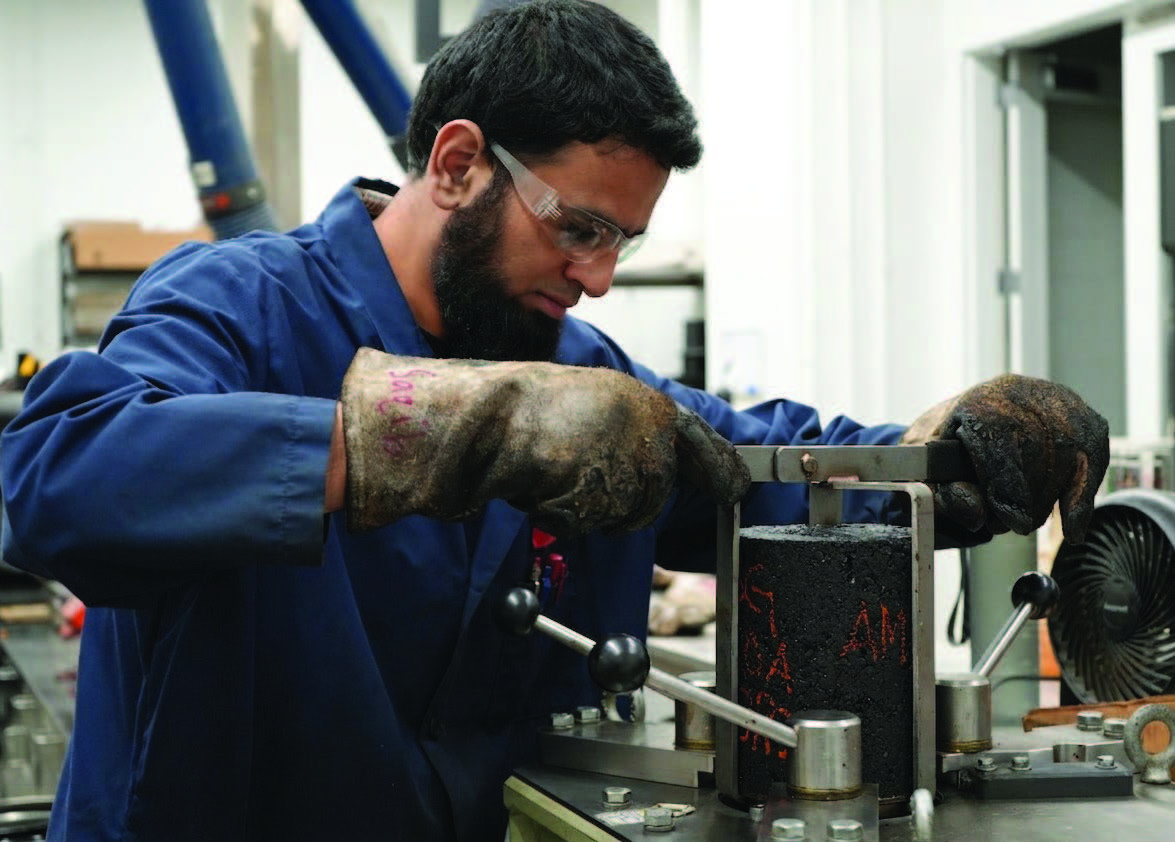 Figure 7. Saqib Gulzar prepares an asphalt sample for testing. Figure courtesy of North Carolina State University.
During the testing phase, replicating real-life conditions as closely as possible requires using the aggregates, binders and additives that will be used in the actual road construction. Thus, tribology tests for asphalt concrete involves, for example, ball-on-plate tests where the plate is made from the aggregate material rather than a flat metal plate. Achieving reproducible results requires using the same or similar aggregate for every test, but the variability in natural aggregates requires averaging over a series of tests
(see Figure 8). How does the aggregate behave with a given binder when they are in contact with another object like a vehicle tire? How does adding a polymer change the flow behavior or the way the binder wets the aggregates or adheres to the road bed? How does this behavior change at various temperatures?
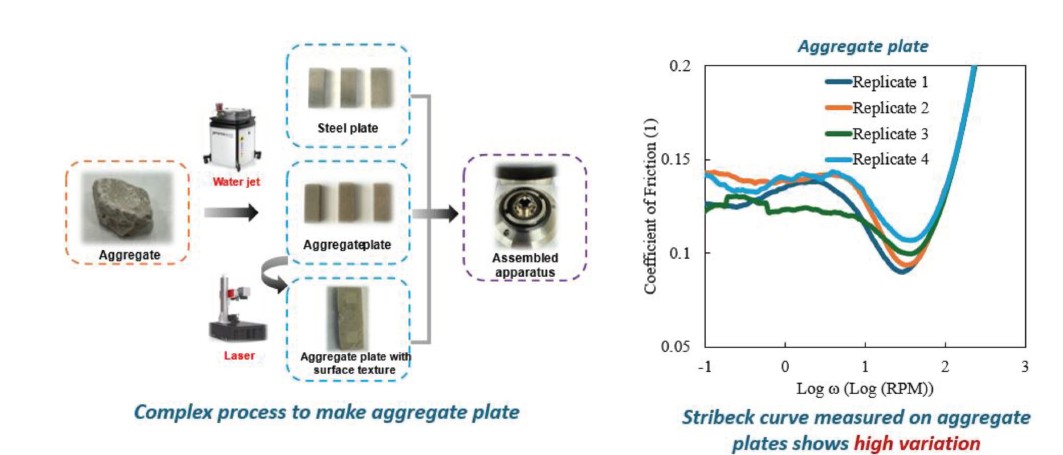 Figure 8. Stribeck curves for ball-on-plate tests using flat aggregate plates show limited replicability. Figure courtesy of The Modified Asphalt Research Center (MARC) at the University of Wisconsin and Anton Paar.
For laboratory tests to be relevant to real-world operations, the information they produce must relate to properties of interest to asphalt manufacturers and road construction companies. Road construction engineers are concerned mainly with macroscopic properties like the workability of the hundreds of tons of paving materials they mix every hour, Swamy says.
This is where the lubricity comes in, otherwise mixing the binder and aggregate would take much longer and require more energy. Lubrication also helps the aggregate particles to maintain their shape without fracturing into smaller particles. "We want this material to stay intact without many changes," Swamy says. "If you're looking at really smooth aggregate, the pavement is going to deform very quickly when you open the road to traffic." The weight of passing vehicles, he says, deforms pavement with smooth aggregates because the particles move past each other too easily. "We want this roughness with the aggregate and stickiness with the bitumen."
Realistic model systems
Laboratory testing provides a foundation for understanding and predicting asphalt behavior, which can then be used for constructing models that facilitate intentional materials design. However, constructing constitutive models for asphalt behavior is a complex and time-consuming process, Swamy says.
Even a simplified asphalt system presents challenges for building a representative model. Solid aggregate particles have varying mineral compositions, particle sizes and shapes, hardness and surface roughness. Mixing and compaction rely largely on surface interactions between the binder and aggregate phases, and this variability complicates matters still further. Bitumen consists mainly of long-chain hydrocarbons, but the exact composition varies depending on the petroleum source, and to some extent, even within the same source. Further, bitumen's behavior depends not only on composition and temperature, but also on its processing history and the type of loading applied.
Bitumen's behavior over various temperature ranges adds even further complexity. At low temperatures, Swamy explains, bitumen is hard but elastic. It deforms under loading, but it recovers its original shape. However, at temperatures less than 10℃, typical in winter at high latitudes, bitumen becomes brittle, and cracks begin to form. Fatigue stress occurs mainly in an intermediate temperature range, roughly 15℃ to 20℃, while volumetric changes predominate above about 40℃. (Black asphalt road surfaces can easily reach 60℃ to 70℃ on a hot summer day.) At high summertime temperatures, in the viscous regime, loading deformation does not recover, and ruts can form. However, small cracks can begin to self-heal as the soft binder expands into them. In between the high and low temperatures is a viscoelastic range where deformation partially recovers. Eventually, however, bitumen ages, oxidizes and becomes brittle, even if it is not placed under frequent loading.
In the temperature range between 60℃ and 100℃, bitumen is non-Newtonian; that is, its viscosity varies with shear conditions as well as temperature. It's like Silly Putty, Swamy explains, behaving like a viscous liquid when force is applied gradually; like an elastic solid under rapid, sudden force; and like a brittle solid under sharp, intense force. Modeling this behavior can involve the same type of computations that NASA used for their non-Newtonian metallized gel rocket propellants,
12 he says. These rocket propellants were exposed to extremely high temperatures and pressures during launch and the extremely cold temperatures of space when they were in orbit, as well as extreme loading conditions.
Historical data is especially important with asphalt paving materials, because, like other viscoelastic materials, they "remember" conditions from the past, about one to two weeks in the case of bitumen, Swamy says. Bitumen's macroscopic processing and usage history will affect its properties going forward. Climate change is factoring into model development, since future road conditions will not be the same as today's conditions. Construction engineers must design roads not only for today, but for predicted conditions several decades into the future, Swamy says.
All of this complexity could become overwhelming, but the knowledge base on which a model is built has to start from the fundamentals, Pondicherry says, "like the interaction between the binder and the aggregate." He adds that the knowledge base must also include temperature and humidity effects. "If it's Singapore, if it's Malaysia, if it's Arizona, it's a different story." His work focuses on mixing and compaction, but follow-up testing might evaluate the effects of different vehicle loads and speeds when a road surface is put into use.
As a starting point for model-building and asphalt lubrication studies, researchers can create a properties database for a basic binder system. Then, when they move to a different binder system, they can determine whether their test methods are valid for that system as well. "Over time, you develop a concrete methodology," Pondicherry says. This information provides understanding that can be used in the intentional design of improvements to the system. Once a body of data and a methodology are established, even if a particular approach is not successful, "you know where to go back and then make the changes you want to make," he adds. This approach also enables researchers to pre-screen various versions of a material to narrow down the number of samples that progress from lab tests to model-scale tests, then component tests and field tests.
Artificial intelligence is emerging not only as a useful component of asphalt modeling studies, but also as a way to save time and effort in conducting laboratory testing. The variability of properties and the amount of work required to do laboratory testing makes machine-learning models an attractive alternative for defining general property trends and narrowing the range of candidates for laboratory studies. For example, mixture testing in the laboratory requires about a week to complete aggregate gradation, mixing, compacting and testing, and because of the variability in properties, the results span a range of values. Machine learning schemes provide information like expected moduli, which can serve as a starting point for further study.
"Very few groups across the world are working on these aspects," Swamy says, adding that gathering data to train the models remains challenging. He adds that this type of computational study is not especially useful for construction crews in the field because machine learning tends to be a "black box." The user enters data, and the model produces a result, with little additional information on how it obtained that result.
Another approach, gene expression programming, involves strings of computer code that "evolve," producing a program that models a desired phenomenon, including equations that can be used to predict the properties of materials not included in the training set. However, Swamy cautions, to get the best equations, his group had to run training schemes over millions of iterations, which required anywhere from a few days to a few weeks of computing time. However, "once we have it," he says, "then it gets easy enough for a field engineer."
Warm mix asphalt
Asphalt tribology studies came about largely in response to a need to identify and characterize additives that enable mixing and compaction at reduced temperatures.
11,13 Warm-mix binder additives, often polymer materials, are mixed with bitumen to reduce processing and application temperatures as well as improve the performance of the resulting pavement. An added benefit is that warm-mix asphalt can be applied during cooler outdoor weather than is practical for hot-mix asphalt, thus extending the road-surfacing season in colder climates.
Common elastomeric modifiers include styrene-butadiene-styrene (SBS) thermoplastic elastomer and styrene-butadiene rubber (SBR). These polymers form 3D molecular networks that resist loading deformation, resulting in a longer-lasting road surface. However, tribological testing is difficult for polymer-modified asphalt binders, Swamy says, because the shear stresses have a tendency to break the polymer chains, affecting the results.
As vehicular traffic increases around the world, Swamy says, roadway surfaces constructed using unmodified (e.g., hot mix) bitumen binder materials are unable to stand up under the loads. Polymer-modified binders have come into common usage in part because they provide greater elasticity, even at high ambient temperatures. Plasto-elastomer additives, which are rigid at high temperatures and resilient at low temperatures, can enhance performance by counteracting the tendency of untreated binders to become rigid at low temperatures and overly resilient at high temperatures, he adds. This property is especially useful in regions with wide seasonal, or even daily, temperature variations.
Increasing the density of the asphalt concrete layer on a road surface creates a better-performing, more durable road, Zhang says. A low-friction binder phase improves mixture workability during asphalt concrete layer application, resulting in a denser layer with better performance. The result is a road requiring less maintenance and a service life that can go from 20 years to perhaps 25 to 30 years. All this adds to the sustainability of the road surface.
Gulzar has studied the performance effects of warm mix additives in conjunction with polymer and rubber additives including SBS and terminally blended crumb rubber. He notes that warm-mix additives that enable effective compaction at lower temperatures not only enable significant energy savings, but they also extend the road construction season in regions with long periods of cold weather. "You don't have to wait for good weather," he says.
Conventional testing of asphalt binders determines optimal mixing and compaction temperatures using rotational viscometry, but the results of these tests underestimate the workability and densification behavior of warm-mix asphalt binders. Thus, even though warm-mix additives can reduce a binder's viscosity, this property does not quantify the associated improvements in workability and production temperatures. Rather, workability and densification are likely driven by improvements in the binder's lubrication properties.
13
Although asphalt binder testing in bulk, thick films, is a common practice for grading purposes, this method does not address binder performance in the thin films common in asphalt mixtures. Thin-film testing of asphalt binders suggests that increased lubricity and reduced internal friction, rather than the viscosity reduction that helps the binder to coat the aggregate could explain why warm-mix asphalt formulations can be produced at lower temperatures than hot-mix formulations.
14,15
Evaluating the effects of specific warm mix asphalt additives on asphalt compaction properties requires considering the hydrodynamic and boundary lubrication regimes. Warm mix additives typically improve a binder's boundary lubrication characteristics compared with an unmodified binder, but some additives are more affected than others by the characteristics of the substrate aggregate material.
16 The coefficient of friction for unmodified binders is higher than for modified bitumen regardless of temperature, but modified bitumen exhibits temperature-dependent responses.
17
Recycled asphalt
Tribology also factors into efforts to increase the amount of aged asphalt that can be recycled and reused on road surfaces. Zhang notes that for the past two to three decades, old road surfacing materials have usually been recycled rather than discarded. Recycling asphalt has become commonplace as a way to save money and reduce waste. Old road surfacing materials are processed and mixed with new materials, and the resulting mixture is used to resurface roads. Properly treated pavement containing recycled asphalt can perform as well as materials containing only fresh asphalt. Recycling pavement is especially important in remote parts of the world including island nations, Swamy says, where suitable aggregate materials are not available locally and must be imported.
However, as asphalt weathers, the liquid hydrocarbon fraction evaporates or seeps into the layers below, and the remaining fraction forms asphaltene, a brittle hydrocarbon material
(see Figure 9). Oxidation-related increases in asphaltene content increase hydrodynamic friction and high-temperature viscosity, which can result in a decrease in workability when applying reclaimed asphalt pavement to road surfaces. Reclaimed asphalt with a high asphaltene content typically exhibits decreased lubricity compared with unweathered asphalt.
18 Rejuvenating agents, typically low-viscosity oils, restore some of the elasticity to weathered asphalt, making it suitable for reuse. Rejuvenating agents include plant-based oils, waste engine oil, waste vegetable oils, waste oils from the paper and textile industries, "all sorts of oils," Gulzar says. Classifying these oils for laboratory studies is a big challenge, he says, because they include triglycerides, fatty acids, aromatics, resins and various mixtures.
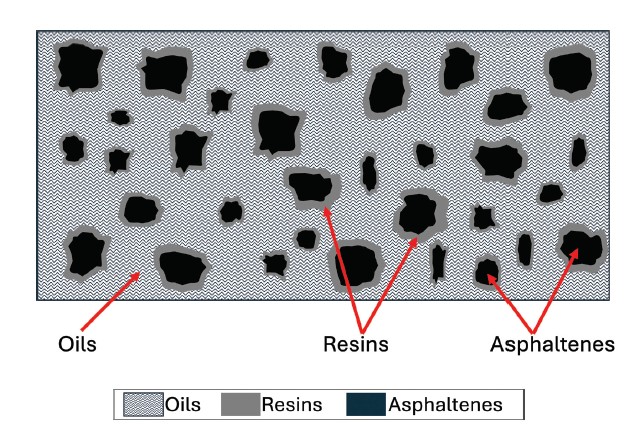 Figure 9. Weathered asphalt binder contains hydrocarbon oils that seep into lower pavement layers and insoluble asphaltene particles coated with semi-solid resins, which can oxidize to form asphaltenes. Figure courtesy of Aravind Krishna Swamy.
Asphalt that has been recycled tends to stay on the road, exposed to the elements, for a long time, says Gulzar. Fresh asphalt material is likely to be mixed with as much as 20% of older oxidized RAP material with negligible effects on its performance.
19 The 20% limit represents the maximum amount of RAP that can be reused effectively without any sort of reprocessing or a new mix design, he says.
Several U.S. states are pushing to increase the reclaimed asphalt content of their road surfaces beyond the 20% level, Gulzar continues. This requires a new mix design including the use of softer bitumen grades and rejuvenating agents that replenish aged asphalt components, enabling mixing with fresh asphalt and making the rejuvenated asphalt more resilient. Tribological studies that replicate expected usage conditions as closely as possible could significantly facilitate the optimization of new formulations and guide intentional mix design, saving the time and expense of trial-and-error testing.
Ready for the rubber to hit the road
Changes in vehicular traffic and climate conditions place increasing demands on the world's roadways. Further, a push toward energy savings, worker safety and waste reduction are driving developments like warm-mix asphalt and asphalt recycling. For asphalt manufacturers and road construction companies to keep pace, they need practical knowledge that helps them choose asphalt products with characteristics that fit their particular applications.
Every day, while millions of drivers take to the streets and highways, asphalt researchers in their labs are finding new ways to make longer-lasting, better-performing road surfaces using less energy and more recycled materials. One measure of their success is when ordinary drivers have even less reason to think about the pavement beneath their vehicles. It's always there, providing a smooth ride to their destination.
REFERENCES
1.
Kennedy, T. W. and Cominsky, R. J. The SHRP Asphalt Research Program: 1990 Strategic Planning Document. SHRP-A/UWP-90-007. Strategic Highway Research Program, National Research Council, Washington, DC 1990. Available at
www.trb.org/publications/shrp/SHRP-90-007.pdf.
2.
Strategic Highway Research: Saving Lives, Reducing Congestion, Improving Quality of Life – Special Report 260 (2001). Chapter: 2 The First Strategic Highway Research Program. National Academies of Sciences, Engineering, and Medicine. 2001. Washington, DC: The National Academies Press. Available at
https://doi.org/10.17226/10223.
3.
Analyzing the Petroleum Asphalt Binder Supply Chain under Energy Transition Scenarios, page 3. Wood Mackenzie Consulting on behalf of the Asphalt Institute Foundation. January 2025. Available at
www.asphaltfoundation.org/wp-content/uploads/Analyzing-the-Petroleum-Asphalt-Binder-Supply-Chain-under-Energy-Transition-Scenarios_AIF-Wood-Mackenzie.pdf.
4.
Federal Highway Administration Highway Statistics 2022. Public Road Mileage - VMT - Lane Miles 1900 - 2022, Chart VMT-421C. Available at
www.fhwa.dot.gov/policyinformation/statistics/2022/vmt421c.cfm.
5.
Sustainability. National Asphalt Pavement Association. Available at
www.asphaltpavement.org/expertise/sustainability.
6.
Reclaiming, Reusing, and Recycling Asphalt Pavement. Texas Department of Transportation. Available at
www.dot.state.tx.us/business/contractors_consultants/recycling/rap.htm.
7.
Wagh, V. P. and Gupta, A. (2024), "Tribology-based specifications for assessing the production temperatures of asphalt binder,"
Transportation Research Record: Journal of the Transportation Research Board. Available at
https://doi.org/10.1177/03611981241242361.
8.
Wagh, V. P., Saboo, N. and Gupta, A. (2024), "Using tribological approach to assess production temperatures of asphalt binders,"
Construction and Building Materials,
419, article no. 135513. Available at
https://doi.org/10.1016/j.conbuildmat.2024.135513.
9.
STP941-EB. Asphalt Rheology: Relationship to Mixture, 1987. (list of relevant references) Editor: O. E. Briscoe. Available at
https://store.astm.org/stp941-eb.html.
10.
Gulzar, S. et al. (2021), "A nexus of tribology and rheology to study thin-film mechanics of asphalt–aggregate interaction during mixing and compaction," in Tribology and Sustainability, 1st ed., CRC Press, Taylor & Francis.
11.
Wang, R., Zhang, R. and Bahia, H. U. (2025), "Development of a tribological test for measuring asphalt lubrication characterization,"
Transportation Research Record: Journal of the Transportation Research Board,
2679 (10). Available at
https://journals.sagepub.com/doi/abs/10.1177/03611981251344900.
12.
Palaszewski, B. and Rapp, D. Design issues for Propulsion Systems Using Metallized Propellants. NASA Technical Memorandum 105190, AIAA-91-3484, 1991. Available at
https://ntrs.nasa.gov/api/citations/19910019906/downloads/19910019906.pdf.
13.
Wagh, V. P., Saboo, N. and Gupta, A. (2022), "Tribology as emerging science for warm mix technology: A review,"
Construction and Building Materials,
359, article no. 129445. Available at
https://doi.org/10.1016/j.conbuildmat.2022.129445.
14.
Baumgardner, G. L., Reinke, G. R. and Brown II, J. Lubricity Properties of Asphalt Binders Used in Hot-Mix and Warm-Mix Asphalt Pavements, 5th Eurasphalt & Eurobitume Congress, June 13-15, 2012, Istanbul.
15.
Bairgi, B. K., Manna, U. A. and Tarefder, R. A. (2019), Tribological Evaluation of Asphalt Binder with Chemical Warm-Mix Additives. Airfield and Highway Pavements 2019 Testing and Characterization of Pavement Materials - Selected Papers from the International Airfield and Highway Pavements Conference 2019: 266-273. ISSN/ISBN: 9780784482469, DOI: 10.1061/9780784482469.027.
16.
Puchalski, S. (December 2012), Investigation of Warm Mix Asphalt Additives Using the Science of Tribology to Explain Improvements in Mixture Compaction, Master's Thesis, Dept. of Civil and Environmental Engineering, University of Wisconsin.
17.
Gayathri, V. G., Rochlani, M. and Krishnan, J. M. (2024), Tribological Investigation of Asphalt Binder Using DSR. International Conference on Transportation and Development. Available at
https://doi.org/10.1061/9780784485538.049.
18.
Verilhac, C., Barreto, G., Devès, L. et al. (2025), "Influence of laboratory aging and asphaltene content of asphalt on frictional coefficient by tribological analysis—A case study,"
Fuel,
379, article no. 133013. Available at
https://doi.org/10.1016/j.fuel.2024.133013.
19.
McDaniel, R. S., Soleymani, H., Anderson, R. M., Turner, P. and Peterson, R. (2000), Recommended Use of Reclaimed Asphalt Pavement in the SuperPave Mixture Design Method, NCHRP Final Report (9-12), TRB, Washington, D.C.
Nancy McGuire is a freelance writer based in Albuquerque, N.M. You can contact her at nmcguire@wordchemist.com.