20 Minutes With Max Marian
By Nicole Gleeson, Editorial Coordinator | TLT 20 Minutes September 2026
This professor and director of the Institute of Machine Design and Tribology discusses bridging scales, systems and continents through tribology.
Max Marian - The Quick File
STLE member Max Marian holds a doctorate degree (Dr.-Ing.) from Friedrich-Alexander-University (FAU) Erlangen-Nuremberg and is full professor and executive director of the Institute of Machine Design and Tribology (IMKT;
www.imkt.uni-hannover.de/en/) of Leibniz University Hannover, Germany, as well as a professor for Multiscale Engineering Mechanics at the Department of Mechanical and Metallurgical Engineering and associate director for International Relations of the School of Engineering at Pontificia Universidad Católica de Chile. His research focuses on sustainable motion and energy for industry, mobility and health, with an emphasis on tribological phenomena and the optimization of machine elements, drive systems and biomedical products under real-world operating conditions. The focus lies on a mechanism-based understanding and multi-physical friction, wear and lubrication phenomena across scales, numerical modeling, data science and artificial intelligence as well as test-rig development, fabrication, commissioning and experimentation.
Prof. Dr.‑Ing. Marian publishes regularly in reputed peer-reviewed journals, gives conference and invited talks and has been awarded with various individual distinctions as well as best paper and presentation awards. Furthermore, he was listed among the Emerging Leaders 2023 of Surface Topography: Metrology and Properties and received the prestigious Future Technology Award 2022 from Schaeffler FAG Foundation as well as the Young Investigator Award 2026 from MPDI Lubricants. Moreover, he is in the Editorial Boards of Frontiers in Chemistry Nanoscience, Industrial Lubrication and Tribology, Lubricants as well as Tribology - Materials, Surfaces & Interfaces and served as a guest editor in several special issues for Lubricants and Wear. Furthermore, Prof. Dr.-Ing. Marian is on technical-scientific advisory board the German Society for Tribology (GfT). He is also a member of the STLE Annual Meeting Program Committee and chair of its machine learning track as well as part of the TLT Editorial Advisory Board. Moreover, Prof. Dr.-Ing. Marian is chair of the board for the Bearing World Conference (FVA) as well as part of the steering committees for the International Colloquium Tribology from the Technical Academy Esslingen (TAE) as well as Wear of Materials (WOM).
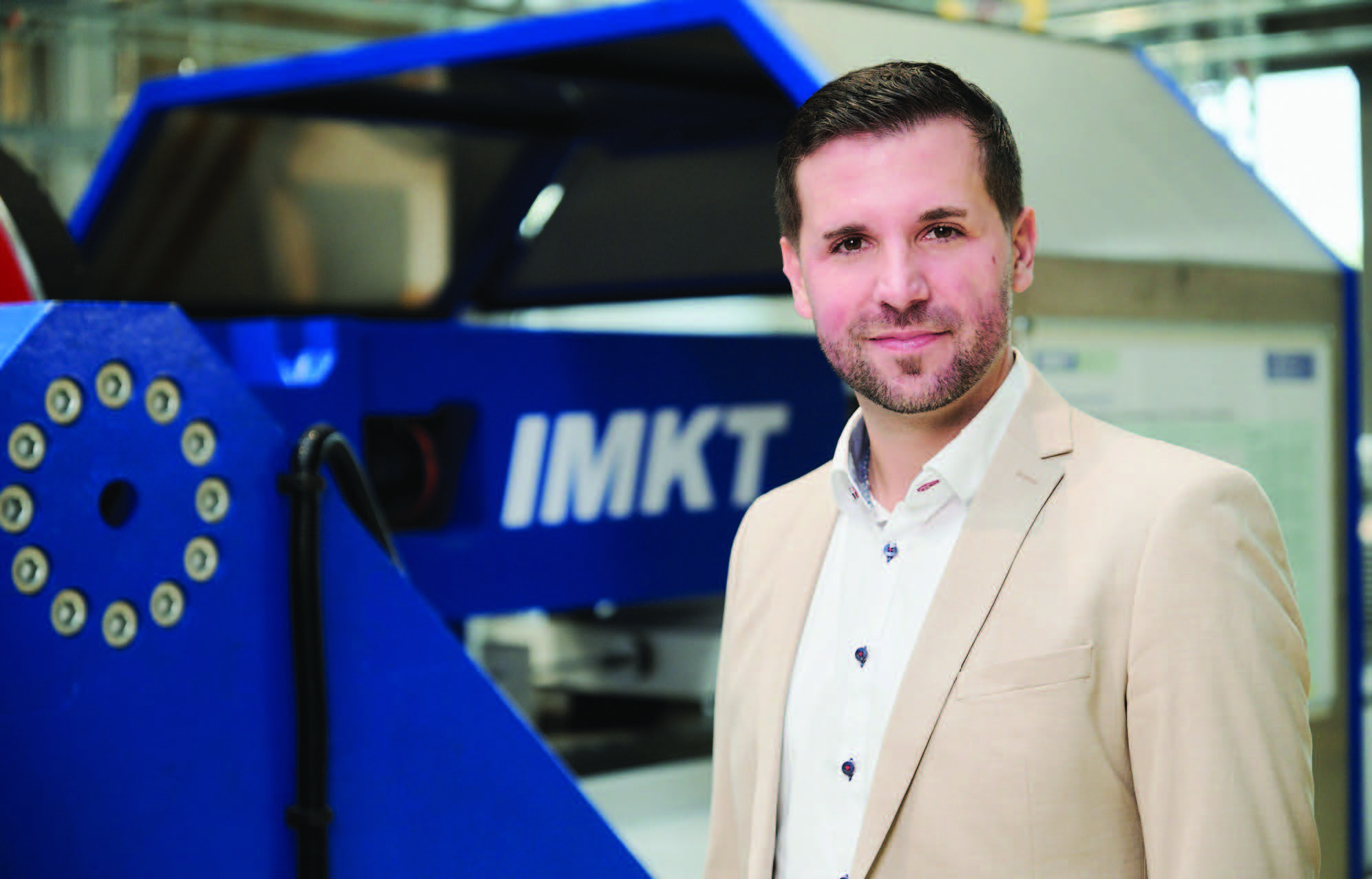
 Max Marian
TLT: How is tribology changing with the use of modern simulation, machine learning and other numerical methods?
Marian: Tribology has always been an inherently interdisciplinary field. Friction, wear and lubrication are not isolated material properties, but rather emergent system responses that arise from highly coupled interactions between surfaces, materials, lubricants, operating conditions and environmental influences. This complexity makes tribology both fascinating and challenging, because many of the underlying mechanisms occur simultaneously across very different spatial and temporal scales. Traditionally, our field relied strongly on empirical testing, simplified analytical equations and highly specialized numerical simulations. While these approaches remain fundamental, modern simulation technologies and machine learning are significantly transforming how we study and engineer tribological systems.
One major change is the increasing ability to bridge scales and connect local contact phenomena to complete engineering systems. In the past, very detailed elastohydrodynamic lubrication or contact simulations often required enormous computational effort and were therefore difficult to integrate into system-level design processes. Today, artificial intelligence (AI) or machine learning models can act as surrogate models for these expensive simulations. This means that we can train models on high-fidelity numerical or experimental datasets and subsequently predict quantities such as film thickness, pressure distributions, friction behavior or wear evolution with drastically reduced computational cost. In some cases, predictions that previously required hours of computation can now be performed almost in real time while maintaining very high accuracy. At the same time, machine learning allows us to identify hidden relationships in highly multidimensional datasets that would be difficult to observe manually. Tribological systems are often influenced by a large number of coupled parameters: surface topography, chemistry, temperature, lubricant formulation, loading history, humidity, contamination, transient operating conditions and many others. AI methods can help us uncover nonlinear dependencies and interaction effects that are difficult to capture using conventional regression or simplified physical models alone. This is especially relevant because tribological behavior is often path-dependent, meaning that the system “remembers” previous states through wear, transfer layers, surface evolution or lubricant degradation.
However, I believe it is very important to emphasize that AI should not be understood as a replacement for physical understanding. In engineering, and especially in tribology, black-box predictions alone are usually not sufficient. The future lies much more in hybrid and physics-informed approaches, where data-driven methods are combined with mechanistic models and governing equations. Physics-informed machine learning, for example, allows us to integrate known physical laws directly into the learning process, improving robustness, interpretability and extrapolation capability. I am always saying that AI is a useful servant, but a dangerous master. In this sense, we should understand it as an additional engineering tool that complements human expertise and physical reasoning rather than replacing it.
Another major transformation concerns data itself. Historically, a tremendous amount of tribological knowledge has been generated worldwide, but much of it remains fragmented in spreadsheets, local databases, papers or isolated experiments. The rise of AI makes structured and reusable data increasingly important. This is why concepts such as FAIR data principles, making data findable, accessible, interoperable and reusable, are becoming highly relevant for our field. We are moving from isolated “data islands” toward interconnected knowledge networks that allow experiments, simulations and literature knowledge to be linked more efficiently. In the long term, this could fundamentally accelerate scientific discovery and collaborative engineering development.
Beyond simulation and modeling, AI is also changing experimental tribology. Modern test rigs increasingly integrate embedded sensors, automation and real-time monitoring systems. This opens the possibility for adaptive testing strategies, where experiments are dynamically modified based on live data analysis. In the future, we may even see partially autonomous laboratories that combine robotics, simulation and AI-driven optimization loops.
Ultimately, the most exciting aspect for me is that these technologies enable us to tackle problems that were previously too complex, too expensive or too time-consuming to address comprehensively. They allow us to develop more reliable and efficient tribological systems, accelerate material and lubricant design, improve predictive maintenance and support sustainability goals through reduced energy losses and longer component lifetimes. In many ways, tribology is evolving from a predominantly empirical discipline into an increasingly predictive and data-enriched engineering science.
TLT: Engaging at the university in Germany and Chile is a lot of travel effort. What is the benefit of this experience?
Marian: It is true that working actively between Germany and Chile involves considerable travel effort, and I am trying to reduce this as much as possible. Fortunately, modern digital collaboration tools have made international cooperation much easier than in the past. Nevertheless, I still consider it an enormous privilege to work closely with talented students, researchers and colleagues in two leading institutions located within two very different academic, cultural and industrial ecosystems. The benefits of this experience go far beyond logistics or professional networking. One of the most enriching aspects is the exposure to fundamentally different ways of thinking about engineering, research and education. Germany has a very strong tradition in precision engineering, industrial integration, manufacturing technologies and long-term engineering structures. Chile, in contrast, often approaches challenges with flexibility, creativity and interdisciplinary openness, partly driven by very different industrial and societal conditions. Experiencing both perspectives simultaneously creates a highly stimulating environment for innovation because it constantly challenges assumptions and broadens the way one approaches scientific and engineering problems.
The collaboration between Europe and Latin America is also scientifically highly complementary. Chile has globally important industries and infrastructures related to mining, renewable energy and raw materials, while Germany has strong industrial ecosystems in mobility, machine design and advanced production technologies. Many tribological challenges are directly connected to these sectors, ranging from sustainable energy systems and resource-efficient production to reliability and lifetime extension of industrial machinery. By connecting expertise and perspectives across continents, one can often identify research questions and solutions that might not emerge within a single regional context alone.
Another important aspect is the human dimension. International collaboration creates strong academic and personal relationships that are incredibly valuable. Working with people from different cultural and educational backgrounds teaches openness, adaptability and communication skills. It also reminds us that science and engineering are fundamentally global activities. The major technological challenges we face today are global problems that cannot be solved within isolated national contexts. I also try to actively pass this international experience on to my teams and students. One of my goals is to create opportunities for exchange, mobility and collaborative work across institutions and countries. Students benefit enormously from international exposure, not only academically but also personally. Experiencing another academic system often broadens their perspective on engineering, teamwork, communication and problem-solving. It helps them understand that there are multiple valid ways to approach scientific and technical challenges. Therefore, in teaching and supervision, I try to create an environment where international collaboration becomes normal rather than exceptional. Another important point is that exposure to different academic systems also creates a more critical perspective on one's own structures. You begin to recognize strengths and weaknesses more clearly and can transfer successful ideas from one environment into another. This can concern teaching concepts, research organization, industry collaboration, student engagement or even institutional culture.
TLT: Tribology is a very diverse scientific field. How do you engage with students and excite them for the topics?
Marian: One of the most fascinating aspects of tribology is precisely its diversity. Tribology connects physics, chemistry, materials science, mechanics, fluid dynamics, manufacturing, data science and machine design, often within the same problem. At the same time, tribological phenomena are everywhere in daily life and industry, even though many people are initially not aware of it. This makes tribology both challenging and extremely rewarding to teach because students quickly realize how strongly friction, wear and lubrication influence energy efficiency, reliability, sustainability, mobility, health and industrial productivity.
In my teaching philosophy, I strongly follow Humboldt's educational ideal, where research and teaching are closely interconnected. I believe students become most engaged when they experience that what they are learning is directly connected to real scientific and industrial challenges. Therefore, our research activities across scales are also reflected in the courses. Students do not only learn abstract theories or equations but also see how these concepts relate to actual engineering systems and ongoing research projects. In my case, the educational pathway starts at the machine-element level during undergraduate studies. Students first encounter tribology in the context of bearings, gears, seals or lubrication systems. From there, they can gradually specialize further into more fundamental tribological phenomena at the intersection to materials, physics, chemistry and biology. Alternatively, students may move more toward application-driven areas such as drivetrains in wind energy or vehicle propulsion systems. I think this combination of fundamentals and applications is extremely important because it allows students with different interests and backgrounds to find their own connection to the field. One aspect that is especially important to me is making students experience the topics physically and intuitively rather than only theoretically. Tribology can easily become abstract if taught purely mathematically. Therefore, we bring demonstrator systems, industrial components, experimental examples and real engineering failures directly into the classroom whenever possible. When students can physically hold a damaged bearing, observe lubricant behavior, analyze worn surfaces or see how friction influences the efficiency of a system, the subject suddenly becomes much more tangible and memorable. The direct connection to industry also plays a major role. Many students are highly motivated when they understand that tribological phenomena are directly linked to current societal and technological challenges. Topics such as renewable energy, electric mobility, sustainability, resource efficiency or circular economy are all deeply connected to tribology. Students begin to realize that improving friction and wear behavior is not a niche problem, but rather something with significant global impact in terms of energy consumption, emissions, reliability and material usage.
At the postgraduate level, we are currently experimenting strongly with new educational concepts. One major focus is the implementation of flipped-classroom approaches, where students engage with the learning material asynchronously before the in-person sessions. This allows classroom time to be used much more interactively for discussions, case studies, problem-solving activities and experimental demonstrations. We are also converting courses into multilingual formats using AI-supported workflows. This includes multilingual video capsules, automated subtitling and AI-assisted translation processes. In addition, we are integrating specially trained AI chatbots into our learning platforms. These systems are designed to function as interactive tutors that can answer technical questions, provide explanations and support individualized learning. I believe these tools can become extremely valuable, particularly in international and diverse classrooms, because students have different learning speeds, backgrounds and language proficiencies. The goal is not to replace human teaching but to create additional support structures that improve accessibility and student engagement.
TLT: Tribology can be well connected to sustainability. How important is this topic for you?
Marian: Sustainability is one of the central motivations behind our work. In my opinion, for anything you are doing, and especially when working with students and young researchers, you need a very strong “why.” Sustainability is, or at least should be, one of the strongest motivations in modern engineering. It gives meaning and direction to technological development and reminds us that engineering solutions should ultimately contribute positively to society and future generations. Tribology is actually much more connected to sustainability than many people initially realize. Friction and wear are directly linked to enormous global energy and resource losses. A substantial portion of worldwide energy consumption is associated with tribological contacts, and every improvement in efficiency, reliability or lifetime can therefore have significant environmental and economic impact. Reducing friction means reducing energy losses. Reducing wear means extending component lifetime, decreasing material consumption, lowering maintenance requirements and enabling more effective remanufacturing and circular economy strategies. This becomes especially visible in sectors such as renewable energy, mobility, industrial production or heavy machinery.
For example, in wind energy systems, the majority of the environmental footprint is often associated with manufacturing, raw materials, transport and installation rather than operation itself. Therefore, increasing the operational lifetime of drivetrain components can dramatically improve the overall sustainability of the system. Extending service life by even a few years can reduce the environmental footprint. Similar arguments apply to vehicles, manufacturing equipment, rail systems or industrial machinery. Another important aspect is resource efficiency. Modern engineering systems often rely on highly sophisticated materials, coatings, lubricants and manufacturing processes. These resources are valuable and, in many cases, geopolitically sensitive. Tribology contributes by helping preserve value over longer periods through maintenance, repair, remanufacturing and durability-oriented design strategies. Sustainability also strongly influences the way we formulate research questions. For example, we are increasingly investigating biodegradable lubricants, energy-efficient machine elements, resource-efficient manufacturing strategies, remanufacturing concepts and intelligent condition monitoring systems that help avoid catastrophic failures and unnecessary replacements. In many cases, tribology acts as an enabling technology for sustainability because reliable and efficient motion systems are required in almost every industrial sector.
At the same time, sustainability is not only a technical challenge but also an educational and societal one. Students today are often searching for purpose and meaning in their studies and future careers. I believe engineering education should actively connect technical content with societal relevance. When students understand that improving friction and wear behavior contributes to climate goals, energy efficiency, renewable energy reliability and resource conservation, they become much more engaged and motivated. Sustainability provides a powerful narrative that connects fundamental engineering science with global challenges. This is also reflected in how we structure our courses and research activities. In teaching, we explicitly discuss topics such as climate change, resource efficiency, circular economy and the role of engineering in sustainable transformation. We try to demonstrate that tribology is not an isolated technical niche but rather an important contributor to broader sustainability goals. Many students are surprised when they realize how directly tribological improvements influence CO
2 emissions, energy efficiency and industrial resilience.
You can reach Max Marian at marian@imkt.uni-hannover.de.