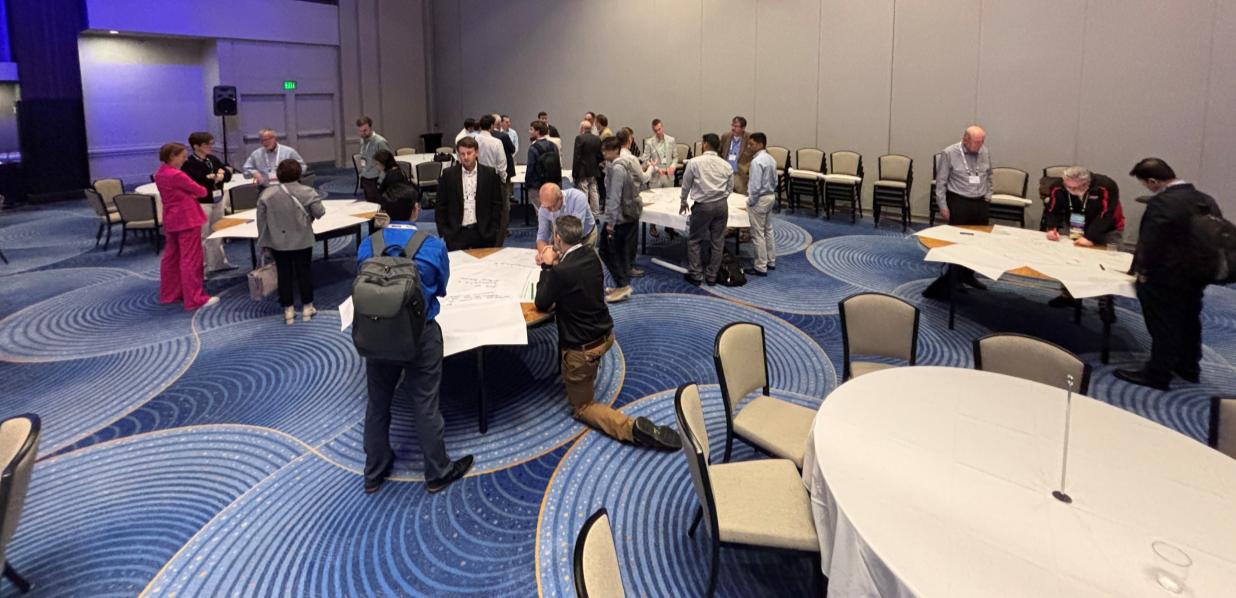
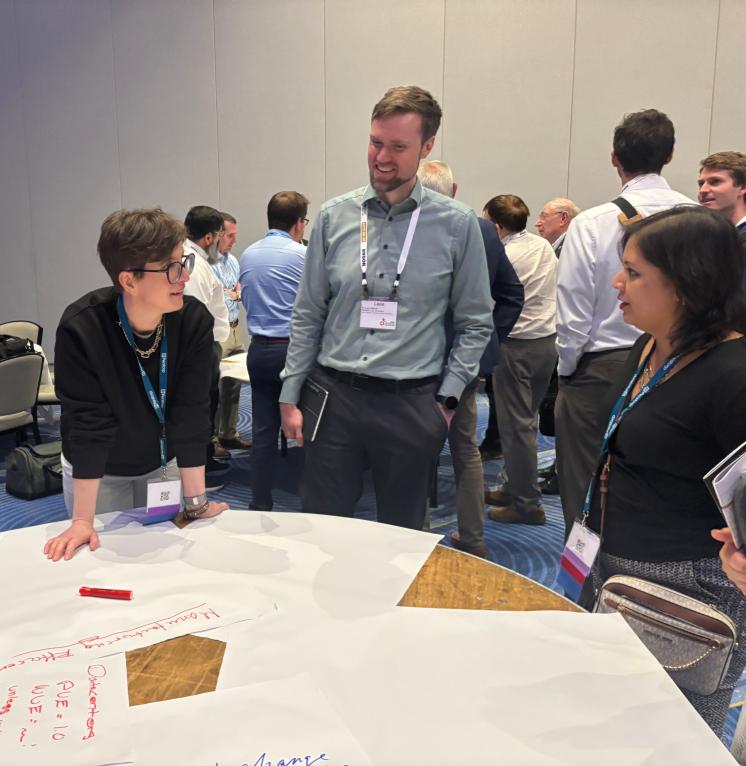
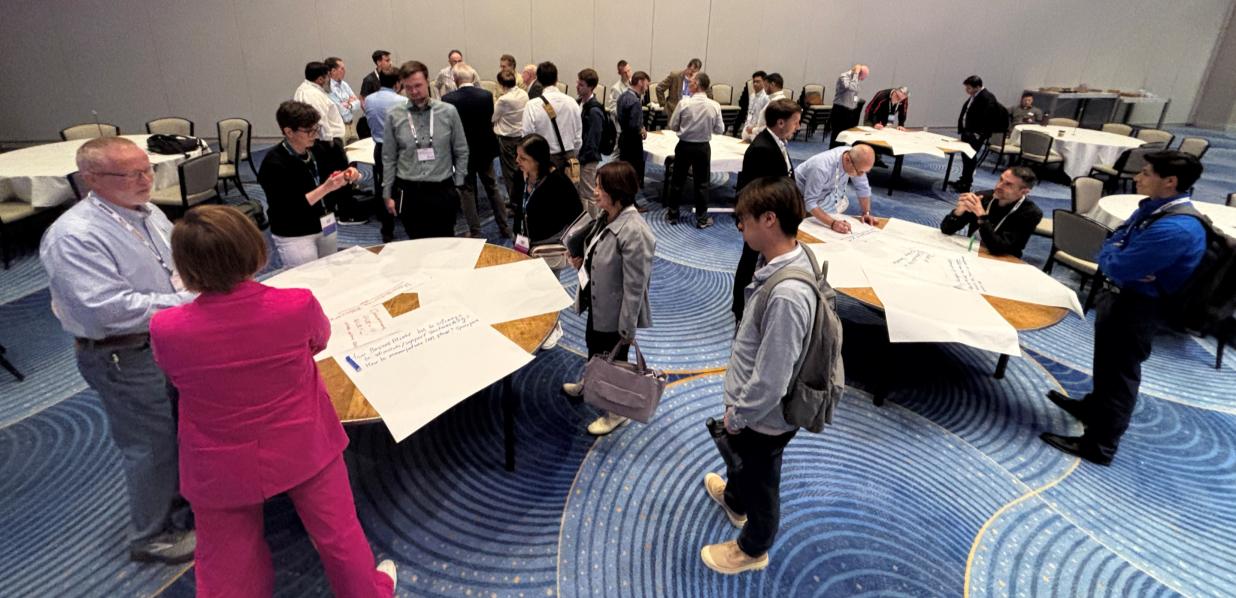
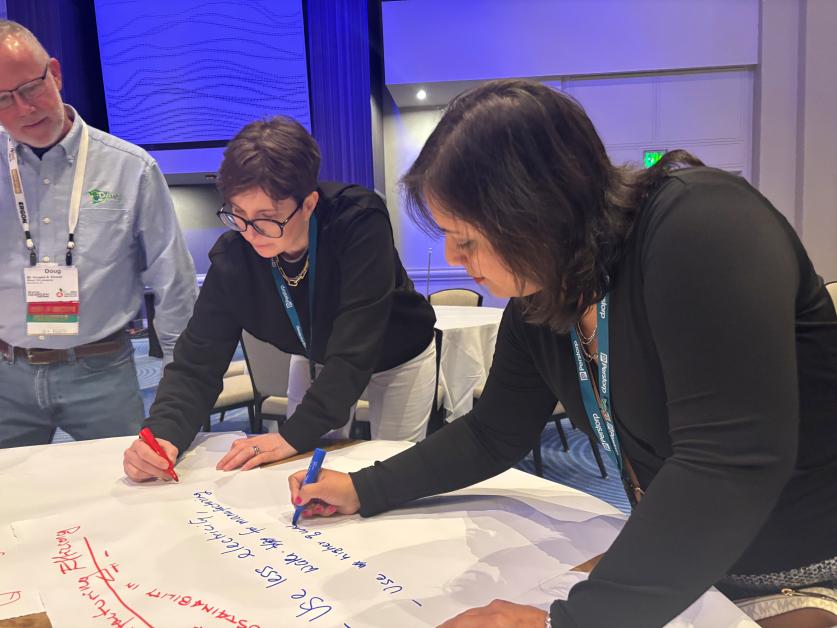
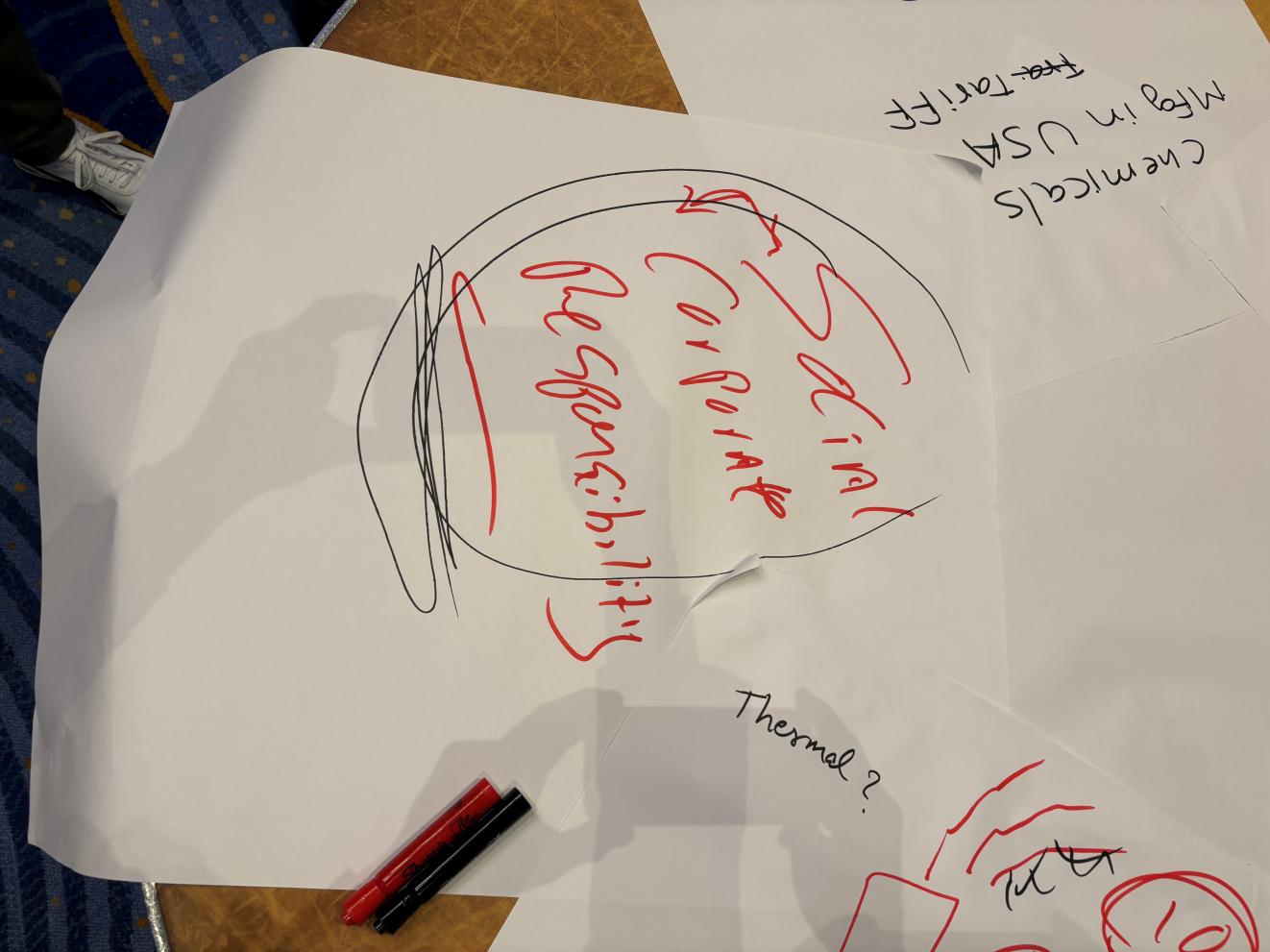
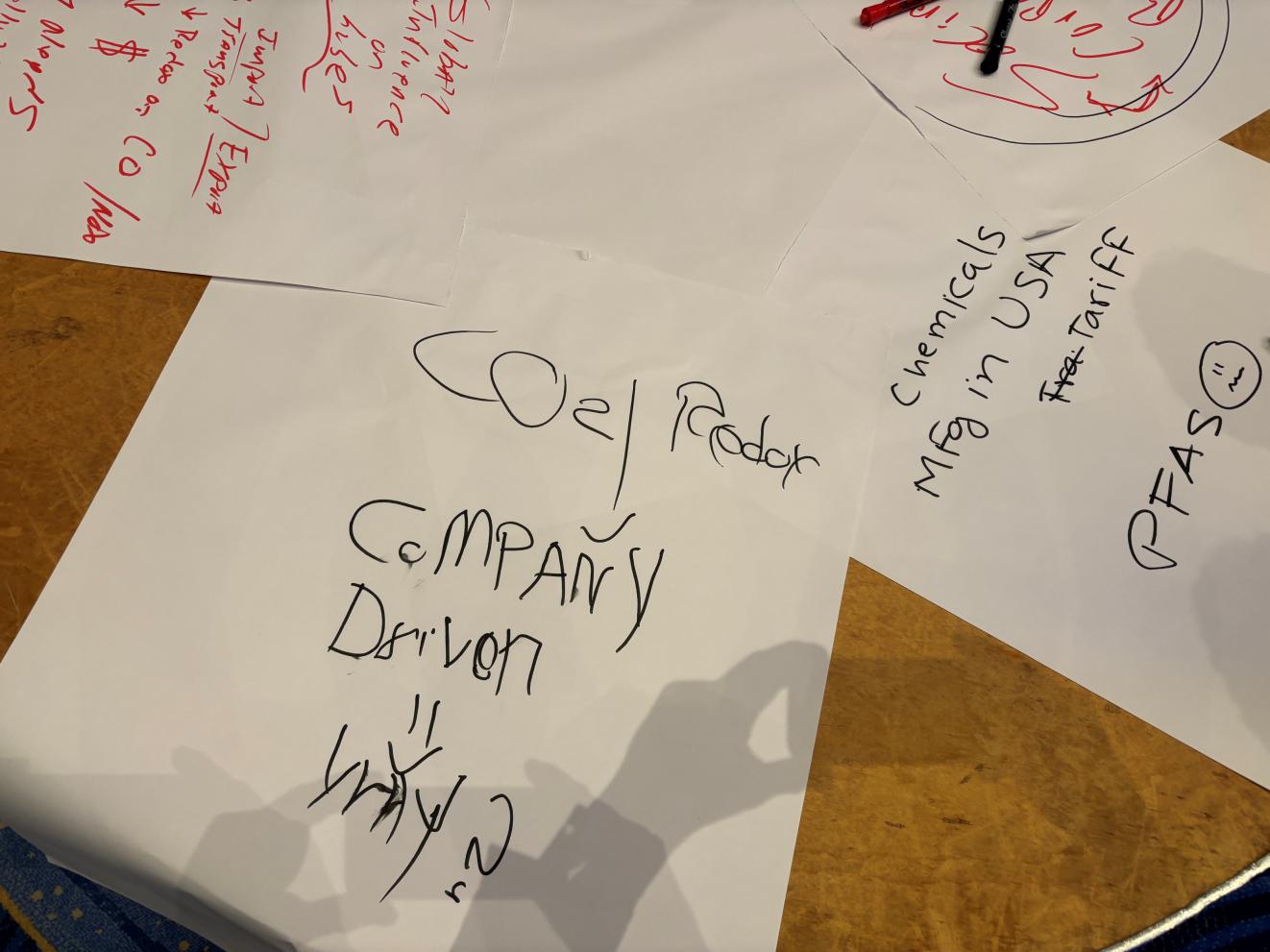
The Discussion Roundtables (DRTs) are a scientific brainstorming and networking event held annually at the STLE annual meeting. This event aims to encourage open discussions between experts of different disciplines on various topics of interest. The format of the DRTs is very fruitful to facilitate a creative atmosphere on complex topics’ character and to find technical impulses by brainstorming. The topics are proposed by the table hosts themselves and are based on current interests. A unique typical property of DRTs is the writable tablecloth to inspire the discussion as well as keep notes for subsequent discussions. The photos throughout this article are the documentation of this unusual format, based on quick thinking and easy collaboration, and thus might appear quick and dirty. But this is intentionally and helps all participants to recap the conversation. The benefit of DRTs goes beyond the technical impulses. During the DRTs, the hosts will guide the discussion only and not give a lecture. Active participation, including experience sharing from each participant, is one of the main features of this event, providing a unique opportunity to connect and learn.
At the 2025 STLE Annual Meeting & Exhibition in Atlanta, Ga., a lively DRTs session produced creative insights and discussions among the table hosts and attendees. This article provides a recap of the 2025 event and an invitation to participate in the next DRTs at the 2026 Annual Meeting & Exhibition: Innovating Through Tribology & Lubrication, May 17-21, 2026, in New Orleans, La. Registration opens December 1, and we are currently looking for table hosts for the 2026 DRTs. Please reach out if you are interested in learning more or volunteering. For the latest updates, visit www.stle.org/annualmeeting.
 Topics and table hosts
The 2025 DRTs highlighted how tribology intersects with urgent global priorities such as sustainability, energy transition and manufacturing efficiency. Common themes included the need for innovative solutions that improve performance while reducing environmental impact and operating costs. The event also emphasized the importance of collaboration and education in advancing tribology knowledge, strengthening industry practices and preparing for future challenges. The table hosts represented a range of global industry and academic backgrounds.
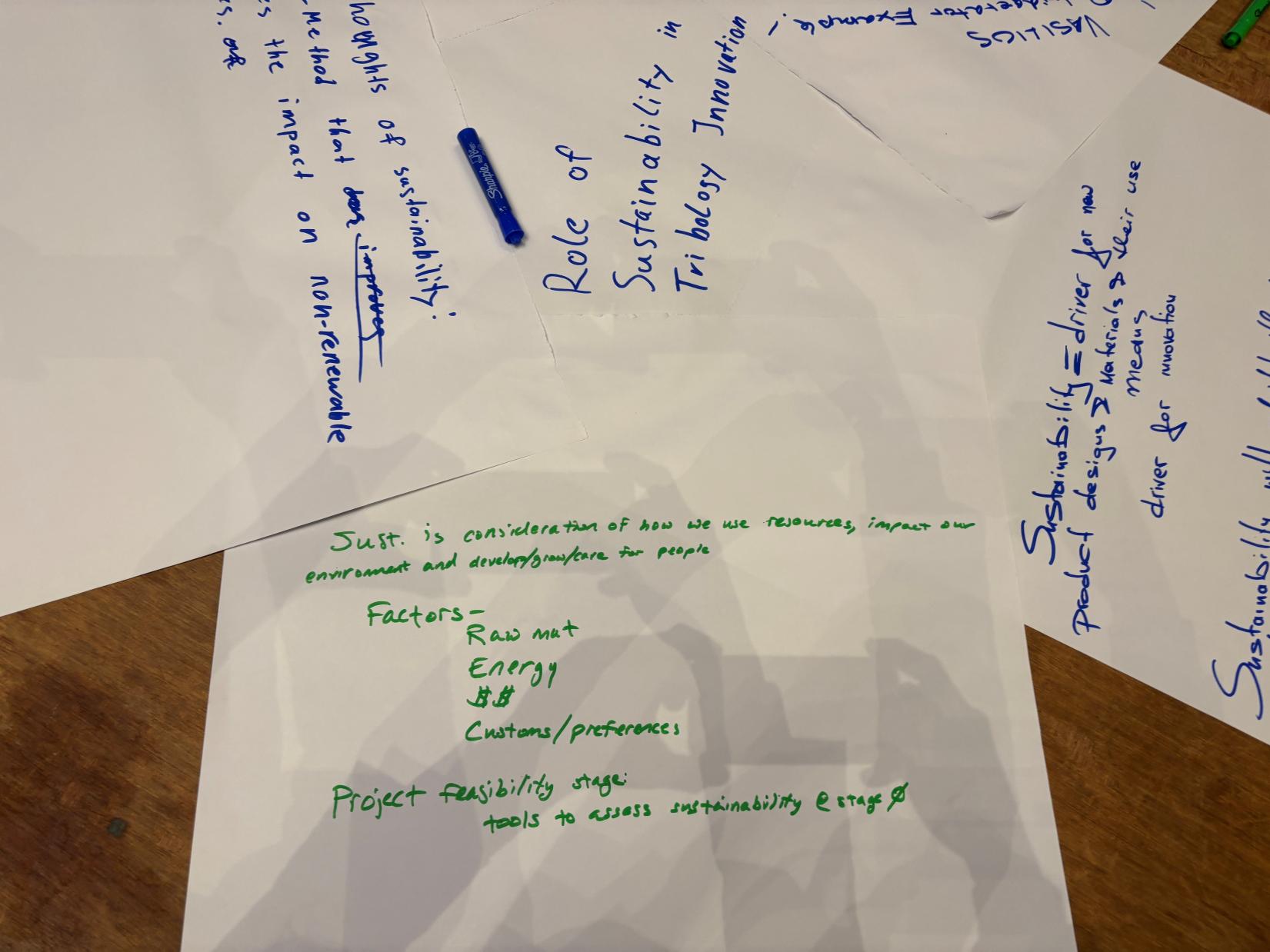
Role of sustainability in tribology innovation
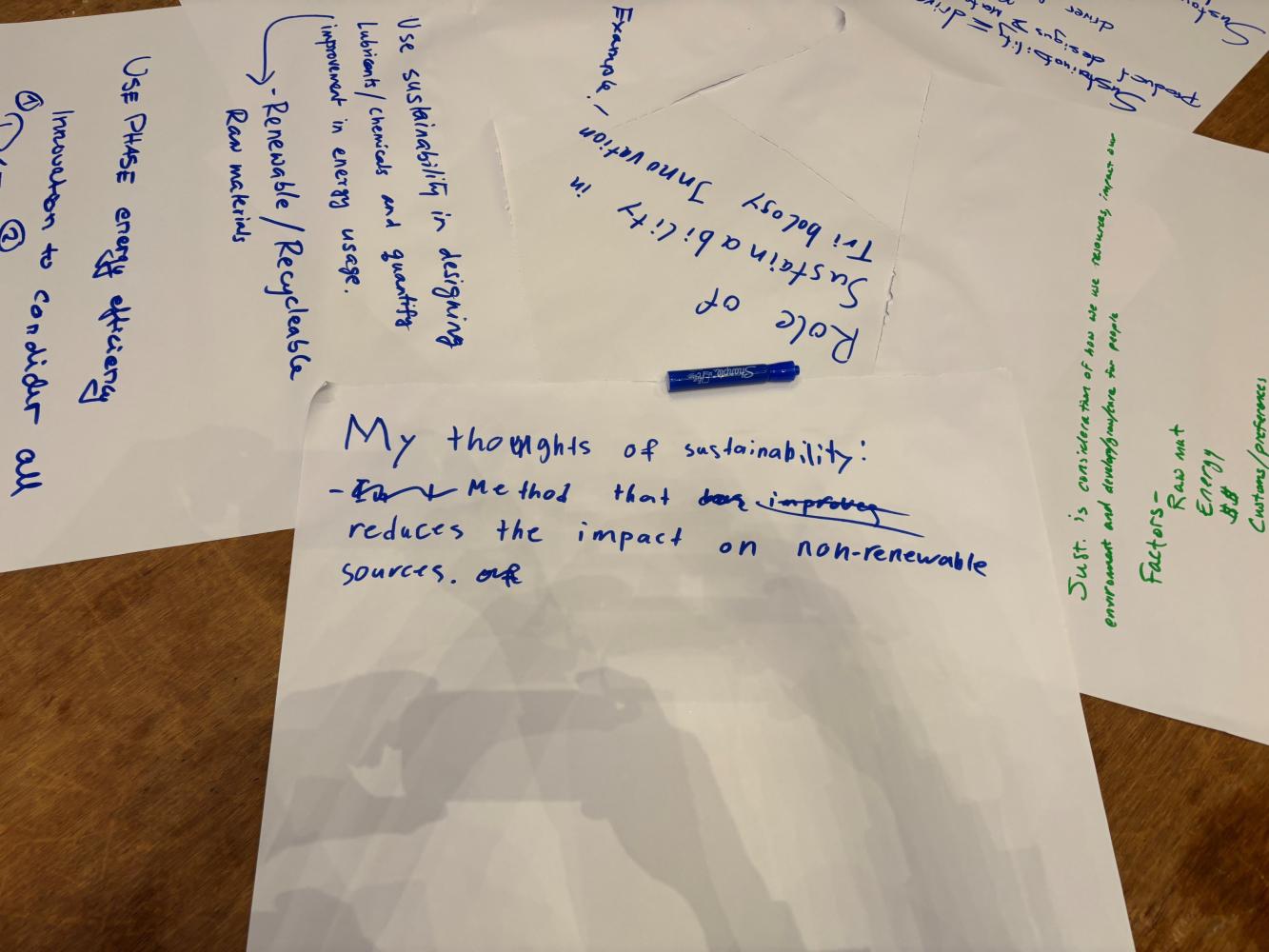
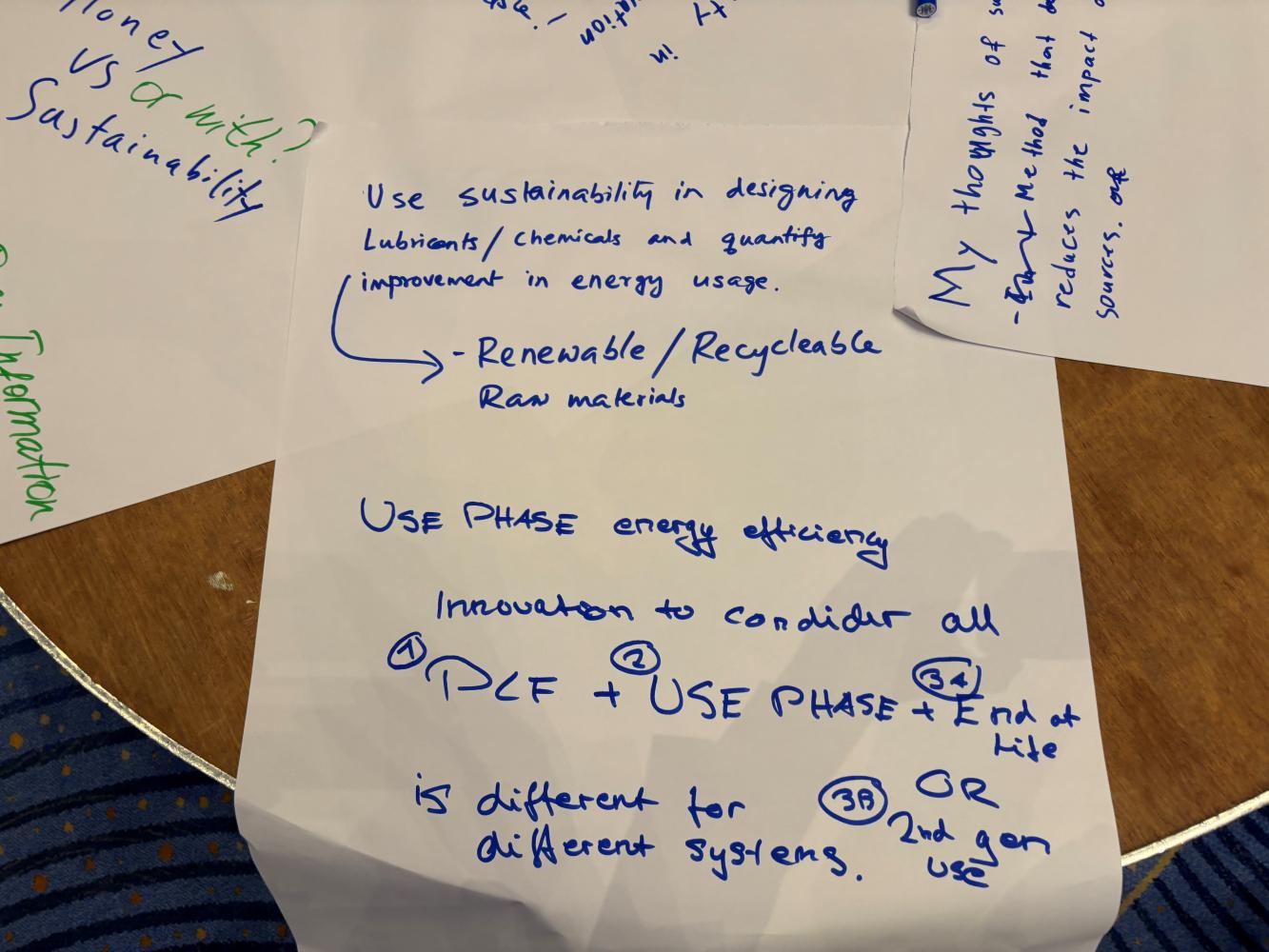
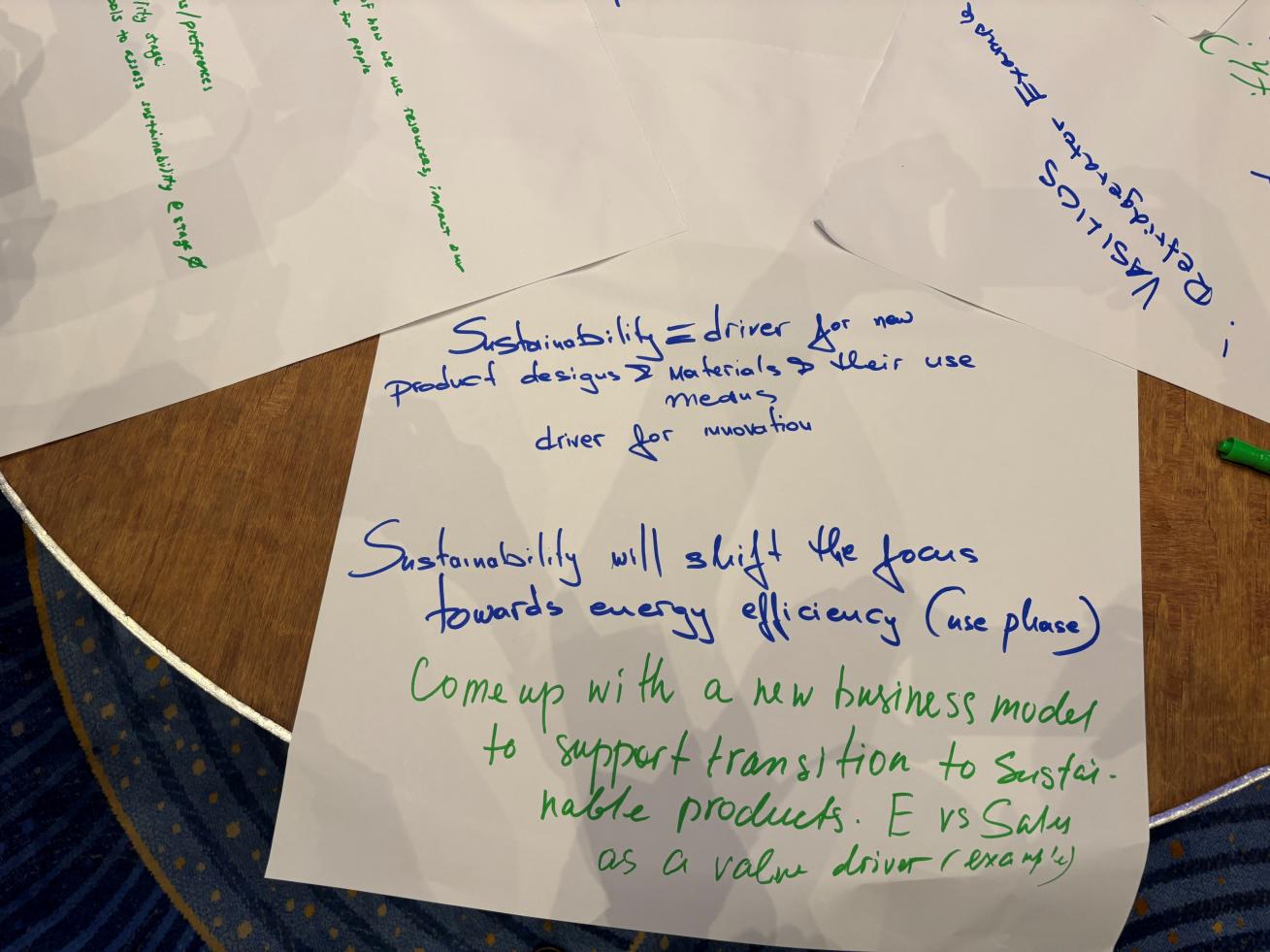
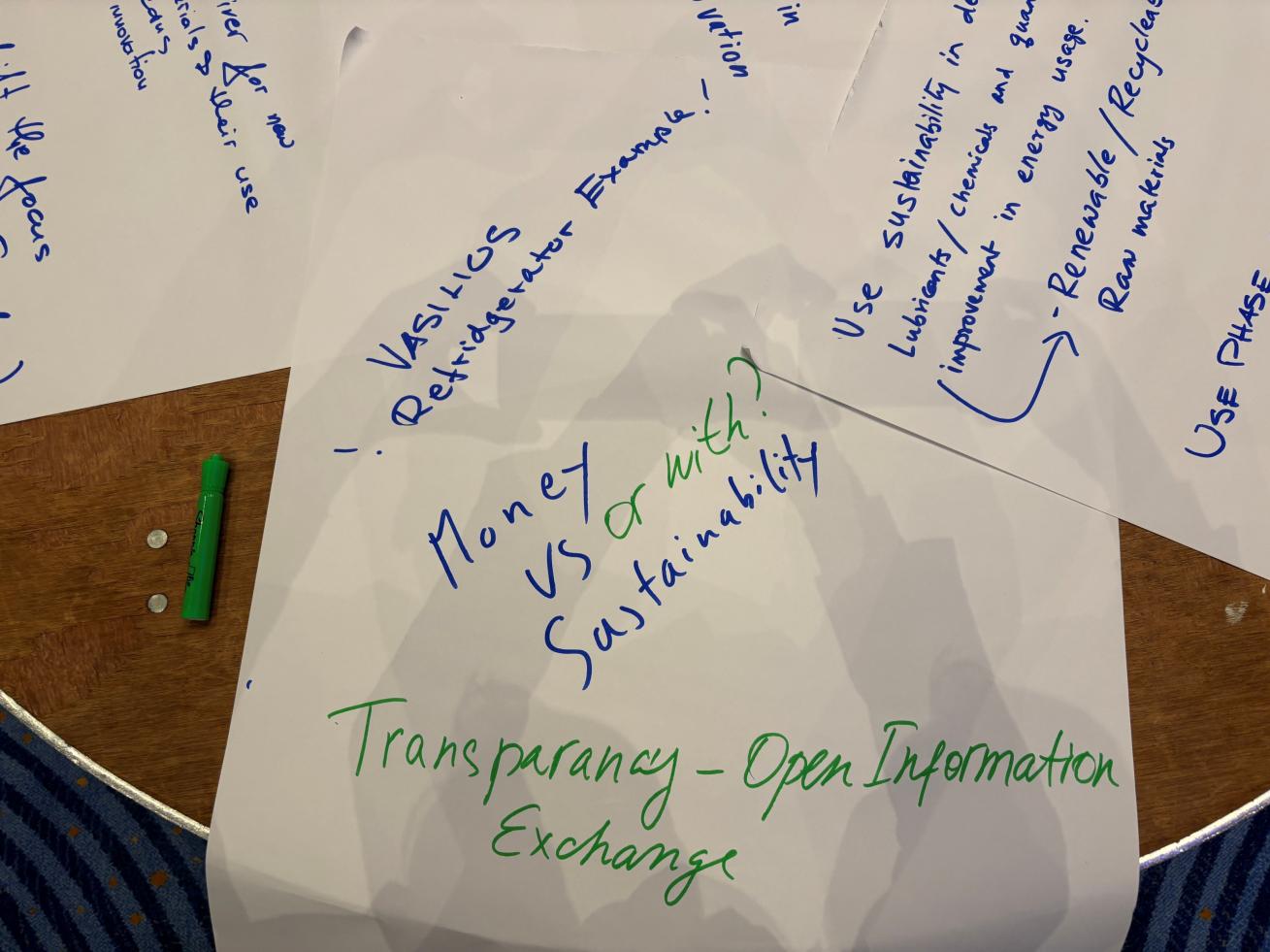
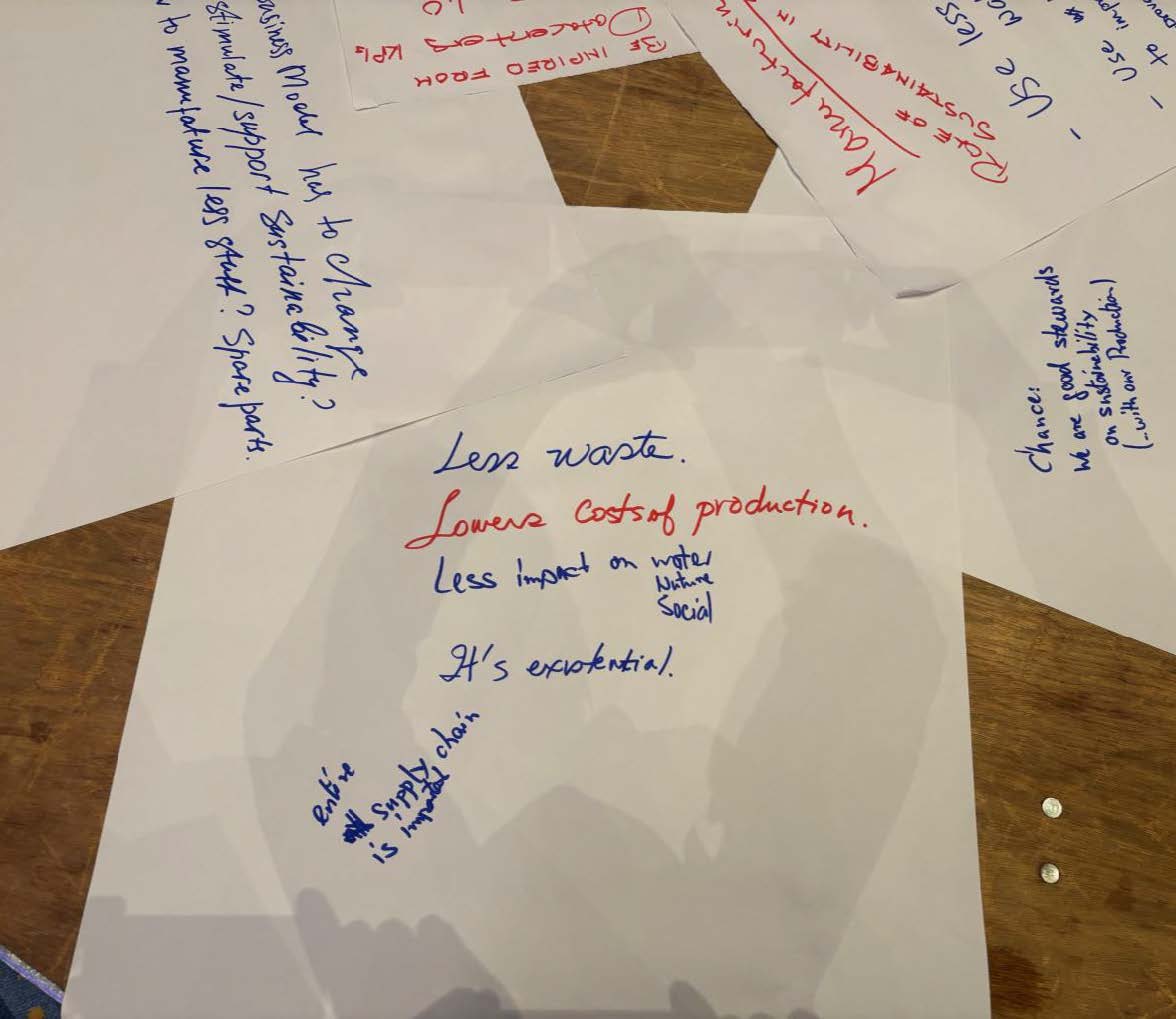
STLE member Dr. Neil Canter, Chemical Solutions, and Manuel Zuercher, Schaeffler Technologies, led a visionary discussion on the role of sustainability in tribology innovation now and into the future. The purpose of this ideation session was for participants to engage in a discussion about how the tribology field can develop innovative products and services that will enable users to achieve sustainability through reducing production carbon footprints for their processes, improving their plant efficiencies, reducing energy usage and reducing operating costs. A key element of the discussion was how lubricants, derived from synthetic, renewable and re-refined sources, can be better employed to provide superior performance in a wide range of automotive and industrial applications. Input from participants was documented for further review and guidance for the STLE Sustainability Committee and STLE membership.
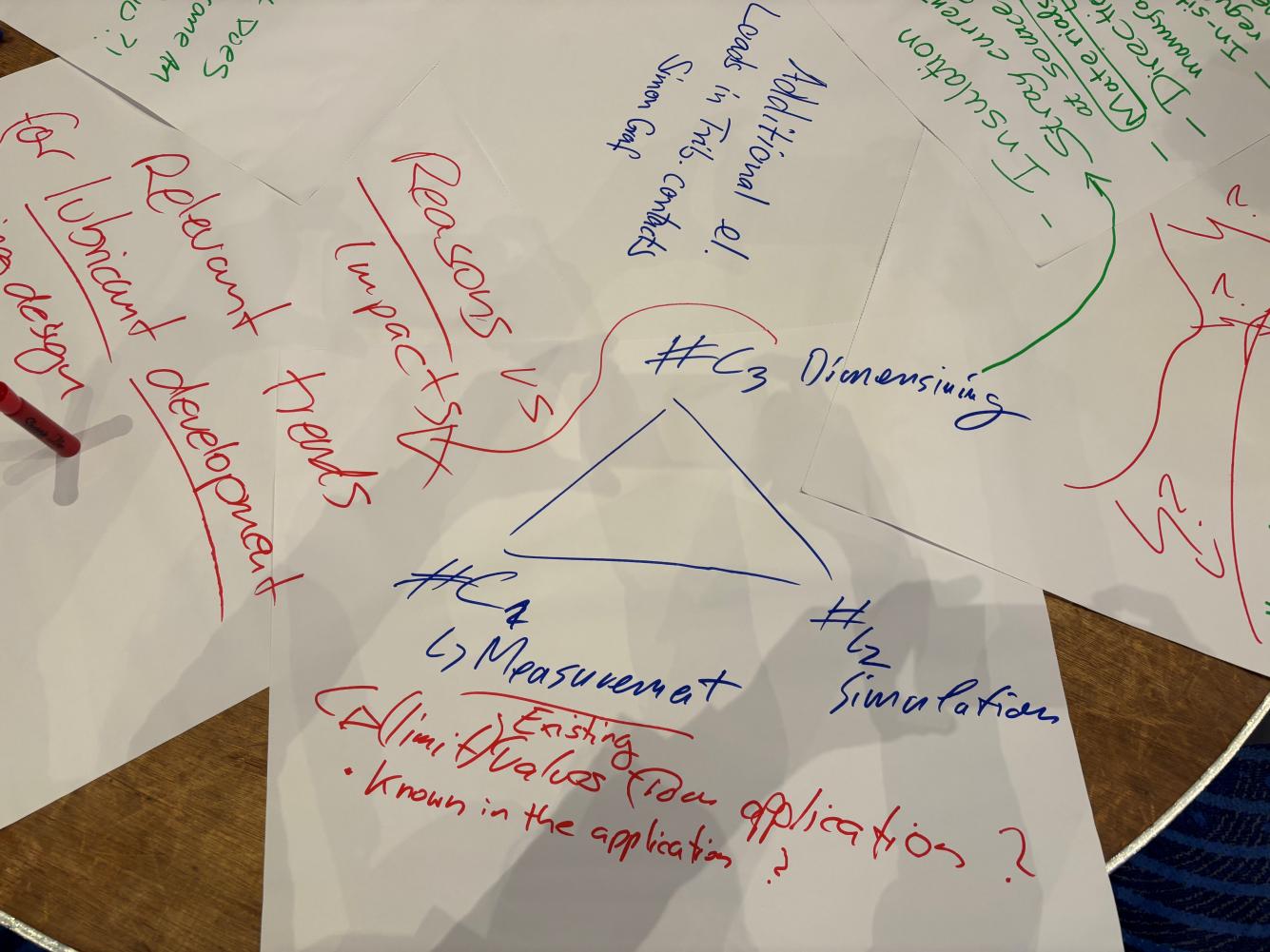
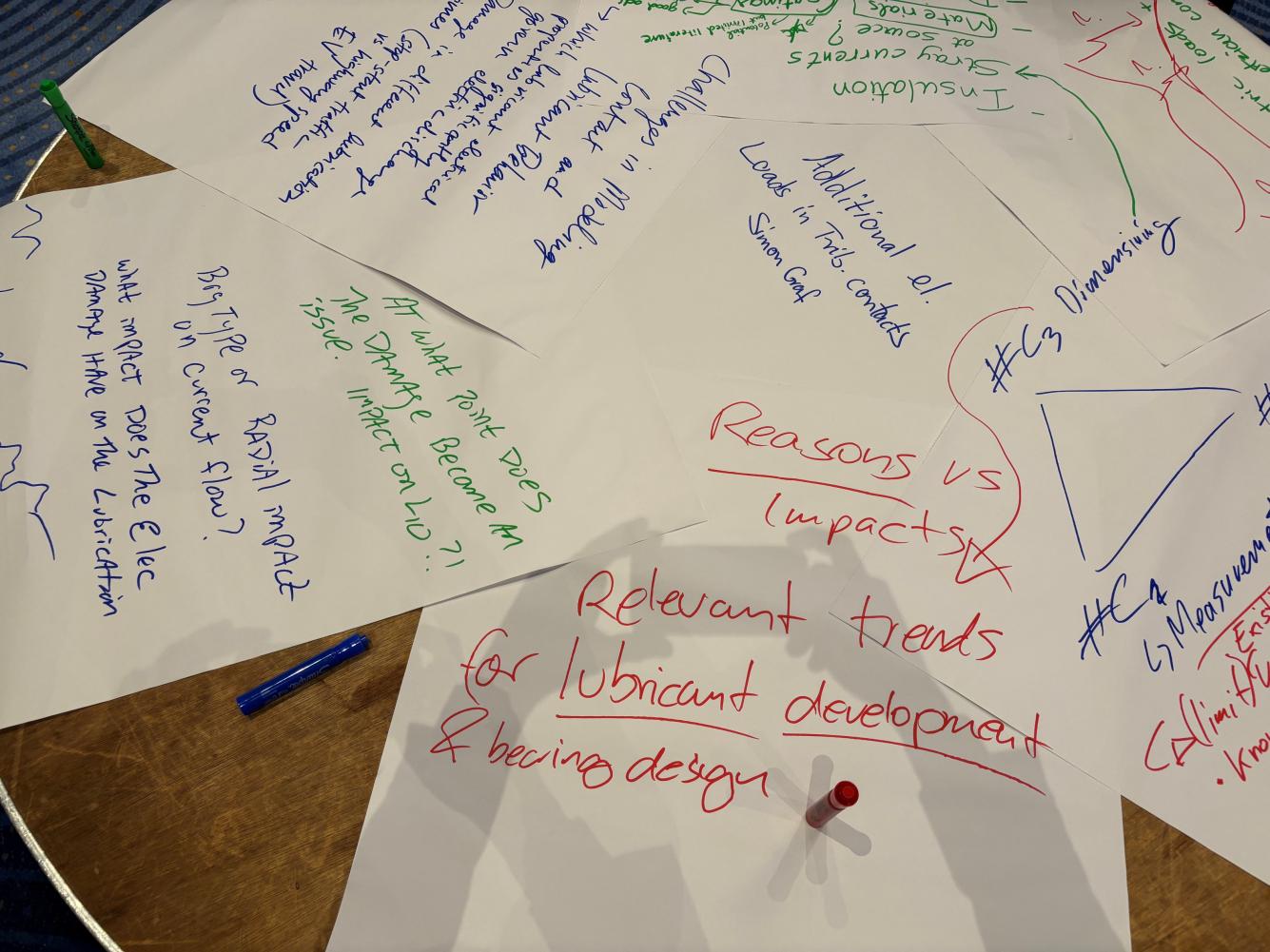
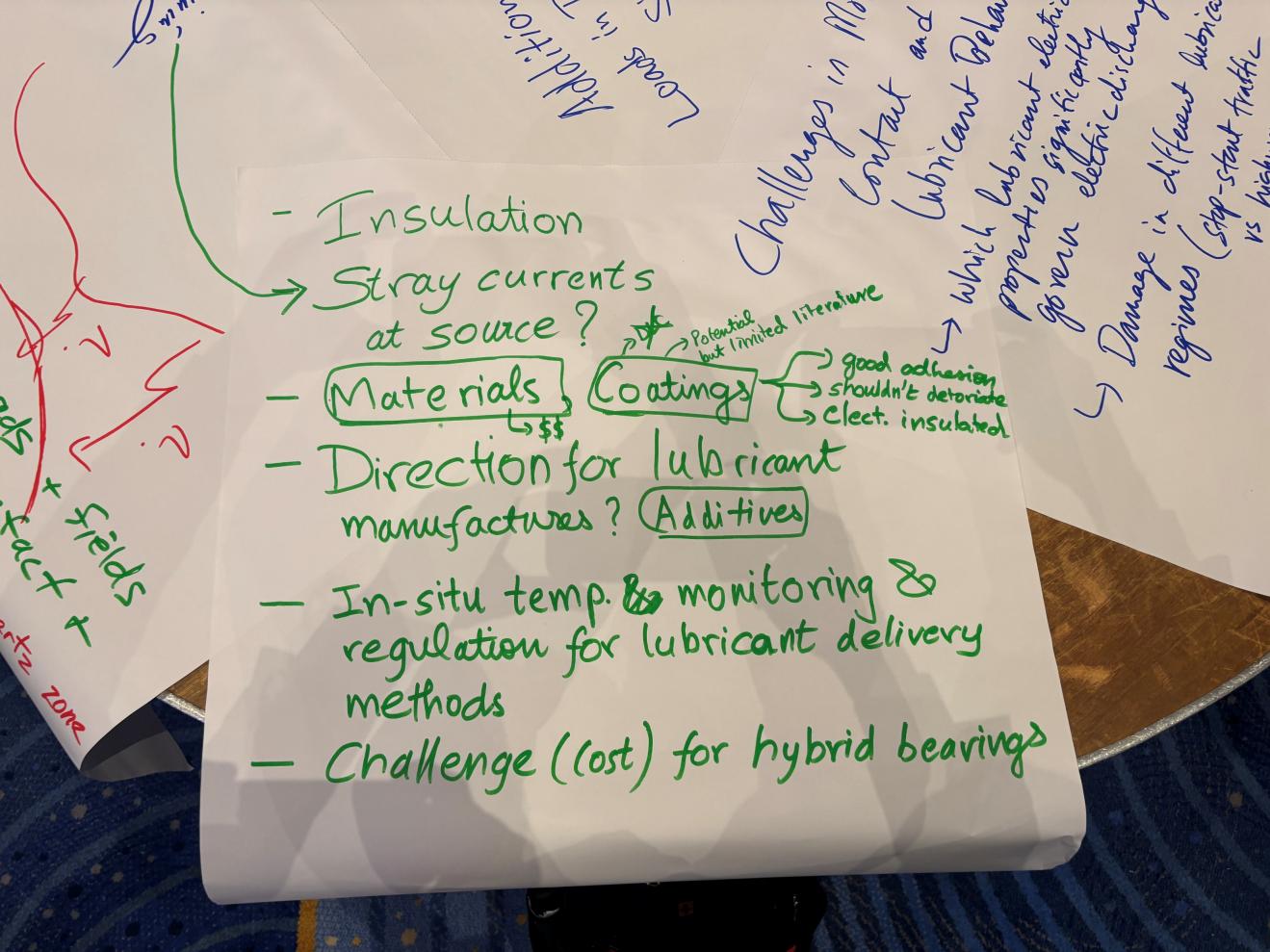
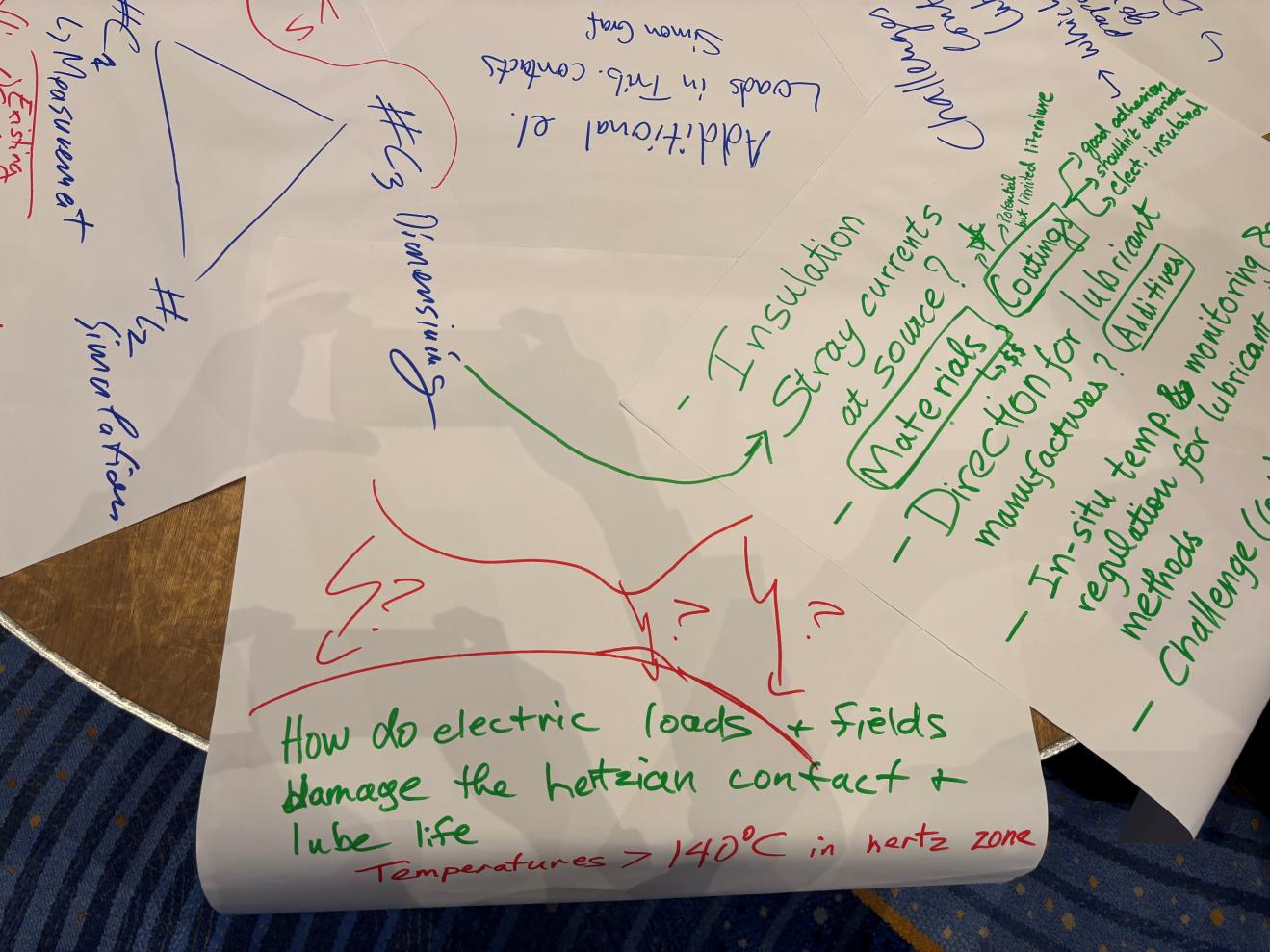
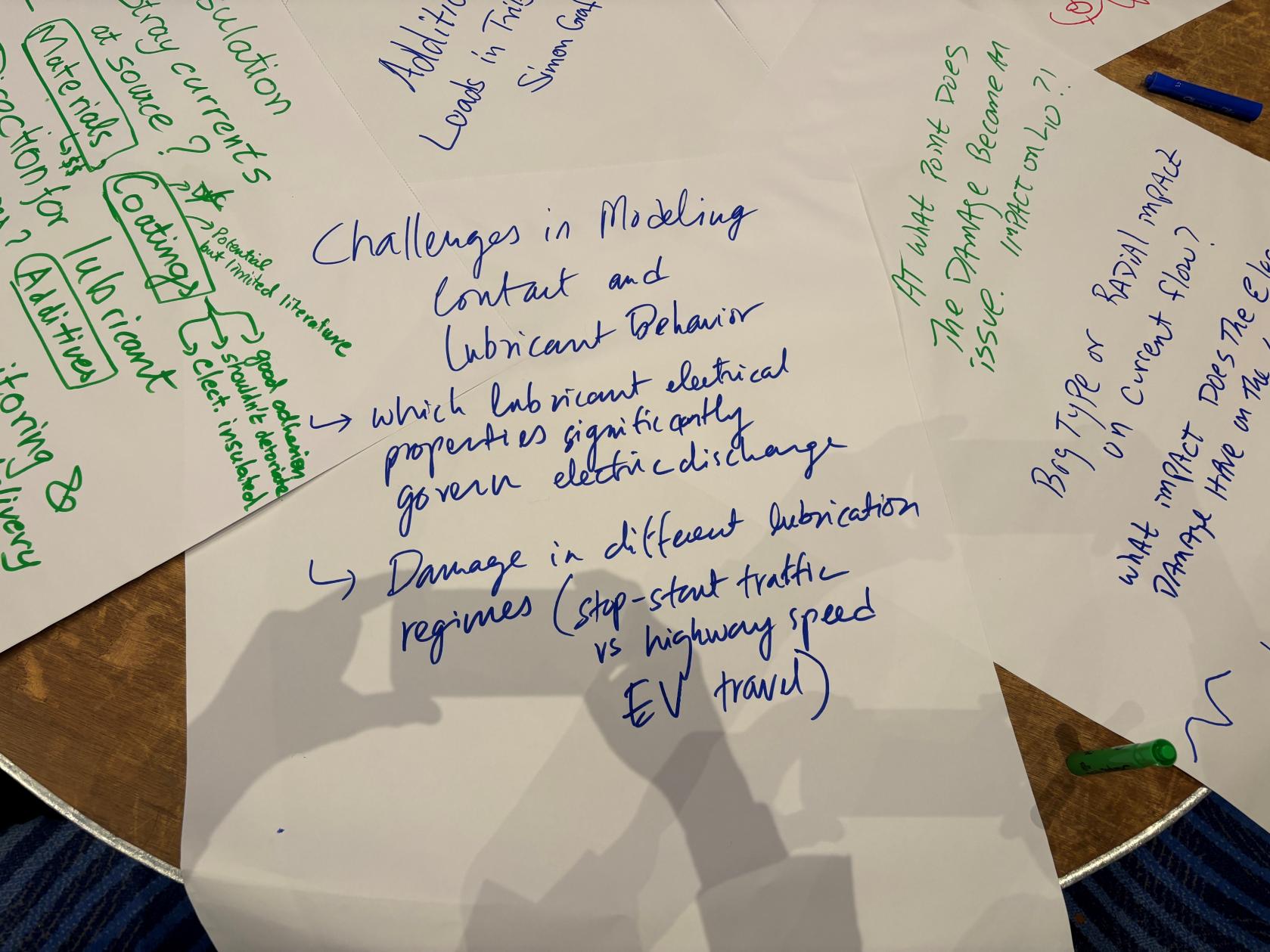
 New challenges for tribological contacts - additional electrical loads
Additional electrical loads in tribological contacts are increasingly becoming a critical issue, particularly in key technologies such as wind turbines and electric vehicles. Rolling bearings in electric machines (motors and generators) as well as gear transmissions are particularly affected, often leading to premature component failures in practice. A key factor in this phenomenon is the complex interaction between the applied electrical field and the tribological conditions within the contact zone. At this table, led by Simon Graf, Technical University of Kaiserslautern, participants exchanged insights on mitigating electrical loads in tribological systems and enhancing the reliability and longevity of critical components.
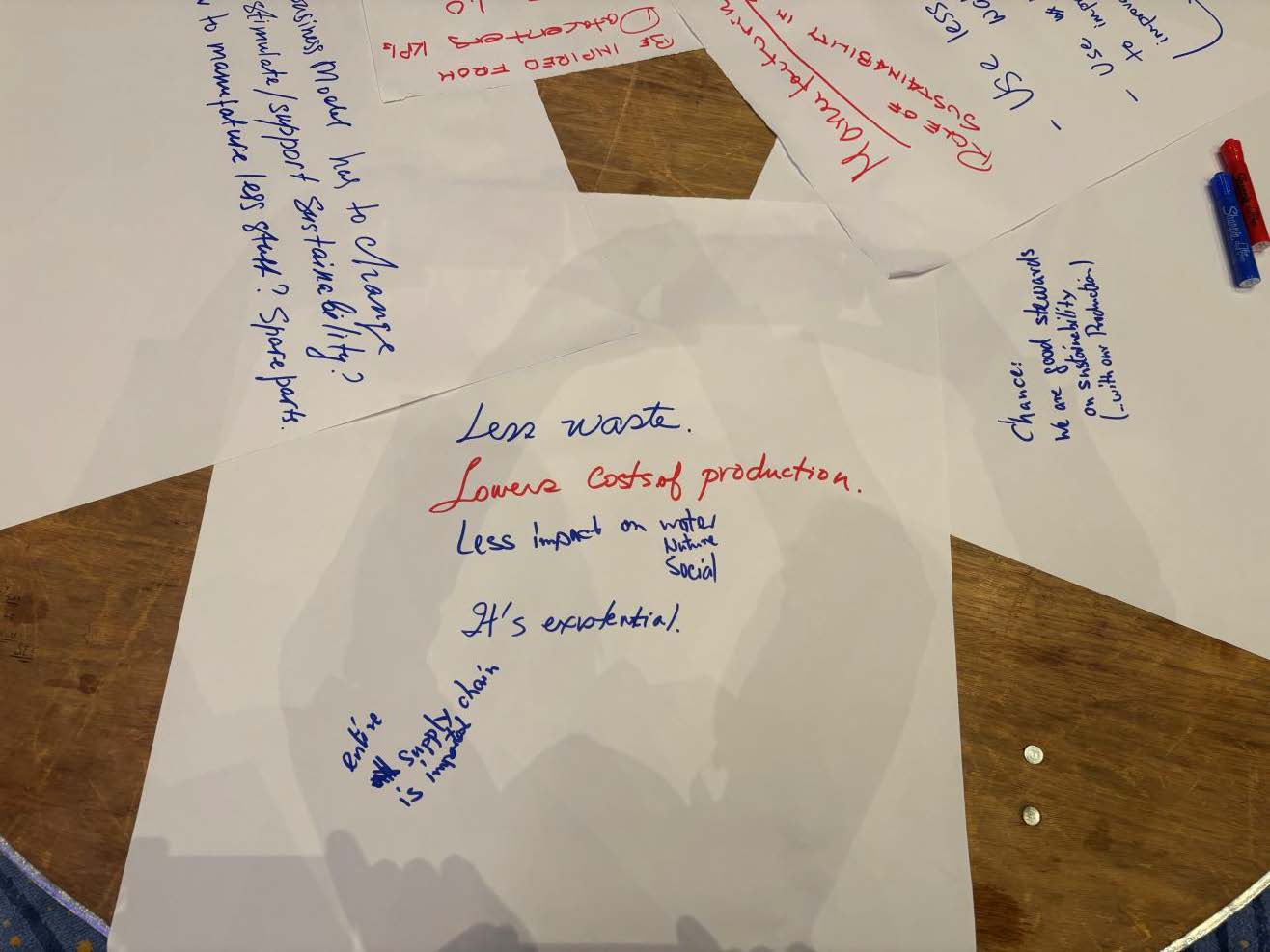
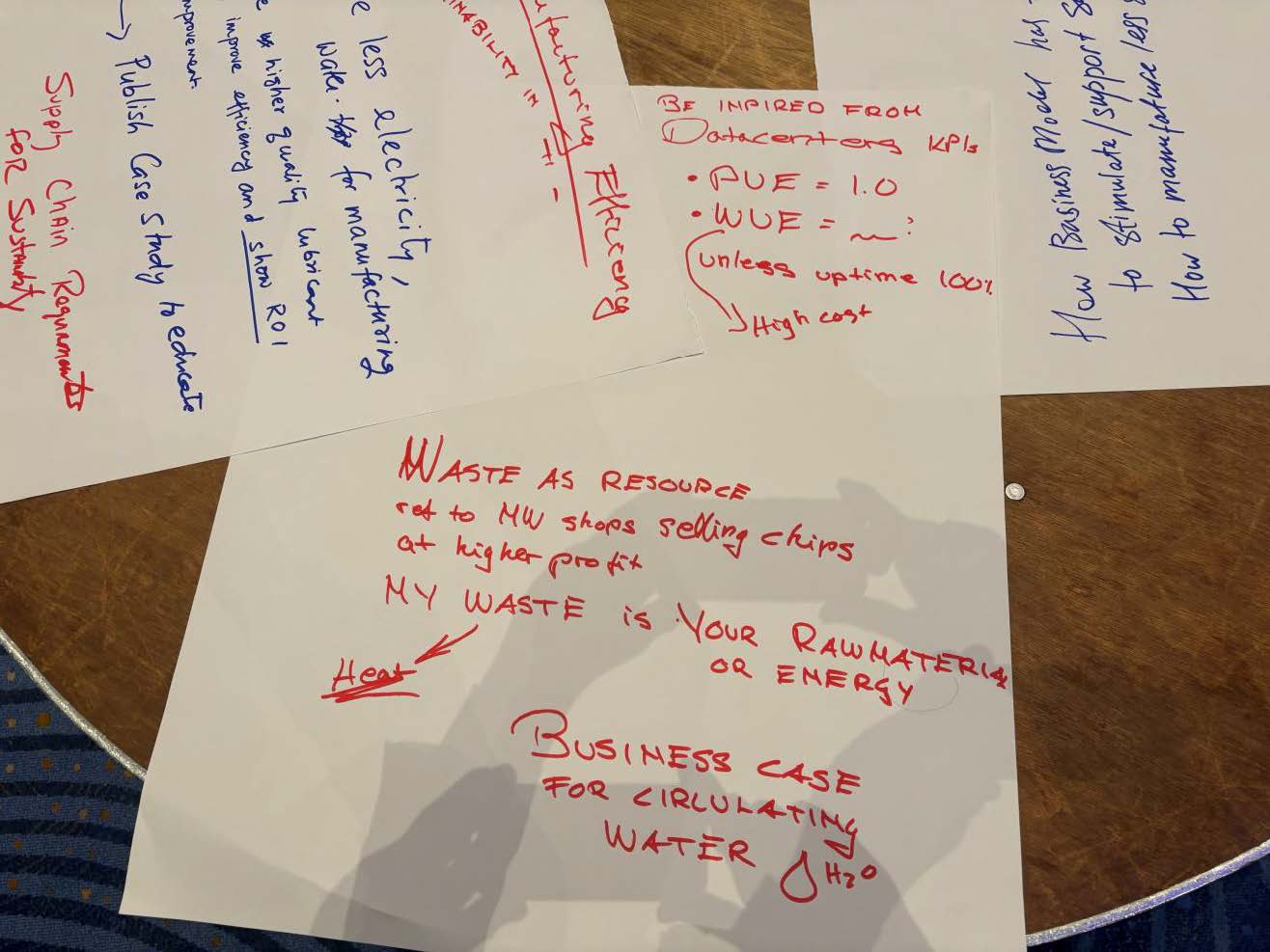
 Role in Assisting Lubricant Companies with Improving Their Manufacturing Efficiency
STLE member Doug Sackett, Dilmar, and Canter led a practical discussion on sustainability’s role in improving the operational efficiency and effectiveness of lubricant companies. Topics covered in the discussion included expanding the use of renewable raw materials, process innovations that can be conducted to reduce the consumption of energy in the manufacture of lubricants and the use of sustainable packaging for lubricants. The objective of this ideation session was to have participants present ideas on what their organizations are doing or intend to do to accomplish these objectives. Hopefully cross-fertilization of these ideas will lead to new approaches that contributors can take back to their workplaces and use to benefit their organizations. Input from participants was documented for further review and guidance for the STLE Sustainability Committee and STLE membership.
 New challenges for tribological contacts - additional electrical loads
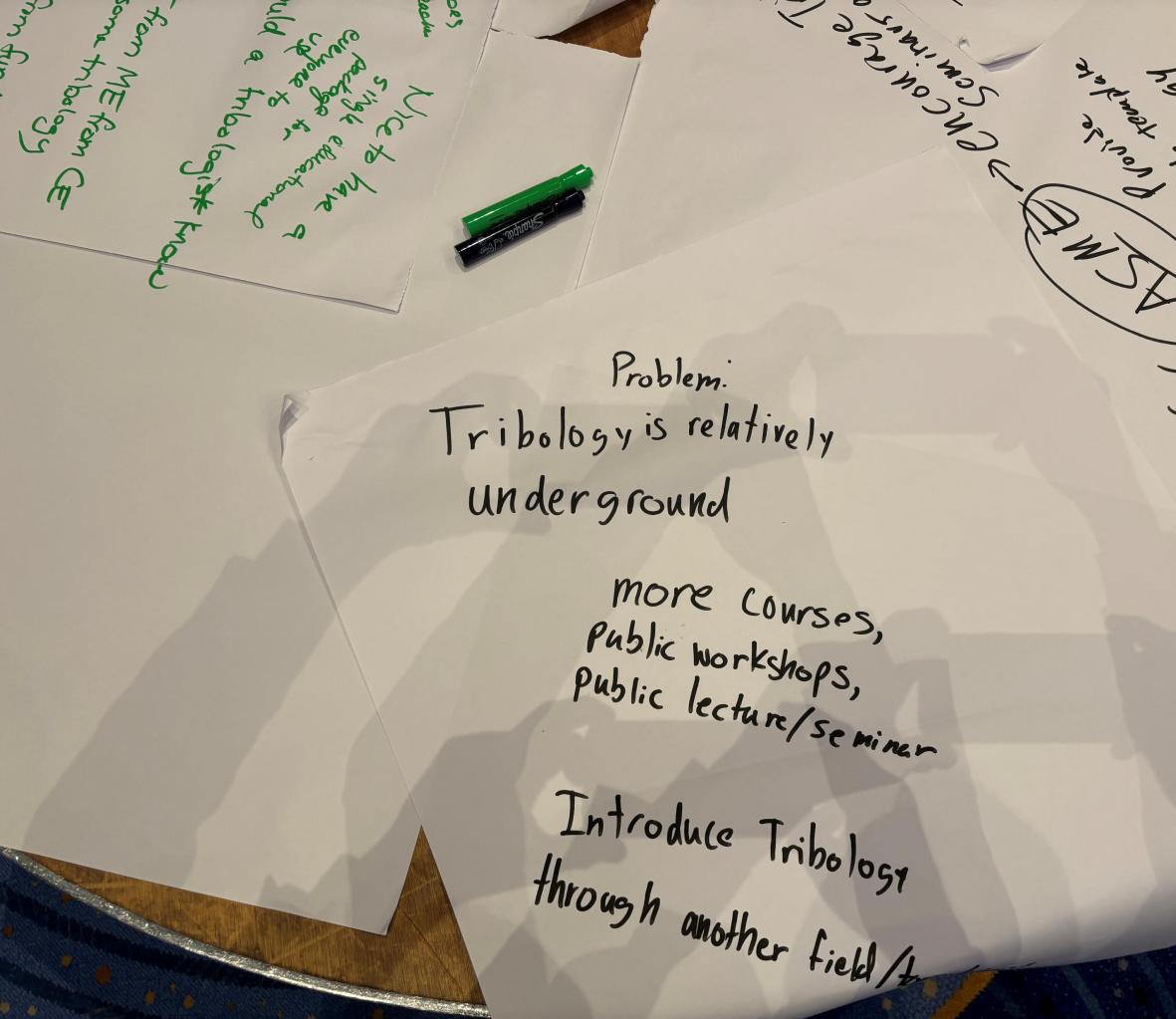
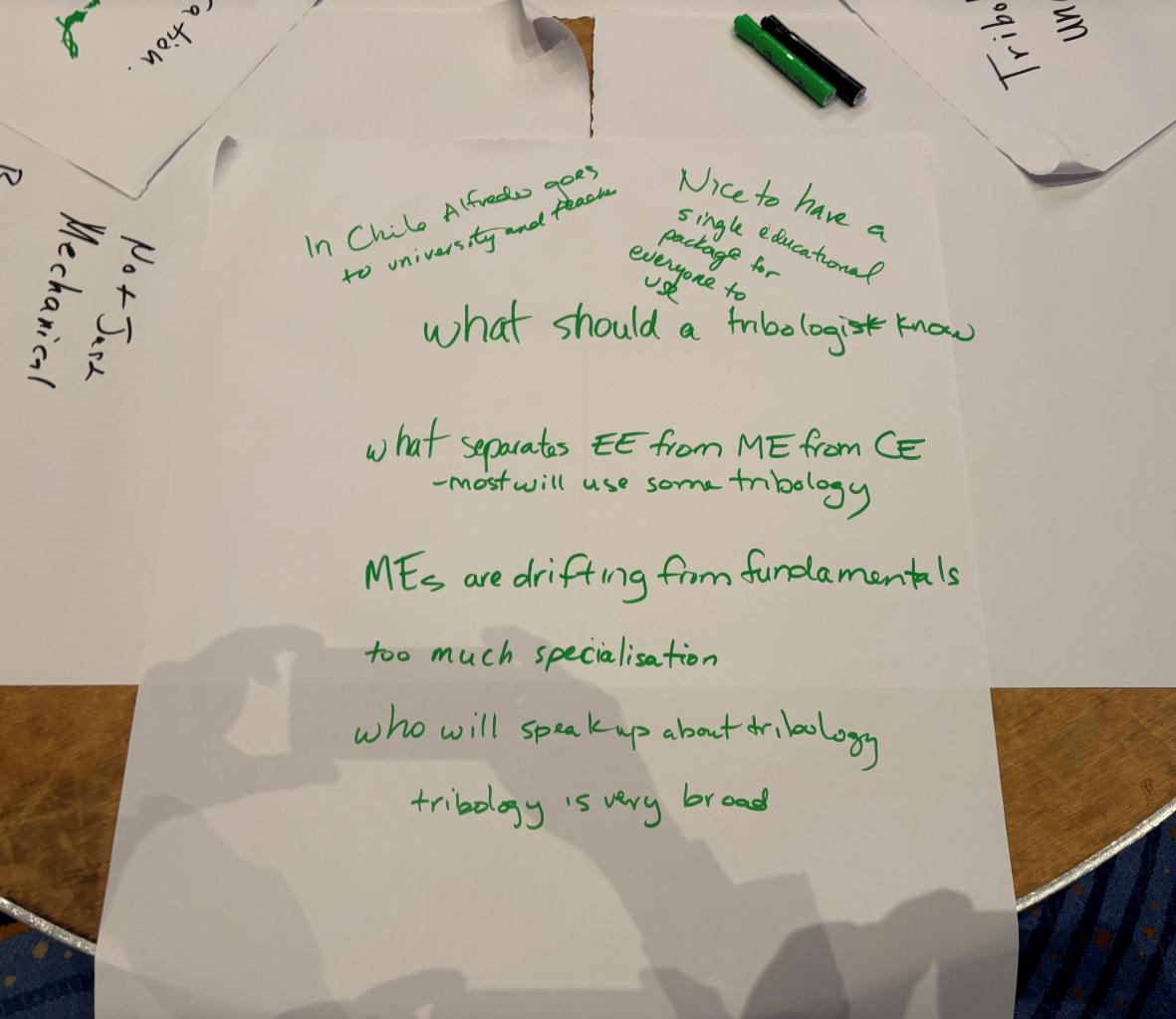
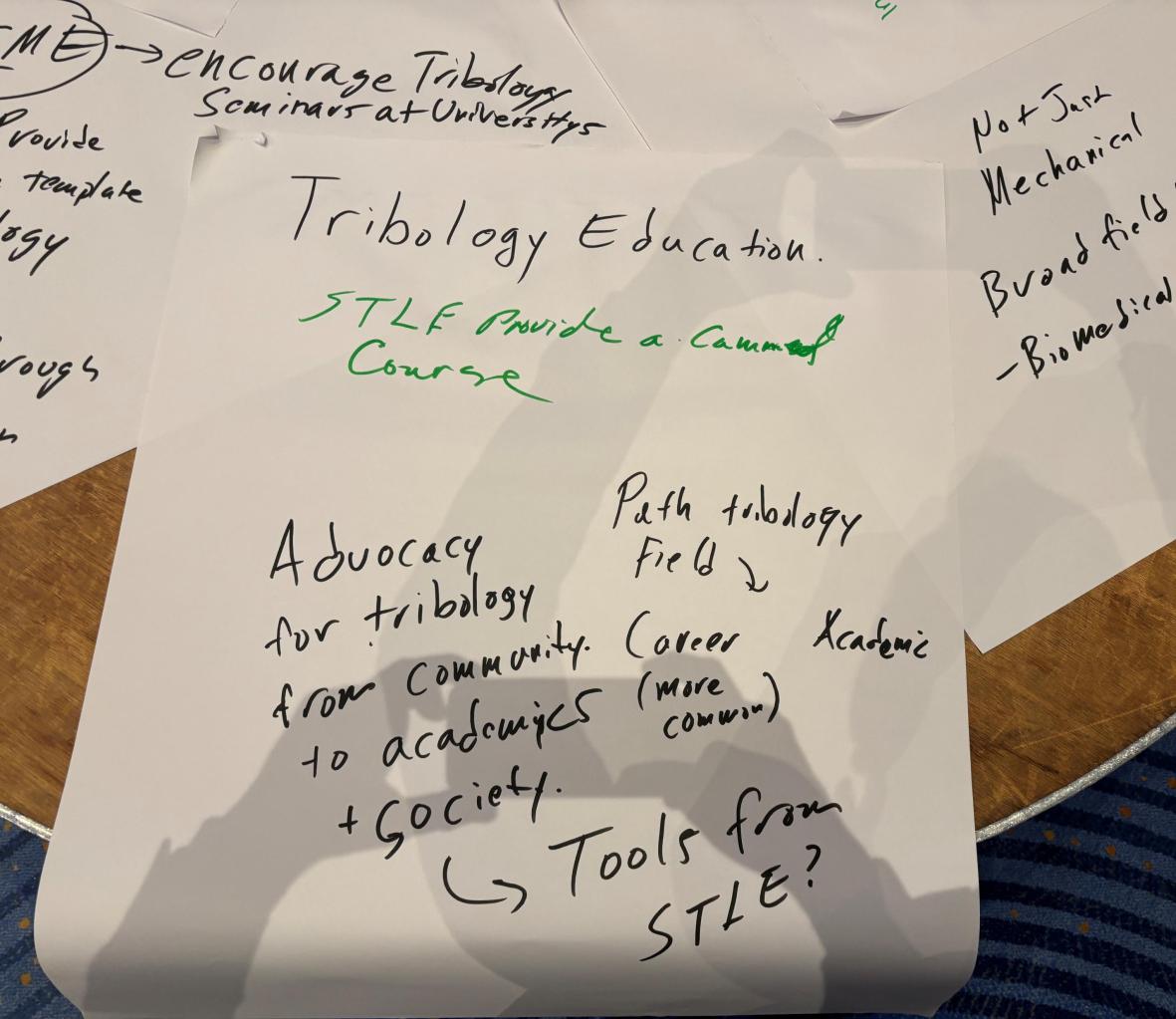
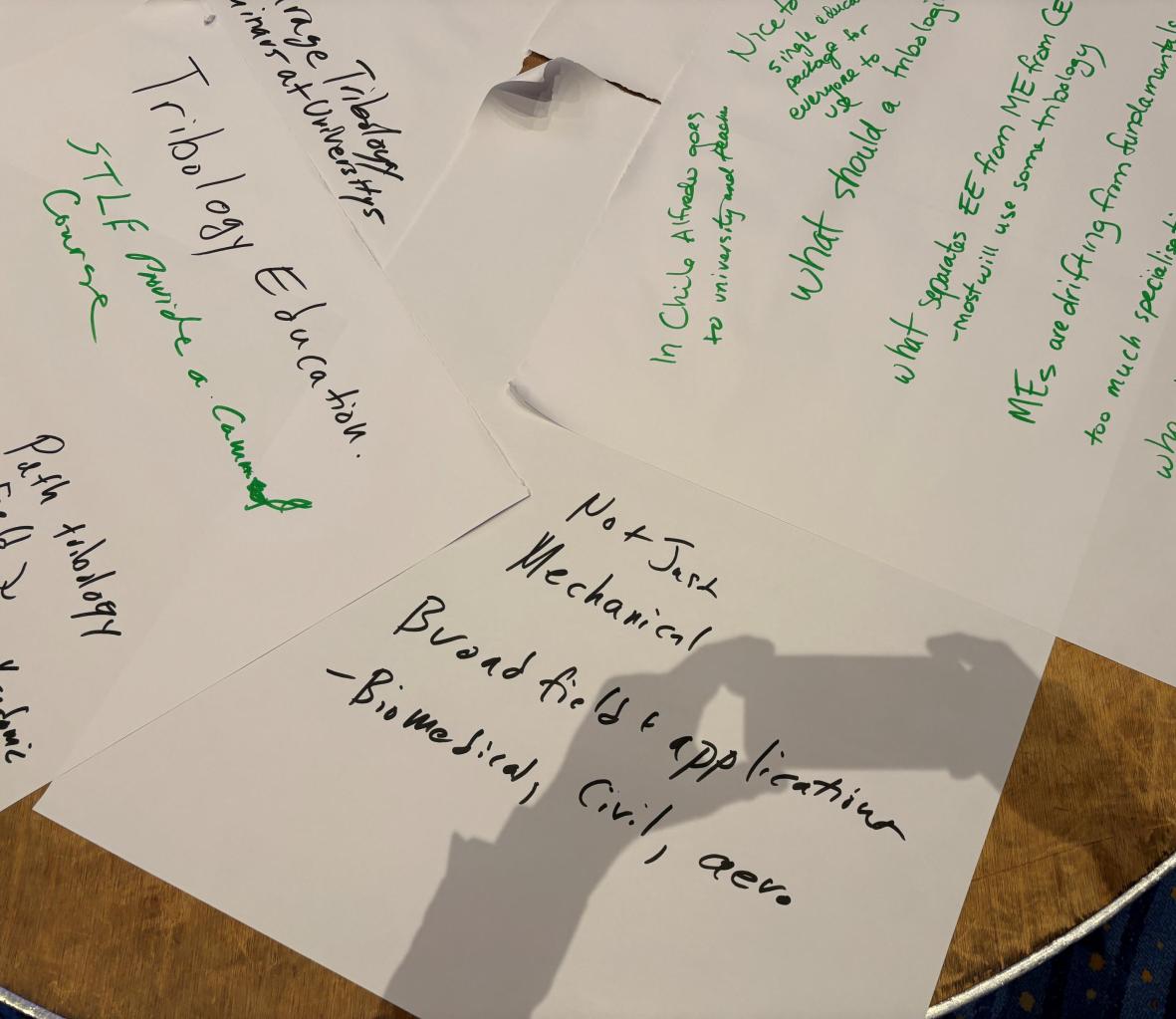
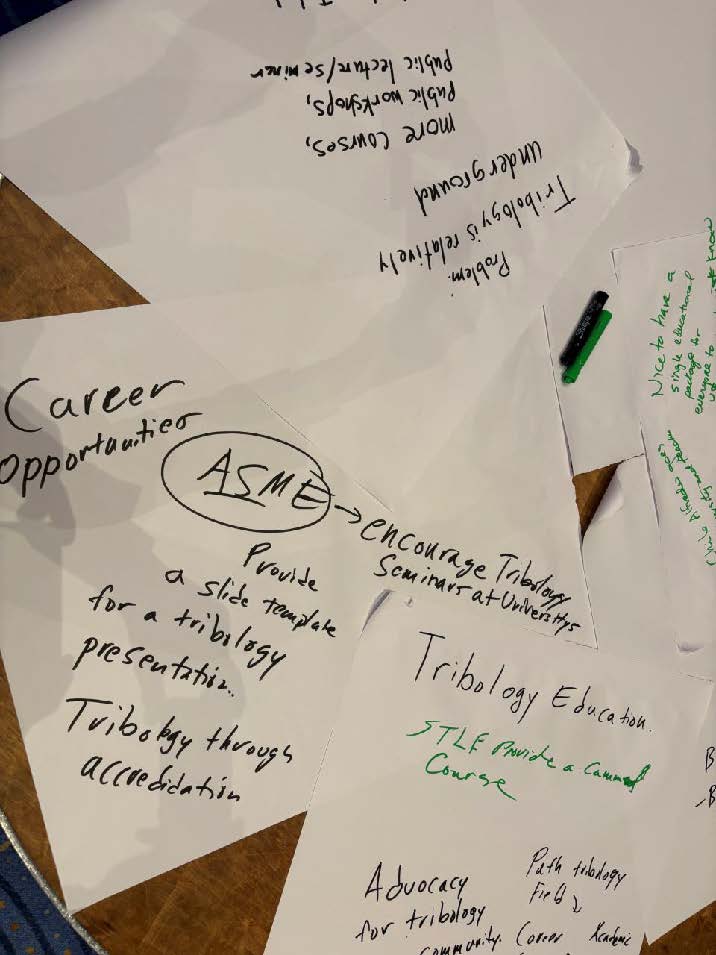
STLE member Robert Jackson, Auburn University, led the discussion on how education is essential for increasing the workforce and the general understanding of the importance of tribology. At this roundtable discussion, the state of education in tribology was the focus topic. The discussion included the following questions: What is the current state of tribology education in academia and industry? Are tribology topics still required in many institutes, such as in machine design courses in mechanical engineering? What practices are currently employed to improve tribology education? What current research in improving tribology education in academia is being conducted? What are the differences between regions of the world? What are possible new approaches to improve tribology education representation in academia and industry?
 Global Energy Transition and Its Impact on Fuel and Lubrication
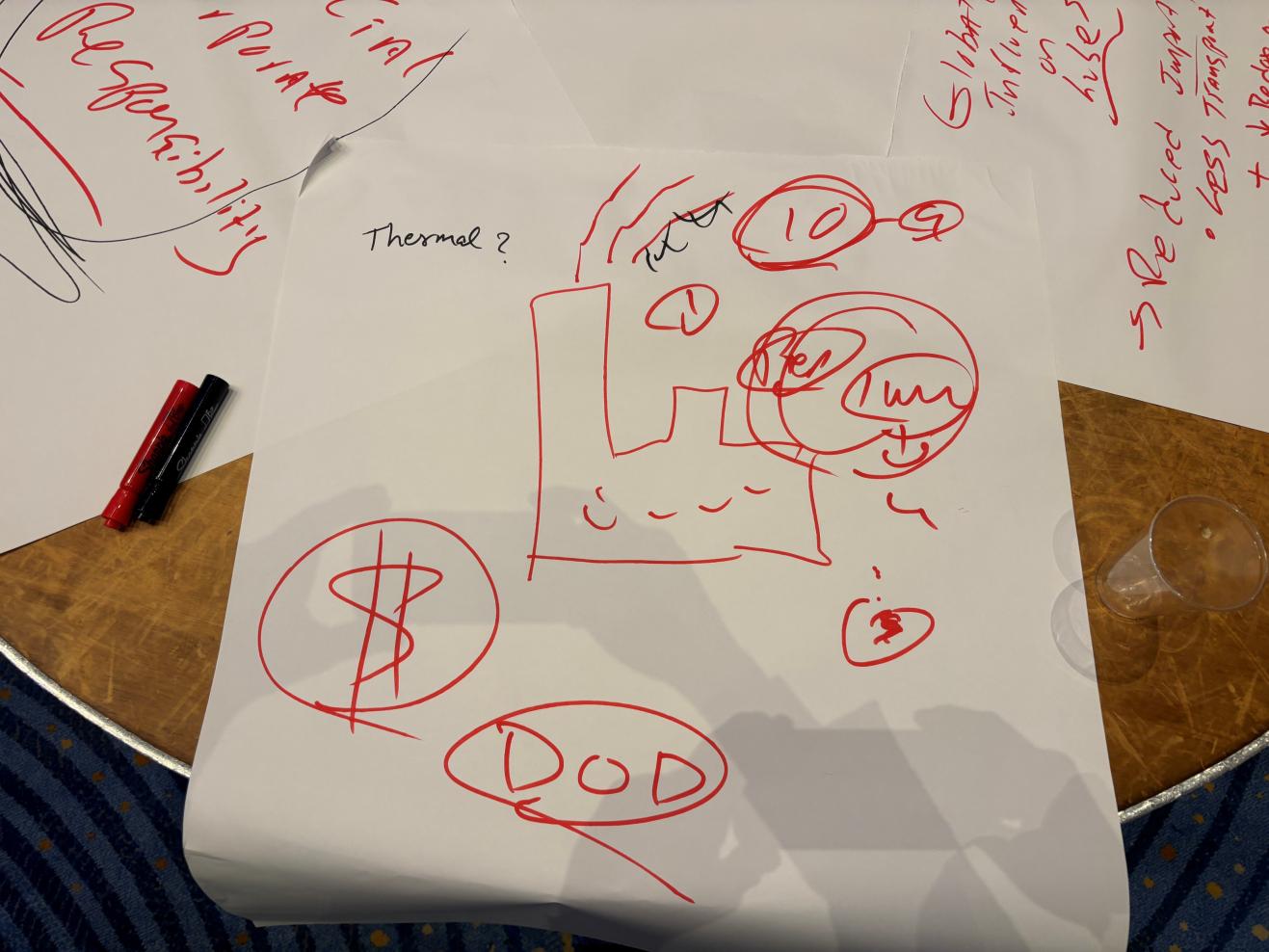
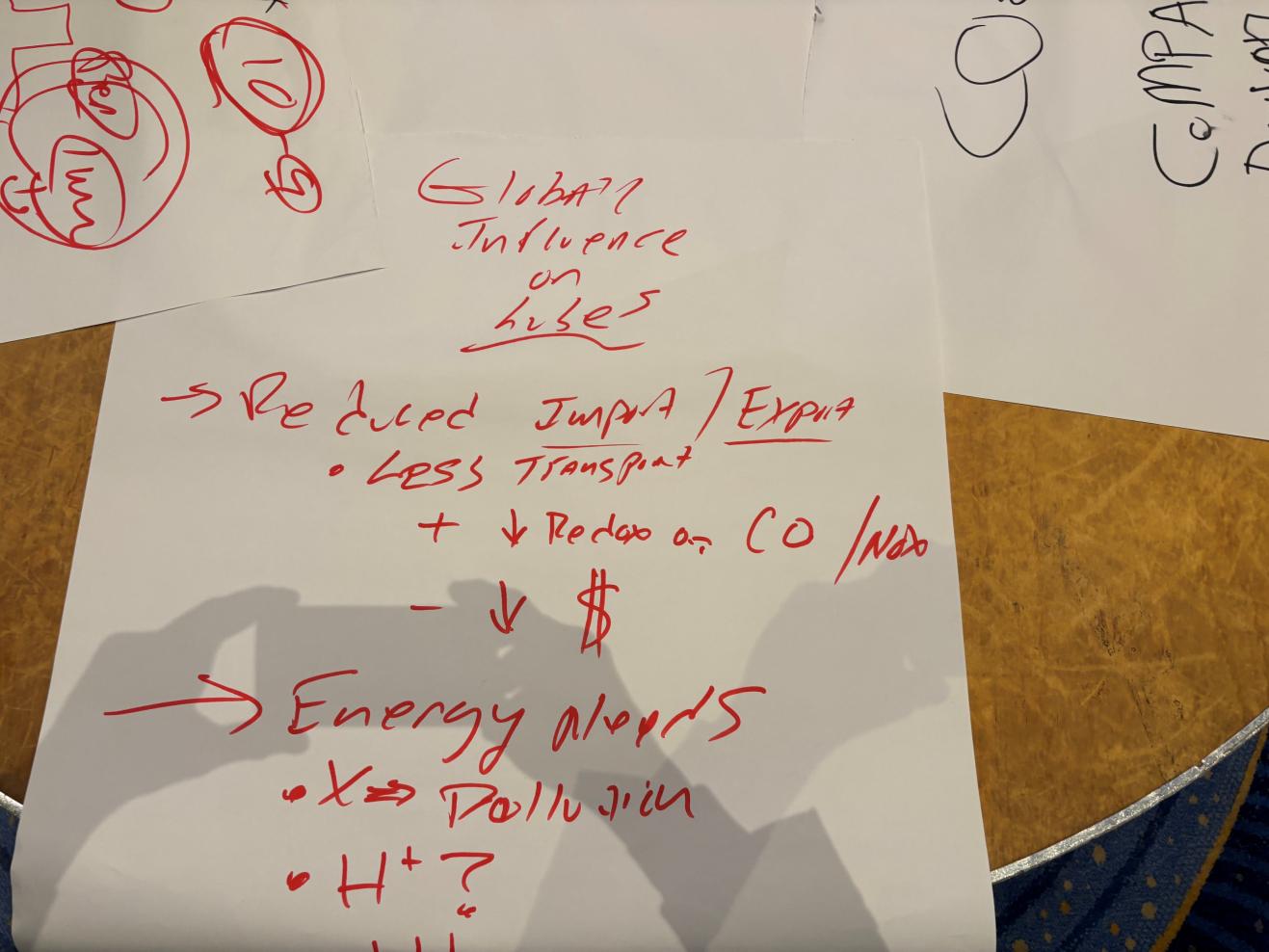
The work in this discussion, led by STLE member Michael D. Holloway, 5th Order Industry, focused on analyzing the implications of the shift toward renewable energy sources on the fuel and lubricant industry. The global energy landscape is undergoing a profound transformation, driven by the urgent need to address climate change and reduce reliance on fossil fuels. This shift toward renewable energy sources, such as solar, wind and hydropower, is reshaping the fuel and lubricant industry in significant ways. At this table, participants discussed the implications of this energy transition on the fuel and lubricant sector, including market dynamics, technological advancements, regulatory and policy implications, supply chain and logistics. The discussion focused on the potential disruptions to the supply chain and logistics of fuels and lubricants as the industry transitions to new energy sources. It also explored the challenges and opportunities associated with the shift toward decentralized energy production and distribution.
STLE member Dr. Hannes Grillenberger is a key expert on rolling bearing fundamentals at the motion technology company Schaeffler. He is currently a member of STLE’s Board of Directors, the STLE Annual Meeting Planning Committee, and the chair of the Discussion Roundtables. You can reach him at hannes.grillenberger@schaeffler.com.