Bonus Content for STLE Members
Investigating mechanical properties of recycled steel for application in the bearing industry
By Nicole Gleeson, TLT Editorial Coordinator | TLT Industry Insights November 2025
Recycled steel could meet the high standards required for bearings while also reducing the environmental footprint of manufacturing.
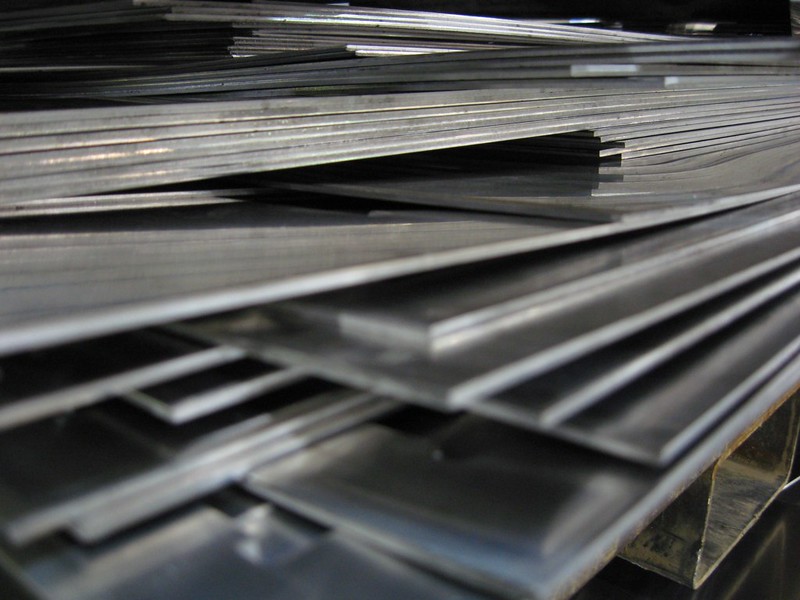
Photo courtesy of ellencanderson, CC BY-SA 4.0, via Wikimedia Commons.
KEY CONCEPTS
•
There is growing interest in recycling industrial steel waste in the form of chips.
•
Steel can be recycled using conventional melting or direct conversion methods, which use a severe plastic deformation technique to consolidate the material into a usable form.
•
While cost and scalability are challenges to adoption, if steel producers invest in cleaner recycling technologies, it could accelerate adoption across the industry.
Meet the Presenter
This article is based on an Industry Insights presented by Mandar Golvaskar on Jan. 21, 2025, titled
Investigating Mechanical Properties of Recycled Steel for Application in Bearing Industry. Industry Insights is a monthly virtual event series available for free to STLE members. These events provide a forum for members to collaborate with STLE industry peers and experts on a specific topic who give a brief presentation, then facilitate conversation by asking discussion questions and providing actionable takeaways. For more information,
click here.
Mandar Golvaskar is a doctoral student at the University of Akron with research interest in material science, recycling, optimization and additive manufacturing. As a part of the advanced materials laboratory at the University of Akron, his research focuses on recycling materials for applications in engineering. Another area of his research is tires, where the focus is on improving tire durability and minimizing wear on tire tread by application of optimization techniques. You can reach him at mmg151@uakron.edu.
 Mandar Golvaskar
Metal chips can be recycled using conventional methods by melting or without melting using direct conversion methods. In a recent Industry Insights presentation, Mandar Golvaskar, a doctoral student at the University of Akron, investigated mechanical properties and microstructure of the recycled material using vacuum induction melting furnace. Golvaskar discussed the advantages and disadvantages of the conventional and direct conversion methods with respect to application in bearing industry. See Meet the Presenter for more information.
Investigating the recycled steel for the bearing industry
When it comes to the bearing industry, sustainability and performance are often seen as competing priorities. However, Golvaskar is challenging that assumption by exploring how recycled steel could meet the high standards required for bearings while also reducing the environmental footprint of manufacturing.
“The topic for this article is investigating mechanical properties of recycled steel for application in the bearing industry,” Golvaskar says. “What I’ve put together in this presentation is why we need recycling, how we recycle steel and the conventional and direct conversion methods we can use. Based on published research, I want to see if it’s possible for us to develop bearings using recycled steel.”
Why recycle steel for bearings?
The traditional process of manufacturing bearings from virgin steel is energy-intensive and contributes significantly to greenhouse gas emissions. “If you’re manufacturing bearings the conventional way, there’s significant energy consumption, habitat destruction and depletion of resources,” Golvaskar explains. “But if you develop bearings using recycled steel, energy consumption drops and CO₂ emissions can be reduced by around 58%.”
While some bearing manufacturers remain skeptical of using recycled steel, Golvaskar has identified early adopters who are already experimenting with recycling. He notes, “Some recycle old bearing components, like rings and rolling elements, while others rebuild old, used bearings. There’s also growing interest in recycling industrial waste in the form of chips. This article focuses on this third area.”
Conversion methods
Steel recycling can be approached in two primary ways: conventional melting or direct conversion methods. “In conventional methods, you melt the material for recycling,” Golvaskar explains. “In direct conversion, you don’t melt the material. Instead, a severe plastic deformation (SPD) technique is used to consolidate the material into a usable form.”
Conventional recycling relies on technologies such as vacuum induction melting (VIM) and vacuum arc remelting (VAR). “I’ve focused on VIM in my research,” he says, “but I also compare it with VAR.”
By contrast, direct conversion methods like high-pressure torsion or equal channel angular pressing rely on mechanical processing of metal chips to achieve ultra-fine grain structures and high strength. “Direct conversion has lower energy consumption, less metal loss and fewer harmful gas emissions,” Golvaskar notes.
VIM and VAR
VIM offers high control over chemical composition and is already used for critical materials like nuclear fuel alloys. “The biggest advantage of VIM is the degree of control over composition,” Golvaskar says. “The inductive stirring homogenizes the melt and ensures that refining reactions proceed efficiently.”
However, VIM has its challenges, particularly with contamination from refractory crucibles. This is where VAR has an edge. “In VAR, all three sources of contamination—refractory crucibles, slags and the air atmosphere—are eliminated,” Golvaskar explains. “VAR-melted ingots typically have better mechanical properties and reduced micro-porosity compared to those prepared by VIM.”
The trade-off is cost. “Vacuum induction and vacuum arc melting are more expensive than air melting,” Golvaskar explains. “But the advantages far outweigh the drawbacks, especially when you think about long-term durability and performance.”
Direct conversion
While conventional recycling is proven at scale, direct conversion methods like high-pressure torsion (HPT) hold unique promise for small, high-performance applications. “When researchers used HPT to recycle maraging steel, they observed a 70% increase in ultimate tensile strength due to the refined grain structure,” Golvaskar shares.
One challenge, however, is uniformity. “With HPT, you don’t get a homogeneous microstructure after just one rotation,” he explains. “You need five to eight turns to achieve uniformity. Scaling this process up for large components, like those needed in the bearing industry, is not straightforward.”
Despite these limitations, Golvaskar sees direct conversion as a potential solution for niche projects. “For example, if a company is working with NASA on a custom bearing for space applications, direct conversion might deliver the small, high-quality parts they need,” he says.
Mechanical properties
High-performance bearings require exceptional fatigue resistance. Non-metallic inclusions like oxides, sulfides and silicates can initiate cracks that lead to premature failure. “One way to improve fatigue life is by eliminating these defects,” Golvaskar says. “VIM helps by producing cleaner steel.”
Golvaskar’s team is also experimenting with surface treatments to enhance performance. “Instead of using coolants during machining, we use targeted air cooling,” he explains. “This induces compressive residual stress on the surface, which slows crack propagation and improves fatigue life. We believe combining this with VIM-recycled steel could be a powerful approach.”
Case studies
Although few studies have focused on recycled bearing steel, Golvaskar found inspiration from related research. “I came across a study where alumina particles were added to 52100 bearing steel during powder metallurgy processing,” he says. “When they added 3% alumina, they saw the best mechanical properties and reduced porosity.”
He also reviewed studies on titanium and zirconium alloys recycled through VIM. “Researchers achieved microstructures with fine needle-like alpha phases and mechanical properties comparable to conventional materials,” Golvaskar says. “For zirconium alloys, the ultimate tensile strength was on par with virgin material, although elongation was slightly lower.”
These findings give him confidence that similar results could be achieved for bearing steels. “Our plan is to recycle 52100 steel using VIM, make dog-bone samples, test their mechanical properties and then move toward producing bearing components for fatigue testing,” he explains.
Challenges and future outlook
Cost and scalability remain the biggest obstacles to widespread adoption of recycled steel in bearings. “The bearing industry may not be willing to invest in expensive technologies like VIM or VAR right away,” Golvaskar acknowledges. “But if we can show a significant difference in mechanical properties compared to air-melted steel, it might convince them.”
Sustainability, he believes, will soon become a competitive advantage. “After 10 to 15 years, sustainability will be one of the main factors customers look for when choosing products,” Golvaskar says. “Companies that can demonstrate recycled content in their bearings will have an edge.”
Golvaskar also emphasizes the need for collaboration beyond bearing manufacturers. “As one participant in our discussion pointed out, the steel industry needs to come on board,” he says. “Bearing companies can’t carry this alone. If steel producers invest in cleaner recycling technologies, it could accelerate adoption across the industry.”
Conclusion
More recently, Golvaskar’s team has experimented with recycling SS304 steel using VIM, observing three phases in the microstructure austenite, δ-ferrite and σ-Phase (see Figures 1 and 2). Next, they will study the tensile and fatigue properties of SS304 and recycle other materials like bearing steel, titanium and superalloys. Golvaskar remains optimistic. “Based on everything we’ve discussed today, I believe conventional recycling methods like VIM are the best path forward for now,” he concludes. “But direct conversion methods are worth exploring for specialized applications. Our next step is to produce test samples from recycled 52100 steel and see how they perform. If the results are promising, we can start thinking about bearings made entirely from recycled steel.”
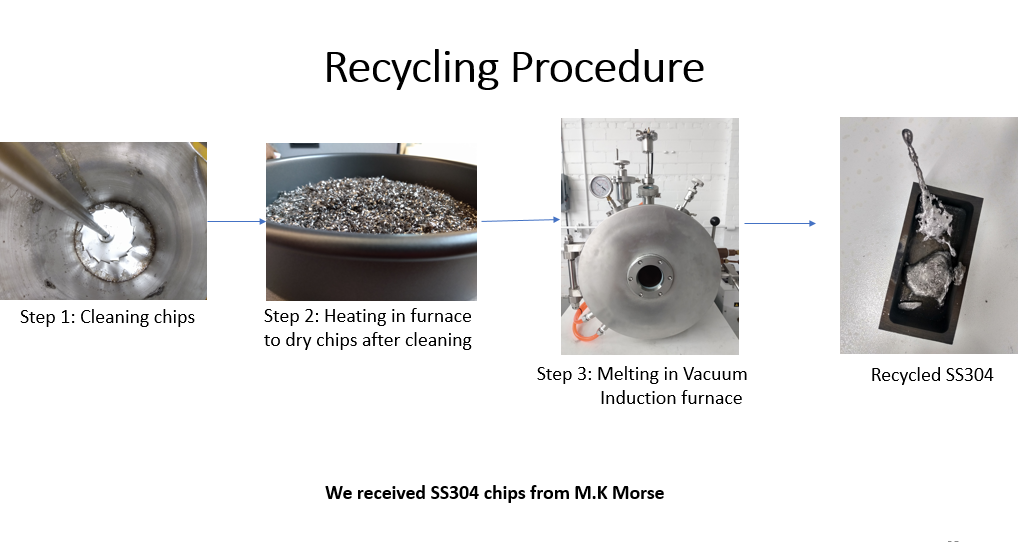
Figure 1. The SS304 recycling procedure.
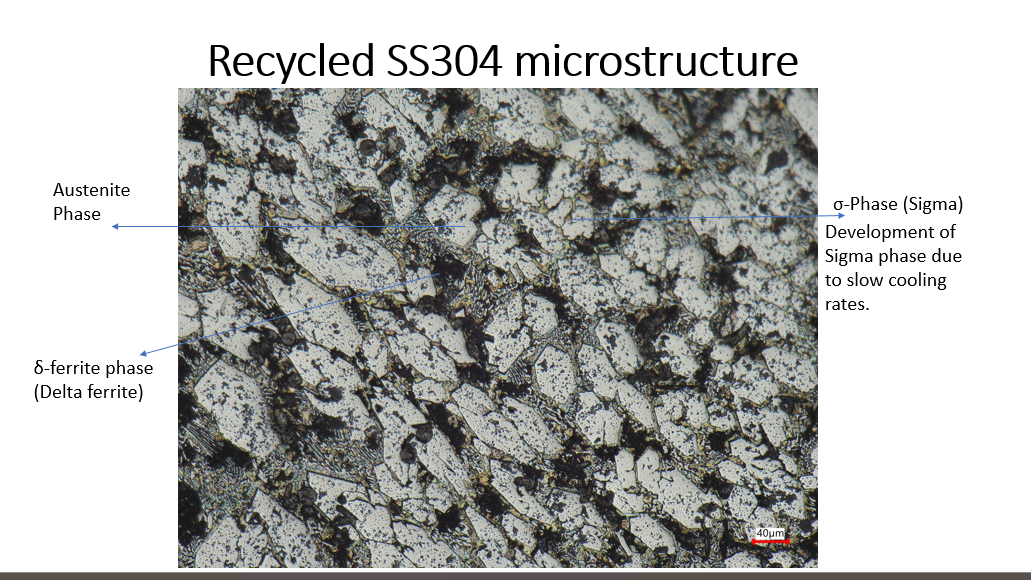
Figure 2. The microstructure of recycled SS304.
FOR FURTHER READING
1. Golvaskar, M., Ojo, S. A. and Kannan, M. (2024), “Recent advancements in material waste recycling: Conventional, direct conversion, and additive manufacturing techniques,” Recycling, 9 (3), p. 43. https://doi.org/10.3390/recycling9030043.
You can reach TLT editorial coordinator Nicole Gleeson at ngleeson@stle.org.