Bonus Content for STLE Members
Oil drain levels
By Nicole Gleeson, TLT Editorial Coordinator | TLT Industry Insights May 2025
Consumer perceptions and brand positions create a lot of confusion in the marketplace, but what does the data say?
Photo courtesy of SIGAUS, CC BY-SA 4.0, via Wikimedia Commons.
KEY CONCEPTS
•
There is no one-size-fits-all recommendation for oil drain intervals, despite common beliefs.
•
The oil to fuel ratio is the most critical measurement to determining oil drain intervals.
•
Oil life indicators can be a useful tool but are not entirely reliable in determining oil life.
Meet the Presenters
This article is based on an Industry Insights presented by STLE member Lake Speed, Jr. and STLE member Mark Shannon on Oct. 9, 2024, titled
Oil Drain Levels. Industry Insights is a monthly virtual event series available for free to STLE members. These events provide a forum for members to collaborate with STLE industry peers and experts on a specific topic who give a brief presentation, then facilitate conversation by asking discussion questions and providing actionable takeaways. For more information, click
here.
The son of a former NASCAR driver and World Karting Champion, Lake Speed, Jr. holds both STLE Certified Lubrication Specialist™ (CLS) and Certified Oil Monitoring Analyst I™ (OMA I) certifications. While working for Joe Gibbs Racing, Speed led a development team that applied the science of tribology to NASCAR engines and drivetrains. In the eight seasons prior to the development program, Joe Gibbs Racing won 17 races and no championships. In the first eight seasons of the development program, Joe Gibbs Racing won 41 races and three championships. Overall, the lubricants developed for Joe Gibbs Racing have enabled over 10 championships and 100 victories. Speed has spent the last seven years working closely with Shaver Specialties Racing Engines testing engine oils, cylinder bore surface finishes and piston rings. Following the sale of Joe Gibbs Driven Racing Oil (now known as Driven Racing Oil), Speed moved to Total Seal piston rings to continue the application of tribology for the purpose of improving engine efficiency. You can reach him at
lspeed@SPEEDiagnostix.com.
Mark Shannon is a fuel and lubrication sales engineer with United Oil and Grease, a division of Texas Enterprises, Inc. His expertise is in industrial lubrication with over 25 years of field experience. Prior to starting his career, he served his country as a security specialist at the U.S. Air Force. Mark holds the STLE CLS certification. You can reach him at
mshannon@unitedoilandgrease.com.
 Lake Speed, Jr.

Mark Shannon
How accurate are the oil life indicators on modern vehicles? Some people still change their oil every three months or 3,000 miles (regardless of what the oil life indicator says), but some oils claim 25,000-mile oil change intervals, which is much further than what the oil life indicators allow. These consumer perceptions and brand positions create a lot of confusion in the marketplace. So what does the data say? This article, based on an Industry Insights presentation from STLE members Lake Speed, Jr. and Mark Shannon, takes some real world used oil analysis results to get to an answer. See Meet the Presenter for more information.
There are three major questions when it comes to oil drain intervals. What is the ideal oil change interval? How do oil life indicators work? And what about extended drain interval oils? The answer to this question, Speed explains, will vary: “Application will always dictate chemistry.”
Shannon shares a current problem in the automotive industry: “We are seeing a trend of vehicles having catastrophic engine failure just outside their factory warranty periods. Owners and operators are saying, ‘Wait a minute. I’ve been changing my oil exactly by the book.’ And they tear the engine down, and in some cases the oil passages are blocked and the oxidation level is way off the charts. They are just doing what they were told to do by the manufacturer. What is going on here?”
What is the ideal oil change interval?
The question of an ideal oil change interval has existed as long as internal combustion engines (ICEs) themselves—163 years—and there still isn’t a one-size-fits-all answer. Speed says, “A lot of people will go with six months or 3,000 miles, whether they drive the car or not. How effective is that?” Interestingly, changing the oil too soon can actually present an opportunity for failure. Speed shares an example from the U.S. Navy, where predictive maintenance using oil analysis informs the timing of oil changes and maintenance on aircraft engines. He explains, “They actually reduced the number of failures compared to if they went strictly based off a time schedule. Every time you do maintenance, there’s an opportunity for what is called maintenance induced failure.” Examples include failing to tighten or introducing contamination.
“As a lubrication specialist, it’s really your job to be a reliability specialist to help your customers have the maximum uptime and the maximum value out of their equipment, and part of that equipment is the lubricant itself. You want to reduce the number of times you do maintenance to just when it’s actually necessary,” Speed explains. Reducing oil drain intervals depends strongly on having a product that is actually capable of longer intervals, Speed adds. “In the past 100 years, we’ve come a long way technology-wise in terms of chemistry that can enable a product to go further.”
There is one major difference in comparing oil drain intervals in automotive engines to other industrial applications like gearboxes and turbine engines. Shannon shares, “Some gas turbines have been running on the same oil essentially for 30 years or longer. They are very high quality mineral oils with very few additives, and there is no contamination. But there is no fuel. There is no external contamination contributing to oxidation and breakdown.”
Speed adds: “Fuel is the enemy of your oil. When you have a dirty fuel injector, it cannot atomize the fuel as well. It’s creating a larger droplet, and engines will only burn vaporized fuel. The liquid fuel will not burn. In fact, if the fuel is still in a liquid form when combustion takes place, that’s what makes the soot.” Only when the injector is clean can it function properly, making the tiny droplets needed to burn fuel (see Figure 1). Additives can clean the injectors, leading to a reduction in fuel dilution and consequently a reduction in wear in the engine. This leads to a longer engine life and a longer oil drain interval.
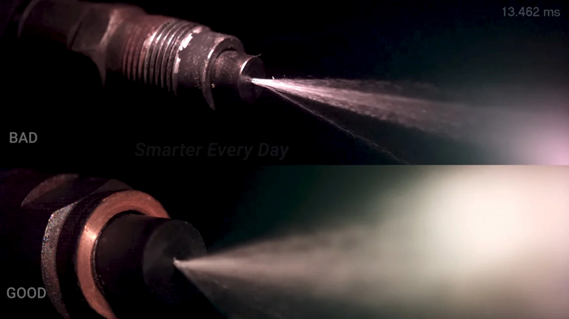
Figure 1. Dirty versus clean fuel injectors.
Speed summarizes: “The first line of defense is actually making sure the injectors are clean.” Optimizing temperature is also critical. “There’s a sweet spot in terms of operating temperature. You want to maintain a hot enough oil sump temperature to evaporate the water out of the system so it’s not degrading the lubricant,” Speed explains, “but you don’t want it too hot.”
How do oil life indicators work?
Many modern cars have oil life indicators, but these are often mileage-based. “Vehicles that actually have a true oil life indication are not using a sensor,” Speed explains. Rather, a computer system monitors the oil and uses an algorithm based on operating conditions. Now that computer systems are standard in modern engines, OEMs are developing predictive models to recommend maintenance based on decades worth of samples taken. Rather than having to sample the oil in a specific engine, the computer tracks engine revolutions, oil and fuel rations and other metrics to predict oil life (see Figure 2).
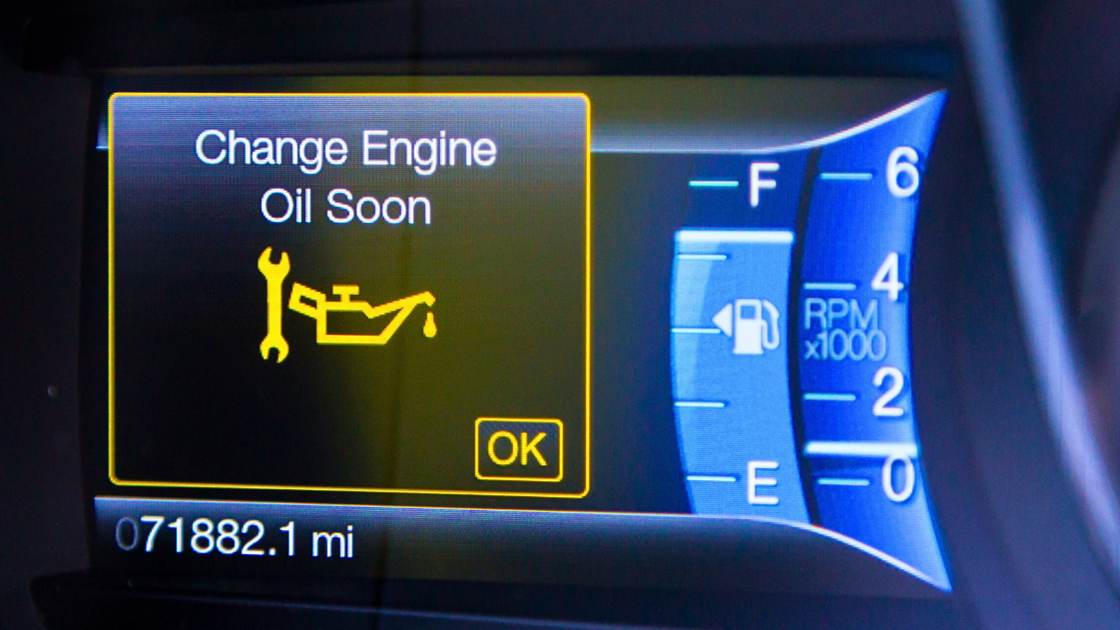
Figure 2. Example of an oil life indicator.
“The oil to fuel ratio is everything when it comes to oil change intervals,” Speed explains. “The more volume of fuel you put through the oil, the shorter the oil life is going to be. That’s why police cruisers, for example, are really hard on oil. They don’t usually have a lot of miles because they have a lot of idle time.” Environmental factors also contribute; in colder environments, it’s harder for the engine to reach operating temperature. Oil specification also matters. Dispersancy for soot, viscosity, shear stability, antiwear packages and detergency packages all factor into using the correct spec for the application to get accurate calculations.
While these calculations can be fairly accurate, the sensors can’t detect environmental factors, so it is important to use oil life indicators as what Shannon describes as “one tool in your toolbox.” Speed gives the example of a brand new vehicle with only 3,600 miles on the oil that shows a very high level of fuel dilution. “In this case, I don’t believe that the high fuel dilution is from dirty injectors at only 3,600 miles on the car. I think it has everything to do with the fact that it was a short trip driven, and the rings haven’t broken in yet. I’ve seen that before when someone babies a car when it’s brand new. As a piston ring person, I can tell you that you need cylinder pressure to drive the rings into the wall because what makes the piston rings seal against the cylinder is not the static tension of the rings—it’s the gas pressure in the cylinder. If you’re not driving the car with some aggression, at least at some point, you’re not going to build that cylinder pressure, which is not going to drive the piston ring into the cylinder wall and create that sealing effect.” While human experience can draw this type of conclusion, oil life indicators cannot. Still, oil life indicators are much better than pure fixed mileage recommendations.
What about the extended drain interval oils?
Modern oil formulas certainly can extend drain intervals, but oil analysis should still be used to inform how much longer these oils can go. Speed elaborates, “We do have better base oils and better additive packages, but severe conditions or severe duty applications can cut the number of miles on the label in half or more sometimes. These oils have the potential to offer a longer service life, but the reality is that service life can only be realized if the rest of the operating conditions are going along with it.”
Conclusions
“In 163 years, we’ve come a long way chemically, but old habits die hard,” Speed concludes. Some people will still change their oil every 3,000 miles no matter what. But tools like oil life indicators can help us make more informed decisions on when the oil does or doesn’t need to be changed. Oil analysis, condition monitoring, vibration analysis and other tests can give us more data, and as Speed emphasizes, “The better the data you have, the better decision you can make.” Doing maintenance only when you need to can extend the life of equipment and reduce the cost of maintenance, but this requires a commitment to making data-driven decisions rather than following generalized recommendations.
You can reach TLT editorial coordinator Nicole Gleeson at ngleeson@stle.org.