Bonus Content for STLE Members
20 Minutes With Balasubramaniam (Bala) Vengudusamy
By Nicole Gleeson, Editorial Coordinator | TLT 20 Minutes April 2025
This senior expert discusses wind turbine lubrication and how he got in the lubricant and tribology industry.
Balasubramaniam (Bala) Vengudusamy - The Quick File
STLE member Balasubramaniam (Bala) Vengudusamy is senior tribology expert at Klüber Lubrication in Munich, Germany (a brand of Freudenberg). He is a mechanical engineering graduate, originally from India, and holds a doctorate in tribology from Imperial College London. He has over 20 years of experience in the field of lubrication, tribology and surface technology with particular focus on space, automotive, marine and wind, among others.
He has been a member of STLE since 2013, served as TLT Technical Editor in 2024 and has been associate editor of ASME Journal of Tribology since 2024.
Balasubramaniam Vengudusamy
TLT: How long have you worked in a lubrication-related field, and how did you decide to pursue a career in the tribology/lubricants industry?
Bala: I have been working in the field of lubrication and tribology for about 23 years. I grew up in India and studied mechanical engineering in a city called Trichy. I happened to study tribology by accident for my master’s degree at Indian School of Mines Dhanbad (now Indian Institute of Technology Dhanbad) because I had no other choice of courses available in the university. But I found tribology and lubrication very interesting as it involves many fields of science including chemistry, materials science, physics and mechanical engineering. That allowed me to widen my knowledge and develop myself in this field. After my master’s degree, fortunately I landed in my first job in 2002 at Indian Space Research Organisation (Trivandrum, India), where I was working in the space tribology group dealing with bearings and lubricants for space mechanisms. During this time, I had a lot of opportunities to enhance my knowledge in this field. Since my quest toward fundamental research kept growing, I then went on for my doctorate degree at Imperial College London (2007) for a BP-funded project to study the behavior of diamond-like carbon (DLC) coatings with lubricants and additives under the supervision of Prof. Hugh Spikes. This opportunity laid a very strong basis in my career and enhanced both my tribology knowledge and network. Hugh has been a great inspiration and gave me plenty of opportunities to learn and grow. Being in touch with connections is an important part of career. A recent picture taken with Hugh and Ksenija Topolovic at TAE 2024 reminds me of my doctorate time at Imperial.
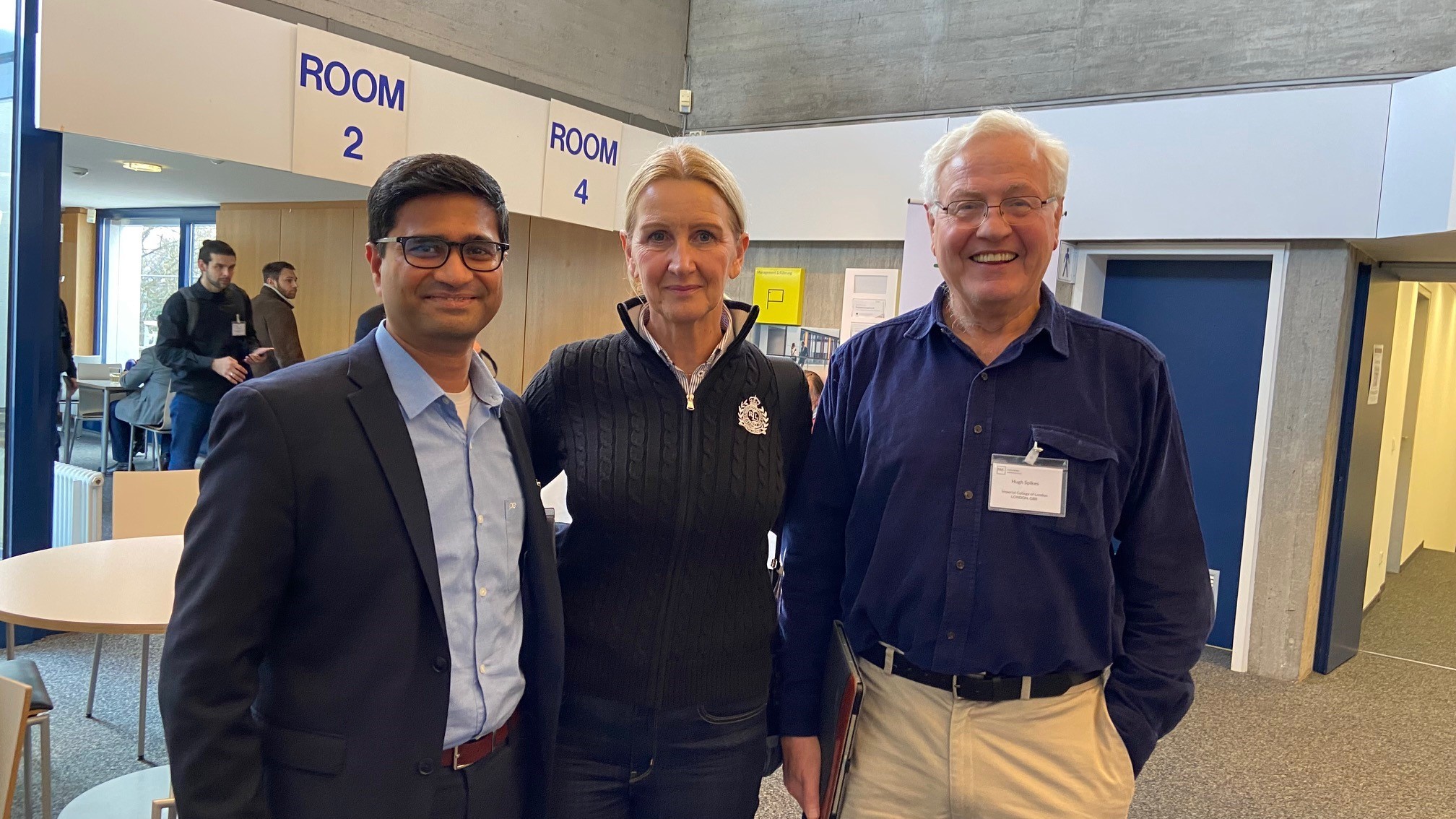
Bala (left) with Ksenija Topolovic and Prof. Hugh Spikes at TAE 2024.
After graduation, I took a tribology role at Western Digital (2011) and later at AC2T research (Austria, 2011). My career continued on the lubrication and tribology path, and I landed in my current position as senior tribology expert at Klüber Lubrication in Munich in 2013. I have been very fortunate to be working in the same field of my education that I chose by accident but do not regret a bit now.
TLT: What has been your most rewarding accomplishment throughout your career in the lubricants industry?
Bala: Many! Most rewarding accomplishments were witnessing my ideas getting turned into solutions that help customers improve their operations and achieve their goals. Building strong relationships with customers and seeing the positive impact of my work is always a great motivation and rewarding. Working on topics like energy efficiency, environmentally friendly and sustainable lubricants is fulfilling, knowing that my contribution makes a positive environmental impact. I have been enjoying working with different kinds of lubrication and tribology problems and am never bored. Every challenge comes with time and delivery pressures. Whether it be setting the right priority for the project or planning resources and capacity, it has been a wonderful journey in executing such projects—particular thanks to all stakeholders, mentors and managers like Mr. Reiner Spallek.
Working with a diverse team globally makes the workplace enjoyable. The team is excellent—whether it be translating complex tribological problems to lab-scale mimicking or delivering solutions to customers with strict timelines or offering their support whenever needed. I work together with an international and cross-functional team including tribology, R&D and sales managers globally at Klüber in understanding different lubrication aspects and also with our parent company Freudenberg Technology Innovation. Lubricant film formation, additive interactions with surfaces (tribofilm studies), micro- and macropitting studies, scuffing, fretting, white etching cracks, hydrogen permeation, friction optimization, etc., are some tribological problems I deal with. This is very satisfying.
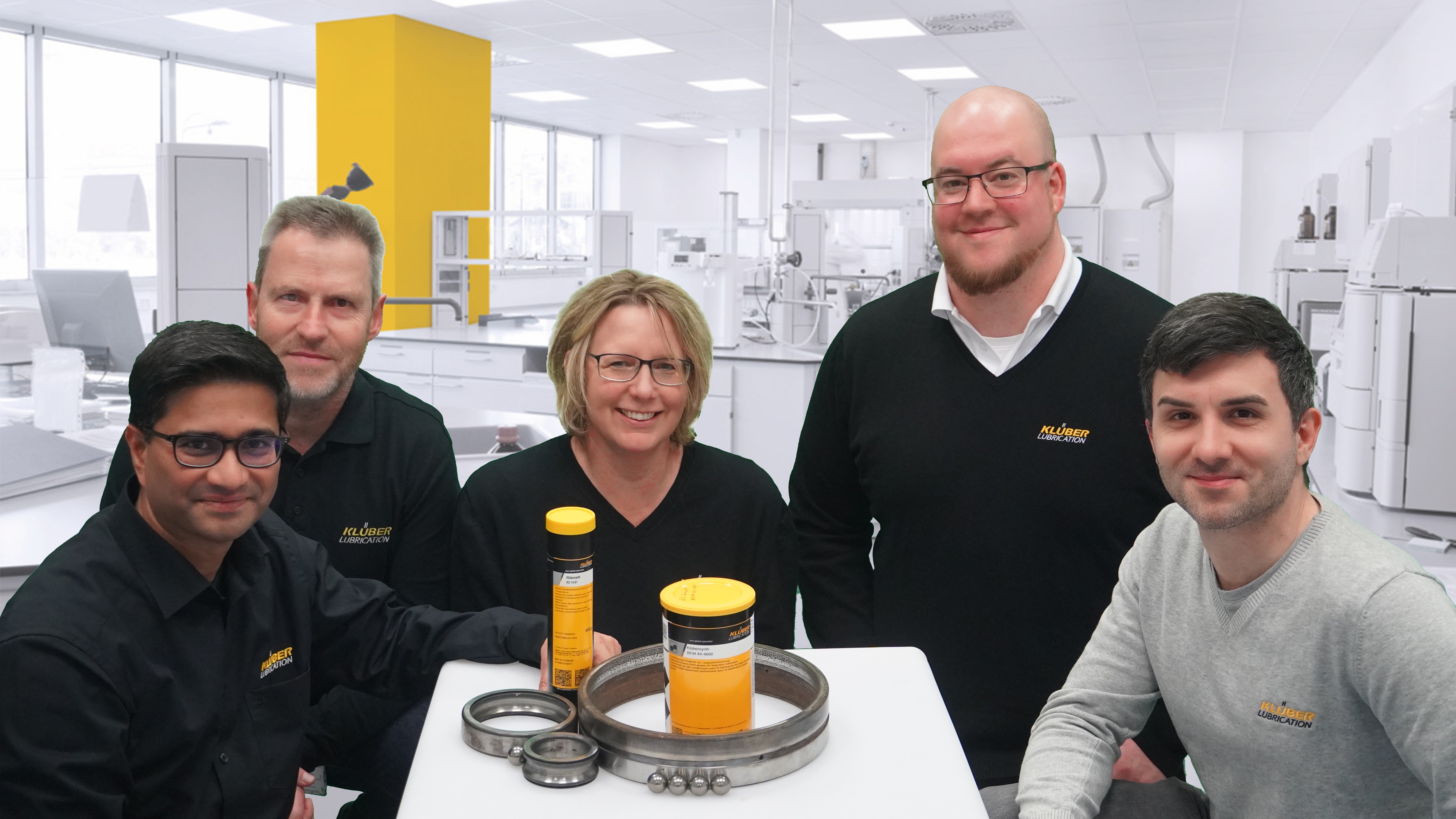
Picture taken with the tribology team at Klüber Lubrication Munich in 2024. From left to right: Bala, Manfred Püler, Tanja Püler, Jonas Krämer and Robert Lupovic. ®Klüber Lubrication
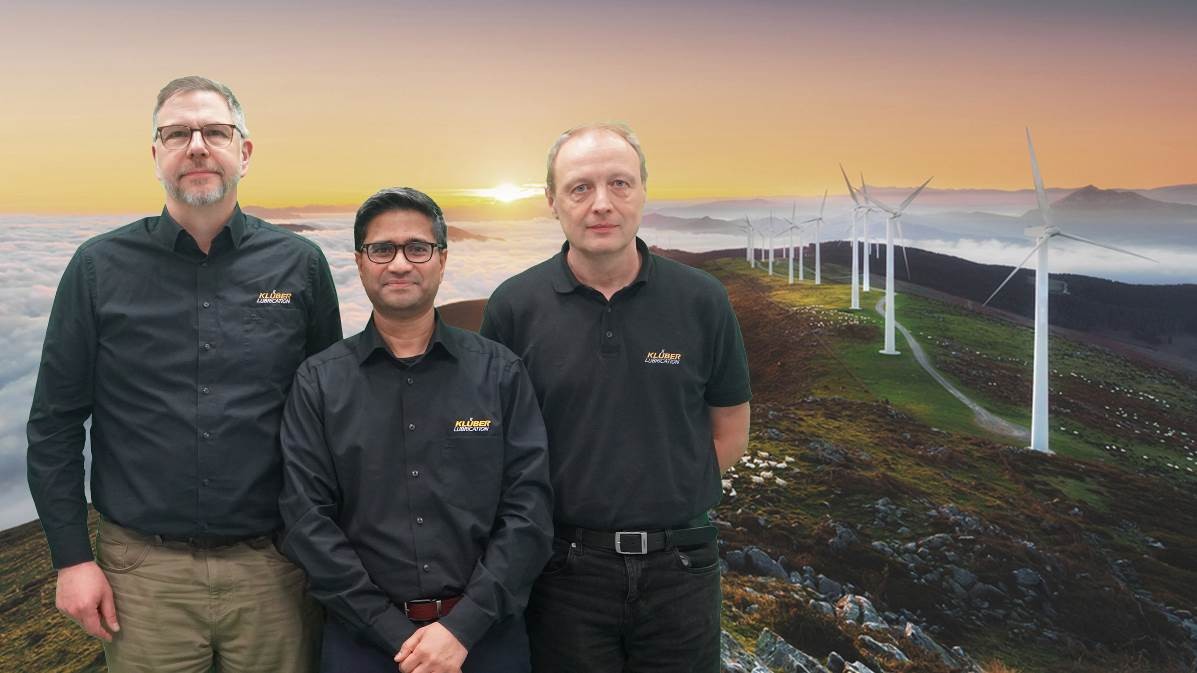
Picture taken with Klüber Wind sales managers after a brainstorming session in Munich (2024). From left to right: Thomas Jorgensen, Bala and Thomas Wunder. ®Klüber Lubrication
I travel to several sites, supporting ongoing wind energy projects—whether it be new lubricant developments or solving lubrication/tribological problems. It has been and is a lovely journey that I am happy about.
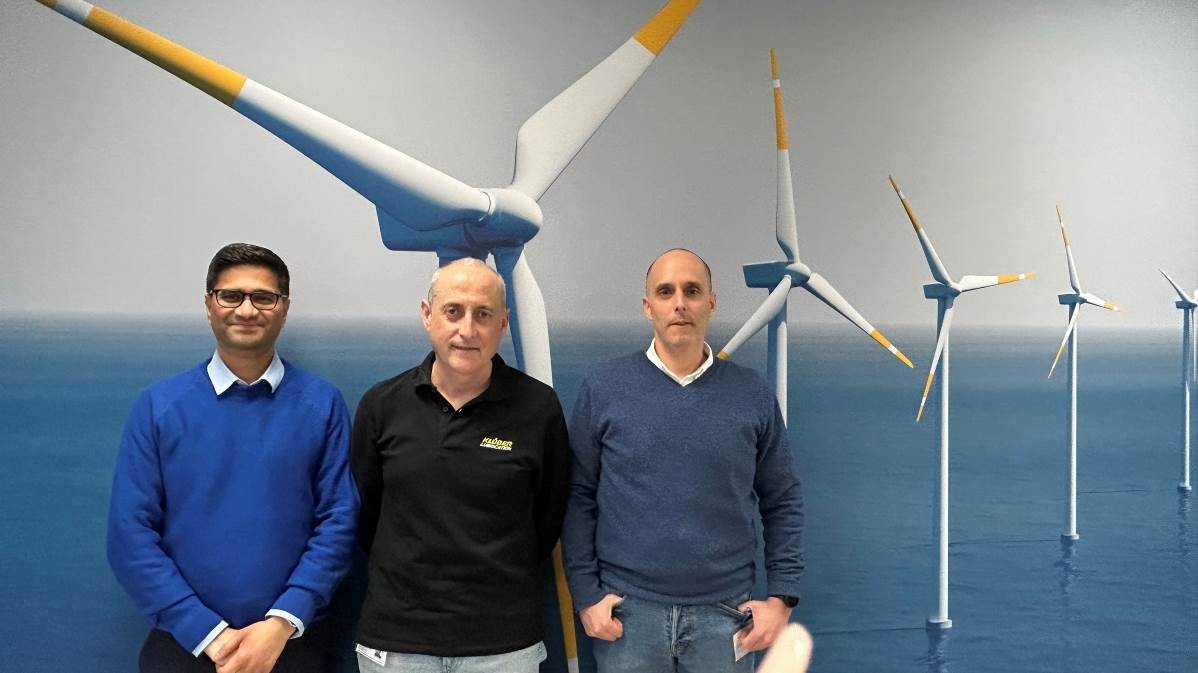
Bala with Klüber Lubrication Spain Wind energy sales team. From left to right: Bala, Raúl Iglesias, Borja Ayo Andicoechea ®Klüber Lubrication
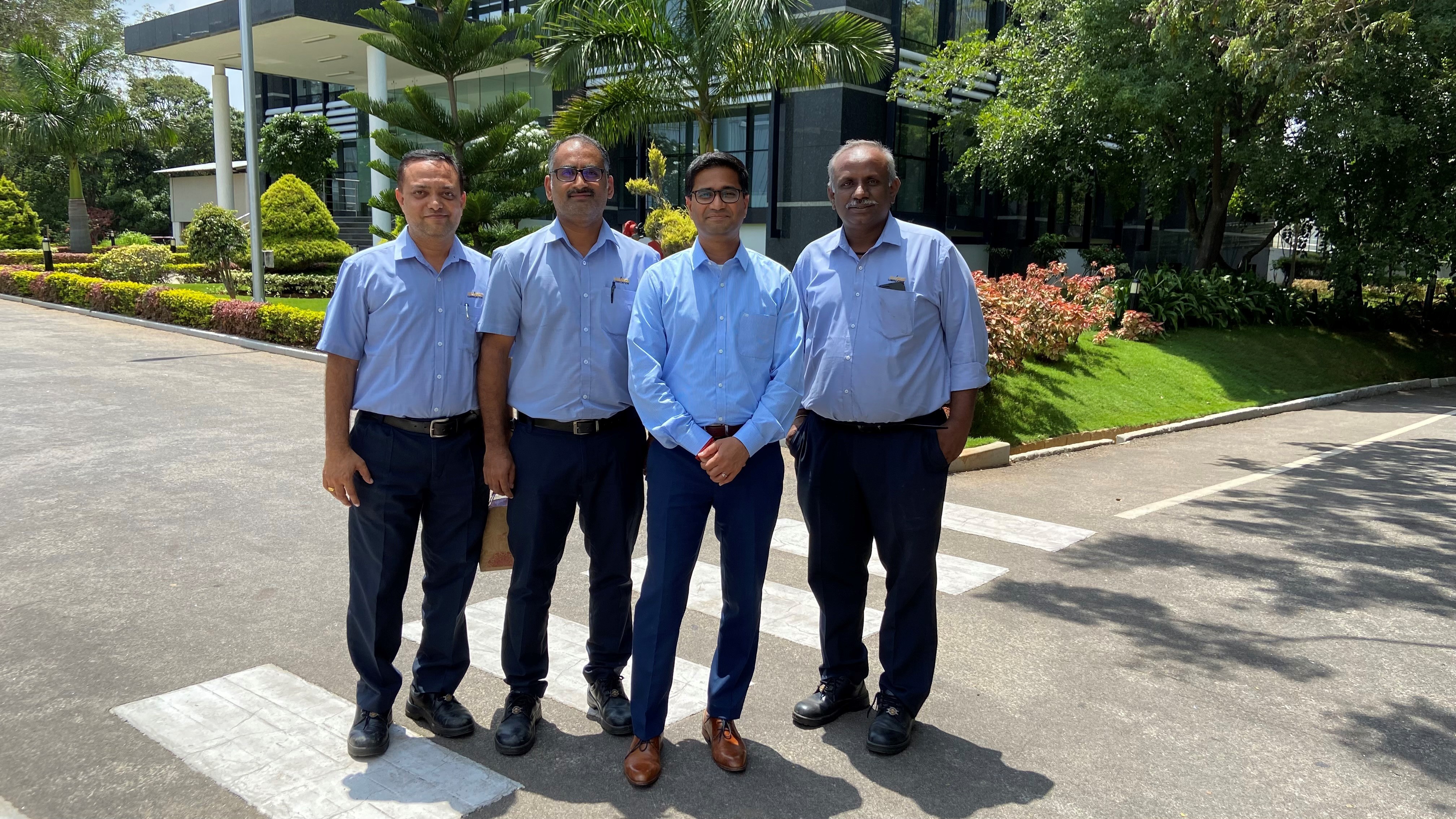
Picture taken after a technical meeting at Klüber Lubrication India in Mysore (2023). From left to right: Sripad Achar, Channabasappa Hudedagaddi, Bala and Satheesh Kumar. ®Klüber Lubrication
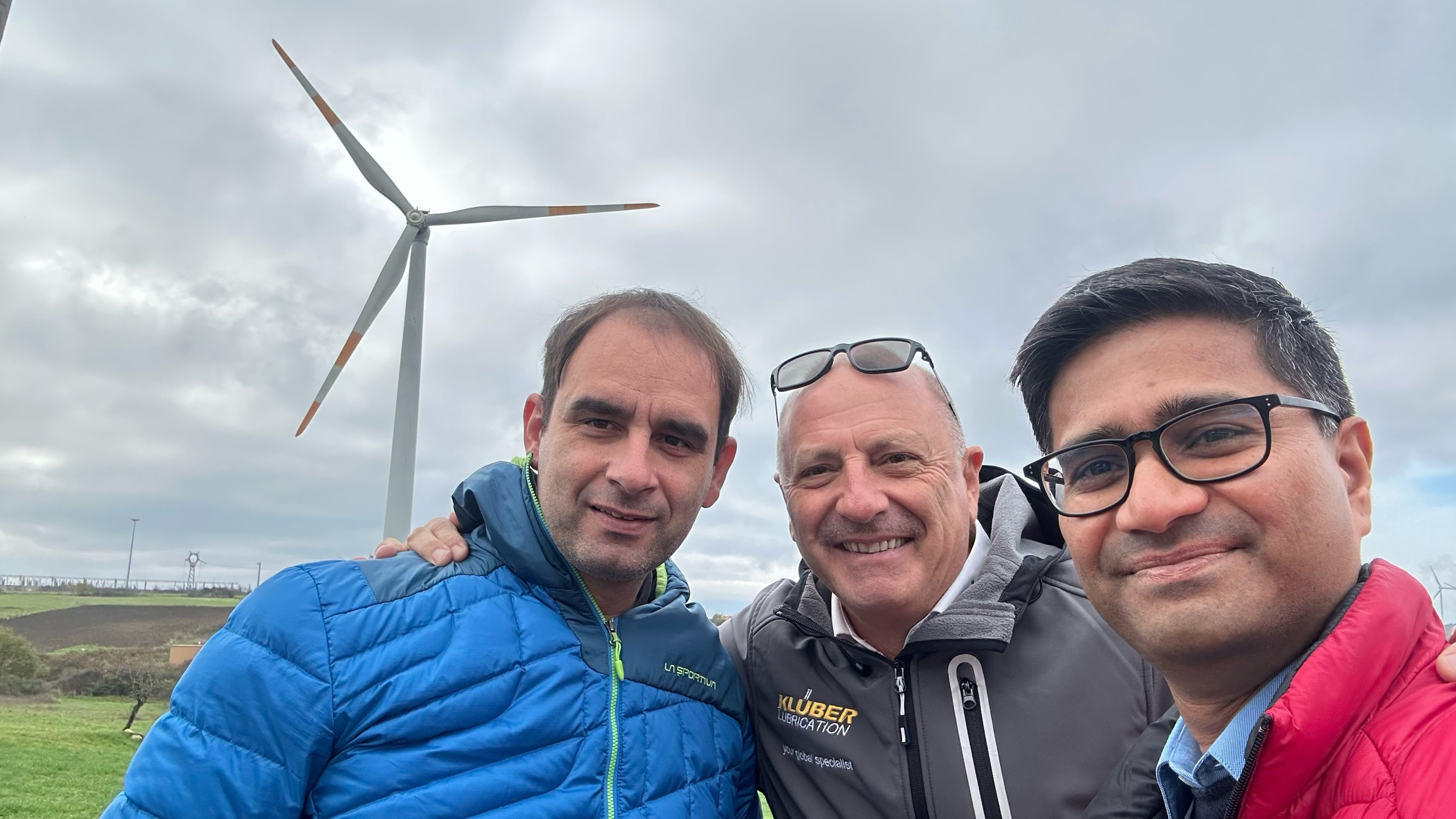
Picture taken in a wind farm in Italy (2024). From left to right: Manlio Astolfi, Francesco Simeone and Bala. ®Klüber Lubrication
On top of this, working with university professors and doctorate students as part of the university liaison function allows me to learn from students and academicians and keep me updated. Learning from everyone and the experience of innovating together has been fun. Furthermore, networking through conferences, STLE activities and other lubricant workshops allows me to stay connected with friends and technologically up to date.
TLT: What is the No. 1 piece of advice you would give to a person who might be interested in starting a career in the lubricants industry?
Bala: My advice would be “go for it.” The industry is wide open, and there are a lot of opportunities to learn and grow in many fields such as materials, chemistry, mechanical engineering, etc. I find developing a strong understanding of fundamental aspects of lubricants and additives, machineries and equipment, and gaining more hands-on-experience would help starting a great career in this field. Keeping oneself up to date, willingness to learn, paying attention to details and being attentive in not missing an opportunity would help reach greater heights.
TLT: What kind of lubricant topics or problems are you currently dealing with?
Bala: I am currently working on several topics, but to name a few, lubrication of wind turbines, marine propeller bearings and robotic components like gears and bearings are some of my key areas of focus.
Wind turbine applications have been one of my favorite subjects for over a decade now. I have been working with several wind turbine OEMs and operators, particularly focusing on main shaft and blade bearings, yaw bearing/gear and generator bearing. A wide range of tribological problems are commonly known in wind turbine applications like wear, micropitting, spalling, standstill corrosion, false brinelling, white etching cracking, etc. Both wind turbine components and lubricants encounter harsh conditions. With a great and dynamic global wind energy team, understanding the insights and proposing right lubricant solutions have been very exciting.
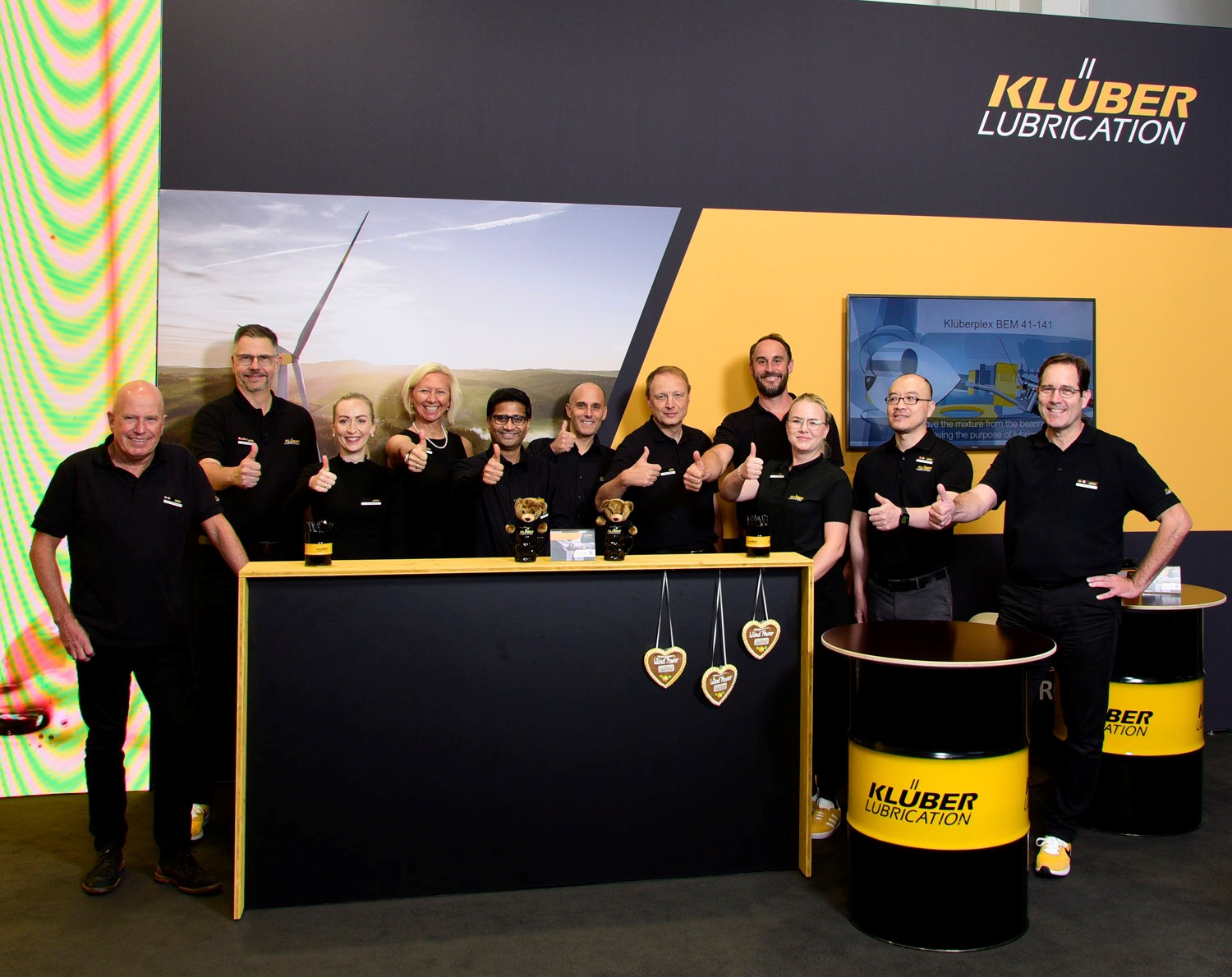
Picture of Klüber global wind energy team taken at WindEnergy Hamburg 2024. From left to right: Mart Hoogeland, Thomas Jorgensen, Nicole Neudorfer, Monika Nützel, Bala, Borja Ayo Andicoechea, Thomas Wunder, Daniel Narnhammer, Denise Mehrl, Victor Sun and Oliver Bogen. ®Klüber Lubrication
One of the topics that I have been recently working is rescue grease—a grease that is designed for use in damaged wind turbine main bearings. Replacing a damaged main shaft bearing can be very expensive involving several costs like lost revenue during downtime, repair and replacement costs, transportation, logistics and labor costs, leading to a total economic impact of about €200,000 per replacement in an onshore application. This could cost even more for an offshore replacement. The rescue grease contains special additives that are designed to effectively work on damaged surfaces and help conditioning them, thereby reducing the vibration and bearing temperature. Some of the claimed reasons for an early failure with main shaft bearings are improper main bearing grease, compromised bearing quality, not having maintenance at regular intervals leading to accumulation of wear particles, etc. It is very important to keep the grease and bearing clean. Therefore, having an effective maintenance program is critically important. Keeping the bearing clean could keep the surface distresses low and help reduce surface cracking and prolong the component life. The first step in introducing rescue grease in damaged bearings is flushing the contaminated used grease out using a flushing/cleaning grease. The flushing grease is designed to effectively clean the bearing and at the same time protect surfaces against any further damages—thanks to its special antiwear (AW)/extreme pressure (EP) additives. This means flushing process can be carried out without stopping the turbine, thereby not losing any power generation or revenue. Once the cleaning is adequate, the rescue grease is introduced at required concentration. Since the use of rescue grease significantly reduces the amount of resources involved (waste of materials, transportation and logistics in the process of main shaft bearing replacement), such a lubrication solution contributes to CO2 emission reduction.
This lubricant solution allows the turbine operators running the turbine without high temperature alarms or any immediate stoppage, thereby enabling the operation of turbines without major revenue losses. Such a lubrication solution is gaining a great attention in the industry. Some operators have tried it out on their turbines and reported improved performance of main shaft bearing, either as reduction in vibration or bearing temperature. Such demand-based lubricant solutions help turbine operators and owners to maintain their assets effectively and reliably. I engage in technical discussions and collaborations with turbine owners and operators on this topic. Following this customer-centric approach, working with customers and addressing their pain points are my key focuses, which I enjoy very much.
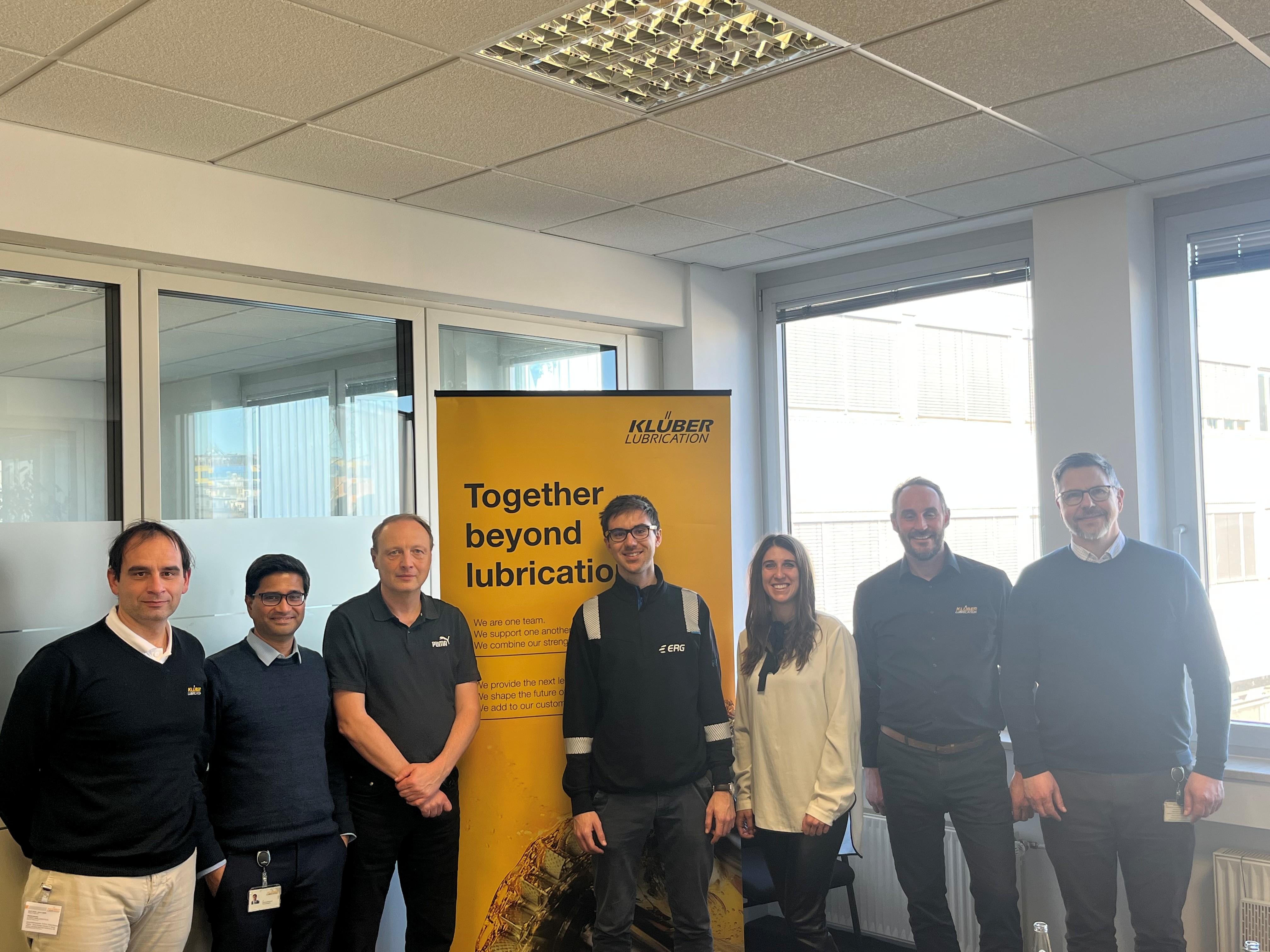
Picture taken during a technical discussion on rescue grease between Klüber Lubrication Munich and ERG from Italy in 2025. From left to right: Manlio Astolfi, Bala, Thomas Wunder, Antonio Arcelloni (ERG), Federica Grosso (ERG), Daniel Narnhammer and Thomas Jorgensen. ®Klüber Lubrication
Two other topics that I have recently been engaged in are a gear oil booster and a new and advanced blade/pitch bearing grease for wind turbines. Since the base oil of gear oil generally does not experience elevated temperatures and no oxidation or major aging, replacing the entire oil after the predefined relubrication interval means a significant waste of material even though oil condition could be healthy and good to be further used. The concept of gear oil booster is intended to offer a sustainable solution by extending the use of base oil just by boosting it with required additives that get depleted over usage. Likewise, a new pitch bearing grease has been under development considering future needs, particularly excellent performance in the presence of water. We had to work really hard to make this grease fail—it simply won’t fail.
Additionally, with a great team, we are studying if and how lubricants and additives, hydrogen sources, impact load, electrical current, etc., affect white etching crack formation. Since this problem is multifaceted and could be induced by more than one driver, this work is very exciting in understanding if and how additive interactions are influenced by these drivers.
TLT: What do you think would be the major focus in the future in the lubricant industry?
Bala: There has been quite some buzzing topics recently including but not limited to sustainability, environmentally friendly lubricants, energy efficiency, long-term reliable and sustainable lubricant solutions, using artificial intelligence (AI) and machine learning for lubricant developments, remote lubrication, digitalization and automation. In my opinion, these areas are likely to grow and expand further. In addition, more preventive and predictive maintenance-related lubricant solutions are to be expected. There may be a greater need for condition-based lubrication than a one-time lubrication with conventional lubricants. Furthermore, needless to say, wind turbine size has increased significantly over the years and this trend/race continues, which is expected to bring even more stringent requirements for lubricants. More exposure of lubricants to soil (onshore) and sea (offshore) are believed to occur, hence the demand for environmentally friendly lubricants could increase—all focusing on generating sustainable and greener energy and future.
You can reach Balasubramaniam Vengudusamy at balasubramaniam.vengudusamy@klueber.com.