KEY CONCEPTS
•
Tribochemistry is essential to lubricant additive function.
•
Tribochemical reactions can significantly improve the overall performance of a lubricant.
•
Tribochemistry can assist in reaching sustainability goals.
Lubrication plays important roles in friction reduction and wear prevention, which leads to efficient mechanical systems. Successful lubrication is either by physical separation of the two solid bodies in hydrodynamic lubrication or based on the complex organometallic reactions occurred between the lubricant and the substrate metal surfaces in boundary lubrication. The details of these chemical reactions are not well-known, and they are generally referred to as tribochemistry, chemical reactions as a result of the two surfaces rubbing together under mechanical loading. Understanding what these reactions are and how they occur would help to achieve successful lubrication (i.e., friction and wear control).
The article’s aim is to provide a historical account of tribochemistry, its origin and a brief overview of applications, acting mechanisms and recent advances in tribochemistry and to discuss challenges of applications of current tribochemically activated lubricant additives, as well as future trends for the development of tribochemistry.
Definition of tribochemistry
STLE member Dr. Ashlie Martini, professor and department chair, University of California, Merced, explains that tribochemistry is the study of chemical reactions that are activated by the conditions in tribological interfaces. It has been widely applied in the lubricant (additives), semiconductor (chemical mechanical polishing) and processing (e.g., ball milling and extruding) industries. Recently it has attracted strong attention from the chemical industry as it offers a greener and more sustainable way to synthesize a variety of products.
STLE member Dr. Seong Kim, distinguished professor of chemical engineering and professor of materials science and engineering, Penn State University, shares his perspective of tribochemistry: “Some chemical reactions can take place spontaneously as soon as we mix reactants at room temperature, but some do not. In fact, most chemical reactions require external energy supplied to occur. If such energy comes from heating, that is thermochemistry. If such energy comes from light, it is photochemistry. If the reaction occurs upon application of electrical bias which is accompanied with current, it is electrochemistry. If the reaction is facilitated by supplying mechanical energy, it is called mechanochemistry. Tribochemistry is one form of mechanochemistry in which the mechanical energy is mostly coming from frictional shear at the sliding interface.”
STLE member Dr. Jun Qu, group leader, distinguished R&D staff scientist, Surface Engineering and Tribology Group, Materials Science and Technology Division, Oak Ridge National Laboratory, concurs with the previous statements and says that tribochemistry refers to the chemical reactions among the contact surfaces, lubricant, wear debris and/or environment, triggered and/or boosted by tribological actions including but not limited to frictional heating, normal pressure, shear stress and mechanical mixing at the contact interface.
STLE member Dr. Stephen Hsu, professor and department of mechanical and aerospace engineering, George Washington University, explains the
tribochemistry term as the following: “The term tribochemistry comes from Greek language: ‘tribo’ - ‘to rub.’” He explains: “Tribochemistry literally points to chemistry resulting from two surfaces rubbing under load. The resulting chemistry from rubbing surfaces depends on the nature of the surfaces and the rubbing conditions. The number of chemical reactions range from decomposition, catalysis, adhesion, polymerization, etc. For this article, we will focus on chemistry that will lead to effective lubrication for energy efficiency and material utilization. If the rubbing surface is the source of tribochemistry, then the interfacial physical and chemical conditions are important to know what chemical reactions will take place and how fast they will take place.” He adds that the following topics are the key issues.
1.
Contact reaction temperature. The key parameter is the chemical reaction temperatures (not necessarily the interfacial asperity-asperity contact temperatures). This question has been the source of many attempts to determine the “rubbing” process. Several mathematical models have been proposed, but the results cannot be verified, so uncertainty is very high. Without the knowledge of the reaction temperature, one could not estimate how much time it will take for the tribofilm to be formed.
2.
Nascent surface effects. In a rubbing contact, when the loads are mostly supported by the surface asperities (boundary lubrication), some wear will occur. The wear would remove the oxides and expose the nascent surface, which could be much more reactive. How does the nascent surface influence the tribochemical rate or nature of the reaction?
History of tribochemistry
According to Hsu, the first
tribochemistry puzzle was discovered in 1958 in Bell Lab by Hermance and Egan
1 when they examined electrical contact failures. They found brown solid organic films on palladium contact surface, as shown in Figure 1.
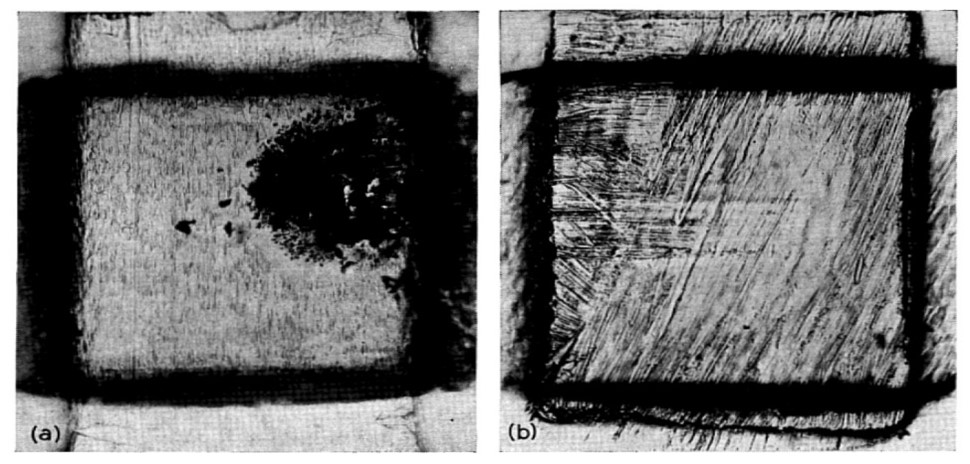 Figure 1. a.) Dark brown deposit on palladium surface. b.) Silver surface showed no deposit.1
The brown deposit was found to be organic, from vapors of organic insulators used in the relay. The polymer was soluble in pyridine, and they name the deposit “friction polymer.” They observed: “The presence of the polymer reduced wear of the contact by 30 times.” But for Bell Lab, the insulating property of the polymer was detrimental to electrical relays. This was the first discovery of “tribochemistry” and “tribo-polymerization.” How the organic vapor under high frequency contacts triggered polymerization was a mystery. As it will become self-evident later, the formation of this high molecular weight (MW) polymer turns out to be the key ingredient to form the tribofilm, achieving successful lubrication.
How tribochemistry enables the formation of tribofilms
Hsu explains: “Under boundary lubrication conditions, the lubricant and the additives will be oxidized at the interface quickly. The oxidation of lubricant is accelerated by the presence of shear stresses, and asperity flash temperatures (in a conformal contact in a four-ball wear tester, the asperity reaction temperature could reach 250ºC to 350ºC depending on the load and speed of the rubbing conditions. Figure 2 shows the molecular temperatures obtained from chemical reaction kinetics of how much reaction products are produced product (high MW organometallic compounds in a four-ball wear tests).
2
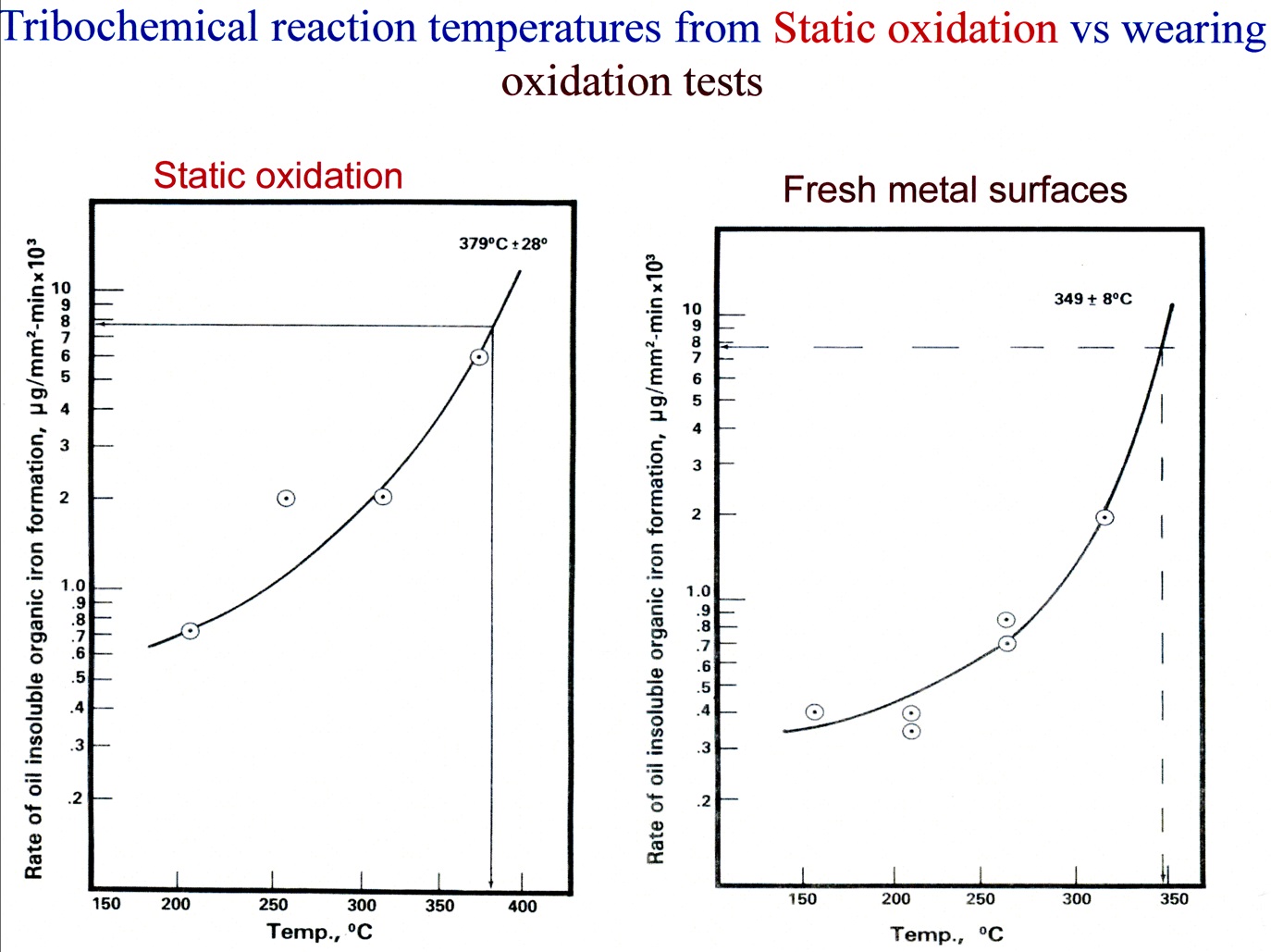 Figure 2. Oil insoluble organic iron formation as a function of temperature in a.) static oxidation test and b.) in very slow sliding wear tests. The temperatures measured are based on the amount of oil insoluble organic iron reaction products.2
Figure 3 shows the traditional hydrocarbon oxidation process via free radicals, but in the presence of iron, organometallic reactions take place. Under high temperatures and pressure, condensation polymerization will occur increasing MW up to 100,000 MW, which is the oil solubility limit, and the polymeric reaction products drop out of solution.
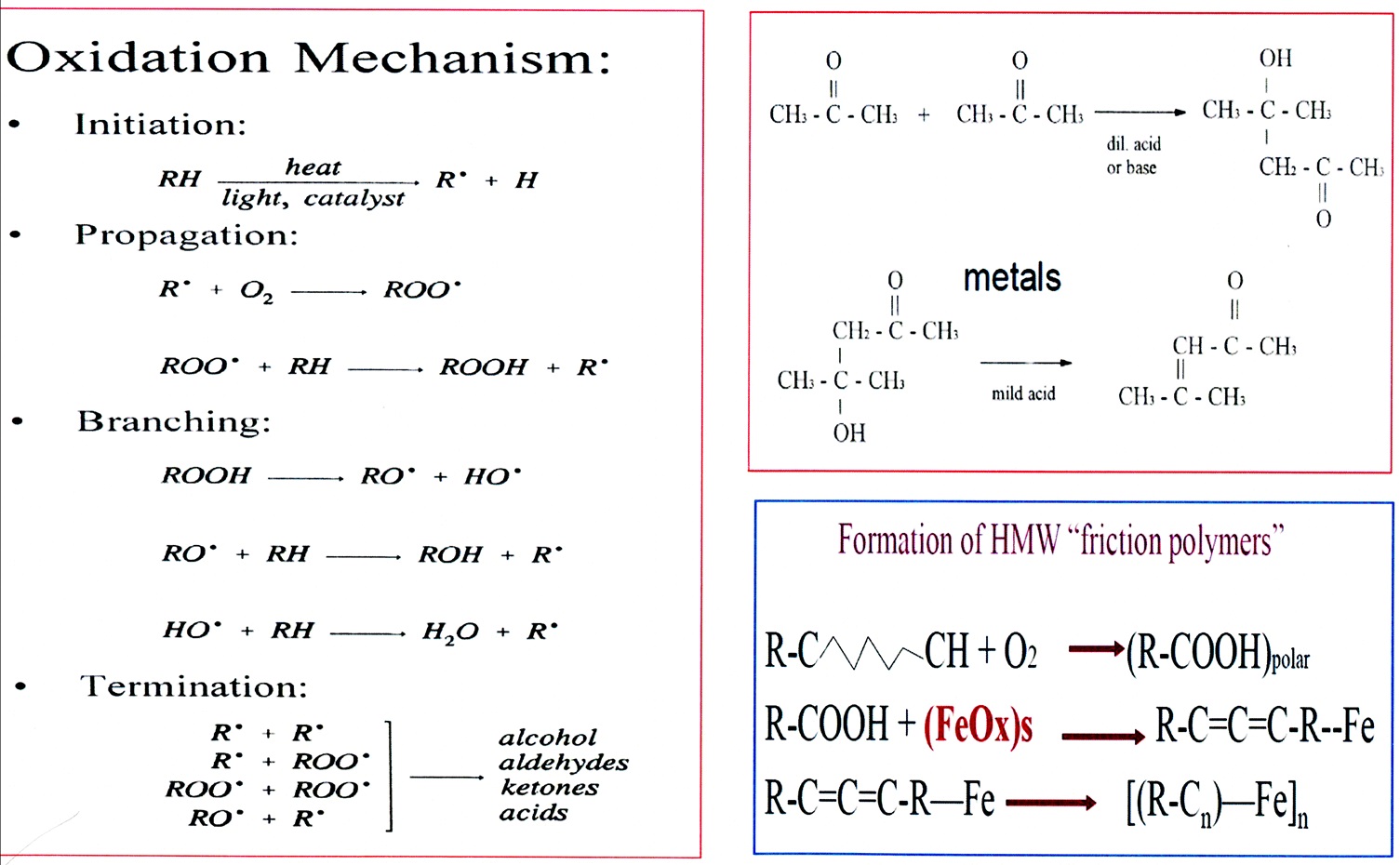 Figure 3. Lubricant (hydrocarbons) oxidation via free radical chain reaction mechanism. The presence of metal such as iron will introduce condensation reactions such as aldol condensation to form polymers. When the MW of the polymer reaches 100,000, it reaches the oil solubility limit and will drop out of the oil solution.3
Hsu continues that the high MW polymer (it used to be called friction polymer) formation reaction is based on hydrocarbon condensation reactions. Successful lubrication is achieved when we have an effective tribofilm formed in the interface. When we examine lubrication effectiveness of a lubricant, the friction polymer provides the basic structure/ingredient of the tribofilm, which requires the presence of a polymer. Reinforcement by phosphite adsorbs on the steel surface forming a glass structure and two layers: a hard adsorbed bottom layer and a soft layer to be worn away to protect the substrate from the wear processes. The phosphate glass from antiwear (AW) additives such as zinc dialkyl dithiophosphate (ZDDP) or tricresyl phosphate (TCP)
4-6 stabilizes the tribofilm to protect the surface, hence achieving successful lubrication.”
Hsu adds that molecular reaction temperatures and effect of nascent surface at the tips of the asperities are important because it tells us how fast the tribochemical reaction will proceed. When one considers the thermal dynamics at the tip of the colliding asperities surrounded by an insulating oil film, the temperatures will rise. In the 1960s, in metal corrosion studies, it was found that metals actually exist in two forms: oil soluble metals and oil insoluble metals (pyridine soluble). A series of wear tests was carried out in a four-ball tester, and the tribofilm was extracted using pyridine, and the oil soluble and the insoluble iron level were measured using graphite furnace atomic absorption instrument. Static oxidation tests using the same specimen also were carried out at various temperatures as baseline data. Using chemical kinetics, the reaction temperatures were measured.
Hsu says: “In Figure 2, the rubbing contact suggested a molecular reaction temperature of 349ºC in a room temperature environment. In this case, fresh nascent surfaces were available. For the static oxidation test, the steel surface was covered by iron oxides. So the effect of the presence of fresh nascent surface accelerating the reaction is about 10%.”
2
The limits of transition metals
Hsu says that almost all of the metals used in tribosystems today are transition metals (such as Fe, Cr, Co, Cu, Ni, etc.). Transition metals have full outer orbitals and have second outermost orbitals incompletely filled. So, their valence electrons are present in more than one shell. This lowers the activation energy for chemical reactions of hydrocarbons (oil) to proceed to form coordination complexes. If the metals are outside the transition metals, the current lubricant may not be as effective to generate tribofilms as currently practiced. Effective lubrication requires the conditions that move the chemical reactions toward the higher MW path to form tribofilms, which function to reduce friction and wear.
2
Hsu describes validation of the chemical path in practice: “The formation process of the organometallic polymer and its role in creating the tribofilms is an important issue. The processes and evolution of simple wear test and the analysis of the ‘friction polymer’ and formation of the tribofilm will need to be experimentally verified. A new analytical procedure and method was developed using a size exclusion chromatography (SEC) to separate the sample according to molecular size and coupled with a graphite furnace atomic absorption apparatus (GFAA) to measure the content of metal (organometallic compounds). This real-time continuous analysis as the various sized fraction coming off the chromatography was new at that time.”
Per Hsu, Figure 4 provides evidence the generic tribofilm is built upon the high MW organometallic polymer formed under rubbing two surfaces together; this tribochemistry enables the universal lubrication of rubbing metal surfaces.
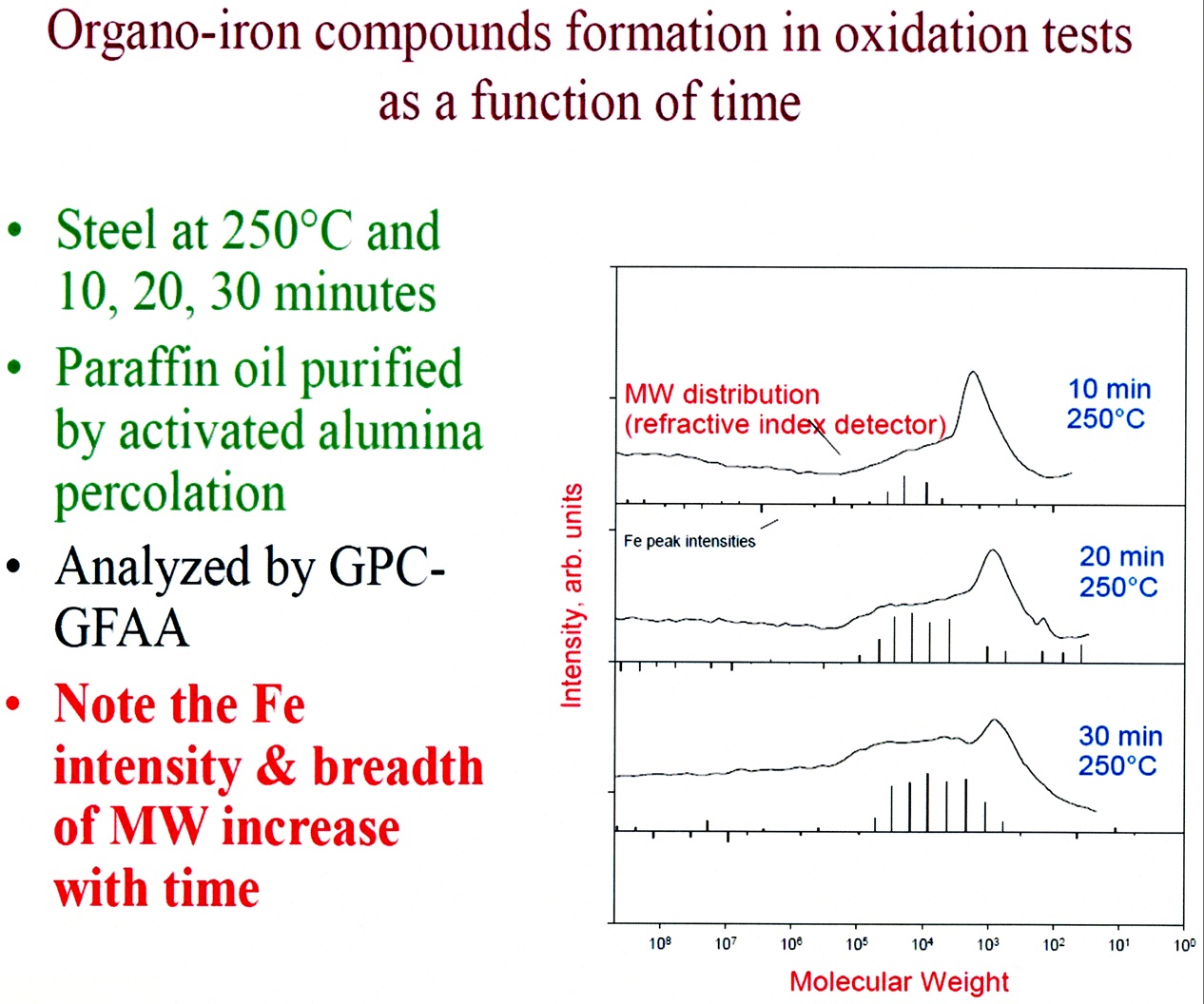
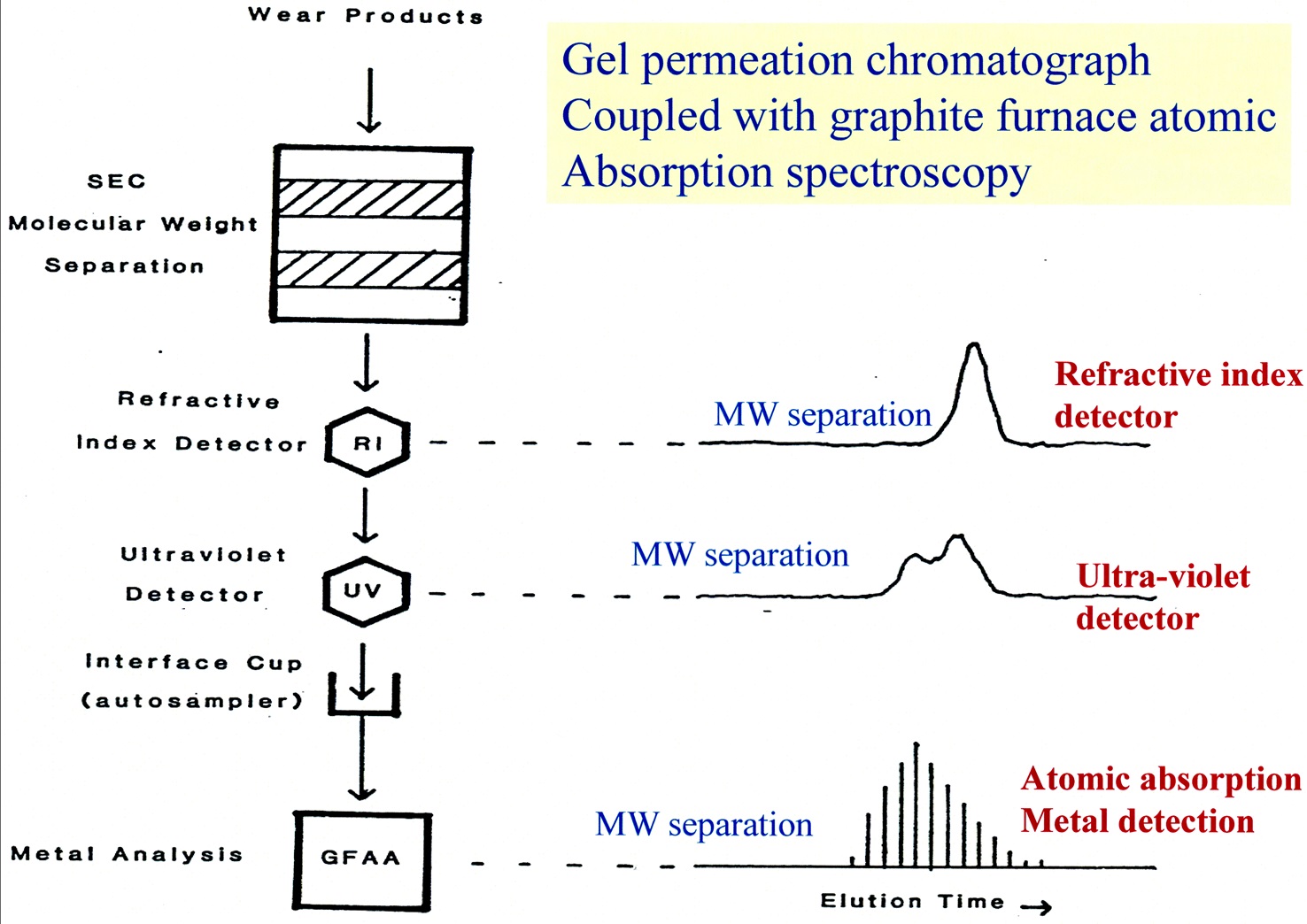
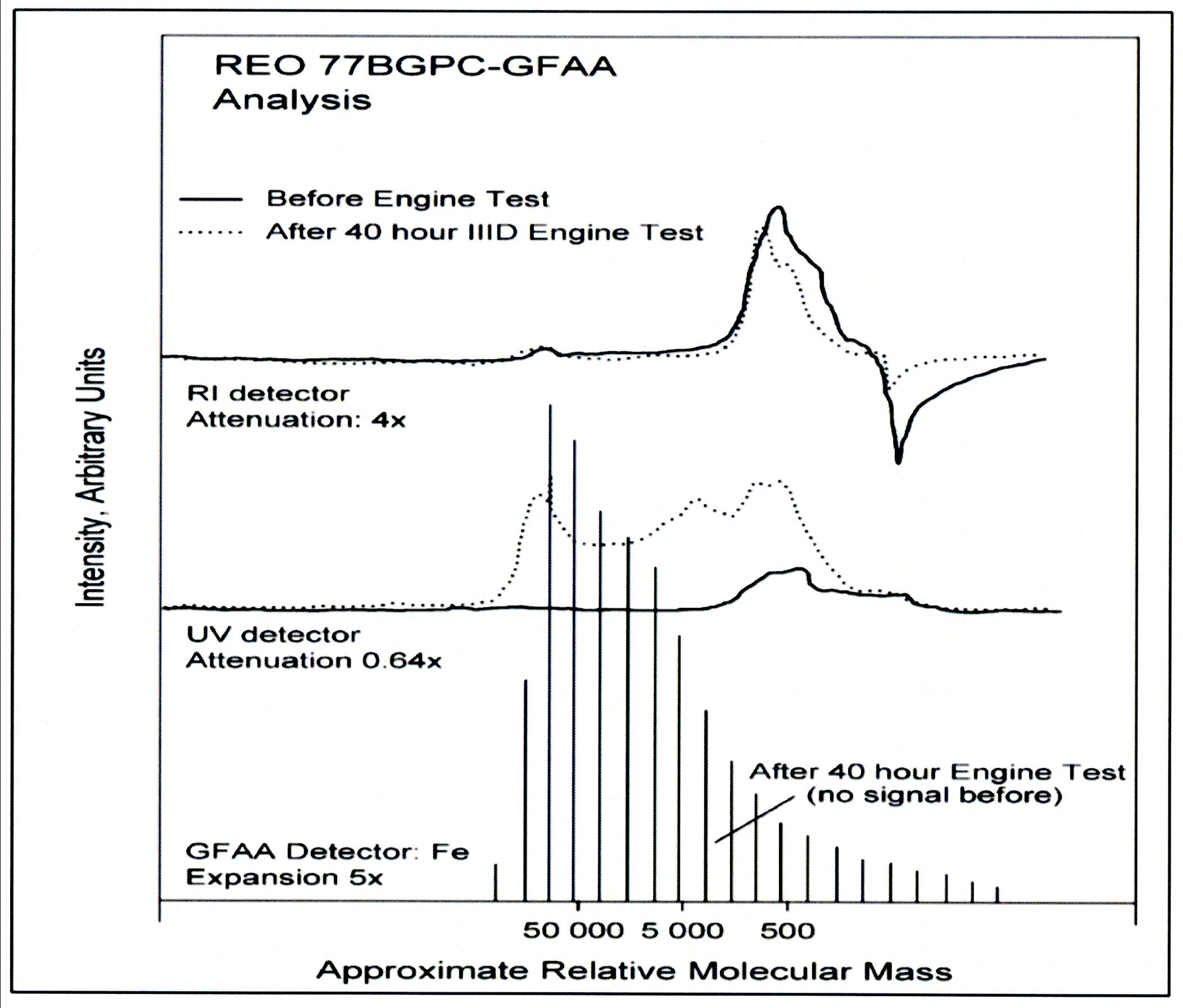 Figure 4. Selective Size Chromatography-Graphite Furnace Atomic Absorption (SEC-GFAA) analysis of organometallic compounds in bench oxidation test, in wear test film, then in engine sequence test tribofilm materials. The three set of data suggest the tribofilm formation follow the same path of MW increase and organometallic compound formation.4,5
Mechanisms of tribochemistry
Martini explains: “The mechanisms of tribochemistry are related to the conditions between two surfaces in relative motion that drive the reactions. Some of the conditions most important to tribochemical reactions are: 1.) frictional heating, 2.) catalysing metal surfaces and 3.) mechanical force.”
First, local (flash) temperature can increase quite dramatically at asperity contacts, which provides thermal energy to drive reactions. As Qu comments, “The flash temperature at the contact interface could be a couple of hundred degrees Celsius higher than that of the bulk lubricant.”
Second, the wear of surface oxides can expose reactant species to nasal metal that acts as a catalyst for reactions. Hsu describes this further as “an emerging nascent surface which accelerates the polymerization of the organo-metallic reactions. The polymerized high MW reaction products form the tribofilms performing functions such as friction reduction, sacrificial wear to protect the sliding interface from wear and tear.
6 This mechanism was demonstrated when a surface was mechanically scratched at various depth of the surface, covered by monolayer of absorbed molecules; chemical reaction products were detected using spectroscopies showing accelerated reaction products.”
Finally, normal and shear force can act directly on reactant species, providing mechanical energy to drive reactions. This is mechanochemistry. Martini comments: “It has been suggested that the direct activation by mechanical force is the most significant factor for tribofilm formation reactions from lubricant additives. However, the relative contributions of different factors depend on operating conditions, surface material and roughness and the chemical reactions themselves.”
Kim concludes: “The exact mechanisms involved in tribochemical reactions are not fully understood yet. One thing clear is that they are different from thermal reaction mechanisms. When the same reactants are heated without frictional shear, some reactions will take place—but thermal reaction products are different from tribochemical reaction products; so they cannot provide the same lubrication effects. One of the challenges in mechanistic study of tribochemistry is that the reaction takes place in small areas and reaction products are so difficult to isolate and purify for structural characterization; so many aspects of tribochemical reaction products remain unknown. Nonetheless, it is clear that ‘friction’ is causing reactions.”
Often, tribochemical reactions are explained with a “shear-assisted thermally activated” model. In this model, it is thought that the mechanical shear (friction) causes lowering of the transition state energy and/or increasing of the reactant state energy.”
The concept behind this model can be visualized using a reaction energy diagram
(see Figure 5). This shows that the energy required for a reaction to proceed can be lowered from the thermal activation energy (Ea, red) by mechanical energy (Em, blue) such that the reaction proceeds more readily.
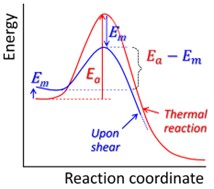 Figure 5. Concept behind the shear-assisted thermally activated model for tribochemistry.8
However, the mechanisms by which mechanical energy can be transferred to reactant species is still not fully understood.
9 Kim says: “One of the leading hypotheses is that friction induces deformation of molecules at the interface and such deformation makes the reactant molecule to be less stable, thus more reactive. Such deformation can be facilitated if the molecule is ‘chemically bonded’ to one of the sliding solid surfaces; then, transfer of frictional energy from the sliding interface to the reactant molecule is facilitated.”
Applications of tribochemistry
Martini says that tribochemistry might occur anytime reactant species are confined and sheared between two solid surfaces. “There are many examples in industry, both specifically related to tribology and elsewhere. For example, ball milling or other milling/grinding techniques are used for synthesis of some commercial products and pharmaceuticals. In such instruments, reactant species are compressed and sheared between solid bodies. This process can drive synthesis reactions without the need for heating or environmentally harmful solvents.” This application also is mentioned by Hsu, who states, “Another application of tribochemistry recently is focused on the advantages of current tribochemistry to develop alternative synthesis routes to create new molecules of molecular structures difficult to synthesize.”
Another example is seen in semiconductor manufacturing; chemical-mechanical-polishing processes are widely used for planarization of semiconductor device surfaces and smooth finishing of optics. As Kim notes, “Chemical mechanical planarization used during the semiconductor manufacturing is tribochemistry.” The tribochemical reactions underlying these processes are facilitated by the mechanical energy of slurry particles sliding on the device surface in solutions containing reactive chemicals.
Finally, tribochemistry is very relevant in tribology applications. Qu says: “Tribochemistry, intentionally or not, occurs at almost every contact interface, either beneficial (e.g., forming a tribofilm reducing friction and wear) or detrimental (e.g., tribocorrosion causing excessive material loss as a result of synergistic effect between mechanical wear and corrosion). A good example of intentional application of tribochemistry is the lubricant AW additives that are designed to be relatively stable inside a lubricant without tribological energy input, but actively react with the bearing surface and/or wear debris at the contact interface to
in situ form a protective tribofilm upon the tribological actions discussed above.”
10
Kim says: “No lubricant is made of a single pure oil. It contains a variety of additives to improve pourability in cold days, augment viscosity at high pressure, scavenge dissolved water and particulate, slide with low friction and prevent wear. The interplays between additives are part of tribochemistry. The dynamic equilibrium of removal of friction modifier due to friction and reformation of the friction modifier layer through diffusion from the liquid phase and reactions at the surface could be viewed as tribochemistry. The dynamic equilibrium of the extreme pressure (EP) layer is the same. The AW layer is formed through tribochemical reactions of additives adsorbed and sheared at the sliding interface. The environment dependence of superlubricity of diamond-like carbon (DLC) also is tribochemistry. The environment dependence of wear of ceramic materials is tribochemistry. Chemical mechanical planarization used during the semiconductor manufacturing is tribochemistry.”
Hsu says: “Current tribochemistry knowledge suggests the chemical reactions between lubricant molecules and additives can diverge into two separate directions: decomposition path to break down the molecules or move toward higher MW compounds. Effective lubrication requires the conditions that move the chemical reactions toward the higher MW path to form tribofilms, which function to reduce friction and wear.”
6
Examples of tribochemical processes of traditional additives such as AW and EP additives
Lubricant additives play a key role in friction and wear reduction and increasing reliability and efficiency of mechanical systems. They function based on their tribochemical interactions with metal substrates, which include physical adsorption, chemical adsorption and tribochemical reaction. Typical AW and EP additives contain chlorine, sulfur or phosphorous elements. These active elements undergo tribochemical reactions and form protective and lubricious tribofilms, which are responsible for reduced friction and wear.
The critical role of tribochemically activated additives can be understood in the context of the Stribeck curve and the classical lubrication regimes. “The right side of the plot
(see Figure 6) is the full film regime where the surfaces are entirely separated by lubricant. The left side of the plot is the boundary regime. In boundary lubrication, if there are no additives, the lubricant is squeezed out, and direct surface contact occurs leading to high friction and wear. In contrast, AW and EP additives react chemically with the surfaces to form a protective tribofilm,” Martini shares.
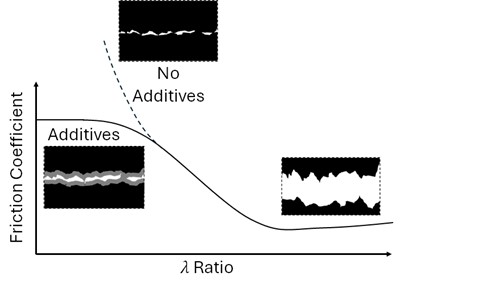 Figure 6. Schematic of the Stribeck curve that defines lubrication regimes. Figure courtesy of Dr. Ashlie Martini.
Kim shares: “One of the important additives in engine oil is ZDDP, which is used as an AW additive. It was originally synthesized and used as an antioxidant additive for engine oil. Soon it was discovered that it has an excellent AW property. Upon shear, ZDDP decomposes and reforms a tribofilm that can prevent the solid surface at the sliding interface from wear.”
Martini states: “AW and EP additives are excellent examples of tribochemistry. These additives form protective films on the surfaces of mechanical components by reacting chemically with the surface material, usually metal. However, tribofilm forming reactions do not occur without relative motion. So, if an AW/EP-containing oil is simply poured onto a metal surface, we do not expect a tribofilm will form. In contrast, when motion begins, the conditions in the interface provide enough energy for reactions to occur, resulting in a tribofilm. This is a pretty cool symbiotic process since the surfaces need the tribofilms for protection against relative motion in severe conditions, but the films can’t form without that relative motion.”
Hsu summarizes tribochemistry of traditional AW and EP additives as following: “For friction and wear control, ZDDP and sulfur-containing additives such as sulfurized fatty ester or dibenzyl di-sulfide are commonly used. For AW additives such as ZDDP or tri-cresyl phosphate, numerous studies have been performed. Basically, the AW additive either thermally discomposed or thermo-mechanically stressed into acid phosphite, which adsorbs onto the metal surfaces (mostly transition metals) forming a phosphorus intensive tribofilms, which is anchored by the acid phosphite in the film. The film continues to be replenished to sustain continuous wear of the film. The dividing line between AW and EP regime is defined by interfacial temperature and pressure. The reactive atoms can be any one from the halogen family, counterbalanced by the corrosiveness and bonding strength with the rubbing surfaces.”
Challenges for current tribochemically activated additives
Despite their success for many years, there are some challenges associated with current tribochemically activated additives. Qu gives a couple of examples: 1.) physical (e.g., miscibility and competition for surface adsorption) and chemical (e.g., undesired reactions or H-bonding) compatibilities with other additives
11 and 2.) negative environmental impact: many traditional AW/EP additives are toxic to organisms and non-biodegradable.
12
Kim adds: “Although tribochemistry of individual additives or ingredients is actively studied, it remains to be tested how well the new additives developed in ideal or laboratory conditions will work in highly formulated lubricant oils under real conditions. As mentioned before, lubricant oils contain so many ingredients that should work synergistically. The synergy (or allosteric effect) between various additives with different properties and functions is difficult to study, but without knowing this interplay, it would be difficult to adopt a specific newly developed tribochemistry in real situations.”
Hsu says: “Our knowledge on tribochemistry is gathered from careful studies of well-known lubricant additives. For example, we studied ZDDP over 20 years using all the analytical tools that we have, including the use of quantum beams.
13-15 To some extent, we lack the knowledge to design new molecules to be the next generation of lubricant additives. This is probably due to the vast number of materials, chemistry, operating conditions, material pairings and potential interactions. In fact, we are just beginning to understand tribochemistry and its link to effective performance through empirical correlations.”
Additive-additive interaction in formulation and new additive development
Hsu explains: “Tribochemistry not only involves chemical reactions, but it also includes additive-additive interaction in solution. Current formulations in lubricants may include 18%-21% of various additives, depending on the application. Most of the current additives carry negative surface charges. The aggregation of similar additives follows the polarity of the individual additive. So, the order of blending additives into the lubricant is important to maintain proper aggregation pattern to avoid chemical interactions. This equilibrium is maintained for most of the formulations
(see Figure 7).”
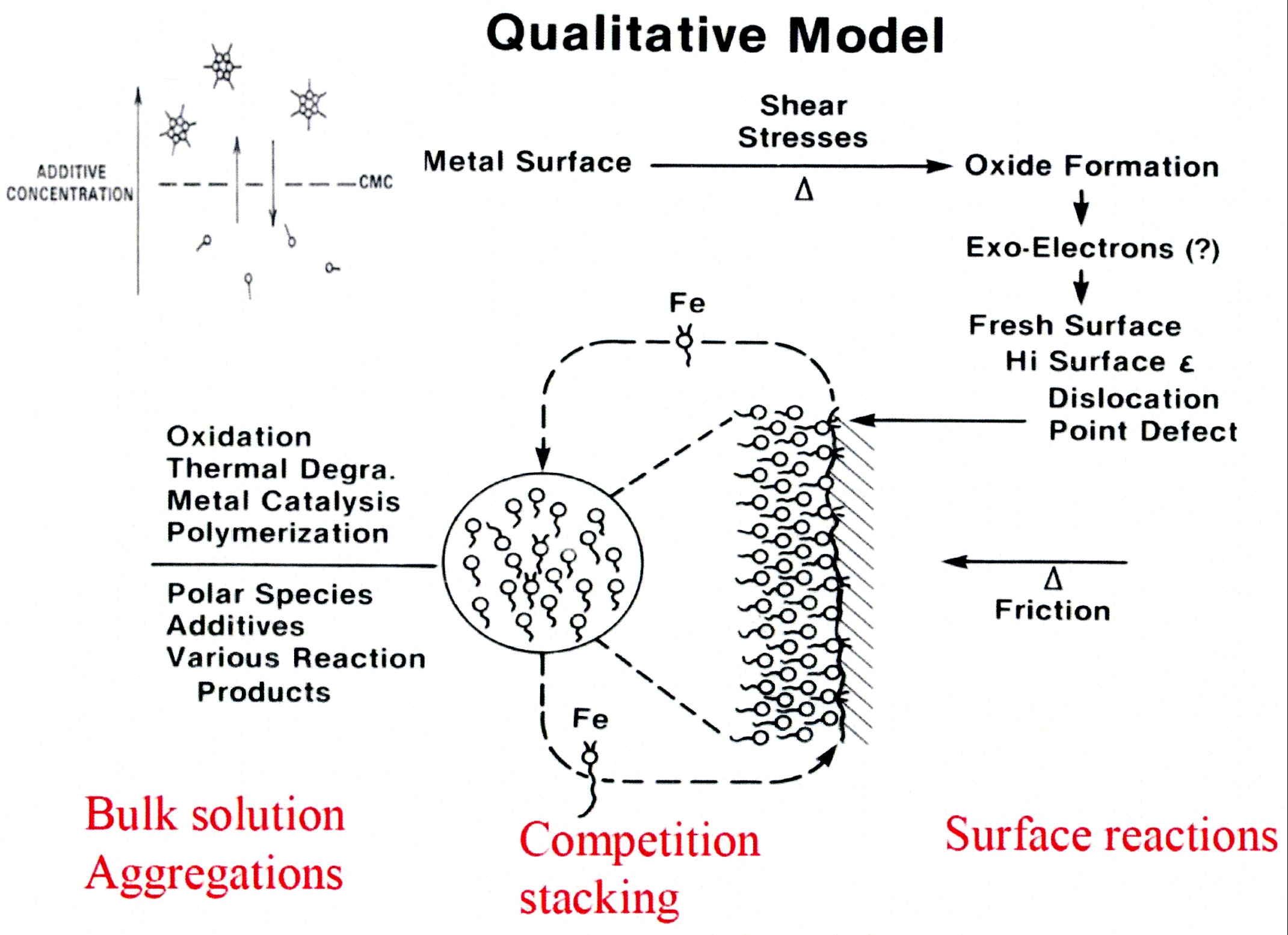 Figure 7. Additive stacking according to polarity/surface charge in oil solution.7
Hsu adds: “However, when new technologies emerge, such as the ultra-low viscosity lubricants (0W-16s and the 0W-8s) used by the Japanese vehicle manufacturers, this type of new low viscosity formulations will require new viscosity index improvers (VII), dispersants, friction modifiers and sometimes new AW additives or supplemental AW additives. Since the viscosity is so low, the solution chemistry aspect of how additives aggregate in lubricant may change depending on the polarity of the new additives. Especially for VIIs, since the current VII MWs are too high, lower MW weight chemicals are developed for testing. Sometimes new combinations of VII and dispersants are developed. This complete reformulation creates many laboratory bench tests, and engine testing, followed by field trials.”
According to Hsu AW additives are examined specifically: “On one hand, the oil industry is pushing low phosphorus limits to reduce the common zinc dithiophosphate AW additive. In the ultra-low viscosity lubricants, due to much lower viscosity, oil films thickness will shrink, and surface contacts will increase. So, research on supplemental non-phosphorus AW additives is being developed. Another aspect is with all the new additives in a low viscosity base oil, would the normal aggregation pattern be sufficient to avoid mix aggregation and chemical interactions?”
Hsu says that the development of the ultra-low viscosity lubricants creates an opportunity to re-examine the basic fundamentals of lubrication and tribochemistry.
A new plasma spray coating for engine piston rings
According to Hsu: “In 2019, U.S. engine companies started using German-made plasma spray cermet rings (WC-CrC-Ni) in their engines. This type of new ring as you can see in Figure 8 is made by adding particles of your choice to form cermet (ceramic-metal) on the piston ring surface as a multifunctional coating. It creates valleys on the ring as oil reservoirs to avoid hot seizure. As can be seen in Figure 8, after friction test, it largely retains the valleys to store oil. At the same time, the material is a cermet (ceramic-metal compound). Also, it can be seen that after cylinder-ring friction test, the surface is clean without the usual tribofilms on the ring surface. It kind of illustrates one important point: our lubrication technology is built on the transition metals. When a new material such as the cermet is being used in our tribosystem, we do not have any lubrication technology.”
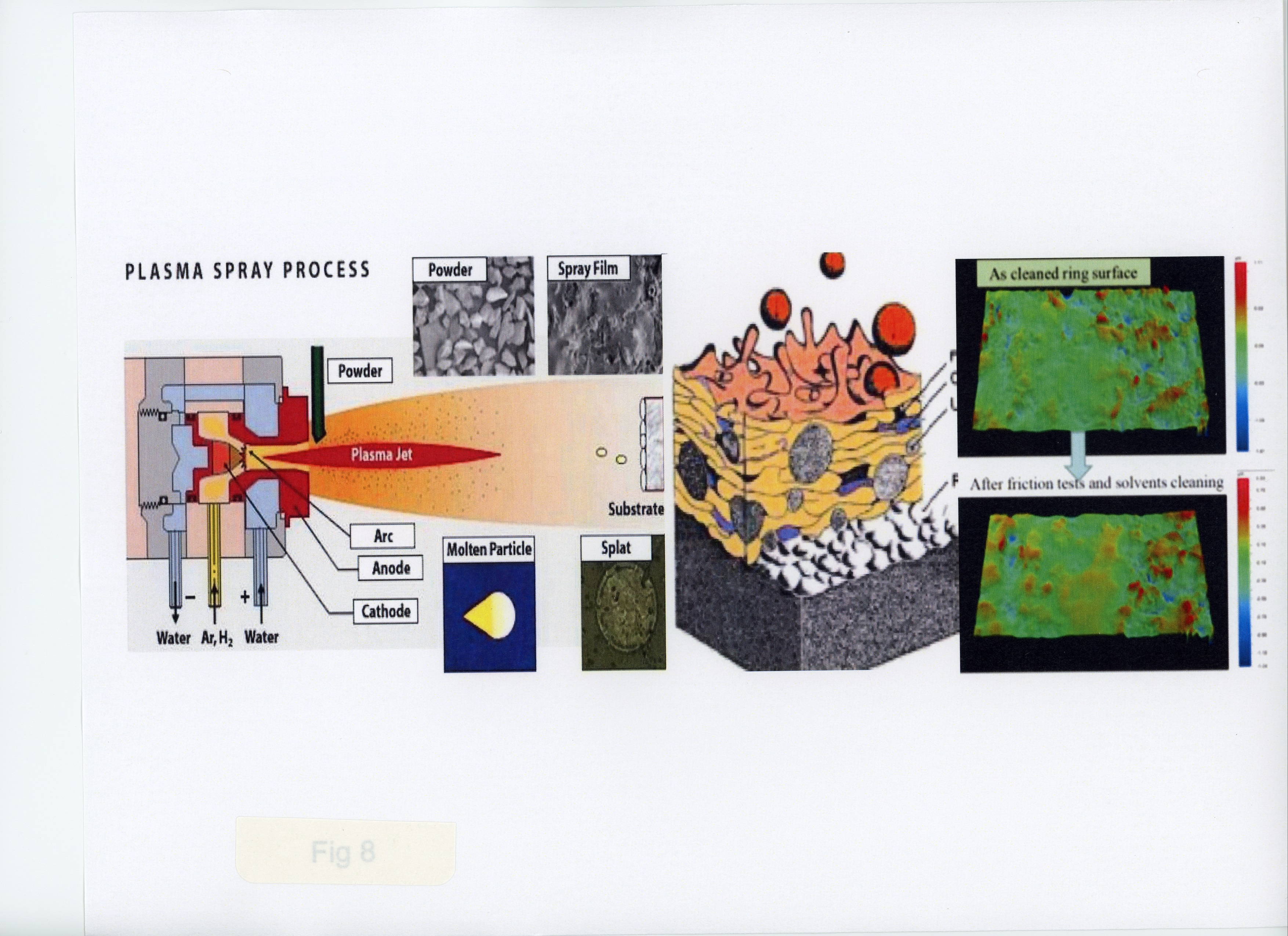 Figure 8. Plasma sprayed piston rings that have built-in texture (valleys) as oil reservoirs to avoid hot seizures in engines. Figure courtesy of Dr. Stephen Hsu.
Future trends of tribochemistry
Per Qu, the future trends of tribochemistry in lubricant development and applications as well as electric vehicle lubricants to satisfy new health, safety and environment regulations are likely within ecofriendly, high-performance AW/EP additives.
Kim says: “Although it has been used extensively and successfully for many decades, researchers are currently trying to develop alternative chemicals to reduce the use of ZDDP and eventually replace it completely in engine oil. The reason is that thermal decomposition of ZDDP at the engine wall produces phosphorous compounds that are volatile at the engine operation temperature so carried down to the exhaustion line. In the catalytic converter that is used to reduce pollutant gases in the exhaust gas, the phosphorous fragments are deposited on precious metal catalysts, forming a coating layer that prevents pollutant gases from reacting with catalysts. So, researchers are actively searching for alternative additives that can form a protective tribofilm via tribochemical reactions at the sliding interface, which would not harm the catalytic converter.”
Hsu indicates that the future trends of tribochemistry are highly impacted by global warming as its resulting devastations of weather, environment-induced migration and sea water level rise are forcing humanity to reduce carbon emissions. “Electrification of the transportation sector is well underway. The moment that we eliminate combustion, which necessitates liquid fluid to carry away the waste products and contaminations, the lubrication will shift to more solid lubrication and sophisticated multi-scale, multifunctional surface design and engineering to improve the transportation sector. Effective lubrication is still needed to reduce friction and prolong durability. New materials from renewable sources will become the future new materials to be ‘lubricated’ (to reduce friction and save energy).”
Tribochemistry also is likely to play a key role in the development of new electric vehicle lubricants. Kim concludes: “At this moment, it is not clear how the electrical current flowing across the tribo-contact will affect tribochemical reactions. The electrical current can cause joule heating, which will drive thermal reactions. Also, deformation of reactant molecules can affect electronic state of molecules, which could facilitate uptake of electrons from the solid surface or loss of electrons to the solid surface. This is pretty much unexplored territory; it could open new opportunities for electric vehicle lubricants.”
Summary
The current state of tribochemistry-related knowledge, its role, challenges, acting mechanisms, applications, ideas for future development and trends are discussed in this article. It is clear that tribochemistry is an essential part of developing a fundamental understanding of tribological processes and using that understanding to optimize materials, lubricants and components, as well as the ability to predict the useful lifetime of tribologically stressed components.
16 With continuously evolving governmental regulations for environment, health and safety, tribochemistry is set to play a key role in modern lubricant development and applications, ensuring compliance and optimization of raw materials usage. However, tribochemical mechanisms (how friction causes chemical reactions) are not fully understood.
17 Understanding and researching tribochemistry on much deeper levels will be crucial in selecting or designing new lubricants for various applications and requirements. Therefore, it is important to do more research to better understand tribochemistry and its potential to improve life, efficiency and overall performance of lubricants and lubricated components.
REFERENCES
1.
Hermance, H. W. and Egan, T. F. (1958), “Organic deposits on precious metal contacts,
Bell System Technical Journal, 37 (3), pp. 739-776.
2.
Hsu, S. M. and Klaus, E. E. (1978), “Estimation of the molecular junction temperatures in four-ball contacts by chemical reaction rate studies,”
ASLE TRANSACTIONS, 21 (3), pp. 201-210.
3.
Hsu, S. M. and Gates, R. S. (1995), “Tribochemistry and lubrication,” In
Proceedings of the Tribochemistry Forum in International Tribology Conference, Yokohama, Japan, Japanese Society of Tribologists.
4.
Hsu, S. M. (1997), “Boundary lubrication: current understanding,”
Tribology Letters, 3 (1), pp. 1-11.
5.
Hsu, S. M. and Gates, R. S. (2005), “Boundary lubricating films: formation and lubrication mechanism,”
Tribology International, 38 (3), pp. 305-312.
6.
Hsu, S. M., Zhang, J. and Yin, Z. (2002), “The nature and origin of tribochemistry,”
Tribology Letters, 13, pp. 131-139.
7.
Hsu, S. M. (2004), “Molecular basis of lubrication,”
Tribology International, 37 (7), pp. 553-5599.
8.
Martini, A. and Kim, S. H. (2021), “Activation volume in shear-driven chemical reactions,”
Tribology Letters, 69, pp. 1-14.
9.
Spikes, H. (2018), “Stress-augmented thermal activation: Tribology feels the force,”
Friction, 6, pp. 1-31.
10.
Zhou, Y., Leonard, D. N., Guo, W. and Qu, J. (2017), “Understanding tribofilm formation mechanisms in ionic liquid lubrication,”
Scientific Reports, 7 (1), 8426.
11.
Li, W., Kumara, C., Luo, H., Meyer III, H. M., He, X., Ngo, D., Kim, S. H. and Qu, J. (2020), “Ultralow boundary lubrication friction by three-way synergistic interactions among ionic liquid, friction modifier, and dispersant,”
ACS Applied Materials & Interfaces, 12 (14), pp. 17077-17090.
12.
He, X., Luo, H., Mathews, T. J., Stevenson, L., Geeza, T. J., Kumara, C., Meyer III, H. M. and Qu, J. (2024), “Minimizing toxicity and optimizing lubricity of ionic liquids for eco-friendly lubrication,”
ACS Sustainable Chemistry & Engineering, 12 (11), pp. 4344-4355.
13.
Pagkalis, K., Spikes H., Rydel, J. J., Ingram, M. and Kadiric, A. (2021), “The influence of steel composition on the formation and effectiveness of anti-wear films in tribological contacts,”
Tribology Letters, 69, pp. 69-75.
14.
Ito, K., Martin, J.M., Minfray, C. and Kato, K. (2007), “Formation mechanism of a low friction ZDDP tribofilm on iron oxide,”
Tribology Transactions, 50, pp. 211-216.
15.
Martin, J. M., Grossiord, C., Le Mogne, T., Bec, S. and Tonck, A. (2001), “The two-layer structure of Zndtp tribofilms,”
Tribology International, 34, pp. 523-530.
16.
Chen, Y., Renner, P. and Liang, H. (2023), “A review of current understanding in tribochemical reactions involving lubricant additives,”
Friction, 11 (4), pp. 489-512.
17.
Martini, A., Eder, S. J. and Dörr, N. (2020), “Tribochemistry: a review of reactive molecular dynamics simulations,”
Lubricants, 8 (4), p. 44.
Dr. Yulia Sosa is a freelance writer based in Peachtree City, Ga. You can contact her at dr.yulia.sosa@gmail.com.