Bonus Content for STLE Members
The science of tribological wear in joint arthroplasty
By Nicole Gleeson, TLT Editorial Coordinator | TLT Industry Insights August 2024
Tribology plays an important role in improving joint replacement outcomes and addressing causes of implant failure.
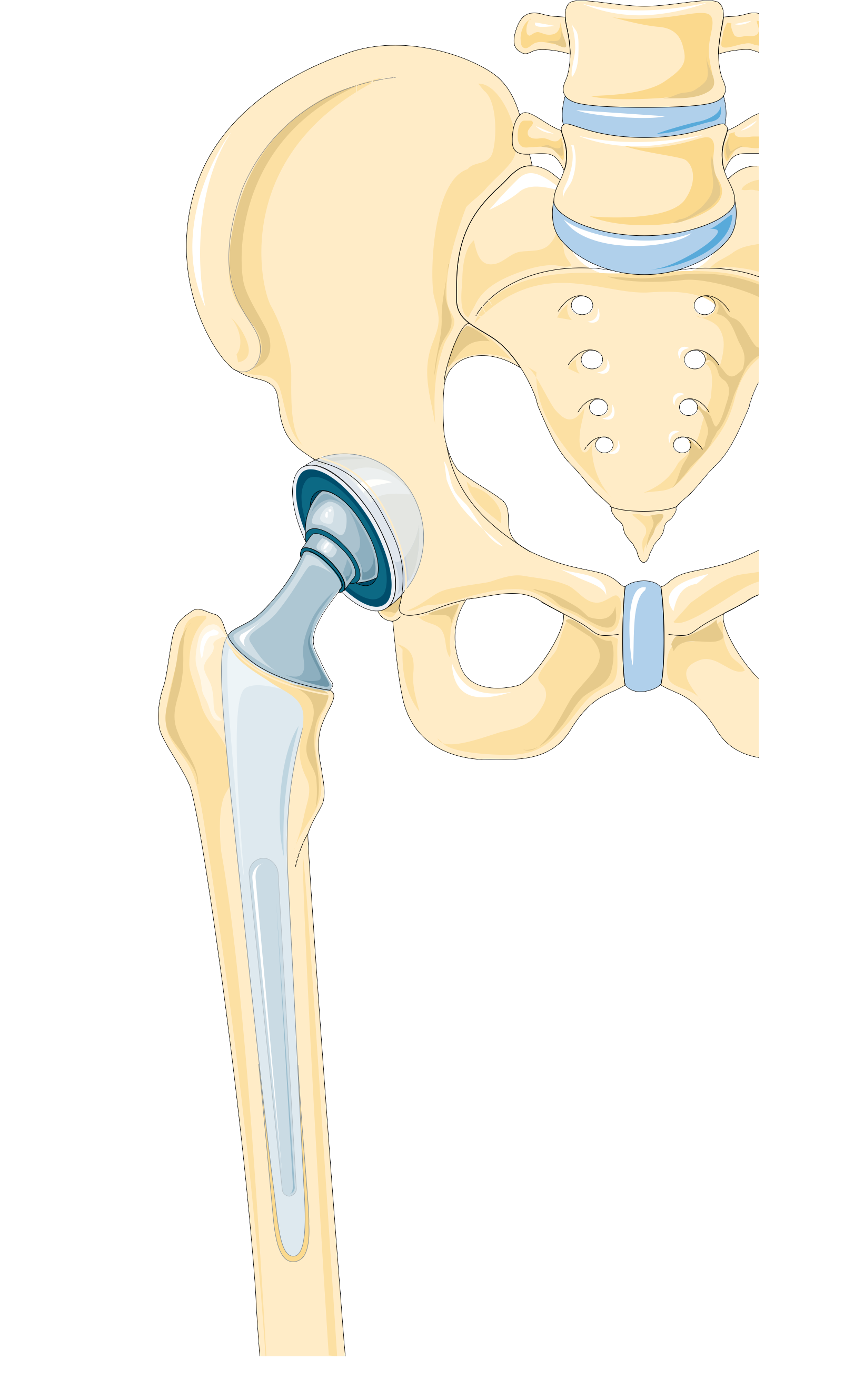
Photo courtesy of Laboratoires Servier, CC BY-SA 3.0 .
KEY CONCEPTS
•
A materials approach to joint replacement technology focuses on coatings, surface treatments and new materials to improve patient outcomes.
•
Standardizing
in vitro testing and to submit to regulatory bodies present some of the biggest challenges to developing new materials for orthopaedic applications.
•
The future of medical tribology will rely heavily on predictive computational modeling.
Meet the Presenters
This article is based on an Industry Insights presentation titled
The Science of Tribological Wear in Joint Arthroplasty by Elizabeth Hippensteel on March 22, 2024.
Industry Insights is a monthly virtual event series available for free to STLE members. These events provide a forum for members to collaborate with STLE industry peers and experts on a specific topic who give a brief presentation, then facilitate conversation by asking discussion questions and providing actionable takeaways. For more information,
click here.
Elizabeth Hippensteel is a staff scientist with J&J MedTech at DePuy Synthes Joint Reconstruction in Warsaw, Ind. She joined DePuy in 2002 and has worked in various roles within research and development (R&D). Currently, she leads the kinematics testing team on hip, knee and shoulder joint replacement new product development and lifecycle management projects. She also is involved in developing new test methods to challenge joints in new and adverse ways and contributes these efforts to standardizing practices within the ASTM and ISO communities. You can reach her at
EHippens@its.jnj.com.
 Elizabeth Hippensteel
Tribology plays a crucial role in ensuring the proper functioning and longevity of orthopaedic medical devices within the human body.1 The design, function and performance of joint replacements depend on the tribological properties such as wear, friction and lubrication. Examples of tribological systems in medical devices include joint replacement, contact lenses, skin patches and cardiovascular devices.
Joint arthroplasty is the surgical process involved in replacing a musculoskeletal joint that has been damaged through injury or arthritis with a prosthetic joint implant. Materials commonly used for joint implants include plastic, metal, ceramic or a combination of these. The demands on the materials depend on the biological and physical properties of the application. Mechanically speaking, implants function like other mechanical joints; shoulder and hip joints are a ball and socket, and the knee is a hinge. But the performance of mechanical joints is more complicated in the biochemical environment of the human body.2 Hippensteel explains, “We test them in the lab to high cyclic stresses, but they see different demands from patients and their daily living activities: anything from running to jumping to squatting, deep knee bends, going upstairs, going downstairs, etc.”
For total joint replacement, the major materials challenges include:
• High cyclic stresses
• Patient demand and daily living activities
• Increased incidence of high body mass index (BMI) and obesity
• Corrosive environment
• Biological responses to micrometer and nano size particles
• Bone quality/disease and its continued evolution
• Variation in implant positioning and surgeon technique
• Difficulty replicating biological responses in the lab
According to Hippensteel, “These are the high level factors that we’re really looking to replicate in the lab from a tribological perspective.”
When it comes to improving outcomes for joint replacements, there are multiple approaches to consider, including a materials approach. Hippensteel says, “A lot of research focuses on improving materials. We look at creating new materials or generating new coatings or surface treatments for existing materials to reduce wear or wear debris.”
Using a materials approach can improve fixation, reduce pain and infection and minimize wear, particle debris and metal ions. Improving fixation reduces incidences of loosening and can be achieved through the use of porous coatings, porous monolithic structures or scaffolds or calcium phosphate coatings. Coatings also can reduce incidences of infection, pain and revision, as can using patient-specific instruments or computer-assisted surgical navigation (CAS). Another benefit of coatings is the reduction of wear, particle debris and metal ions; materials and surface treatments can help prevent common failures as well. Improvements in polyethylene materials, as well as exploring new alternative bearing materials, have contributed significantly to improving patient outcomes.
Common causes of implant failure
From a materials perspective, three of the most common causes of implant failure are wear, delamination and fracture. Wear happens when bearing surfaces, such as a polyethylene and metal component, articulate against one another (see Figure 1). While wear against metal for modern polyethylenes has been significantly reduced, there is still room for improvement, especially as the surgical community is treating younger patients who require more robust and longer lasting joint replacements. The wear requirements change as the design of the implant itself is changed, and in vitro testing involves a lot of trial and error. Additionally, the mechanisms that cause wear can vary largely from patient to patient depending on factors such as activity level, weight, age, and other health concerns. Implant materials and designs must be globally acceptable to the majority of patients.
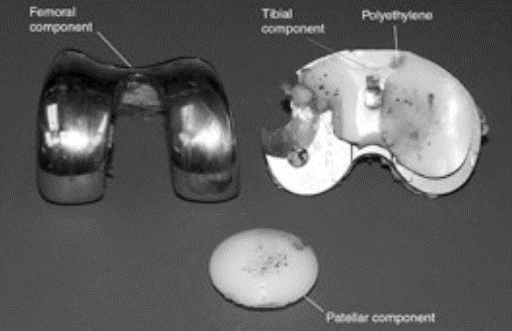
Figure 1. Examples of wear in various joint replacement implants.
Delamination occurs when a thin surface layer of polyethylene separates from the deeper layers (see Figure 2). Delamination impacts the function and longevity of an implant, potentially leading to loosening or failure. It also can contribute to wear, since it creates a rough surface. Fracture is a break in the implant, often caused by heavy stress or heavy loading (see Figure 3). It also can be caused by injury, weak or osteoporotic bone around the implant or choosing the wrong implant for the patient. Wear can directly lead to fracture, too.
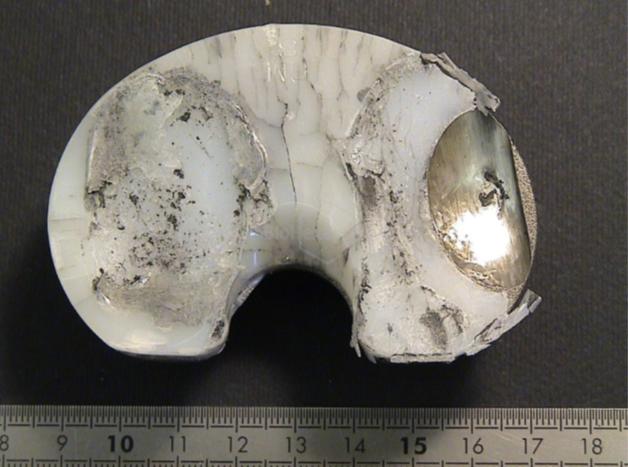
Figure 2. Delamination is shown on the tibial component of a knee replacement implant.
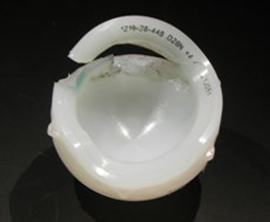
Figure 3. Example of fracture in the polyethylene liner used in a hip replacement implant.
Revision surgery may be necessary if wear, delamination or fracture become severe enough to impair function or cause pain. All three causes of failure also can result in an inflammatory response since small particles may be released into the body. Hippensteel describes the process of designing materials with the optimal properties as a balancing act: “We are always trying to balance the manufacturing process in this type of triangle (see Figure 4).” The manufacturing process can impact the properties of the implant, including oxidation resistance, mechanical properties and wear resistance, to improve the implant’s performance.
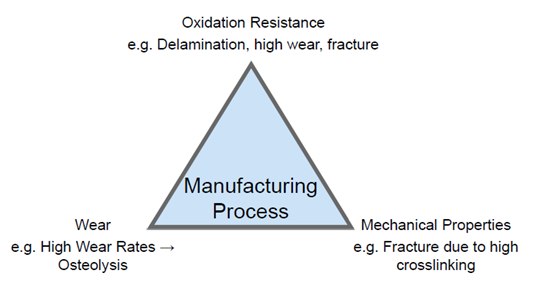
Figure 4. Balancing the manufacturing processes of UHMWPE.
Four generations of UHMWPE
Ultra-high molecular weight polyethylene (UHMWPE) is a commonly used bearing material in joint replacements. The properties of modern polyethylene make it an excellent material for implants; wear against metal is low and wear against ceramics is essentially zero. It can be “forgiving” and remold when subjected to minor scrapes/damage and can be absorbent like a sponge.
The first generation of UHMWPE was gamma sterilized in air to increase crosslinking in the polymer and create very tough bonds, which reduces adhesive and abrasive wear. However, processing in air results in increasing oxidation, resulting in increased wear and delamination. The second generation of UHMWPE was gamma sterilized in an oxygen-free environment utilizing barrier packaging. This reduces oxidation issues during processing but still creates a material with free radicals, which can lead to long-term oxidation.
Free radicals are eliminated with third generation UHMWPE, which sterilizes through remelting or annealing. While this eliminates free radicals by preventing oxidation after crosslinking, it can lower mechanical properties due to the high crosslinking and low percent crystallinity. As irradiation increases, wear decreases, but the polyethylene becomes more prone to fracture and delamination (see Figure 5). Hippensteel explains, “You are constantly balancing your gamma radiation dose to create a more wear-resistant material. As you increase irradiation, you will see there is almost a linear relationship between irradiation and wear rate. As this process continues, our mechanical properties have an inverse relationship, and they can experience a decline in performance.”
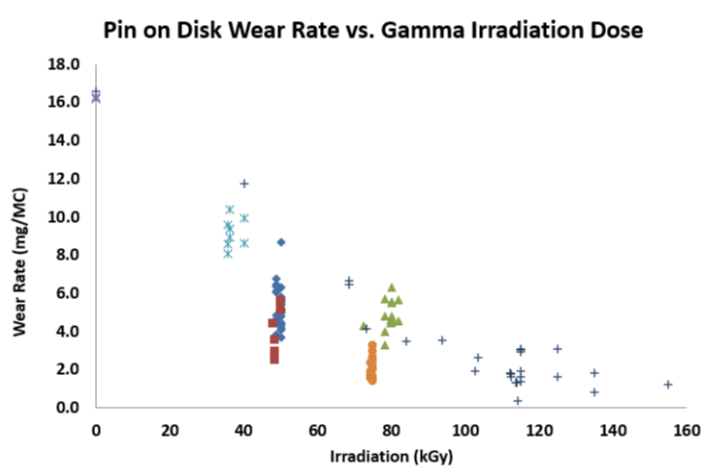
Figure 5. As irradiation dose increases, wear decreases.
The fourth generation UHMWPE stabilizes the free radicals without thermal treatment by adding in antioxidants before or after irradiation. This can decrease wear while maintaining toughness and percent crystallinity, and doesn’t increase the chance of fracture.
Developments in ceramics and hard coatings
Many joint replacements consist of a polyethylene and metal/ceramic combination, such as a metal/ceramic ball with a polyethylene socket or lining for hip replacement. While this is a very durable option, it can be prone to failure and production of debris. Furthermore, metal sensitivity is a common issue among implant patients. Reduction or removal of metals ions reduces the risk of hypersensitivity significantly; hypersensitive immune response to nickel, a metal commonly used in implants, is estimated to impact as much as 14% of the population. This is where ceramic and hard coatings offer promise as new materials for joint replacement. “There are a lot of benefits to people who are nickel sensitive, which can be an issue with cobalt chrome or titanium alloys,” explains Hippensteel. Ceramics and ceramic coatings offer lower adhesive wear of UHMWPE compared to metal, as well as improved hardness. They can also have a superior surface finish and increased resistance to abrasive wear and scratching.
Current challenges and opportunities
Standardization of in vitro test methods for regulatory bodies are some of the biggest challenges to developing new materials for orthopaedic applications. The industry standards for hip and knee replacements have not significantly changed in more than 20 years, despite the newest materials having better resistance to wear and degradation. Standards instructing on “standard walking” for hips and knees include:
ISO 14242-1 and ISO 14242-3: Implants for surgery—Wear of total hip-joint prostheses
Specifies the relative angular movement between articulating components, the pattern of the applied force, the speed and duration of testing, the sample configuration and the test environment to be used for the wear testing of total hip-joint prostheses.3
ISO 14243-1 and ISO 14243-3: Implants for surgery—Wear of total knee-joint prostheses
Specifies the relative angular movement between articulating components, the pattern of the applied force, the speed and duration of testing, the sample configuration and the test environment to be used for the wear testing of total knee-joint prostheses.4
ISO 14242-2 and ISO 14243-2: Wear of total hip-/knee joint prostheses
Specifies a method of assessment of wear of the acetabular/tibial component of total joint prostheses using the gravimetric technique for components tested in accordance with ISO 14242-1, ISO 14242-3, ISO 14243‑1 or ISO 14243‑3 as appropriate.5
The FDA may require testing of scenarios that could be a potential hazard for risk mitigation. This “adverse testing” may represent extreme or worst-case scenarios, which can result from implant failure, the surgical process, complications with revision or high demand on the implant. These requirements are prompting the standardization committees to develop new methods.
Hippensteel says, “Testing deals less directly with ‘standard’ wear, and more with extreme scenarios due to retrievals seen at the extreme ends of the spectrum. Our average patient used to be the 80-year-old who fell and broke their hip. Now we’re having patients getting replacements in their 30s and 40s, still being very active and a desire to return to this busy lifestyle.”
The development of new standards (or revision of existing standards) to test more challenging demands is a major opportunity, and one where Hippensteel focuses much of her work. Recently her team has helped develop a hip impingement test to evaluate the effect of implant positioning in a simulator that allows the acetabular cup (metal shell + polyethylene liner) to come into direct contact (impinge) with the (metal) femoral stem, creating impingement-like damage (see Figure 6).
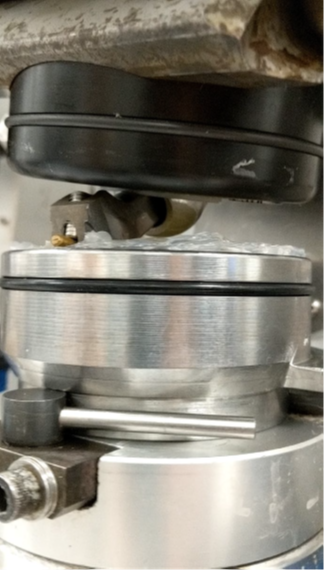
Figure 6. Standard test method for dynamic impingement between femoral and acetabular hip components, ASTM F2582-20.
Another standard was recently developed to study the adverse scenario potential in surgical positioning. Hippensteel explains, “When we implant a hip, for example, there is a certain angle that is recommended for implantation.” This positioning is key to preventing separation of the femoral head and acetabular cup, which can lead to edge loading. The simulation in the lab recreates a scenario in which a high cup angle allows for separation of the cup and head centers to occur, which can then results in direct edge loading and/or adverse wear or damage at the rim of the acetabular cup (see Figure 7).
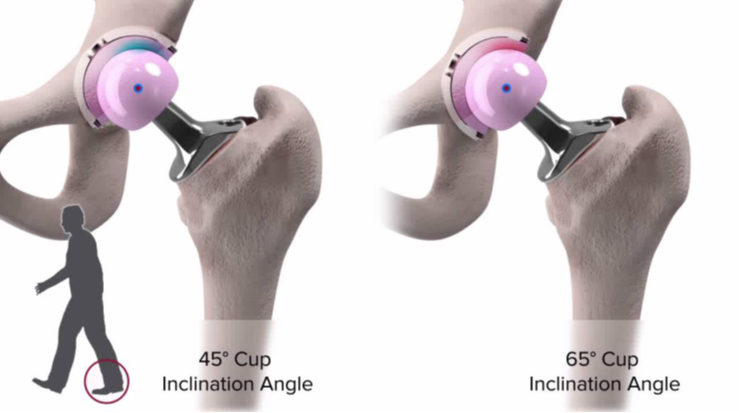
Figure 7. Testing hip prostheses under variation in component positioning, which results in direct edge loading, ISO 14242-4.
Testing and simulations
The newest developments in joint replacement technology will likely be enabled through advanced computational simulations and predictive modeling. Hippensteel says the future of medical tribology will be heavily dependent on computational modeling: “Generating physical data that is reproducible and repeatable is very expensive and time consuming. Our goal is to make improvements to designs so we can get them to patients who need them most.”
Running a physical test with a large enough sample size can take a minimum of 12 weeks and requires a lot of time and preparation and daily hands-on care and attention, according to Hippensteel. Hippensteel says, “We’ve been able to validate a number of our computational models using our physical simulation testing, and so can computationally explore different sample sizes, designs, loads, materials, etc.” In a simulation, researchers can explore a wide range of design options, kinematics or loads, and then use physical testing with only the top performing (or, in some cases worse-case) constructs.
Conclusion
Joint replacement technology has come a long way in the past few decades, and tribology has a major role to play in continuing to optimize the function, comfort and longevity of joint replacement implants. Focusing on developing new materials and designs will continue to improve outcomes for patients, even as patients’ needs continue to become more complex. Computational modeling will enable a faster design and testing process, which will make the best implant technologies available to more patients than ever before.
REFERENCES
1. Jin, Z.M., Zheng, J., Li, W. and Zhou, Z.R. (2016), “Tribology of medical devices,” Biosurface and Biotribology, 2 (4), pp. 173-192.
2. www.stle.org/files/TLTArchives/2024/04_April/Webinar.aspx
3. www.iso.org/standard/63073.html and www.iso.org/standard/44997.html
4. www.iso.org/standard/44262.html and www.iso.org/standard/56649.html
5. www.iso.org/standard/70668.html and www.iso.org/standard/69851.html
You can reach TLT editorial coordinator Nicole Gleeson at ngleeson@stle.org.