Bonus Content for STLE Members
Ester-based fluids for electric vehicles
By Andrea R. Aikin, Contributing Editor | TLT Industry Insights December 2023
There are many requirements, challenges and advantages related to immersion cooling.
Photo courtesy of Visitor7, CC BY-SA 3.0, via Wikimedia Commons.
KEY CONCEPTS
•
Batteries, like humans, have an optimal temperature window of about 15-35 °C. While humans can self-regulate temperature, batteries lack this ability, which is where a thermal management system comes into play.
•
Globally recognized standards don’t yet exist for immersion cooling and electric vehicle (EV) transmission fluids like those that exist for engine oils. While different users want very different properties, it is possible to create specific fluids and lubricants that are tailored to users’ needs.
•
Ester base oils have many benefits when used in dielectric fluids in EV motors, including long fluid life, potentially being 100% biobased and biodegradable.
•
Esters can offer better cooling capabilities than alternative chemistries at the same viscosity while offering good material compatibility with metals and elastomers.
Meet the Presenters
This article is based on an Industry Insights presentation titled
Ester-Based Fluids for Electric Vehicles by STLE member Dr. Bethan Warren and Nick Weldon on March 22, 2023. Industry Insights is a monthly virtual event series available for free to STLE members. These events provide a forum for members to collaborate with STLE industry peers and experts on a specific topic who give a brief presentation, then facilitate conversation by asking discussion questions and providing actionable takeaways. For more information,
click here.
Dr. Bethan Warren is a lead application scientist at Cargill. After graduating from the University of York in 2014 with a master’s degree in chemistry, she went on to study for a doctorate at the University of Leeds, where she looked at the interaction between automatic transmission fluid additives and copper surfaces. Since 2018, Bethan has worked within the Energy Technologies category of Cargill Bioindustrial and has focused on the changing lubrication requirements for EVs and the development of dielectric cooling fluids for automotive batteries. You can reach Bethan at
bethan_warren@cargill.com.
 Bethan Warren
Nick Weldon is a marketing manager at Cargill. Nick has a master’s degree in consumer psychology and business, graduating in 2010. He has worked in a variety of business development and marketing roles in the specialty chemical industry, including marketing for phase change materials, crude oil production additives, lubricant additives and synthetic ester base oils, and now leads marketing for the Energy Technologies category within Cargill Bioindustrial. You can reach Nick at
nick_weldon@cargill.com.
 Nick Weldon
This article focuses on the needs and requirements of immersion cooling for electric vehicles (EVs), including the role that ester-based fluids can play in formulating high performance dielectric fluids. Note that dielectric fluids can serve in any situation where there is a need for a non-conductive fluid to cool and be in direct contact with a charged system.
Topics covered include:
• challenges in EV thermal management
• cooling methods
• choosing the right cooling fluid
• advantages that esters can bring when formulating fluids for EVs.
Challenges in EV thermal management
EV fluids face a different operating environment than lubricants used in internal combustion engines (ICEs), including faster rotational speeds, high torque from low rpm, exposure to electrical fields and high voltages. A minority of EVs have more than one speed and therefore also have a clutch. In addition, the motor and gearbox may share the same fluid, meaning the requirements for both must be met. Goals for EV fluids include minimizing wear and maximizing efficiency.
Three main challenges are identified:
• EV motors have electrical fields with high voltages. There is a trend toward directly cooled motors because so many motors are integrated within the transmission.
• Today, many EV transmission fluids are very similar or identical to those used in ICE gearboxes; however, these fluids are not completely suitable for long-term performance.
• There are different competing cooling designs (e.g., air cooling, indirect cooling, direct cooling). This leads to a number of things to consider, including the physical metrics and thermal properties of the fluid, as well as material compatibility with the vast array of different materials these fluids will contact.
In terms of trends being generally seen across EVs, a big issue is thermal management or temperature management. Taken holistically in the vehicle, this can be everything from how passengers are heated to how to make sure the battery remains at an optimal temperature. As components become smaller, they increase in power density, which means they become localized heating sources.
People also want to charge batteries more quickly, which can translate to increased heat generation when the batteries are being charged. Batteries like to be kept within a very optimal temperature window, so ambient temperature conditions become important. Whether this is high (e.g., desert) or low (e.g., winter), ultimately, temperature management for long-term durability of batteries is important, as excessive long-term high temperatures can damage battery performance.
Methods of cooling
Batteries are a bit like humans, as both have an optimal temperature window. People and batteries are comfortable at about 15-35 °C. While humans can self-regulate temperature, batteries lack this ability. This is where a thermal management system comes into play. Fluids can be used to prewarm the battery in very cold ambient climates; however, more often the issue is cooling at higher ambient temperatures or when there is a lot of heat generation.
Within the battery, there are three things to achieve regarding temperature.
• A uniform pack temperature. Ideally, cell temperature differences should be below 5 °C. It also is important to maintain pack temperature, particularly making sure it doesn’t exceed around 50 °C. Both goals can be achieved by cooling the battery pack, and direct immersion cooling of the battery pack can give a better homogeneous temperature profile. This helps prevent cell capacity reduction, which reduces battery aging by managing temperature.
• Control of thermal runaway. If one of the cells were to become damaged or begin to overheat, there is the potential for cell-to-cell propagation and a fire. So, the thermal management system helps to identify and control any thermal runaway situations. When charging batteries, the concerns include overheating of cells and maintaining temperature homogeneity across the pack. A lot of power goes into the battery when charging, generating heat. For customers, charging time is a key consideration when buying a vehicle. Some of the fastest charging vehicles today achieve an 80% charge in 15-30 minutes, which is too long for many people who would prefer a full or nearly full battery in less than five minutes.
• Control of heat generation. Managing heat generation during charging is key. Most battery systems currently commercially available have a 400-volt architecture. Due to the heat generated during charging, 400-volt architectures are limited to a maximum of 240 amps of current, which is 100 kilowatts (kW) of charging power. In contrast, 800-volt systems allow for much greater charging power, up to 400 kW, because far less heat is generated during charging.
In addition to the heat generated in the battery pack during charging the battery, there is heat generated in the charging cables themselves. A balance is needed between how much power is pushed through the cables and how easy the cables are to handle. To get more power through the cables, they need to be thicker, which means lower resistance and less heat, but also makes the cables much heavier, less flexible and harder to handle. Thinner cables mean higher resistance and higher heat, but easier to handle. Finding the sweet spot is the aim. Liquid cooling of the cables allows for a different way of managing the heat to keep the cables smaller. Heat is removed via cooling fluid and rejected through a secondary cooling system. The liquid used within charging cables needs to have many of the same qualities as that used for immersion cooling of batteries.
Choosing the right cooling system
There are three main methods used to cool EV batteries: air cooling, indirect liquid cooling (also known as base plate cooling) and direct immersion cooling. Moving from air to indirect to direct cooling means that the cooling ability improves, but cost and complexity increase.
Air cooling usually requires a fan to be running, which can be noisy but isn’t necessarily required while driving. Moving to direct immersion cooling can reduce some of the noise heard during fast charging (i.e., high heat generation situations).
A goal of this research is to understand how direct immersion cooling fluids compare to indirect or cold plate cooled systems, as well as understanding how to improve the fluids. A third-party engineering company helped build and model a battery module. In Figure 1, on the left side is an immersion cooling system, and on the right is a cold plate cooling system where a water glycol fluid was passed through a base plate. The industry standard for indirect cooling is a water/glycol mixture (i.e., the same as used as engine coolant in ICE vehicles). This research compared the immersion system with the indirect cooling system to understand how this impacted the temperature differential.
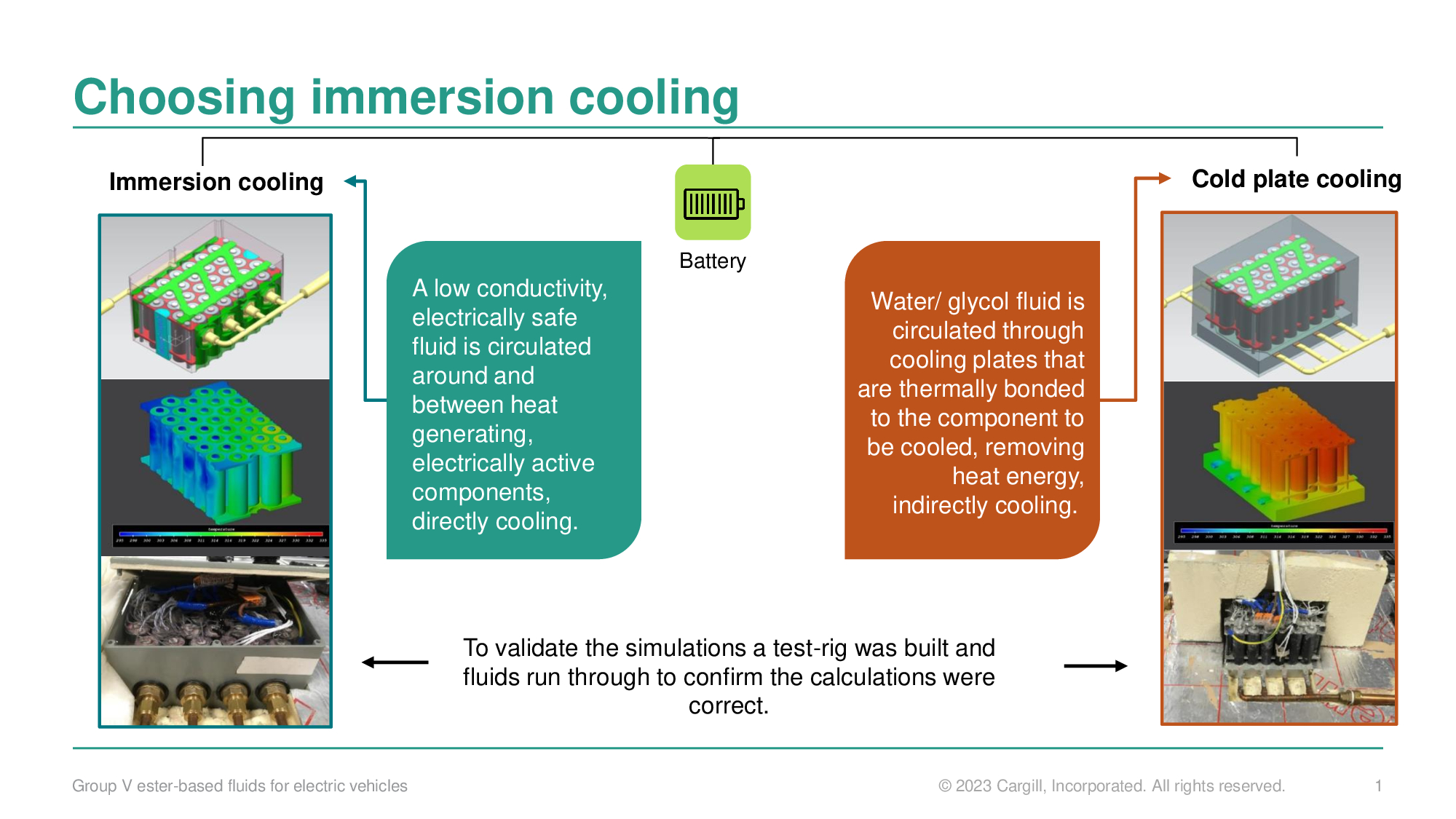
Figure 1. An immersion cooling system is on the left, and on the right is a cold plate cooling system where a water glycol fluid was passed through a base plate. Figure courtesy of Cargill.
In the indirect cooling system, the temperature difference between the top of the cell and the bottom of the cell was often in the region of 4 °C regardless of the fluid flow rate. In contrast, for the immersion cooled system, this temperature difference was much closer to 1 °C. This makes sense as the heat in the immersion cooled system can be rejected more quickly due to a greater contact area with the cells. Using the validated model, the individual parameters were changed to understand how the fluids themselves, and the properties of those fluids impacted cooling.
Based on the heat transfer coefficient equation (see Figure 2), density, thermal conductivity and specific heat capacity of the fluid need to be as high as possible, with the fluid viscosity as low as possible, to maximize the heat transfer coefficient. The model allows each parameter to be varied individually. The model indicates which fluid properties provide the biggest impact regarding heat transfer.
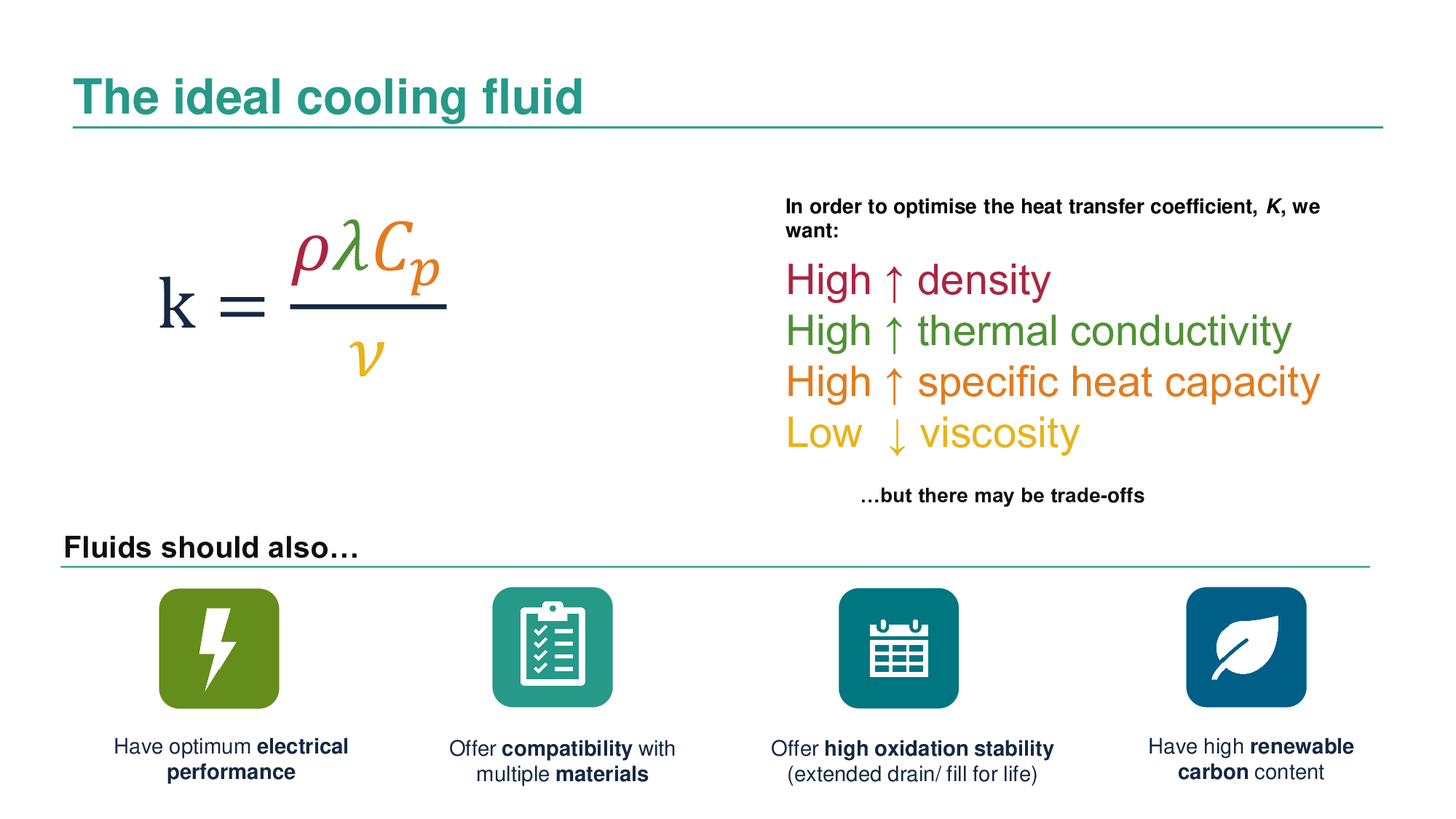
Figure 2. The heat transfer coefficient equation. Density, thermal conductivity and specific heat capacity of the fluid need to be as high as possible, with the fluid viscosity as low as possible. Figure courtesy of Cargill.
The fluids need to have optimum electrical performance. This means that while the fluids are in direct contact with high voltage components, they must not conduct electricity. The fluids need to be compatible with multiple materials. High oxidation stability also is beneficial as it extends drain intervals. High renewable carbon content also is desirable, along with low toxicity and biodegradability.
As a whole, cooling fluids are less complex to formulate than engine oils. A base oil defines the main thermal properties and generally composes over 95% of the formulation. A small volume of additives enhances the base oil performance. Additives can include an antioxidant to prolong fluid life, a corrosion inhibitor and possibly an antifoaming agent. It is important to be mindful that, depending on their chemistry, the additives can affect the electrical performance. This means doublechecking the effect of the additives is important.
Ester advantages
Esters have a number of advantages as they can be tailored to suit a specific application. Ideal cooling fluids have low viscosities but high thermal conductivities. The low viscosity helps efficiency as the fluid doesn’t require much energy to pump through the system, allowing that saved energy to be used to move the vehicle. Many synthetic esters offer high oxidation stability, offering the formulator the ability to extend drain intervals and potentially offer fill for life. Esters can be 100% biobased. They also are compatible with a lot of other base fluids so can impart their benefits when mixed with different base fluids to tailor other properties.
Figure 3 begins with synthetic esters on the left moving through some natural esters, then silicones and fluorinated products to mineral oils. All of these can be used as dielectric fluids, but there are benefits and negatives associated with each fluid. For example, perfluorinated products are not biodegradable and some have a high global warming potential. Perfluorinated products are under regulatory scrutiny, and some of these fluids are already being removed from the market. Silicone oils have some very good properties, but they’re not always readily compatible with certain materials. Synthetic esters offer biodegradability, low pour points and have higher breakdown voltages compared to mineral oil or natural esters. Their viscosity can be tailored to meet the customer’s desired fluid properties.
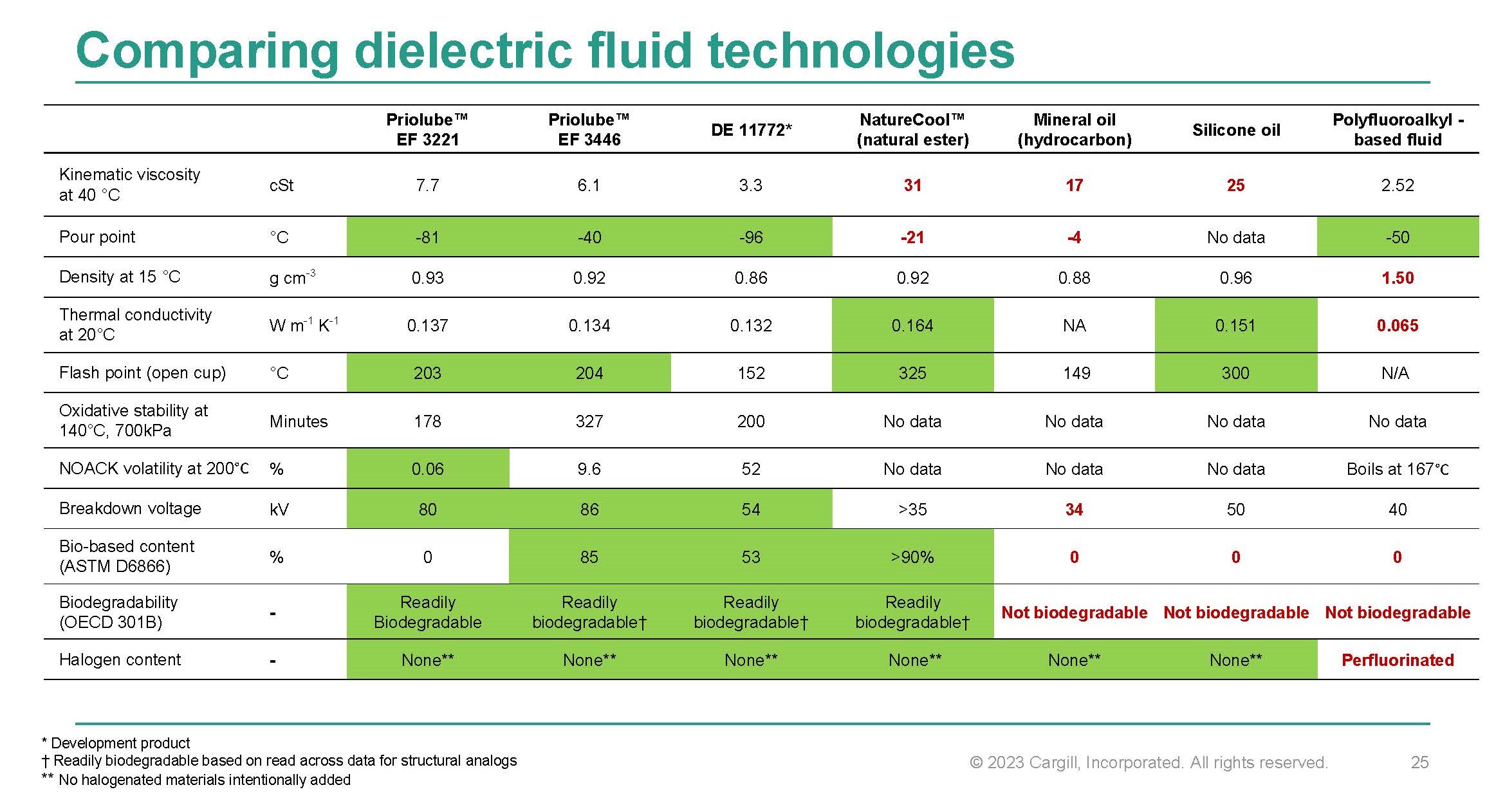
Figure 3. Comparing dielectric fluid technologies. Figure courtesy of Cargill.
Material compatibility is a key concern for formulators. Figure 4 shows material compatibility for hydrogenated nitrile rubber (HNBR). The figure shows a ratio of ester in a Group III or Group IV blend without any detrimental effects to the HNBR; however, the elastomer choice is important. The bottom of the table shows data for pure or neat ester in contact with different types of elastomers, which can give variable results based on the elastomer chosen. The EV fluid formulator must give consideration as to the materials to be used and the formulation required. Being mindful of the elastomer choice, it is possible to have a high percent inclusion rate of ester specifying dielectric fluids for EVs.
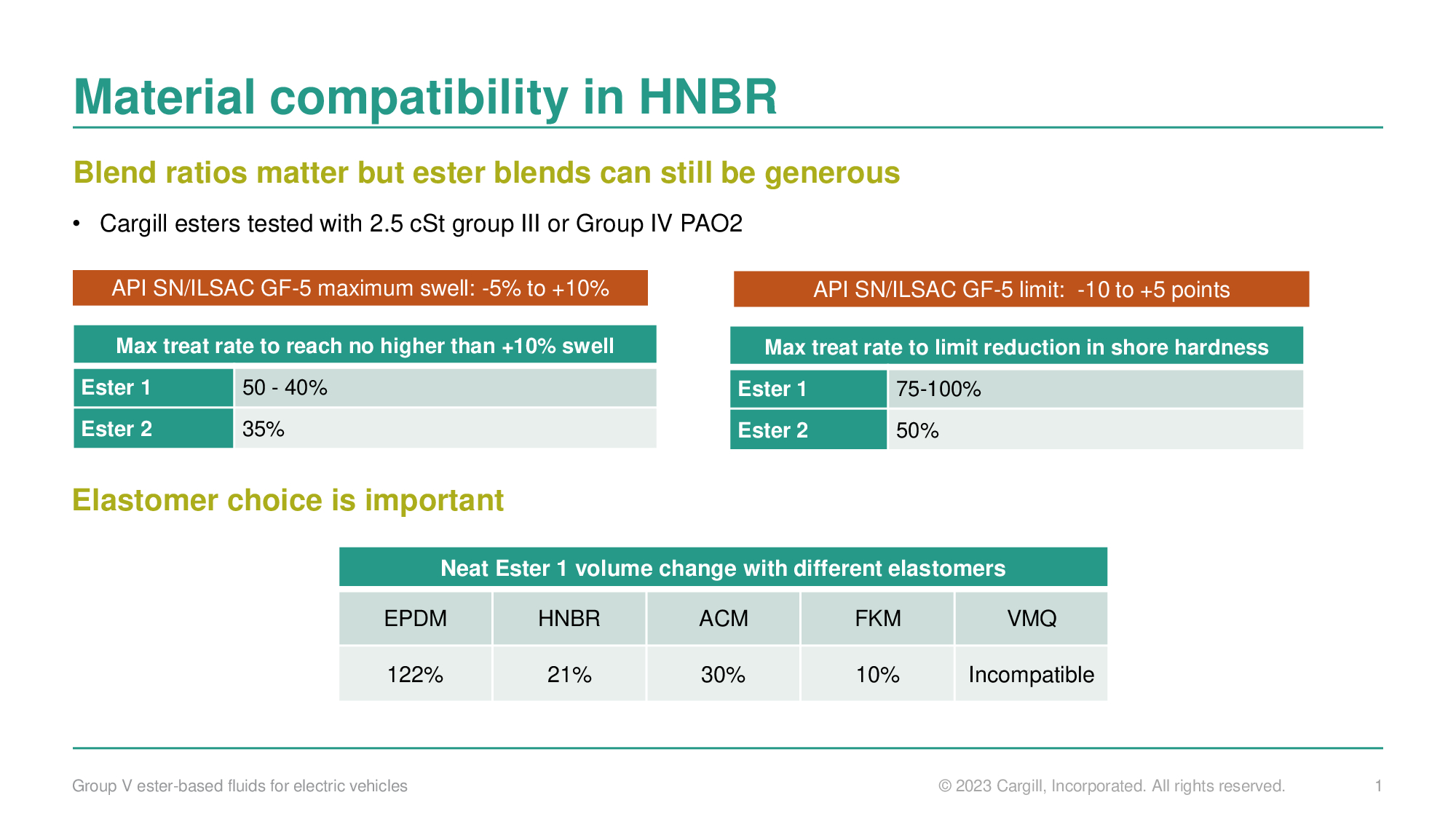
Figure 4. Material compatibility for hydrogenated nitrile rubber (HNBR). Figure courtesy of Cargill.
Shared fluids
Reducing the number of fluids in an EV has advantages; EVs are expensive to make and have limited range. Reducing mass and complexity can reduce manufacturing costs and increase driving range. The logical conclusion to fluid simplification is a single fluid that cools both the battery and the motor and also lubricates the transmission. Of course, there are challenges in using a single fluid.
When considering cooling the motor, battery and power electronics, it is important to note that they all have different performance requirements. Batteries have the most stringent cooling requirements and, for the best long-term performance, need to be maintained at between 15-35 °C, while motors and power electronics operate at higher temperatures. The motor is often integrated with the transmission, but the transmission fluid has its own set of requirements over and above thermal performance, including low scuffing, low wear and low traction. Low traction comes back to efficiency, as a low traction fluid can improve range by reducing friction between gear teeth and reducing energy needed to move the vehicle.
Shared fluids can definitely be considered, but exactly which fluids will pair up is yet to be decided.
Summary
Ester base oils have many benefits when used as dielectric fluids, including long fluid life and potentially being 100% biobased and biodegradable. In addition, they can offer optimum cooling compared to same viscosity fluids of different chemistries, as well as improved efficiency and good material compatibility.
During the Industry Insights presentation, the audience was interested in EVs. However, applications for dielectric fluids exist in other industry areas. For example, data centers use significant amounts of energy, and more efficient methods of cooling can save owners a lot of money, as well as reduce their environmental impact. The requirements may differ slightly, in terms of viscosity and material compatibility, but fundamentally the fluids are used for the same purpose—to safely cool components and improve component lifetime.
Globally recognized standards don’t yet exist for immersion cooling and EV transmission fluids like those that exist for engine oils. As an immature technology, original equipment manufacturers (OEMs) approach EV architectures in different ways, and there is little standardization between brands. As such, each OEM has its own set of performance requirements. Formulators must understand exactly how each fluid will be used, and synthetic esters can be tailored to the needs of each OEM.
Discussion questions
Why is the density of fluorinated materials highlighted in red (in Figure 3)? High density is beneficial in terms of the amount of cooling seen in the heat transfer equation; however, a very dense fluid shows a negative benefit in terms of both the weight and the amount of energy required to pump that fluid. High density is a benefit when talking about static applications where moving the fluid is not required.
Have there been tests of other fluids, such as polyalphaolefin (PAO) fluids or polybutylene oil? PAOs have been extensively tested, but esters offer much better thermal conductivities, and the pour point, depending on the chemistry, also can be better. PAOs have issues with breakdown voltage, so, esters offer better beneficial breakdown voltage than PAOs.
How long would the fluid be in full service? Generally, ester-based fluids have a 10-year lifetime as they exhibit improved oxidative stability over other base fluids, but a lifetime is formulation-dependent, and other fluid components must be taken into consideration.
Have polyalkylene glycols been studied for high density fluids? Yes, but the ranges studied were generally electrically conductive or slightly electrically conductive, and their viscosity tends to be too high for what is needed.
Was dielectric breakdown evaluated as a function of temperature range for batteries or electric motor applications? No, but the temperature at which the breakdown voltage was taken is available. However, a sweep of different temperatures has not been performed. Instead, static temperatures have been studied (e.g., 25 °C, so room temperature breakdown).
How can you control specific heat capacity and thermal conductivity of esters in terms of their structure? That is a trade secret. It requires research and structure performance relationship modeling. There is a relationship between thermal conductivity and structure, but a relationship between specific heat capacity and structure was less obvious.
What is the challenge in developing low viscosity natural esters? By definition, natural esters aren’t developed; instead they are extracted, so the viscosity is dictated by what the plant produces.
Do you recommend your ester for simultaneous battery and electric transmission immersion cooling? There are a number of different esters and products available, and while they can be used for both, the specifications for uses tend to be different and generally come down to viscosity. Transmission fluids tend to have higher viscosity than battery cooling fluids. Esters do work as both, but it depends on the specifics people are looking to achieve. Rigorous testing on a fully formulated fluid is always recommended to understand its suitability.
What is the target viscosity and pour point for dielectric fluids? Answering specifically for battery cooling fluids in EVs, the target viscosity is generally below 3 centistokes (cSt) at 40 °C. Data centers can have bigger pumps or use convection, so usually can use a slightly thicker fluid. Pour point comes back to where the fluid will be used, mostly the engine oil requirement of below -40 °C is maintained.
Is there any correlation between electrical power loss and heat transfer for esters? A ready answer is not available, but with better heat removal, there might be more beneficial power transfer. It isn’t clear how that might transfer to esters over other fluids.
What is the improvement in percentage that you have reached for specific heat and thermal conductivity based on ester structure modification? That is tricky to answer because the structure of the molecule defines its viscosity. The viscosity of the fluid has an impact on how well it cools. In other words, high viscosity fluids have higher thermal conductivity.
If you did not perform dielectric breakdown temperature measurement temperature suites, did you evaluate the moisture influence? Esters are surprisingly tolerant to the ingress of water, and water content can increase within the ester base oil without a detrimental effect to electrical conductivity and dielectric dissipation factor. However, as water content increases, breakdown voltage does decrease. Understanding the impact of different levels of moisture on performance is a current research area.
Andrea R. Aikin is a freelance science writer and editor based in the Denver area. You can contact her at pivoaiki@sprynet.com.