Bonus Content for STLE Members
Tribology and sustainability: How you can integrate them into your plant reliability program
By Dr. Yulia Sosa, Contributing Editor | TLT Industry Insights August 2023
A world-class lubrication reliability program can improve equipment uptime and provide cost savings while improving the sustainability of a site.

Photo courtesy of Innov8social/Flickr, CC BY 2.0.
KEY CONCEPTS
•
Tribology advancements enable discoveries and development of new materials and lubricants to combat frictional and energy losses, ultimately achieving sustainability goals of an organization.
•
Synthetic base oils deliver enhanced energy efficiency versus mineral base oils.
•
Selection of an optimal product for an application enables a reduction in the product consumption, packaging usage and CO
2 emissions.
Meet the Presenters
This article is based on an STLE Industry Insights presentation titled
Tribology & Sustainability: How You Can Integrate into Your Plant Reliability Program by STLE member Doug Sackett, senior field engineer and blender QA/QC manager, TotalEnergies, and STLE member Joe Goecke, senior technical advisor, HF Sinclair Corp., on Oct. 20, 2022. These events provide a forum for members to collaborate with STLE industry peers and experts on a specific topic who give a brief presentation, then facilitate conversation by asking discussion questions and providing actionable takeaways. For more information, click
here.
Doug Sackett is senior field engineer and blender QA/QC manager for TotalEnergies USA. He has more than 20 years of experience in the lubrication industry focusing on power generation, production and mining and providing lubrication services, including lubricant selection, oil sampling, oil reclamation, filtration and vacuum dehydration, filter selection to ensure oil quality and purification standards for ensuring a reliability lubrication best-in-class program. He previously was general manager for a lubricant distributorship for 12 years helping develop the most stringent requirements for delivery of bulk and package lubricants to the end-user. He was first runner-up for Maintenance and Technology Magazine’s Innovator of the Year Award in 2012 for the delivery processes and procedures ensuring ISO cleanliness specifications to the end-customer and helping evaluate and redesign the complete lubrication delivery program. He also redesigned a complete lubrication program for phosphate plants. Sackett holds the STLE Certified Lubrication Specialist™ (CLS) certification and is immediate past chair of the STLE CLS Certification Committee. He was elected to the STLE Board of Directors in 2022. He was a TLT Technical Editor in 2018. You can reach him at
doug.sackett@totalenergies.com.
 Doug Sackett
Joe Goecke, senior technical services advisor, HF Sinclair, joined Petro-Canada in 2013. He was the director of industrial operations for Apollo Oil from 2009 to 2013 and technical service specialist from 1992 through 2009. Goecke has been an STLE member since 2009 and holds the STLE CLS, Certified Oil Monitoring Analyst I™ (OMA I) and Certified Metalworking Fluid Specialist™ (CMFS) certifications. He has served on the STLE CLS Certification Committee since 2010. He earned his biology degree from Northern Kentucky University. You can reach him at
joe.goecke@hfsinclair.com.
 Joe Goecke
Lubrication and reliability have taken on a whole new meaning with new corporate responsibility to achieve “net zero” or “carbon neutrality” by 2035-2050. This article gives an overview of the avenues of how this goal can be achieved. It also shows how a world-class lubrication reliability program improves equipment uptime and saves costs while improving the sustainability of a site.
What is sustainability?
The UN explains the difference between sustainable development and sustainability as follows: “Sustainability is often thought of as a long-term goal while sustainable development refers to the many processes and pathways to achieve it (see Figure 1).”1
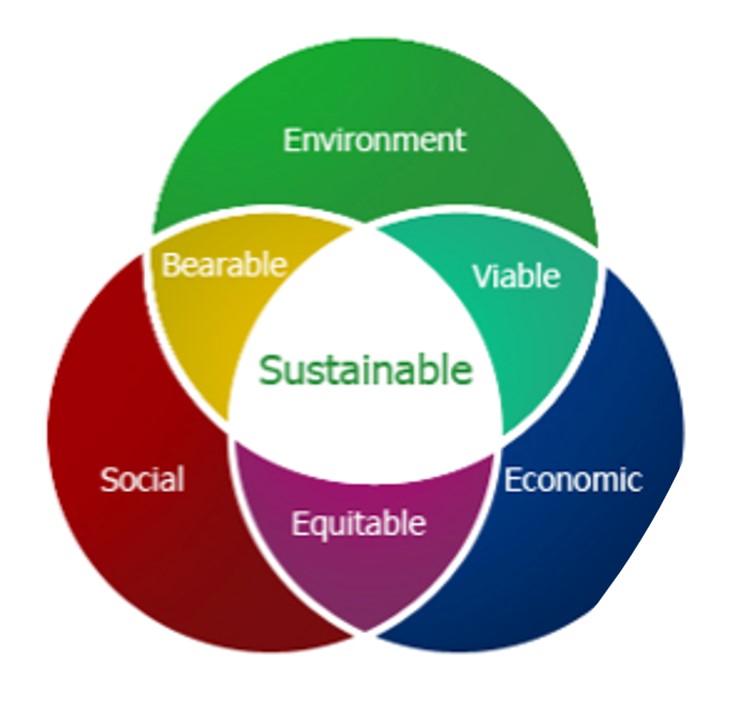 Figure 1. Sustainability in the interaction of environment, social actions and economics.2
From Figure 2, it is clear that a plethora of sectors contributes to greenhouse gas (GHG) emissions. Therefore, to effectively reduce GHG emissions, a multi-sectoral focus and strategy are required. The largest GHG contributor, the energy sector, produced 73.2% of GHG emissions in 2016. Energy use in industry alone accounts for almost a quarter of GHG emissions. This is followed by energy use in buildings (17.5%) and then transport (16.2%).3
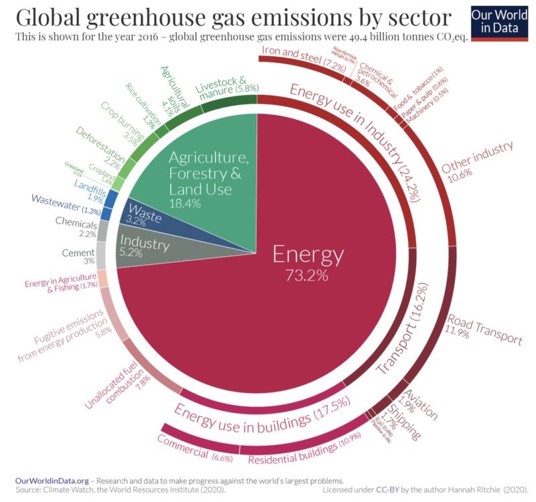 Figure 2. Global greenhouse gas emissions by sector (2016).3
For years, the U.S. government has been the driver in the transportation industry with a greener approach. With the sustainability target of achieving overall better fuel economy, the industry itself was tasked with the sustainable development of the following:
• Improved aerodynamics
• Synthetic lubricants in engine oils and transmissions
• Lower viscosity lubricants that provide the same wear protection
• Higher speed transmissions to improve fuel economy without lowering performance
• Single wide tires on transport tractors and trailers
• Wheel covers, skirts, flaps, etc.
From the statements above, a question to manufacturers is: How can we take this approach to manufacturing plants? A recent survey of American base oil producers reveals that among different types of companies, base oil companies are edging ahead in terms of committing to specific goals, reporting and having dedicated teams (see Figure 3). Additionally public companies are further along in their sustainability journey. Lastly, companies having a sustainability goal increases from 55% for small to 71% for mid-size and 90% for large.
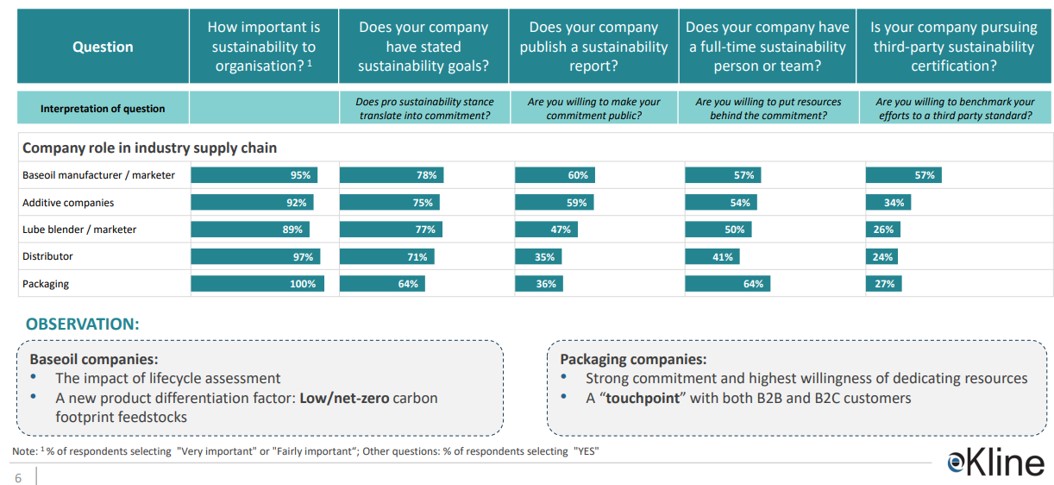 Figure 3. Understanding companies’ commitment to sustainability.4
For manufacturers, the biggest opportunity to improve emissions is within their energy usage on site with improved lubrication practices and processes. A 1977 study by the American Society of Mechanical Engineers (ASME) estimated savings by friction reduction of 10.9% of primary energy consumption10 or in monetary value, $16.2 billion at that time. Table 1 summarizes the economic impact of additional findings on the impact of savings through tribology by year.
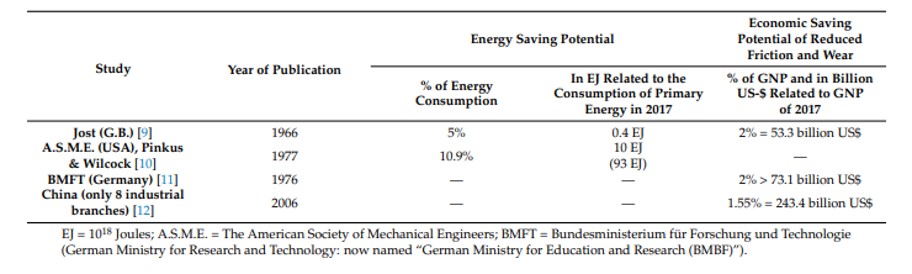 Table 1. A display of potential energy savings using tribological measures.5
In the U.S., to help manufacturers achieve their ambitious decarbonization, energy, water and waste goals, the U.S. Department of Energy (DOE) through its Better Plants program has been focusing on decarbonization and has already achieved significant numbers (see Figure 4).6
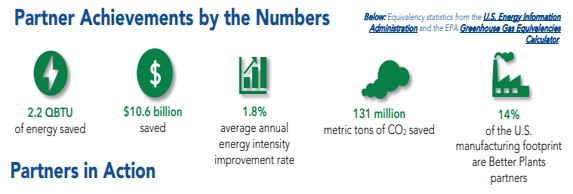 Figure 4. Better Plants program achievements.6
Estimated energy and economic saving examples
Example 1: Application (gearbox) efficiency
As it relates to enclosed gearing, efficiency is simply the ratio of the output power (power transmitted through the gearbox as usable work) to the input power. As no mechanical device is 100% efficient, this numerical value of efficiency will always be less than 1. As an example, take a gear reducer like the one shown in Figure 5.7
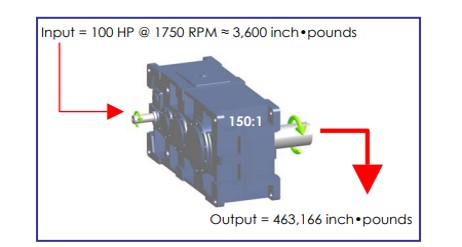 Figure 5. Gearbox efficiency.7
If this speed reducer were 100% efficient, it would be concluded that the 3,600 in•lbs of torque being applied to the input shaft would generate 540,000 in•lbs of torque.7
In order to improve oil life extension, OEMs post guidelines where they clearly show benefits of synthetic gear oils usage.
Synthetic gear oils are OEM preferred over mineral as synthetic gear oils reduce operating temperatures by as much as 15 C without the need for mechanical changes to the equipment or machines operating conditions. Additional benefits include:
• Extending the service life of the oil
• Avoiding premature drive failure downtime
• Extension in component life.
The following thermographs (see Figure 6) show the dramatic impact of synthetic lubricants in a worm gear reducer. The efficiency of the gearbox is increased by 2% while oil sump temperature is decreased by 13 F. Lower temperatures and increased efficiency can translate to reduced operating costs and longer component life.9
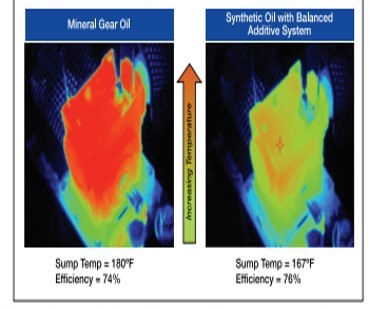 Figure 6. Thermograph of gearboxes: synthetic versus mineral oil. It was tested using the ExxonMobil Research modular small worm gear test stand.8
Figure 7 shows the typical ranking of results that were obtained with a laboratory equipment. Friction coefficient is nearly two times less using a synthetic product than with mineral-based oils. This tendency is even more pronounced with polyalphaolefin (PAO)-free synthetic technology. This ranking gives an initial indication of potential energy efficient technology.
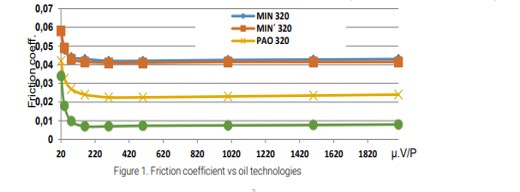 Figure 7. Friction coefficient versus oil technologies.9
The measurements taken in the laboratory were influenced by a list of fixed parameters as, for example: gearbox and gear design, operating conditions, lubrication type, filtration unit, oil drain process, operators and high torque measurement. Figure 8 highlights that mineral products generate more losses than synthetic, depending heavily on gearbox operating conditions and environment. With 100% load on the gearbox of 850 kW, more than 10% energy can be saved by using synthetic product with the same viscosity (ISO VG 320). In addition, by lowering kinematic viscosity, it is possible to increase the energy efficiency potential even further during different operating conditions (see Table 2).9
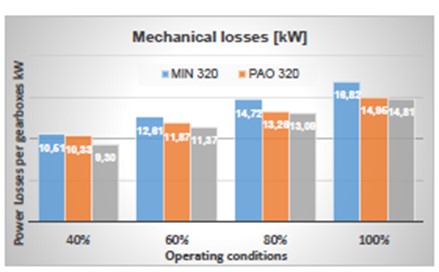 Figure 8. Mechanical losses in kW versus lubricants technologies.9
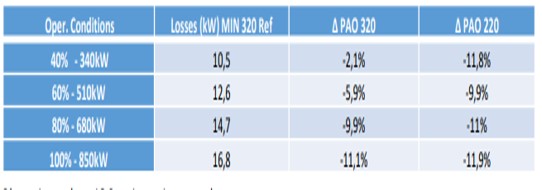 Table 2. Energy efficiency potential at different operating conditions.9
Changing the ISO viscosity grade or moving to higher viscosity index (VI) lubricant could lead to significant energy savings under cold start and warm operating conditions and high shear stresses. Synthetic lubricants provide higher film strength than mineral oils. They also ensure longer service life and oil drain intervals. Importantly, the use of optimized lubricants can lead to energy savings (i.e., reduced fuel cost or electricity cost) and reduce CO2 emissions.9
Example 2: Grease technology optimization
Another example is product technology optimization for an application. As seen in Table 3, the emissions savings can be substantial.
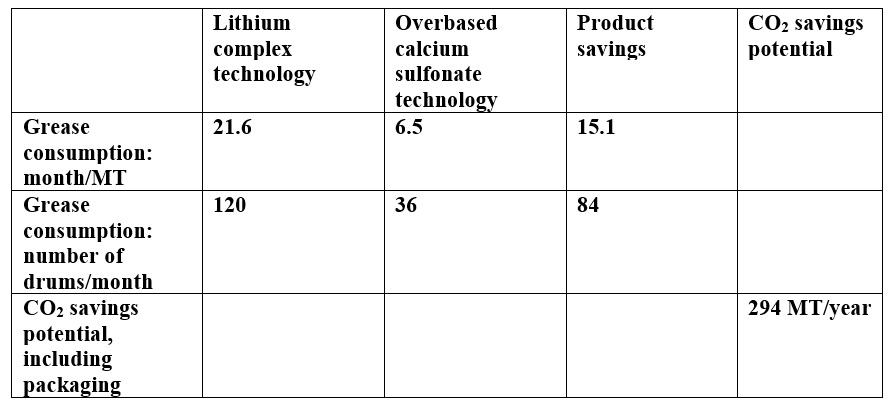 Table 3. Grease technology optimization at a steel mill.
Figure 9 shows the head-to-head comparison of the life cycle of a newly manufactured drum and a reconditioned drum. The outbound transport and end of life of both systems is assumed to be the same. The differences are in the raw materials, inbound transport and the production/reconditioning process. The raw materials of the reconditioning process concern materials like steel shot that are used in the process, but it also includes inner lining and coatings. The figure shows that the GHG emissions of the life cycle of a reconditioned drum are less than half the GHG emissions of a newly manufactured open head steel drum.10
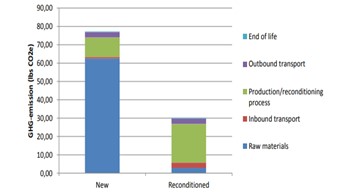 Figure 9. Comparison of carbon footprint between newly manufactured open head steel drums (steel thickness 1.2/0.9) with the reconditioned open head steel drum.10
Conclusions
The economic importance, environmental properties and sustainability of lubricants are integral points of discussion when envisioning the future of tribology. Evidence demonstrates a decisive conclusion that the reduction of energy lost from friction significantly improves efficiency, reduces GHG emissions and generates economic savings not only for the transportation sector of industry but for manufacturing sites as well.
References
1. Idowu, S. O., Capaldi, N., Zu, L. and Gupta, A. D. (Eds.). (2013), Encyclopedia of corporate social responsibility, vol. 21, Berlin: Springer.
2. Chraye, H. (2021), “The role of advanced materials in the European low-carbon transition,” Emiri General Assembly, December 2, 2021. Available here.
3. van der Nest, G. (2021), “A snapshot of the climate change agenda in 2021,” Tralac Trade Brief No. S21TB02/2021. Available here.
4. Kline (2022), “Sustainability in the Lubricant and Base oil Industry,” UKLA The Lube Sustainability Conference 2022. Available here.
5. Shah, R., Woydt, M. and Zhang, S. (2021), “The economic and environmental significance of sustainable lubricants,” Lubricants, 9 (2), 21.
6. U.S. DOE (2022), “Better Plants 2022 progress update,” U.S. Department of Energy. Available here.
7. Boba, T. (2018), “How Green Is Your Gearbox?” Sumitomo Machinery Corporation of America.
8. ExxonMobil (2009), “The synthetic revolution.” Available here.
9. TotalEnergies (2022), “Energy cost – A new perspective,” The INDsider in the heart of industry.
10. Ernst & Young Accountants (2015), “Life cycle assessment of newly manufactured and reconditioned industrial packaging.” Available here.
Dr. Yulia Sosa is a freelance writer based in Peachtree City, Ga. You can contact her at dr.yulia.sosa@gmail.com.