KEY CONCEPTS
•
The metal cleaning market is currently experiencing record growth and numerous opportunities to develop customized solutions.
•
Numerous contaminants need to be addressed, and surfaces to clean are continuously evolving.
•
Customizable surfactant chemistry is available, but optimal products need to go through advanced testing.
Meet the Presenters
This article is based on an Industry Insights presentation titled
Post-Machine Cleaning: How To Pick the Right Surfactant for the Job by STLE member Stephanie Cole, IFL sales manager - Midwest, Münzing North America, on Aug. 16, 2022. It also was co-presented by Jacob Ritter, senior chemist, and Bailey Masters, chemist, for Clariant Corp. These events provide a forum for members to collaborate with STLE industry peers and experts on a specific topic who give a brief presentation, then facilitate conversation by asking discussion questions and providing actionable takeaways. For more information, click
here.
Stephanie Cole joined Münzing North America this year as IFL sales manager - Midwest. She previously worked for Clariant Corp. as the senior formulation chemist for North America’s industrial lubricants business unit. Cole has eight years of knowledge in the industrial lubricants market, including industrial cleaning formulation and application and metalworking fluid formulation and application. Cole received her bachelor of science degree in chemistry and a minor in marketing at the University of Houston, Texas. You can reach her at
s.cole@munzing.com.
 Stephanie Cole
Jacob Ritter joined Clariant Corp. in late 2015 and is currently the senior chemist leading new product development and scale-up activities for the industrial and consumer specialties business unit in North America. Ritter received his bachelor of science degree in inorganic chemistry from The University of North Carolina at Chapel Hill and his master of science degree in inorganic chemistry from The University of California, Irvine. Starting in the consumer care lab, Ritter now works closely with application chemists across a wide variety of industries to design, scale up and launch new and innovative chemistries. You can reach him at
Jacob.Ritter@clariant.com.
 Jacob Ritter
Bailey Masters joined Clariant Corp. in 2017 and is currently a chemist that specializes in new product development and scale up for the industrial and consumer specialties business unit in North America. Masters received her bachelor science degree in chemistry from Wofford College, located in South Carolina. Starting with the aviation team, she works with both customers and her formulation colleagues in order to create the exact molecule to fit their needs. You can reach her at
Bailey.Masters@clariant.com.
 Bailey Masters
All figures courtesy of Clariant Corp.
Terminology used for surfactant production
•
Alkoxylation: Ethylene oxide (EO) and propylene oxide (PO) added to an alcohol.
•
Ethoxylation: Only EO added to an alcohol.
•
Propoxylation: Only PO added to an alcohol.
•
Degreasing: Proof of concept degreasing test to evaluate surfactant’s rough degreasing/cleaning power. In a study, we were looking for patterns as changing EO and starting alcohol.
•
Emulsification: Introduction of foreign oils to evaluate surfactant’s emulsification or oil rejection properties.
•
Foaming: Agitation of a solution via apparatus to measure foam growth and decay rates.
After manufacturing a metal part, a thought-out cleaning is necessary. Typically choosing a right cleaner/surfactant is challenging. This article presents options on how to challenge surfactant manufacturers and formulators to design a surfactant that addresses the unique pain points of a customer. This topic also helps to answer questions: What is an ideal cleaner? Is it something that needs to be low foaming, or maybe capable of cleaning different metals? Is it something that can be used on both aluminum and steel at the same time? Or maybe it needs to be able to operate at low operating temperatures? Or perhaps it needs to be a high alkaline degreaser? Or maybe all of the above together?
Metal cleaning market
•
The global metal cleaning chemicals market size by value is projected to reach $16.5 billion by 2025 at a compound annual growth rate of 5.0%.
1
•
Cleaning metal and protecting it against rust or corrosion is important, regardless of if the surface is to be painted or left uncoated.
•
Metal has a reputation for being difficult to clean and a burden to maintain, but many specialized products are emerging to make metal-care tasks easier and more effective.
•
The metal cleaning market is currently experiencing unprecedented growth, largely due to the rise of precision parts, which require more critical levels of clean within more complex geometries.
Variables to consider when choosing a right cleaner
•
Cleaning process
o
Soak
o
Ultrasonic
o
Immersion
o
Spray
•
Potential contaminants
o
Corrosion inhibitors/rust preventatives
o
Cutting oils
o
Metalworking fluids
o
Burnt hydrocarbons
o
Metal oxides
o
Dust/air contaminants
o
Human contamination
•
Aqueous cleaner type
o
High alkaline
o
Mild alkaline
o
Neutral
o
Acidic.
Figure 1 shows types of aqueous cleaners and applications—going from left to right, high pH to lower pH, whereas a high alkaline cleaner is of pH >12.
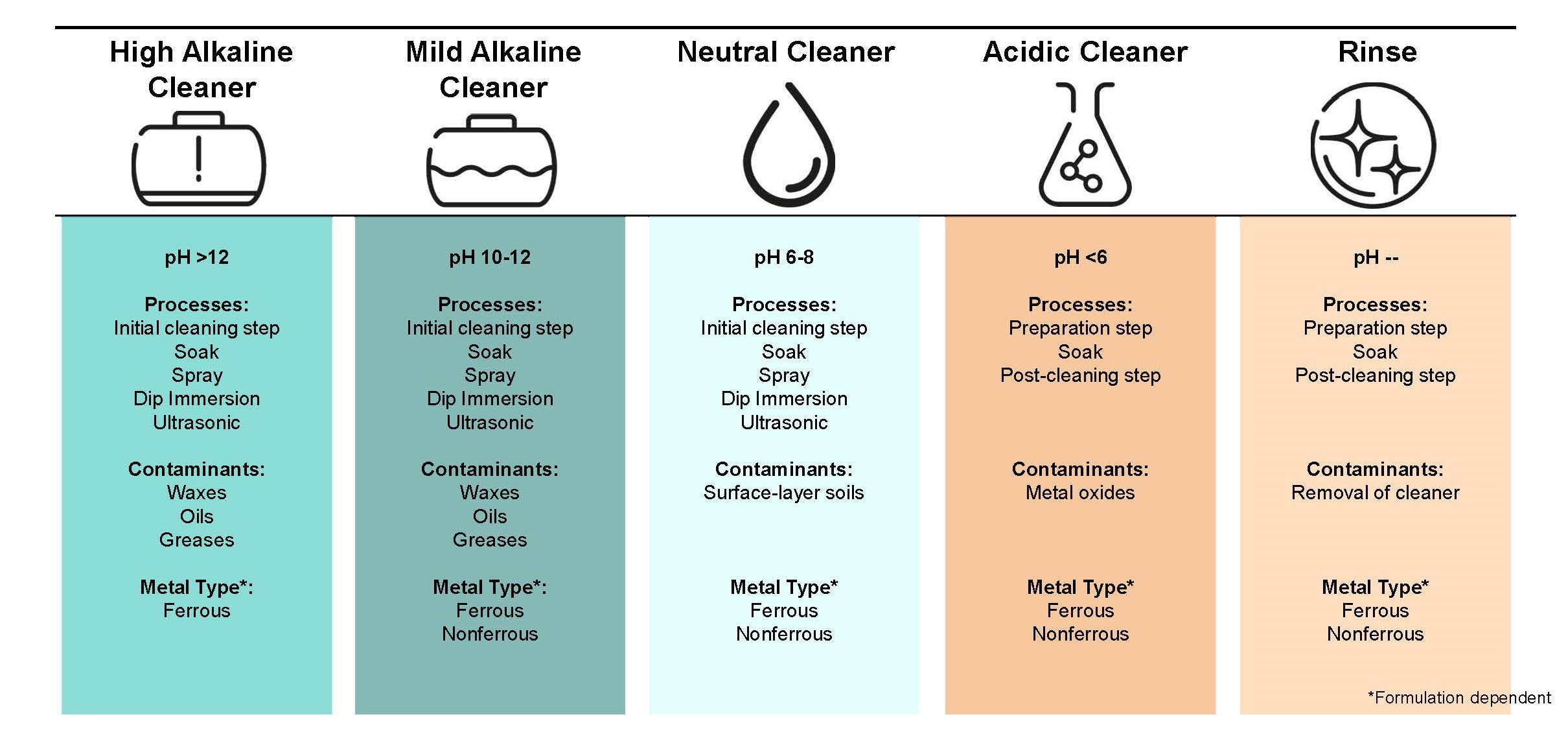 Figure 1. Types of aqueous cleaners and applications.
Potential contaminants
•
Metal type: Ferrous versus nonferrous, star indicates formulation dependency, i.e., between high and mild alkaline cleaner where the pH levels are different; depending on the formulation you may be able to include non-ferrous types of metals in this cleaner.
•
Neutral cleaner: Not a very harsh cleaner, so the surface layer soil can be removed, and is dependent on the process that is used to clean.
•
Acidic cleaner: Used mainly for the removal of metal oxides; depending on the acid used, this determines what type of metal type could be used here. The rinse step is a prep step designed to be the last step until the resting period is or next process is.
How surfactants function
Figure 2 shows how surfactants function and how that leads to actual cleaning. A surfactant is a surface-active agent that tends to reduce the surface tension of a liquid when incorporated. Figure 2 also shows an image of a surfactant’s interaction between oil/dirt and water. A surfactant has a lipophilic tail and a hydrophilic head, which help lift and suspend soil into an aqueous solution. The lipophilic tail is attracted to the oil/soil portion, while the hydrophilic head easily goes into the water portion of the aqueous cleaner. Together, these form a micelle, allowing the dirt/soil to be easily removed from the metal piece.
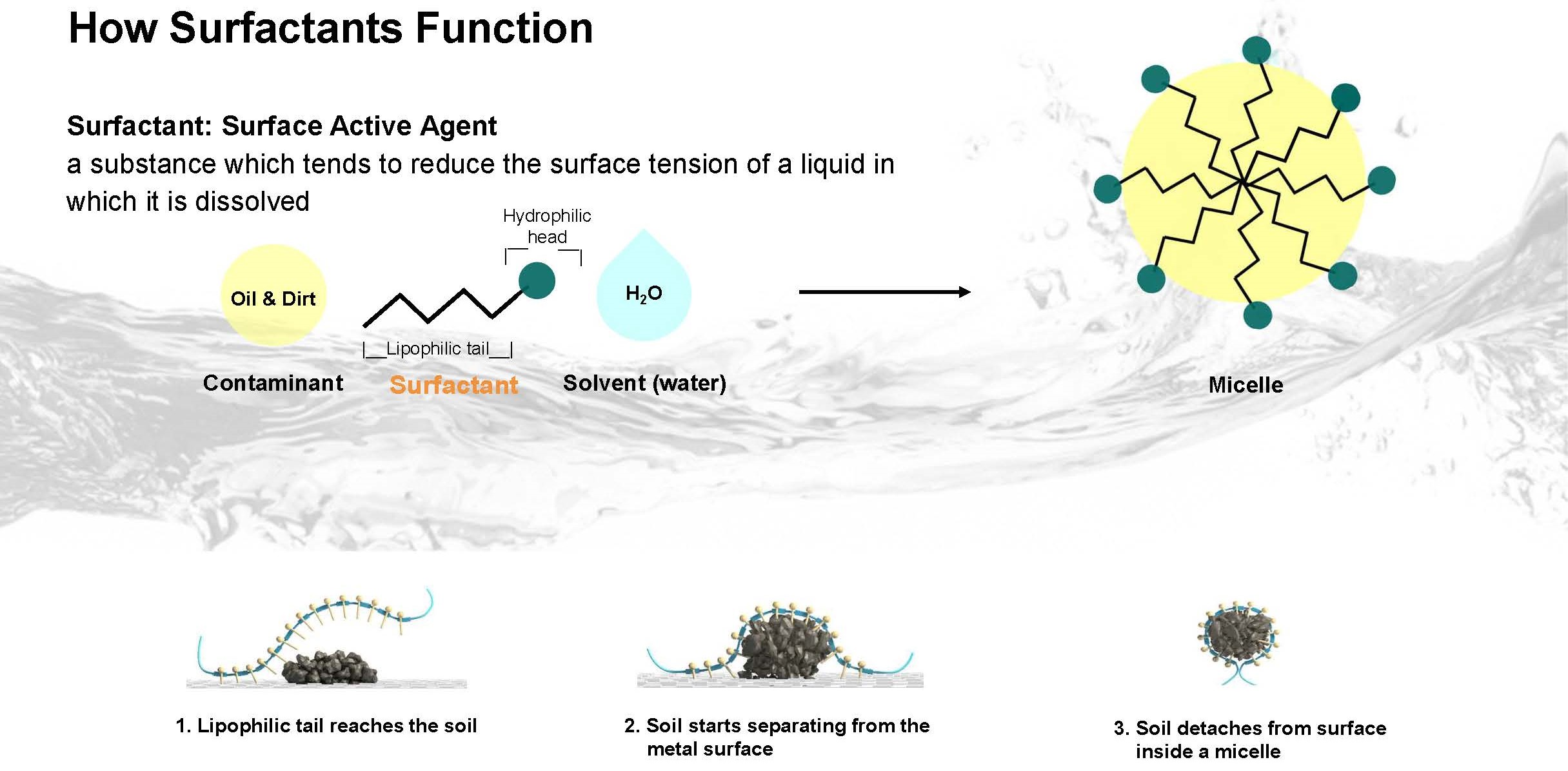 Figure 2. How surfactants function. Steps 1-3 at the bottom show an example of soil being removed from a surface.
There are three types of surfactants
(see Figure 3):
•
Nonionic: Means neutral charge; the hydrophilic head does not have a charge and is attracted to the water portion in an aqueous solution. The hydrophilic tail provides excellent emulsification and wetting properties
(see Figure 4).
•
Anionic: Negative charge; best for lifting and suspending solids off the metal, whether it comes from an alcohol as the starting material or an acid.
•
Cationic: Positive charge; antistatic properties, i.e., prevents redeposition. An alternative example is how a hair conditioning works: if to condition hair with a positive substractant it keeps hair from building up static.
 Figure 3. Surfactant types.
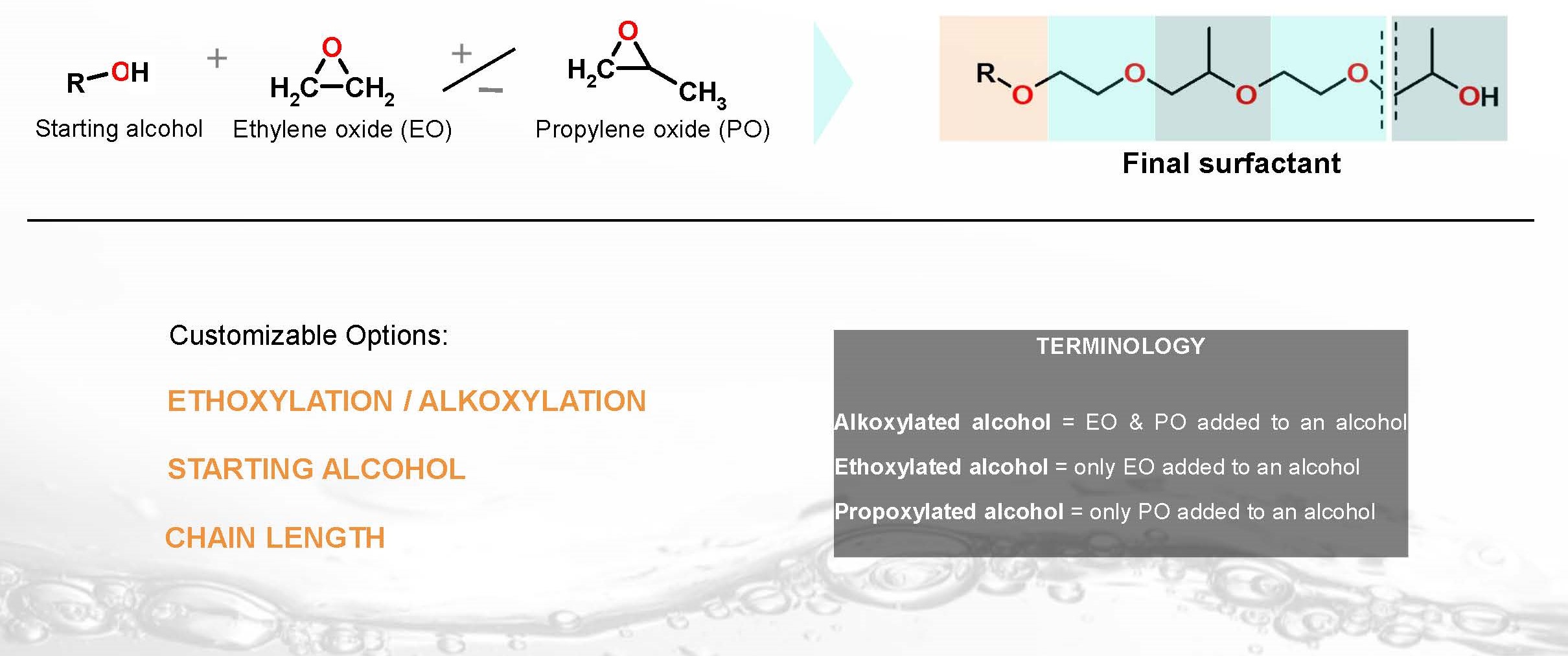 Figure 4. Components of a nonionic surfactant and how they’re made.
Customizable options
•
Ethoxylation/alkoxylation
•
Starting alcohol
•
Chain length.
Surfactant structure evaluation
•
Water solubility: How easy a surfactant is going to be to formulate with
•
Cloud point: Depending on the temperature the surfactant will start to separate from the water phase
•
Hydrophilic/lipophilic balance (HLB): What contaminants your surfactant will be capable of removing and how it will remove them.
To develop new candidates, a case study
(see Figure 5) was conducted. Six surfactant physical characteristics were evaluated.
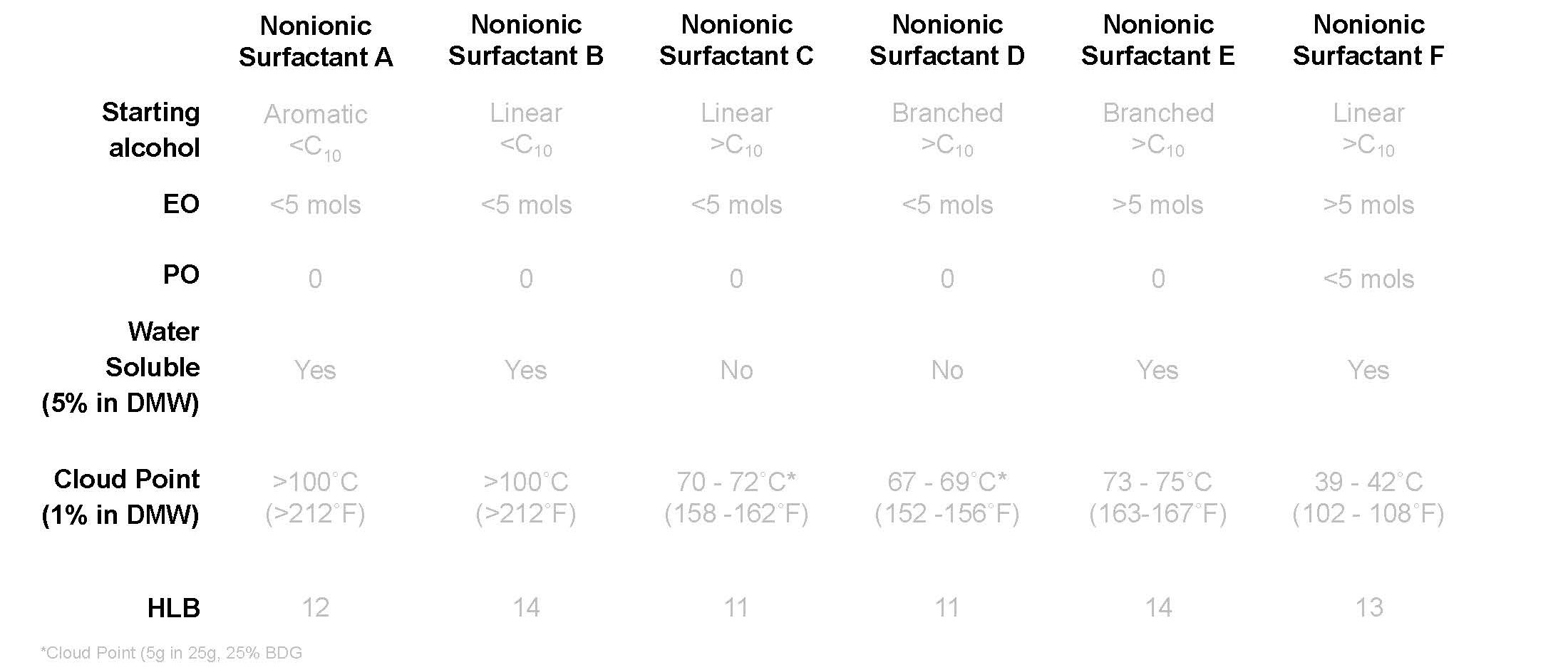 Figure 5. Case study: evaluate surfactant physical characteristics.
Follow up testing was performed
(see Figures 6a-f).
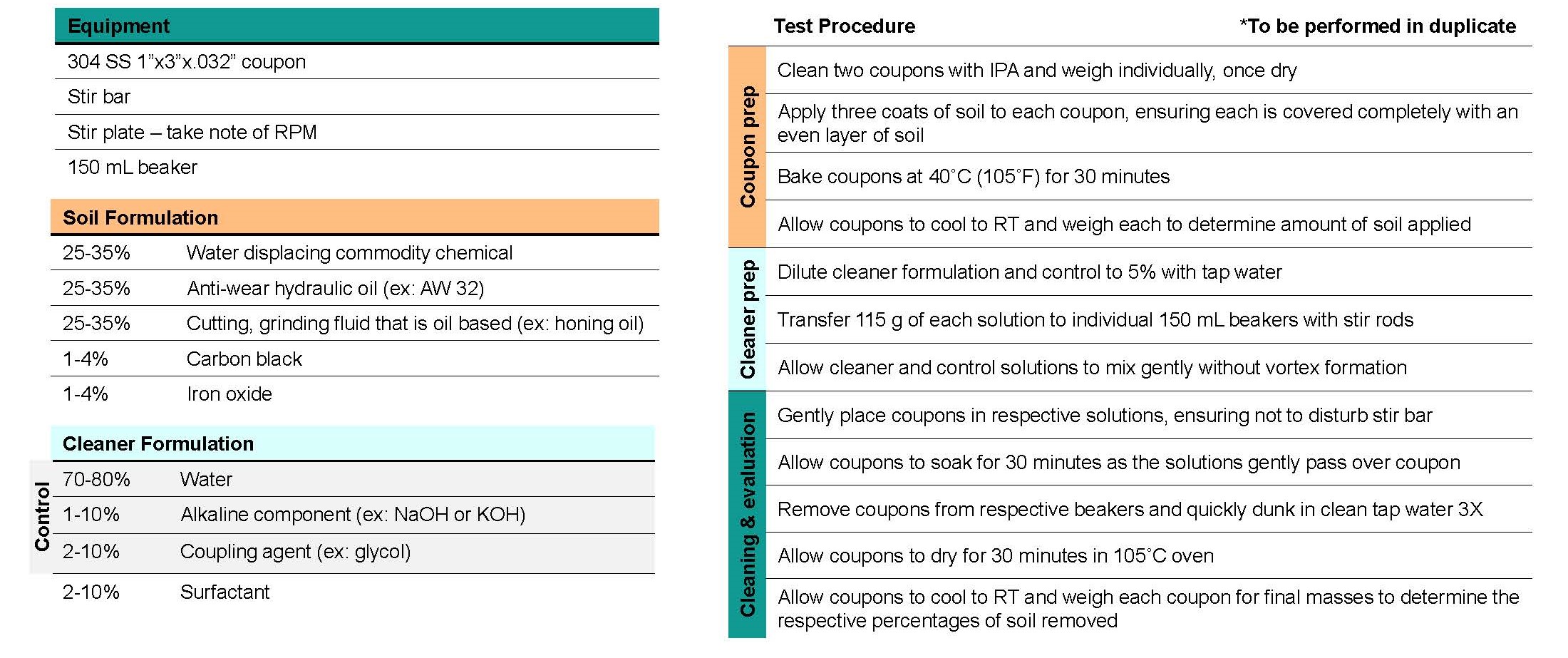 Figure 6a. Validate performance—degreasing procedure: evaluation of a surfactant’s cleansing power.
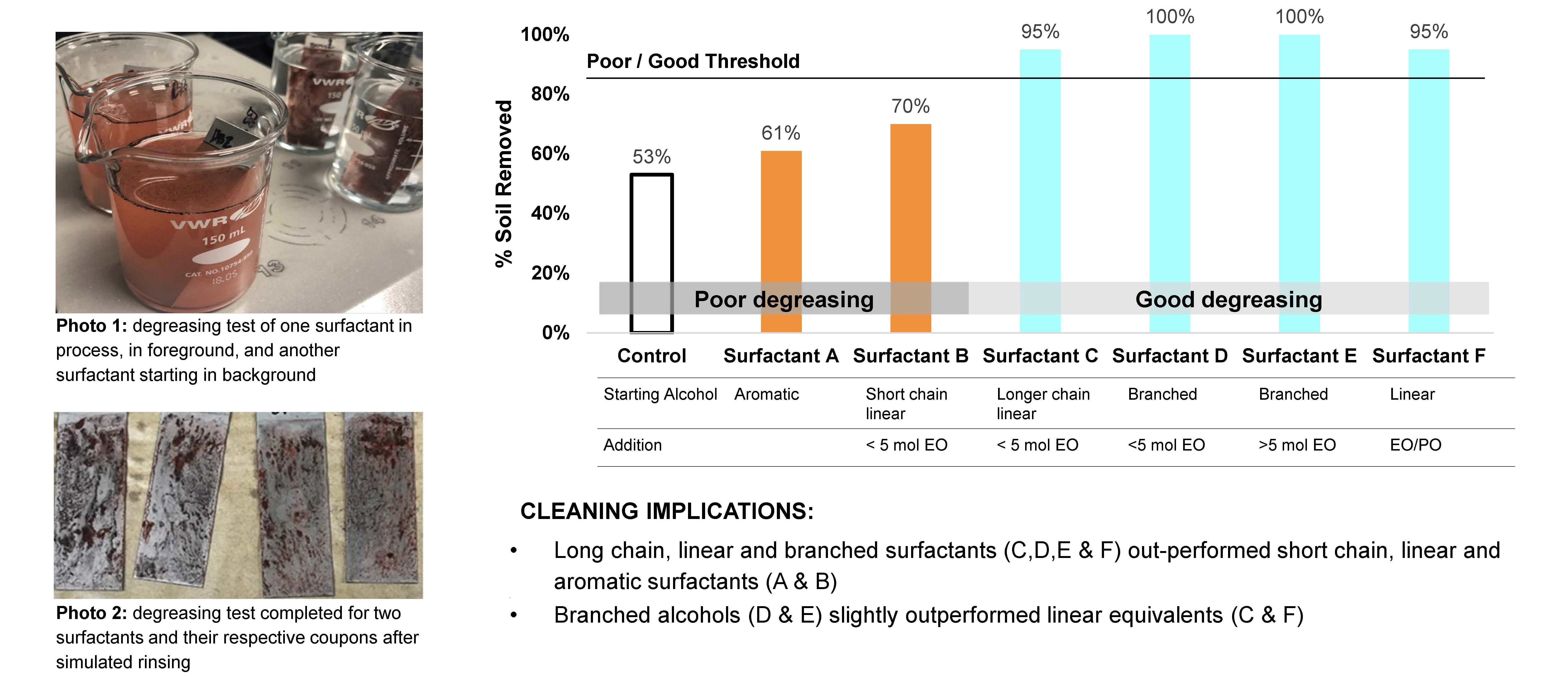 Figure 6b. Validate performance—degreasing results: evaluation of a surfactant’s cleansing power.
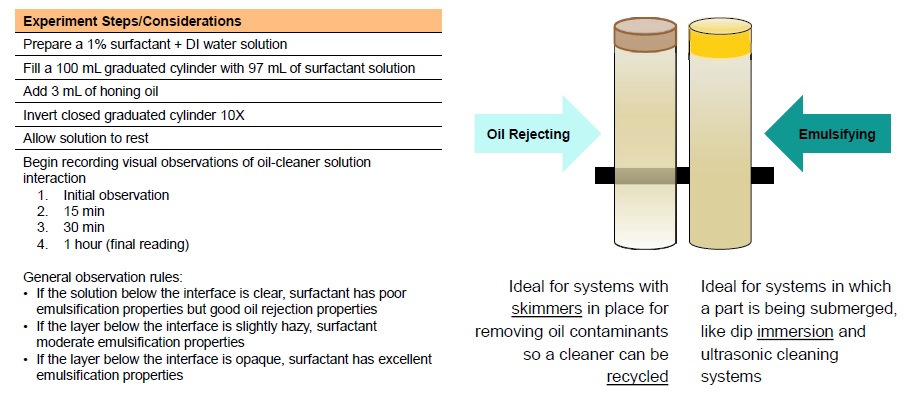 Figure 6c. Validate performance—emulsification/oil rejection procedure. How a surfactant will handle introduction of a foreign oil.
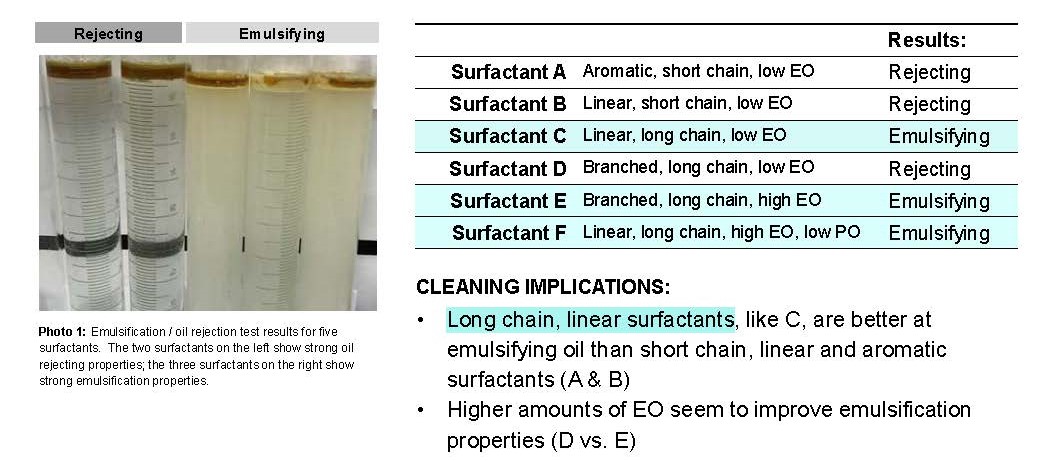 Figure 6d. Validate performance—emulsification/oil rejection procedure. How a surfactant will handle introduction of a foreign oil.
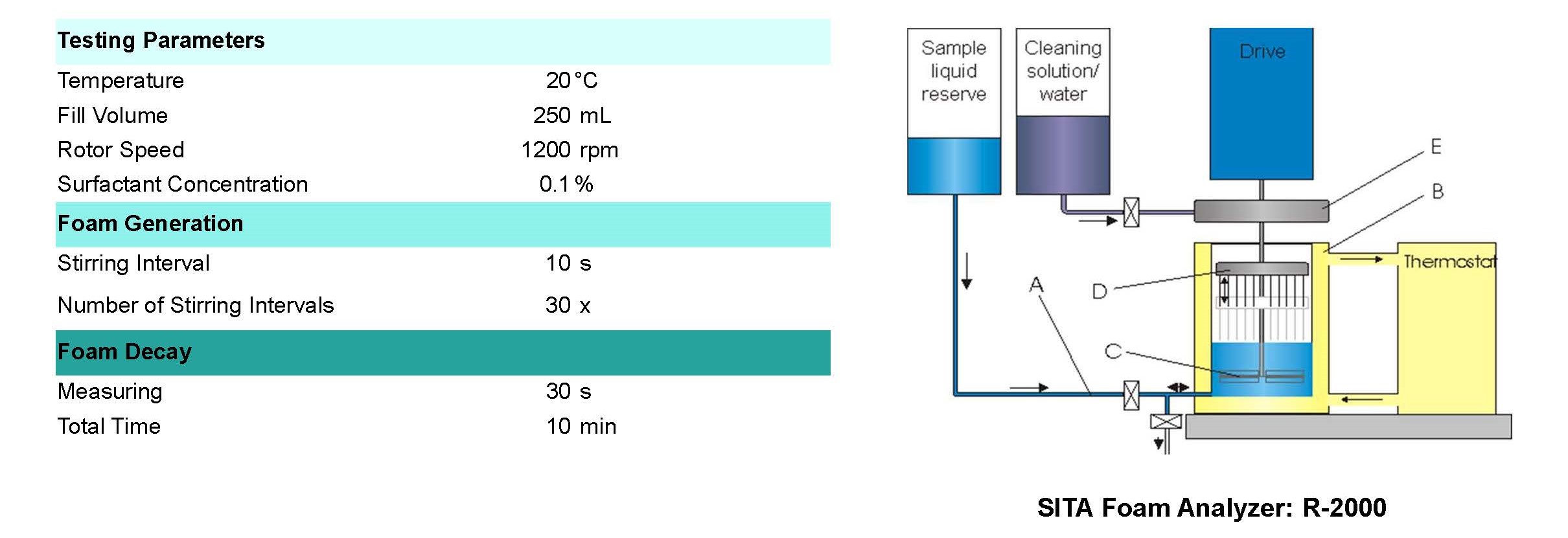 Figure 6e. Validate performance—foam build and decay procedure. A surfactant’s suitability for spray processes.
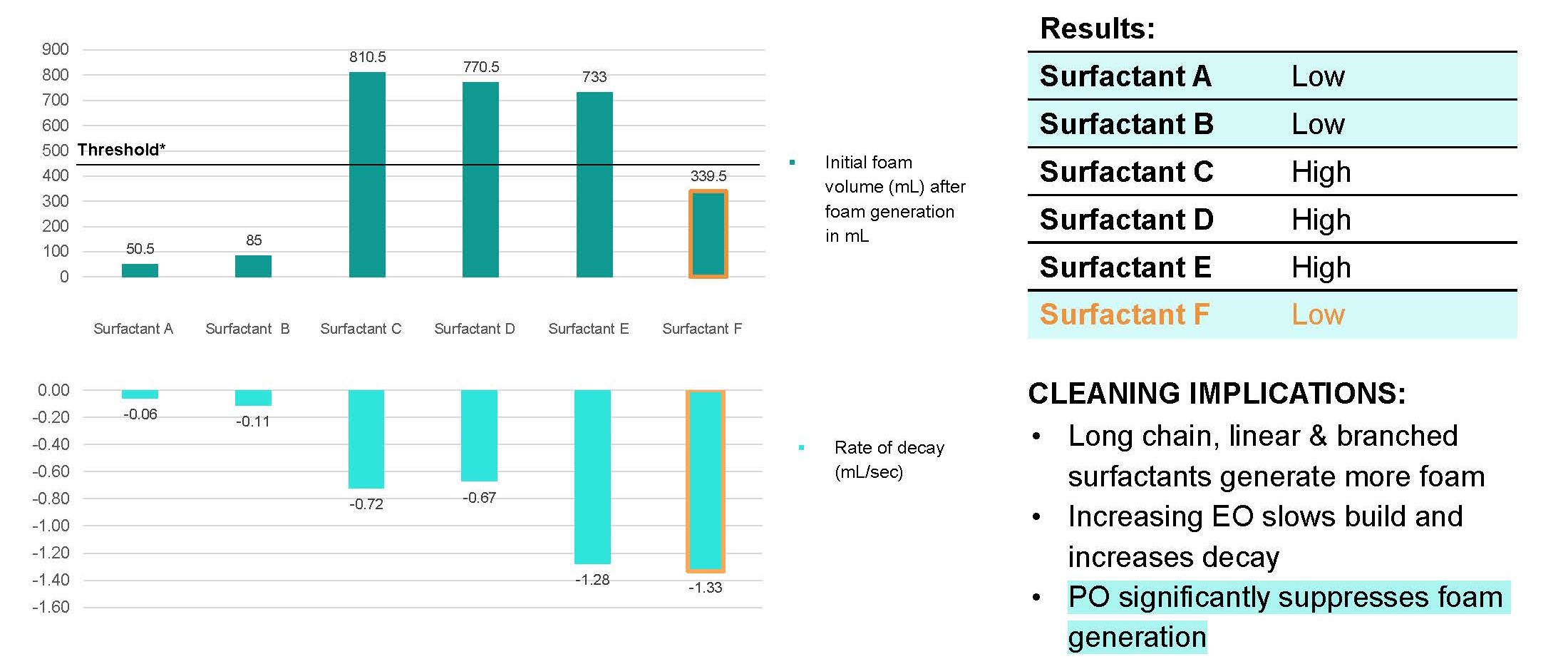 Figure 6f. Validate performance—foam build and decay results. A surfactant’s suitability for spray processes.
Summary
Of the six surfactants that were tested, the ones that gave good emulsification results are surfactants C, E and F. Candidates testing began with aromatics selection, which give solvent type properties, then starting alcohols were selected, based on how their chemistry relates to cleaning implications, then chemistry selection was broken down with the addition of alkoxylate (EO and PO), and it was all wrapped up with optimization for the applications
(see Figure 7).
Conclusions
Degreasing: Long-chain, linear and branched surfactants are the best performers at degreasing.
Foaming: Long-chain, linear and branched surfactants generate more foam; PO significantly suppresses foam generation; aromatics as starting alcohols lead to lower foaming surfactants.
Emulsification: Long chain, linear surfactants are better at emulsifying oil than short chain, linear and aromatic surfactants. Higher amounts of EO improves emulsification properties.
All of these trends depend on multiple factors—including the combination of the starting material, the EO content and the PO content. This is just a starting guide, and chemistries can be tailorable depending on desired performance characteristics.
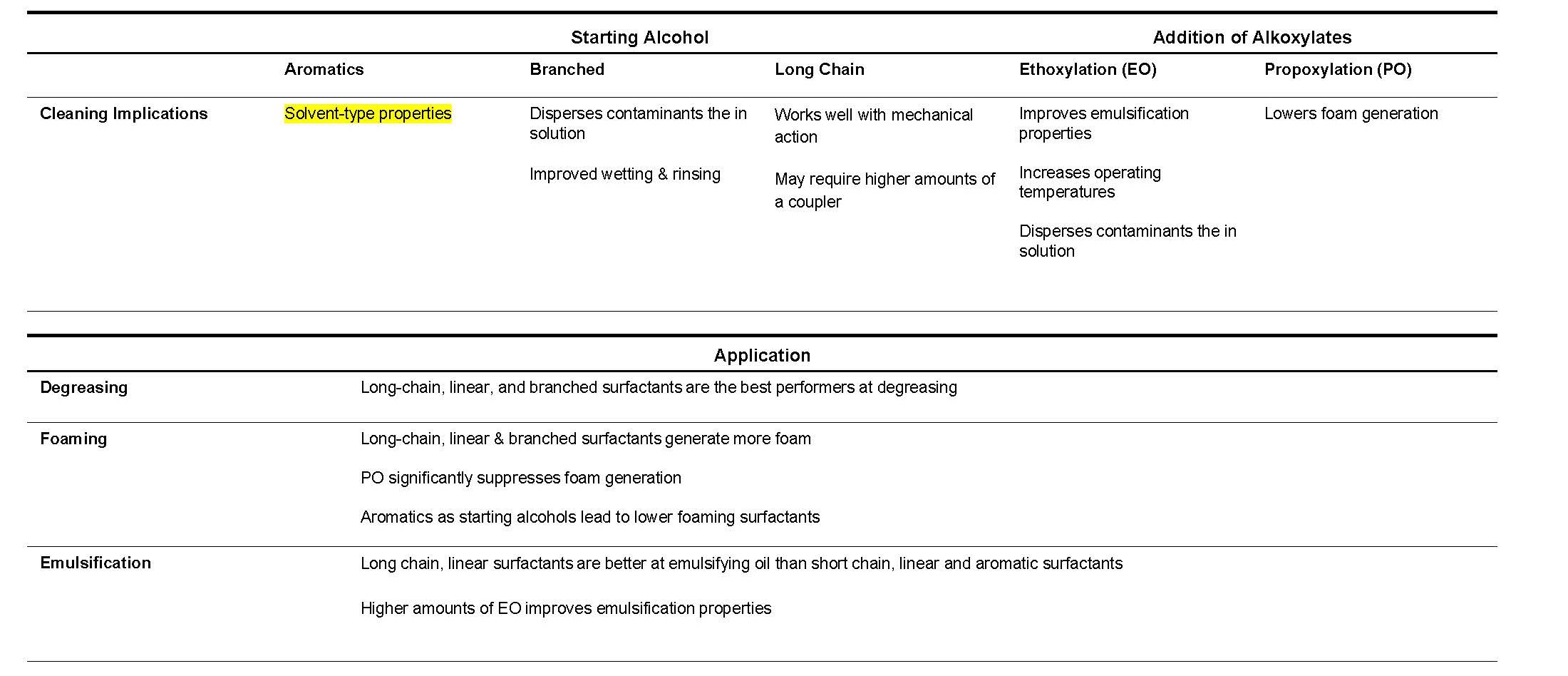 Figure 7. Overview of the results.
The surfactant can be modified based on the starting alcohol and EO/PO content to create a unique surfactant that helps address numerous pain points at once.
Reference
1.
Markets and Markets, (2020), “Metal cleaning chemicals market report. Available
here.
Dr. Yulia Sosa is a freelance writer based in Peachtree City, Ga. You can contact her at dr.yulia.sosa@gmail.com.