TLT: How long have you worked in a lubrication-related field, and how did you decide to pursue a career in the lubricants industry?
Malik: I have worked for more than 30 years in the lubricants and lubrication industry. Back in my university years, lubrication was a stand-alone course in contrast to the current mechanical engineering curriculum, and my interest started from there. In my final year of study, my capstone project was concerned with examining marine diesel engines using emulsified fuels. As a fresh graduate, my first jobs were with Nissan and a steel mill due to the involvement of specialized lubricants within these industries. Later I ventured into the oil and gas industry, taking the role of mechanical maintenance workshop supervisor. Then I joined the Navy and Gulf Oil companies of Saudi Arabia. The Naval job involved being in predictive maintenance on war ships while the Gulf Oil job was more customer technical support and product development related. In 1999, I joined Ontario Power Generation (OPG, formerly Ontario Hydro) and participated in the Integrated Improvement Plan Projects for the company’s three largest nuclear plants (Bruce, Pickering, Darlington). I was involved in the environmental qualification (EQ) of lubricant in harsh radioactive conditions during a postulated accident scenario, predicted maintenance program development and lubrication program introduction. During my career at OPG Nuclear Generating Stations, I led the redesigning and modification of certain plant systems to improve the equipment reliability. All these projects involved tribology and were challenging, which kept my interest in this area.
TLT: What has been your most rewarding accomplishment throughout your career in the lubricants industry?
Malik: The single most rewarding accomplishment across my entire career was my contribution to the new turbine oil qualification for OPG. OPG had used Group I turbine oil from day one in nuclear, hydro and fossil fuel generating stations. It is to be noted that Group I base oils were considered most optimal for nuclear applications. In 2014-2015, the supplier indicated the phasing out of Group I turbine oil in OPG use, and, as such, I began work on the project to secure the qualification of new rust and oxidation (R&O) oil based on Group II, II plus and III. It was a significant trial and error component as we tested almost six different brands and came up with an optimum solution. Rigorous performance testing was performed. Some details of the situation were published in Lubes’n’Greases.
1
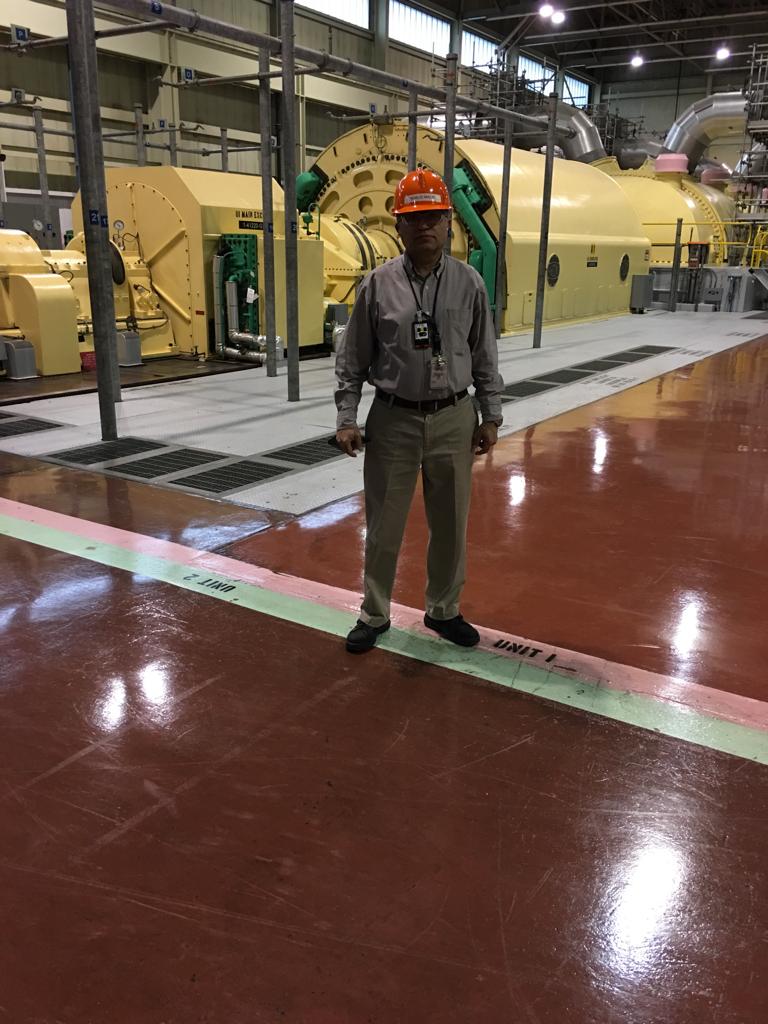 Turbine hall area in a nuclear power plant.
TLT: What is the No. 1 piece of advice you would give to people who might be interested in starting a career in the lubricants industry?
Malik:
My message to them is that it is a rewarding and interesting career if they decide to stick with it. Each stage is very different and equally challenging. Only learning lubricants and lubrication is not enough, and you must understand equipment specific requirements. With industry competition and cost-cutting strategies, it is a good idea to look into the other areas of tribology as well—not keeping your horizon narrowed to just lubrication. For example, I took my predecessors’ advice and involved myself in mechanical seals and seals in general. Other important areas are condition monitoring, hydraulic systems, bearing design and turbomachinery. In addition to these, I also was involved in lubrication of transformers, wire rope, cables, electrical components, gears (open/close), valves, motors and similar fields throughout my career.
TLT: Throughout the different segments within your career, which one has been the most interesting, challenging and/or rewarding?
Malik: I’ve tackled a wide range of situations, both challenging and interesting, throughout my career, and the greatest reward from these experiences was the satisfaction from a successful solution. It is difficult to pinpoint one issue in particular as there are hundreds of such examples. I remember phosphate ester (fire-resistant fluid) maintenance was always a challenge. It is used in the turbine governing (electro-hydraulic control, EHC) system. The unique design issues with mechanical seals, pump and motor bearings’ lubrication is also something I encountered. I also remember running into challenges with antioxidant retention and foaming issues, which were common across the fleet with Group 1 turbine lubricating oil systems, and it took a thorough root cause evaluation to convince the supplier that these were not equipment-related issues and more to do with turbine oil (R&O) formulation. The other challenge industry is observing is knowledge retention with skilled people retiring. The STLE Toronto Section has developed a strategy and is working with local universities and colleges to promote the science of friction, wear and lubrication.
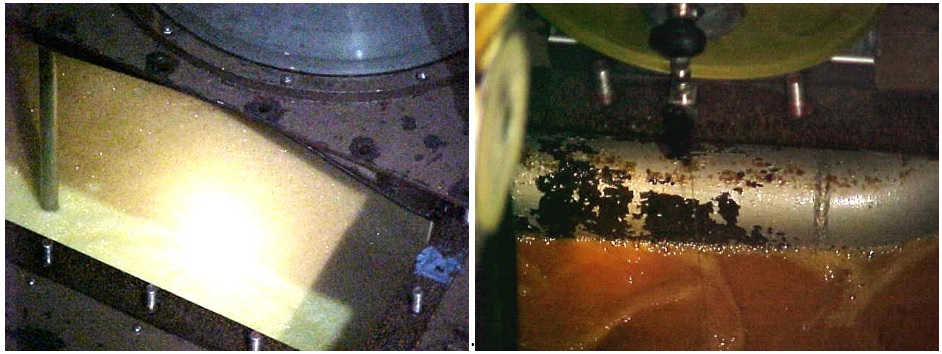 (Left) Turbine oil foaming challenge and (right) after treatment pipe is visible.
TLT: What are some of the most technical lubrication-based concepts or topics you have encountered throughout your career?
Malik:
Like I mentioned earlier, the most technical lubrication topic throughout my career is turbine oil (R&O). It is to be noted that not only are these oils used in turbine lubricating systems but are used widely in the lubrication of power plant equipment. Phosphate ester (EHC system) chemistry maintenance and EQ greases (radiation resistance performance) are the other interesting concepts.
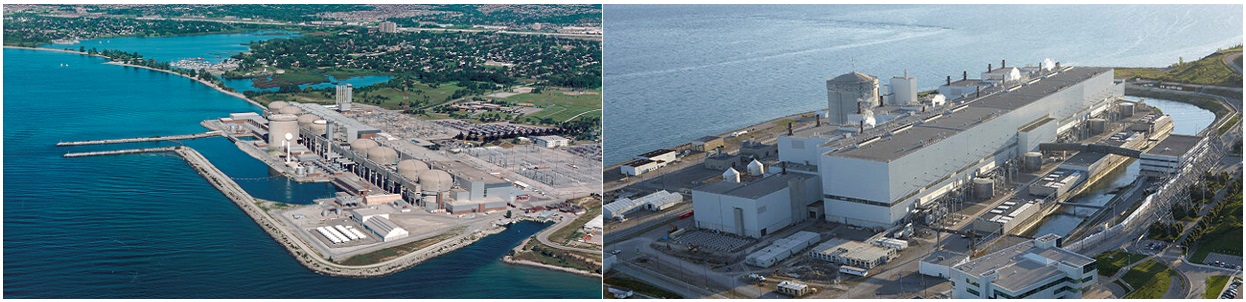 (Left) Pickering Nuclear Generating Station and (right) Darlington Nuclear Generating Station.
TLT: What is the one thing you wish you would have learned earlier in your career?
Malik:
I think leadership training would have been beneficial earlier in my career. Also, a good mentor at the beginning of my career could have been very helpful.
REFERENCE
1.
Jacobs, C. (2016), “Group II: The nuclear option,”
Lubes’n’Greases, 22 (9), pp. 42-47.
You can reach Khalid Malik at khalid.malik@opg.com.