KEY CONCEPTS
•
There are growing requirements on electric vehicle fluids.
•
Current tests for electric vehicle fluids are inadequate.
•
Standardization of electric vehicle fluids test procedures is needed.
Meet the Presenter
This article is based on an Industry Insights presentation titled
Electric Vehicle Fluids – Requirements and Testing by Dr. Peter Lee on Sept. 21, 2021. Industry Insights is a monthly virtual event series available for free for STLE members. These events provide a forum for members to collaborate with STLE industry peers and an expert on a specific topic who gives a brief presentation, then facilitates conversation by asking discussion questions and providing actionable takeaways. For more information, click
here.
Dr. Peter Lee is a staff engineer for the Tribology Research and Evaluations Laboratory at Southwest Research Institute, where he is responsible for establishing world-class tribology research laboratories, developing new test techniques and supporting engine sequence testing. As part of this research, he has eight patents, with two pending.
Lee began his career as a qualified motor vehicle technician (light and heavy duty) before attending the University of Leeds, UK, where he earned a degree in automotive engineering in 2002 and later obtained his doctorate in 2006 in engine tribology, developing techniques for the extraction and tribological testing of lubricants from various parts of the engine, including the piston assembly. In 2007, he was successful in his application for a Royal Academy of Engineering Research Fellowship. Through this five-year program, he continued research into engine tribology, as well as supervised undergraduate and doctoral students and lectured tribology to undergraduate and graduate students. In 2011, he moved with his family from Leeds, UK, to San Antonio and accepted the invited position of principal engineer–tribologist at Southwest Research Institute.
Lee serves as a TLT technical editor, is an associate editor for Tribology Transactions and is on the editorial board for the journal Wear. He also is on the STLE Board of Directors. You can reach him at
peter.lee@swri.org.
 Peter Lee
Electric vehicles (EVs) powered either by battery, fuel cell or fuel cell hybrid systems have gained great attention recently around the world as a viable solution to decrease greenhouse gas emissions. In the transportation and energy production sectors, EVs help maintain a clean and healthy environment by restricting the adverse effects produced by the usage of internal combustion engines; as a result, there is a growing interest in EV fluids.
Automatic transmission fluids versus EV fluids
The first high-volume EV fluids used were long-existing automatic transmission fluids (ATFs). And although ATFs have similar tasks and objectives as EV fluids, with more EVs on the roads, and more miles driven, it has become obvious that there are some gaps between existing ATF formulation and EV fluid requirements.
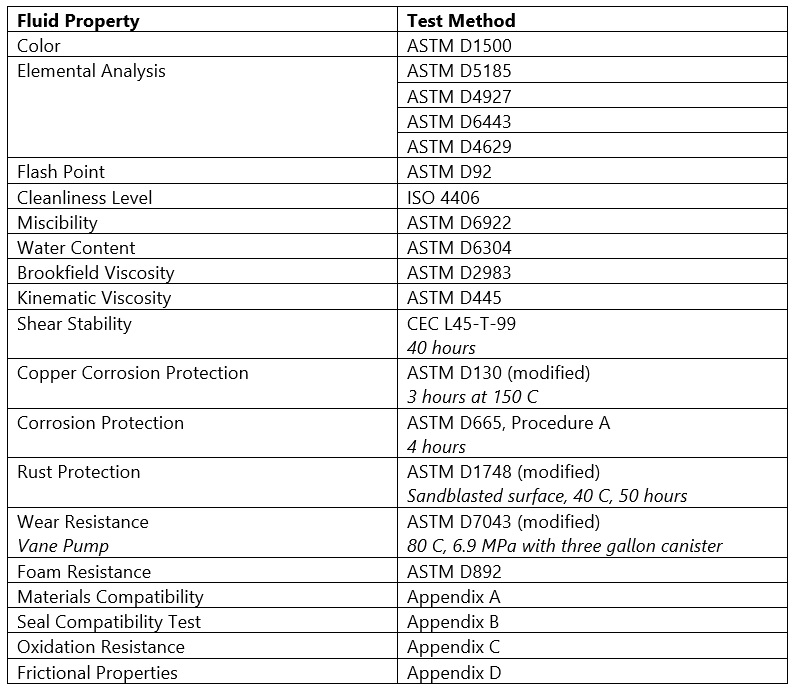
Lee notes that with existing testing requirements, we have a really good understanding of ATF matters (
see Table 1), such as copper corrosion, aeration, wear, oxidation, clutch friction durability, cycling, etc.—while EV requirements call for additional testing, such as copper compatibility with current flow, polyester and polyamide coatings of windings, epoxy used for varnishing, layering and coating, neodymium-based magnets, high-speed aeration, thermal conductivity for improved performance and electrical conductivity. All of these are necessary for optimal EV fluids performance.
One of the reasons why EV fluids have different requirements is the fact that EV drivelines have fewer moving parts. They also incorporate e-motors within the transmission housing while being constrained to small packaging dimensions. EV fluids have to work in excess heat, e.g., heat from the e-motor confined to the smaller designs leads to higher transmission operating temperatures, requiring use of higher temperature-resistant materials. EV fluids should be able to effectively reduce excess heat.
Table 1. Typical Automatic Transmission Fluid (ATF) Testing Methods
Another example is on copper that is present in the electric systems of EVs, which requires protection at high temperatures as well. The fluid must not only be durable in the harsher thermal environment, but it also must be able to combat new byproducts, control new types of deposits and prevent corrosion of new materials of which the EVs are made.
Although there have been major advances in fluid technology for EVs, there still exists a need for EV fluid to improve electrical and thermal conductivity over the lifetime of the fluid. Fluid stability must be balanced with other properties such as low-viscosity and high-speed aeration while achieving parts protection and preventing components from failures. Lack of standardized EV fluid testing is preventing knowledge advancement on the above-mentioned challenges.
Ultimately, the major challenge is that there are many new EV original equipment manufacturers (OEMs) entering the marketplace, spring boarding all EV OEMs to innovate at an unprecedented fast pace, which creates enormous pressure to expedite a formulation of an optimal EV fluid, and to create exclusively tailored solutions to every EV OEM unique applications and needs.
If we could standardize EV fluid testing and improve performance comparison in a relevant manner, we could largely improve efficiency in our industry and concentrate our efforts on further improving EV performance.
EV fluid future requirements
Per Lee, ideally industry needs a combination of characteristics that will drive the creation of new specifications and new fluid formulations to meet them.
1 Some of the questions we need to have answered are the following:
•
Copper compatibility with current flow—How?
•
Polyester and polyamide coatings of windings—How? Temperature? Erosion?
•
Epoxy used for varnishing, layering and coating—How? Temperature? Erosion?
•
Neodymium-based magnets—How? Temperature? Erosion?
•
High-speed aeration—15,000 rpm-30,000 rpm? Real part or a test rig?
•
Thermal conductivity for improved performance—Remove as much heat as possible?
•
Electrical conductivity—First decide what is too high and what is too low?
•
Wear—Are current tests appropriate?
•
Oxidation—Different temperature ranges?
In conclusion, presently there are opportunities for standardization of EV lubricants, which some organizations such as SAE have only begun to explore. STLE members should consider contributing to these activities by participation and involvement in relevant industry groups.
REFERENCE
1.
Van Rensselar, J. (2021), “Driveline fluids for electric vehicles,” TLT,
77 (8), pp. 42-47. Available
here.
Dr. Yulia Sosa is a freelance writer based in Peachtree City, Ga. You can contact her at dr.yulia.sosa@gmail.com.