HIGHLIGHTS
•
The ability of lithium to degrade fluorinated battery components under reductive conditions has been utilized to degrade the well-known PFAS, perfluorooctanoic acid (PFOA).
•
Lithium metal in combination with salts such as lithium perchlorate proved to be effective in degrading PFOA under ambient conditions in the presence of air using DMSO as a solvent.
•
In evaluating 33 additional PFAS compounds, degradation percentages exceeding 70% were achieved for 22 of them.
The known health and safety concerns surrounding the use of per- and polyfluoroalkyl substances (PFAS) are leading researchers to work to develop strategies for decomposing these materials which exhibit exceptional stability and are known as ‘forever chemicals.’ Many recent attempts to decompose PFAS have been conducted using electrochemical oxidation in an aqueous environment because of the need to find an approach to deal with the prevalence of PFAS in drinking and wastewater streams.
In a previous TLT article,
1 a commercial method for destroying PFAS is conducted using supercritical water oxidation. Water when heated above a critical point (374°C and 221 bar pressure) enters a supercritical state where it behaves as both a liquid and a gas. At this point, water acts as an excellent solvent that can breakdown even the strongest bonds such as the link between carbon and fluorine. Treatment of an effluent stream at temperatures between 500°C -600°C and pressures 200-300 times greater than atmospheric leads to the complete breakdown (99.9%) of PFAS at times ranging from 30 seconds to two minutes.
An alternative strategy for decomposing PFAS electrochemically is to consider reduction instead of oxidation. Such an approach is realistic if consideration is given to how lithium-ion batteries degrade. Chibueze Amanchukwu, assistant professor at the University of Chicago Pritzker School of Molecular Engineering in Chicago, Ill., says, “Lithium-based batteries often utilize fluorinated solvents and salts because of their non-flammability, high thermal resistance and oxidative stability. But we noticed that as these batteries cycle, they start to degrade by initially forming solid electrolyte interfaces under reductive conditions. This degradation process is caused by the interaction with the fluorinated battery components and reactive metal electrodes and occurs under non-aqueous conditions.”
Lithium has emerged as one of the most reactive metals in degrading fluorinated compounds.
In effect, lithium’s degradation of fluorinated compounds, which can cause premature battery failure, may be ironically a way to decompose PFAS. Attempts to reduce PFAS in an aqueous medium have proven to be difficult. Aqueous electrons used for reduction can be produced under energy-intensive conditions and the result may not be PFAS decomposition but rather scavenging by hydrogen cations and oxygen present in the water. The use of zero valent metals to facilitate PFAS decomposition is only feasible under high temperatures and pressures. Yields are typically low.
Amanchukwu says, “We also believe that aqueous reduction of PFAS is limited due to interference from the hydrogen evolution reaction which is more favored. Another issue is that trying to use reactive alkali metals such as lithium in water is not doable since the result is a violent reaction that produces hydrogen gas.”
A new strategy has now been developed that degrades PFAS efficiently under reductive conditions using non-aqueous solvents.
Lithium metal-mediated degradation
Initial experiments involved testing the well-known PFAS, perfluorooctanoic acid (PFOA), which was mixed with lithium metal in solvents such as dimethyl sulfoxide (DMSO), ethers and carbonates. These three solvent classes were selected due to their relative stability toward lithium metal, and they have also been used extensively in research on lithium metal batteries. After the interaction was maintained for 24 hours at room temperature, X-ray photoelectron spectroscopy clearly showed evidence for the ultimate reduction product, lithium fluoride, on the lithium metal surface.
In an effort to increase current density, salts such as lithium perchlorate were added to the system. Under these conditions, lithium metal was continuously electrodeposited and PFAS degradation reached 95%. Conversion to the fluoride anion reached 94% as nearly complete defluorination was achieved.
The researchers used a single-chamber membrane-less cell to evaluate lithium metal-mediated degradation
(see Figure 4).
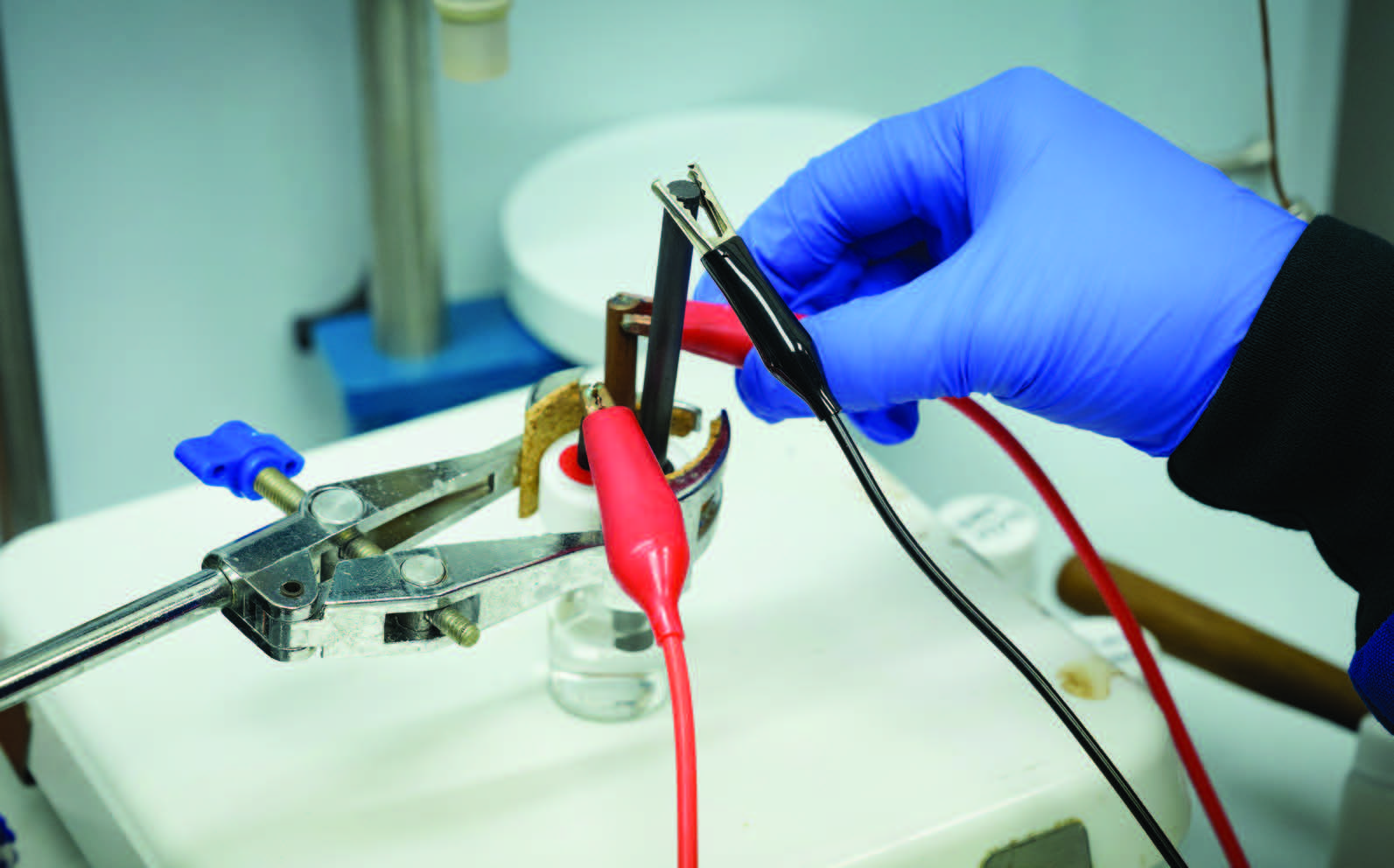
Figure 4. Lithium metal mediated degradation of PFAS was conducted in a single-chamber membrane-less cell. Figure courtesy of the University of Chicago.
While initial experiments were conducted under controlled conditions (glove box), the researchers then evaluated the electrochemical reduction process under ambient conditions in the presence of air. Amanchukwu says, “We recognized that our technique is not commercially feasible if it has to be done under controlled conditions in the absence of oxygen and water.”
PFOA decomposition only declined slightly when DMSO was used as a solvent. The researchers determined that the only source of inorganic fluorides was PFOA. The large electronegative difference between lithium and PFOA led to significant electron transfer from the metal, which promoted PFAS degradation by weakening carbon-fluorine bonds.
The mechanism for PFOA decomposition was examined using density functional theory and molecular dynamics calculations. Amanchukwu says, “Tracking the decomposition of fluorine atoms to fluoride anions is relatively straight forward. But obtaining a complete account for how the carbon present in PFOA decomposes is challenging. We believe that the carbon atoms end up in various arrangements such as alkynes, olefins and carbon dioxide.”
The researchers evaluated 33 additional PFAS compounds to test the versatility of the lithium metal-mediated electrochemical reduction. Degradation percentages exceeding 70% were realized for 22 of the PFAS. Amanchukwu says, “In general, our approach for decomposing PFAS is effective for long chain compounds with greater than seven carbon atoms. More challenges have been found with shorter chain PFAS, which are not as easy to degrade.”
Future work will involve gaining a better understanding of the mechanism of PFAS degradation, developing methods for degrading shorter chain PFAS and working with other alkali metals besides lithium. Amanchukwu says, “We worked with potassium and found some limited success but know that if the experimental conditions can be modified potassium should be as effective because it is in general more reactive than lithium.”
Another benefit of electrochemical reduction of PFAS is that the fluoride anions produced can be close the fluorine loop by enabling their use to produce non-PFAS derivatives. In working with potassium, the researchers utilized potassium fluoride to synthesize a derivative as an example to demonstrate the potential for constructively using the fluoride anion generated from their approach.
Additional information on this work can be found in a recent paper
2 or by contacting Amanchukwu at
chibueze@uchicago.edu.
REFERENCES
1.
Canter, N. (2025), “Supercritical water oxidation (SCWO): Destruction of PFAS,” TLT,
81 (11), pp. 12-13. Available at
www.stle.org/files/TLTArchives/2025/11_November/Tech_Beat_I.aspx.
2.
Sarkar, B., Kumawat, R., Ma, P., Wang, K., Mohebi, M., Schatz, G. and Amanchukwu, C., (2026), “Lithium metal-mediated electrochemical reduction of per-and poly-fluoroalkyl substances,”
Nature Chemistry, 18, pp. 509-518.