Honoring excellence: How to nominate a colleague to be an STLE Fellow
By Dr. Fred J. Passman, FASTM, FSTLE, CMFS | TLT Fellows August 2026
The STLE Fellow designation is one of the field's highest honors. Here's how to help a deserving colleague earn it.
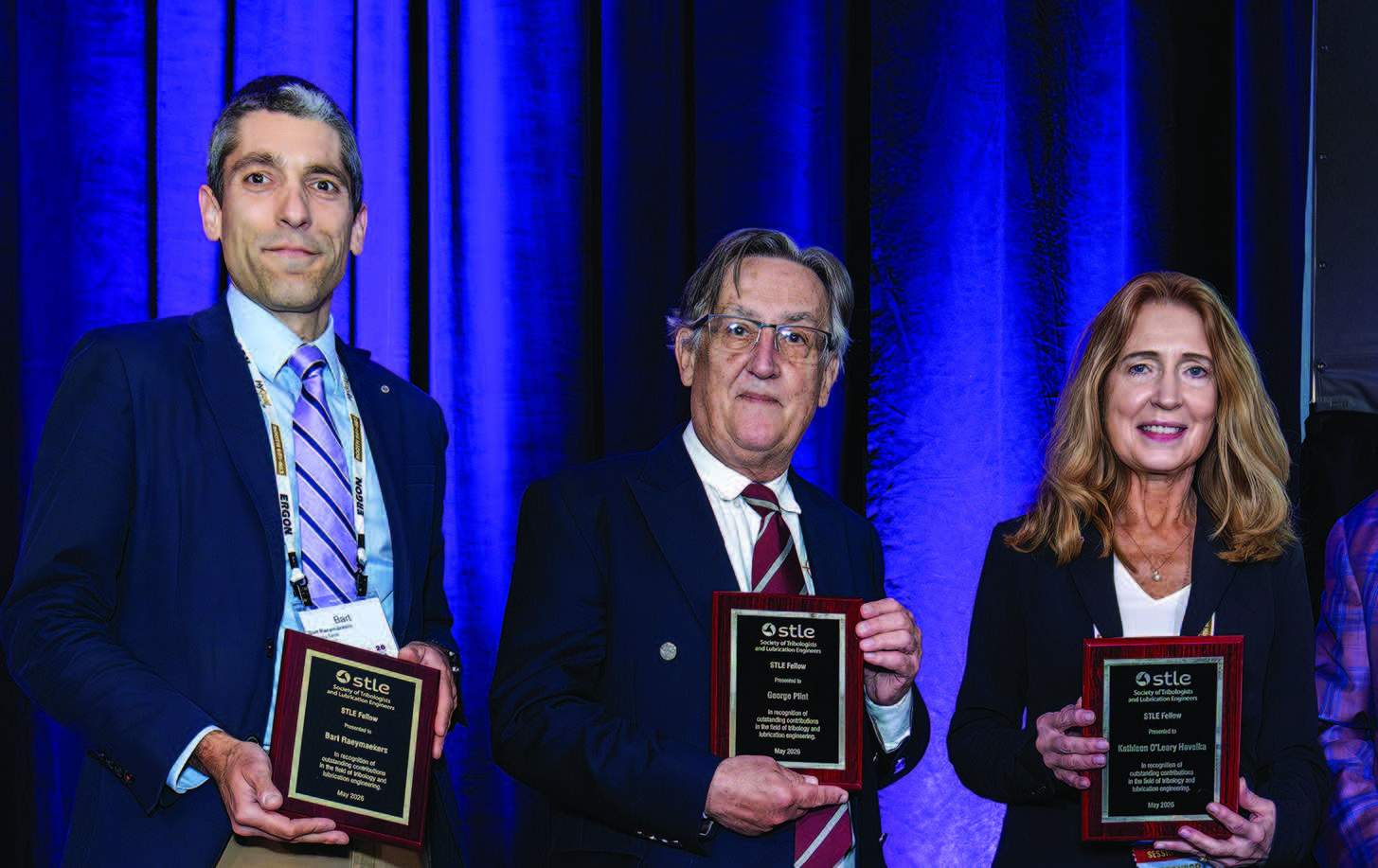
Each year, as summer turns to autumn, STLE annually issues its Call for Fellows nominations. This invitation extends to STLE members, encouraging them to recognize colleagues whose careers have made an enduring mark on the tribology or lubrication engineering field, as well as STLE itself. It is one of the most prestigious honors STLE bestows. Yet every year, one or more nominations fall short, not because the candidate is undeserving, but because the nomination package is not well prepared.
If you have ever thought, “I should nominate someone to be an STLE Fellow,” this article is for you. Understanding how the nomination process works and what the STLE Fellows Committee looks for in candidates can be the difference between a successful Fellows nomination and a missed opportunity.
Nominations are due on September 30 each year. STLE publishes the online nomination form and the Fellows qualification guidelines at
www.stle.org. After receiving all submissions, the STLE Fellows Committee meticulously reviews each nomination package on its merits to assess the nominee's accomplishments in advancing the science and practice of tribology and lubrication engineering through innovative ideas and exceptional contributions.
The Fellows nomination form consists of five sections: candidate information, biographical details, a comprehensive outline of outstanding personal achievements, a list of the presenter (e.g., nominator) and co-sponsors and letters of recommendation. The candidate information section evaluates whether the nominee meets the minimum eligibility criteria set by STLE. Specifically, the nominee must have been an STLE member in good standing for at least 10 years and have been actively engaged in a science and/or engineering profession for a minimum of 20 years.
The “active practice” requirement is a frequent source of confusion. It does not begin with an undergraduate degree. Acceptable starting points include the date the candidate earned a relevant master’s or doctoral degree, began their first relevant tribology or lubrication-related job or received their first relevant patent or peer-reviewed publication. The nomination package should state which starting point applies and briefly explain why.
If the nominee’s field is not immediately recognizable as tribology-adjacent, it is the presenter’s responsibility to make that connection explicit. A microbiologist who has spent a career addressing metalworking fluid biodeterioration, for example, has a clear relationship to lubrication, but the nomination package must say so.
The most common deficiency in unsuccessful nominations is general recommendation letters. An STLE Fellow has a long, demonstrated track record of contributions to both the discipline and STLE. Membership alone isn’t enough. A strong sponsor or co-sponsor letter should:
-
Describe the length and capacity of the individual’s knowledge of the nominee (e.g., close colleague, collaborator or someone known through publications).
-
Provide the nominee’s tenure in the profession, with clear dates and context.
-
Include concrete examples of exceptional professional contributions (e.g., breakthroughs, leadership, mentorship, publications, patents, standards work or other measurable impact).
-
Highlight specific contributions to STLE (e.g., committee service, conference participation, education programs, or other investment within STLE).
It’s appropriate to reference the nominee’s resume or CV, but the letter shouldn’t rely solely on it. Nominee sponsors might need to resubmit revised nomination packages multiple times before a candidate is selected as an STLE Fellow. The STLE Fellows Committee provides substantive feedback to sponsors of unsuccessful nominations. If a nomination isn’t approved, sponsors should use the feedback to strengthen the submission and try again during the next nomination cycle.
If you know someone whose contributions to the tribology or lubrication engineering field deserve formal recognition, nominate them to be an STLE Fellow. For more information on the nomination process, contact Karl Phipps, STLE community engagement manager, at
kphipps@stle.org.
Dr. Fred Passman is an ASTM Fellow, STLE Fellow and STLE Certified Metalworking Fluids Specialist™ (CMFS). He is chair of the STLE Fellows Committee and the principal of Biodeterioration Control Associates, Inc., in Princeton, N.J. You can reach him at passcapt@live.com.