Rheological properties of milk
By R. David Whitby, Contributing Editor | TLT Worldwide July 2026
Food scientists are now using tribology to improve the way your milk drink tastes.
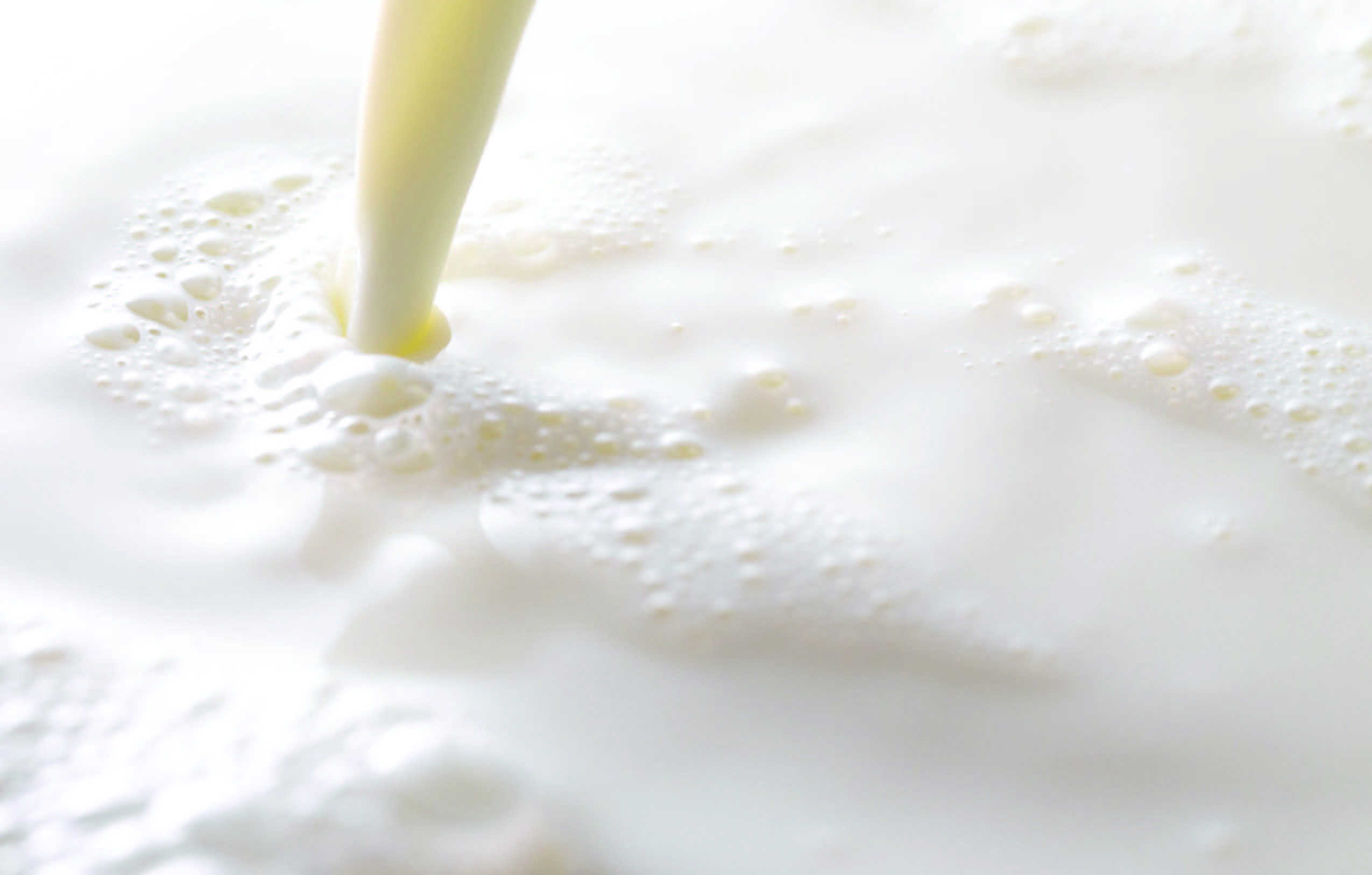
Cow’s milk is usually considered to be a Newtonian fluid at normal concentrations, in that its viscosity is roughly constant as the shear rate changes. However, when cow’s milk is heated, concentrated or stored it can become non-Newtonian, often showing thixotropic behavior, which is shear thinning under shear stress.
Some milk products become less viscous under shear and recover viscosity over time when resting. This applies particularly with concentrated milk and yogurt. The viscosity of milk increases with higher concentrations of milk solids, because water removal brings casein micelles, fat globules and proteins closer together. This can change the rheology from Newtonian to non-Newtonian. The rheological properties affect pumping, mixing, cooling, evaporation, homogenization, pasteurization and product texture. Food engineers can use this knowledge to design processes and predict how milk and dairy products will behave during manufacturing and storage.
Now a group of scientists at the University of Illinois Chicago, led by Vivek Sharma,
1 have compared how animal and plant milks respond to extensional flow, or the stretching that occurs during pouring, splashing and swallowing. The results of the study were presented at the American Physical Society’s 2026 Global Physics Summit in Denver, Colo.
Milk, whether animal or plant based, is an emulsion. Animal milks consist of fat and proteins dispersed in water. Plant milks often include oils, proteins and stabilizers that processors add to improve texture and prevent separation. The stabilizers contain polysaccharides and polymers that change the way the milk flows. As a result, plant milks generally exhibit non-Newtonian behavior.
The research team compared cow and goat milk with soy, oat, almond, coconut, pea and rice milk. They measured how the liquids respond to shear, such as stirring, and how they behave under stretching, such as pouring and droplet formation.
1 They measured extensional shear using a high-speed imaging method that tracks how a droplet pinches off from a nozzle.
While animal milks show nearly constant viscosity across a range of conditions, most plant milks were found to thin under shear. This is because the polymers in plant milks start out as long entangled chains, making the liquid viscous, but when stirred the polymers disentangle and align with the motion.
The researchers found that during most of the thinning process, cow and goat milks stretched and broke apart like water. But in the final two microseconds before the drops snapped off, they suddenly became much harder to stretch, resisting about 10 times as high as theoretically predicted. Sharma suspects that at the extreme strain rates reached in that moment, the tiny fat globules inside the milk begin to deform, adding extra resistance that doesn’t show up in conventional tests.
1 The team plans to test this using simplified emulsions.
The flow findings complement a separate study conducted by the team that compares how well the milks foam. The group found that when hot, animal milks produce more foam and it lasts longer. But when cold, oat, soy and almond milks outperform cow milk in foam volume and lifetime. Additives such as saponins and lecithin, together with the polymers that drive the flow differences, appear to play a central role in how the milks foam. The group is now running experiments to determine the roles of the stabilizing polymers in various milks, and early results confirm that they are the primary drivers of the differences in flow and foaming.
Because of the complex flow profiles that occur inside the human mouth during the ingestion of milk products, comparing the extensional flow and shear properties of plant-based milks with animal-based ones could lead to better milk-based food products with improved quality characteristics.
It may be surprising, but food scientists are now using tribology to improve the way your milk drink tastes.
REFERENCE
1.
Sharma, V. et al. (2025), “Rheology of animal and plant milks featuring dripping-onto-substrate protocols,”
Phys. Fluids, 37, 043112.
David Whitby is chief executive of Pathmaster Marketing Ltd. In Surrey, England. You can reach him at pathmaster.marketing@yahoo.co.uk.