•
A high-throughput kinetic study was conducted to efficiently screen potential solvent candidates for use as electrolytes in organic redox batteries.
•
The most stable solvents as compared to the incumbent, acetonitrile, were small in molecular weight, often fluorinated and have few sites available for hydrogen atom abstraction.
•
Out of the more than 540 candidate solvent molecules tested, only two fluorinated carbonates and one fully fluorinated cyclic anhydride outperformed acetonitrile substantially.
The growing demand for more power generation capacity is leading to efforts to develop suitable storage systems that can by design, complement renewable energy sources such as solar and wind. This need is becoming more acute particularly with the rapid development of data centers as the growth of artificial intelligence (AI) demands more power technologies such as flow batteries can provide operational efficiency and backup.
Redox flow batteries have emerged as a potential solution for storing energy. These batteries contain two massive electrolyte solutions (anolyte and catholyte) separated by an ion-exchange membrane. Past work has been done with aqueous flow batteries due to fast-reaction kinetics, low cost, non-flammability and high ionic conductivity. But aqueous redox flow batteries are limited because they can only provide an operating voltage of 1.23 V due to water splitting, limiting overall energy densities even at high active material concentrations.
These limitations have led researchers to examine non-aqueous flow batteries that use organic solvents and can furnish higher potential operating voltages (up to 6 V). In a previous TLT article,
1 a new approach was taken to minimize the problems that occur due to crossover between the anolyte and the catholyte. To address this issue, researchers designed a non-aqueous redox battery with no membrane. The two electrolytes used are not soluble with each other and the less dense anolyte is above the denser catholyte. Good cycling performance was achieved with a high-capacity retention above 99% after 22 days of operation.
An important characteristic of organic redox flow batteries is the need for very stable redoxmers. Dr. Lily Robertson, assistant chemist at Argonne National Laboratory in Lemont, Ill., says, “Redoxmers are active redox organic molecules that are charge carriers in the anolyte and catholyte. For redoxmers to be effective, they must be stable in the electrolytes used in the anolyte and the catholyte. The problem is to figure out how to utilize a redoxmer that exhibits a high energy storage density and exhibits excellent performance in oxidation and reduction reactions while maintaining stability. Unfortunately, redoxmers with this characteristic are also very reactive which can limit their ability to be strong charge carriers.”
This means there is a need for identifying electrolytes that are more stable when used with redoxmers but will still provide an environment that maximizes their ability to carry and transmit charges when needed. The most common electrolyte used in catholytes is acetonitrile. Robertson says, “Acetonitrile’s exceptional stability is due to its unfavorable energetics for conversion to a radical cation by a homolysis reaction.”
Robertson and her colleagues conducted a new study to identify solvents that exhibit better stability than acetonitrile when evaluated with a common catholyte redoxmer. While acetonitrile is very good for electrochemistry, new and/or underexplored solvents could have other properties such as decreased flammability and increased boiling points that are important for real-world operation.
High-throughput kinetic study
The choice of solvents to be evaluated for stability was based on commercial availability, purity and anticipated functional group compatibility. For example, amines and halogenated solvents were excluded due to likely reactivity and environmental concerns. Robertson says, “Based on these criteria, we identified over 540 candidate solvent molecules to be evaluated with most found in an electrolyte database, and an additional subset from solvent handbooks. The solvents were divided into at least eleven classes which contained certain common groups such as ethers and carbonates, but also sulfur, boron and phosphorus-based functionalities. Finally, many solvents contained some degree of fluorination.”
To efficiently screen potential solvent candidates, the researchers implemented a high-throughput kinetic study. Robertson says, “We took advantage of our autonomous discovery facility to conduct over 6,000 kinetic experiments
(see Figures 3 and 4) that involved the testing of 188 solvent molecules selected from the 540 initial candidates.”
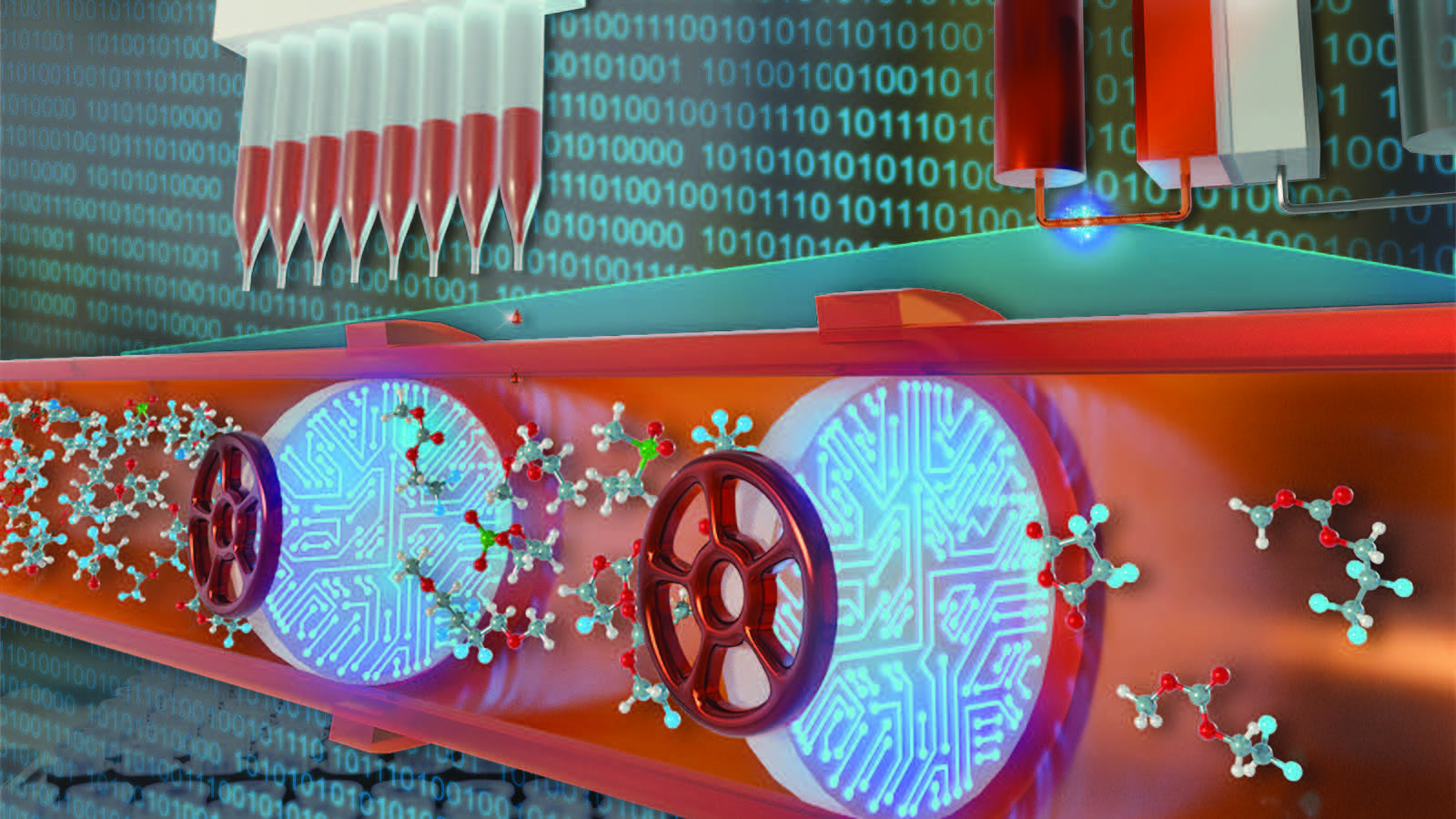
Figure 3. A high-throughput kinetic study that involved over 6,000 kinetic experiments was used to identify potential solvent candidates that are stable electrolytes in organic redox flow batteries. Figure courtesy of Argonne National Laboratory.
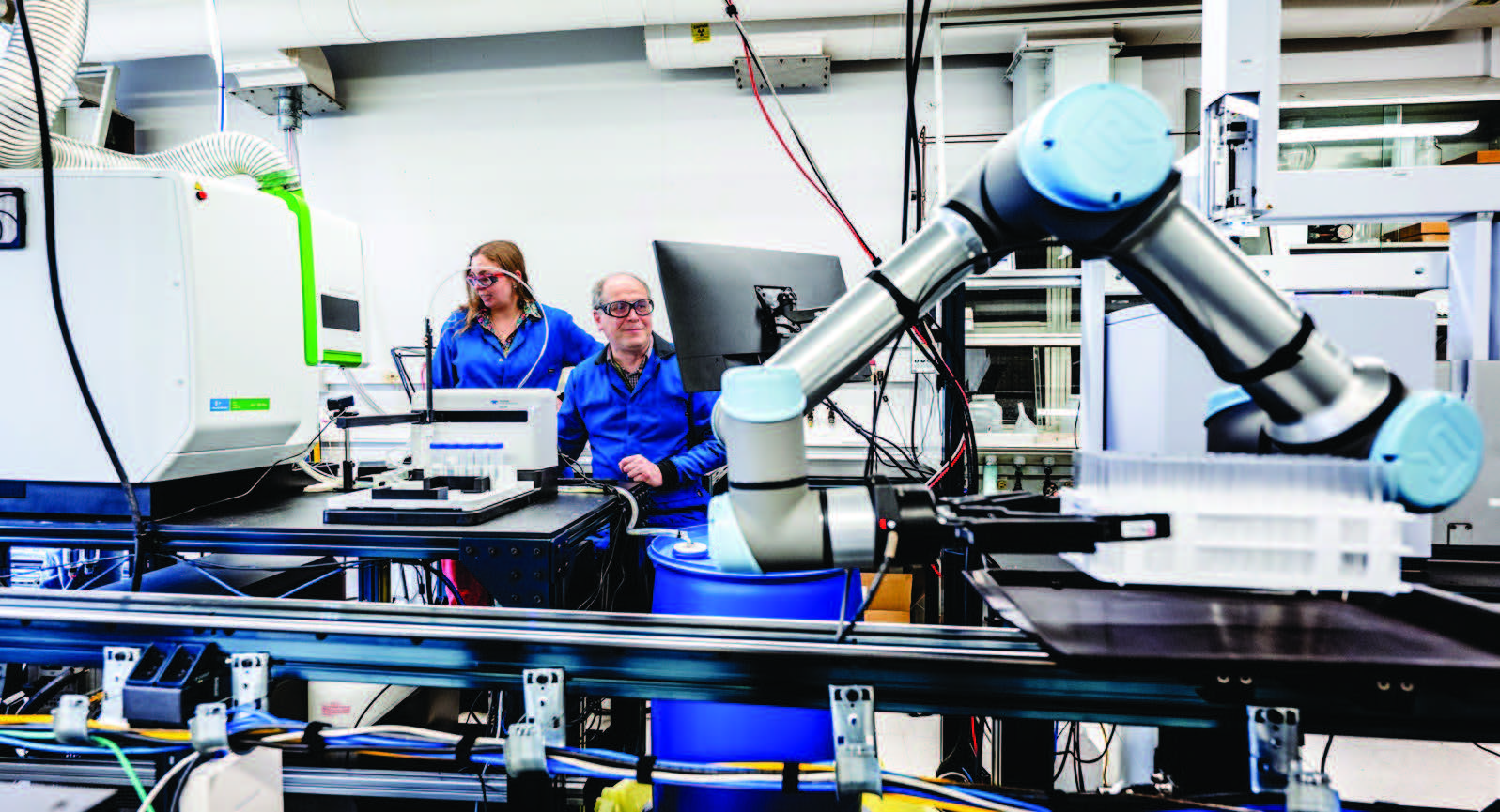
Figure 4. This experimental set-up was used to evaluate potential solvents for use as electrolytes in organic redox flow batteries. Figure courtesy of Argonne National Laboratory.
The redoxmer chosen for the study was the charged form of 10-methyl phenothiazine. Robertson says, “We selected this redoxmer because this molecule is easy to synthesize in high yield, has a highly colored radical cation and known stability.”
The kinetic study examined the rate of decay of the redoxmer in solvent solutions using spectrophotometers to assess the change in color of the samples as the charged molecules decayed. Robertson says, “We were able to utilize a liquid-handling robot in an air-free glovebox chamber to prepare the charged phenothiazine based solvent mixtures and place them in microplates.”
The researchers progressed through three steps to determine if any candidates are more stable than the incumbent, acetonitrile. Robertson says, “We found that the most stable solvents were small in molecular weight, often fluorinated, and have few sites available for hydrogen atom abstraction.”
This general conclusion was supported in part by the behavior of acetonitrile compared to other higher molecular weight nitriles. The researchers determined that most of the longer chain nitriles were unstable with only acetonitrile and n-butyronitrile exhibiting stability in excess of 500 hours. Even slight modifications to acetonitrile including the additional of fluorine functionality led to a significant reduction in stability.
When the study was completed, only three solvents, two fluorinated carbonates and one fully fluorinated cyclic anhydride outperformed acetonitrile substantially. Robertson says, “The best performing solvents were primarily fluorinated and some are already known to be used in lithium-ion and high voltage alkali-ion batteries. They are used due to their low vulnerability to oxidation. We are unsure if the three solvents with superior performance are even viable candidates because they may not meet physical and techno-economic criteria.”
While this study showed that it is challenging to identify a solvent with superior characteristics to acetonitrile, the high-throughput methodology used demonstrates that chemical substances can be evaluated for oxidation and reduction stability in all types of electrochemical devices. The study also points to important functional group design for design of future battery solvents.
Robertson says, “Future work will concern evaluating the stability of electrolytes in sodium-ion batteries by assessing their oxidation stability. We will also be assessing whether decomposition is occurring through a different decay mechanism.”
Additional information can be found in a recently published paper
2 or by contacting Argonne National Laboratory at
media@anl.gov.
REFERENCES
1.
Canter, N. (2024), “Non-aqueous redox flow battery,” TLT,
80 (1), pp. 18-19. Available at
www.stle.org/files/TLTArchives/2024/01_January/Tech_Beat_II.aspx.
2.
Robertson, L., Shkrob, I., Lewis, R., Ward, L., Vescovi, R., and Diroll, B. (2025), “High-Throughput Discovery Illuminates Design Principles and Limits for Long-Lived Charged Species in Organic Electrolytes,”
Journal of the American Chemical Society, 147 (41), pp. 37211-37222.