Part of the tribology family
By Doug Sackett | TLT Shop Floor July 2026
These are the unsung heroes who keep things running smoothly.
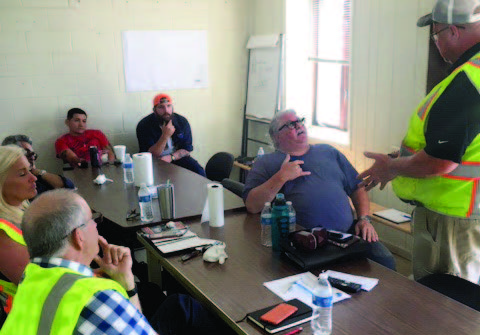
Plant lube techs who are working with the assets every day can make application suggestions that work and need to be recognized as “Lube Heros.”
When you visit the shop floor, you get to meet with the 20-plus year staff that keep the operations going. I always say they are the unsung heroes of the tribology world—especially if there is nothing broken and all systems are running smoothly—they are the forgotten ones! But let something break and stop production, and they become the most important person on earth, and get pushed to get it back up and running as soon as possible and as cheap as possible, which are two words (cheap and running) that do not go well together. These are the people who need to be heard when it comes to real world testing. They have seen some crazy things, and with years of experience they could teach us a lot, but sometimes they are forgotten. Remember the American Society of Lubrication Engineers (ASLE), pre-STLE, was started in the steel industry at the plant level, and the STLE Certified Lubrication Specialist™ (CLS) certification started to certify the “field engineer” working on lubrication and reliability programs at the plant level.
Figure 1 shows that tribology includes the lubrication and maintenance staff that need to learn and grow from all the great R&D that our labs and universities provide and a level that creates the greatest return.
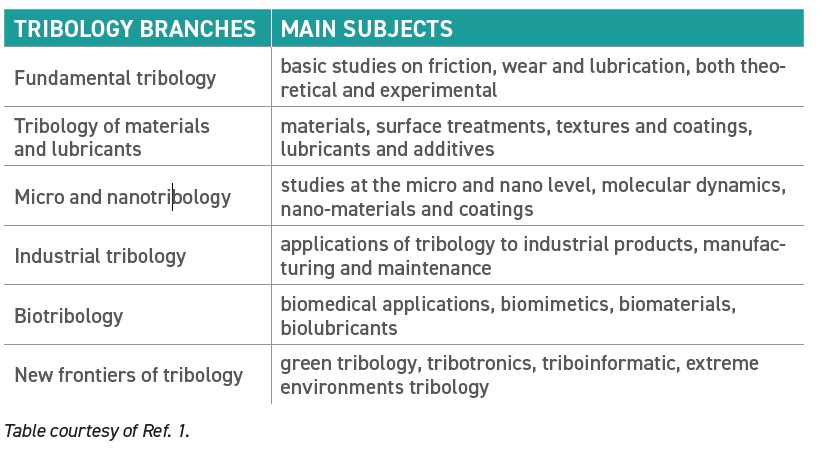
1 The branch “fundamental tribology” in Table 1 shows that, as tribologists, we can come together and make the greatest impact not only in teaching how companies can become more efficient and profitable but also show a great return on being good stewards by lowering our carbon footprint by using products that require less energy to run the plant.
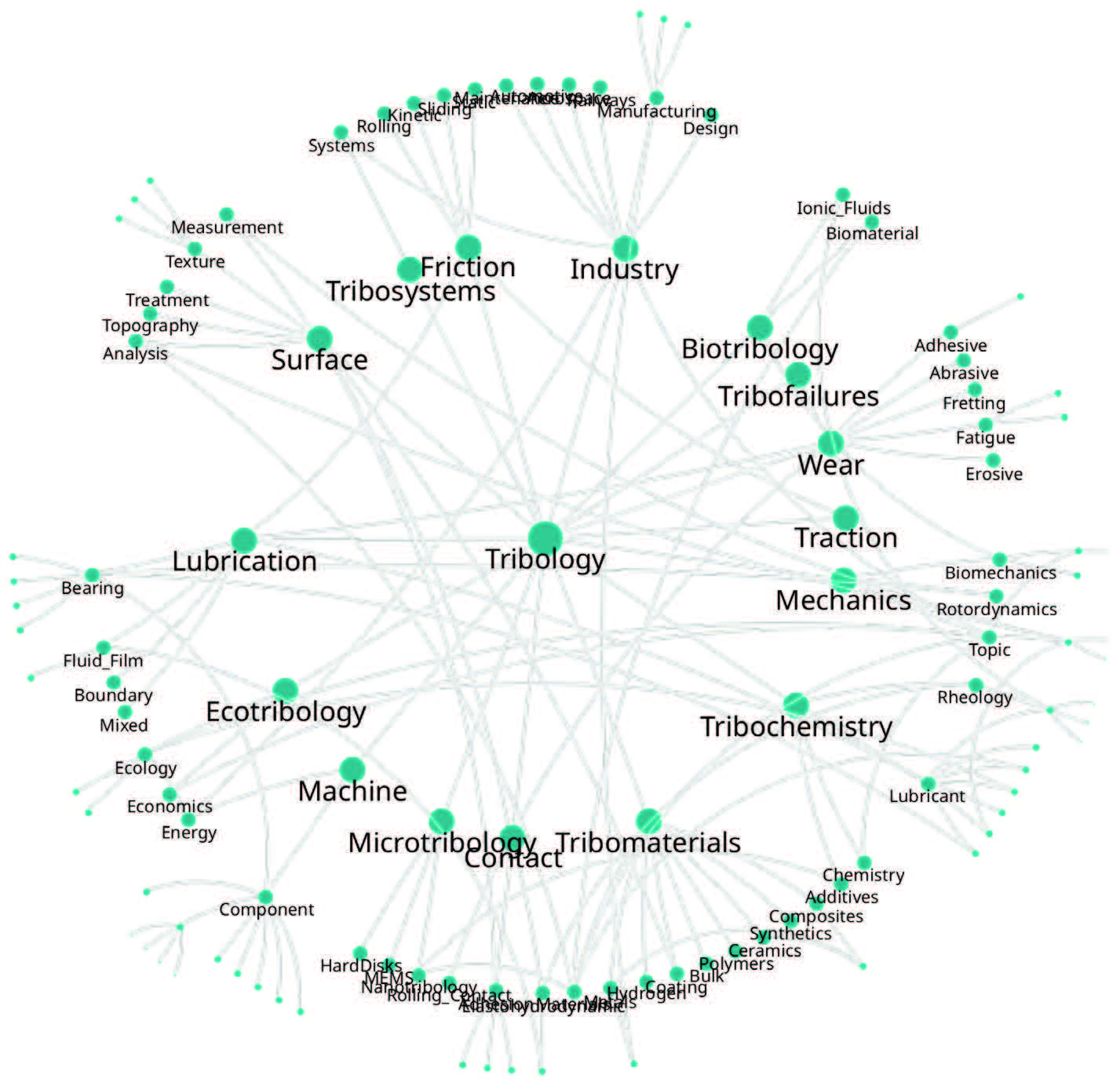 Figure 1. Tribology subjects; an example of possible connections.1
Under great demand to install a gearbox or hydraulic system in a plant that is within budget and will last, they need this knowledge to be able to choose the correct lubricant that is going to give the plant the best ROI in longevity or reliability of the asset but also in reducing the time it takes to maintain the asset in lube changes. If they do have a failure they need to be trained in root cause failure analysis and determine the wear/failure mode so that it does not happen again. They need to know about wear metals and patterns, oil analysis and how to interpret it and the benefits of a synthetic oil versus mineral oil to show the total cost of ownership by extending drain intervals so less oil changes are needed, freeing up time, and that lower coefficient of friction can reduce amperage need to run the motor/gearbox, extending the savings.
So, remember when you are doing your research for tribology and applications, go visit a shop floor of a production plant and talk with the maintenance staff on how they have to adapt and improve with management budgets and gearboxes that are put in places. They were not designed for it, but they will become your LUBE HERO!
REFERENCE
1.
Ciulli, E. (2024), “Vastness of tribology research fields and their contribution to sustainable development,”
Lubricants, 12 (2), 33,
https://doi.org/10.3390/lubricants12020033.
Doug Sackett is senior technical advisor for Dilmar Oil Co., Inc. in Monticello, Fla. You can reach him at doug@dilmar.com.