HIGHLIGHTS
•
An aluminum tube modified by a chemical etching process was found to be remarkably buoyant when placed in water.
•
The modified aluminum tube retains its buoyancy characteristics in salt water without any evidence of corrosion.
•
Construction of a raft made from these modified aluminum tube demonstrated excellent buoyancy increasing the potential for using it to generate electricity from waves.
Finding strategies for protecting metal surfaces is an ongoing need for tribologists and lubrication engineers in order to improve efficiency and reduce friction and wear. Imparting superhydrophobicity on a surface is an attractive approach because it enables a metal to resist water contamination which can be very damaging if left unchecked.
Superhydrophobicity is also appealing because it can reduce the amount of drag seen in fluid flow leading to greater efficiency and energy savings, and even enhancing the ability of a surface to self-clean. In a previous TLT article,
1 a study was conducted to better understand how butterfly wings exhibit superhydrophobicity. Butterfly wings contain hierarchical scales that impart superhydrophobic properties, which are needed to repel water and other contaminants because this insect is inherently fragile and must be able to fly to survive. A synthetic duplicate, prepared by coating dental cement with polydimethylsiloxane, exhibited better performance under high velocity conditions.
The trend to increase the usage of renewable energy sources has focused on cultivating the sun and the wind. One other potential source that has not been exploited originates with capturing energy generated by ocean tides.
Chunlei Guo, professor of optics and of physics and a senior scientist in the Laboratory for Laser Energetics at the University of Rochester in Rochester, N.Y., says, “Unlike solar and wind energy, tidal energy can be generated with far less disruption. With the large area of oceans on the earth, if suitable floating panels could be set up on less than 0.5% of the marine surface, then global electricity demand could be met.”
Past efforts to develop floating structures for energy generation have proven to be challenging. Guo says, “Dynamic and harsh ocean conditions led to biofouling, corrosion and structural failure leading to sinking.”
Buoyance can be accomplished with lightweight superhydrophobic objects such as foams and aerogels. The problem is these materials are not suitable to support a floating platform that can be used to generate electricity.
Guo and his colleagues have now developed a new approach for making metallic tubes superhydrophobic that can prevent them from sinking.
Chemical etching
The researchers subjected clean aluminum tubes to a chemical etching process by immersing them in 5% cupric chloride solution for 15 minutes. An ultrasonic was utilized to remove excess cupric chloride fooled by drying and cleaning. To improve the stability of the surface treatment, an etched aluminum tube
(see Figure 1) was then treated with polydimethylsiloxane (PDMS) followed by heating at 300°C for 30 minutes to evaporate the PDMS onto the metal surface.
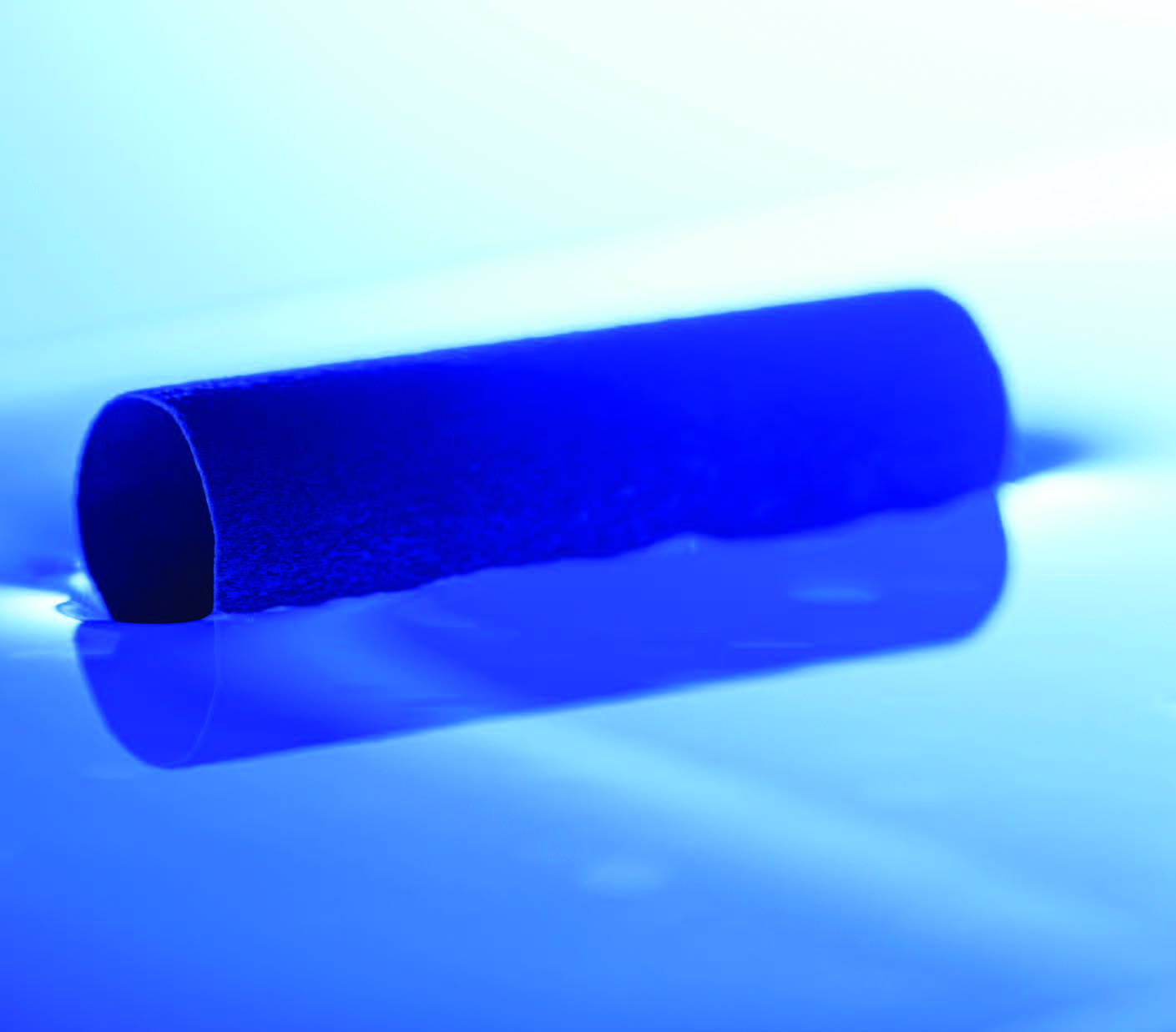
Figure 1. Etching an aluminum tube followed by further treatment with polydimethylsiloxane enabled the metal object to remain buoyant upon exposure to water due to the presence of a superhydrophobic surface. Figure courtesy of J. Adam Fenster at the University of Rochester.
Guo says, “Aluminum is attractive for this application because it is readily available, and low in cost. A wettability study found that the contact angle of the modified aluminum tube is in the superhydrophobic range (158 degrees).”
Testing conducted with the modified aluminum tube demonstrated its ability not to sink. Guo says, “We found in buoyancy studies that upon exposure to water, the superhydrophobic surface repelled water leading to the formation of a dimple around the tube. The inner wall of the superhydrophobic tube also repels water which results in an air bubble being trapped inside the tube. We demonstrated the effectiveness of our approach by leaving a modified aluminum tube submerged in water for one month. Once released, the tube immediately surfaced and was able to float on the water.”
The researchers recognized that a sealing wall inside of the tube can significantly enhance the tube’s stability. In their experiments, a sealing wall was produced by connecting two superhydrophobic tubes end to end and then putting a sealing resin between them. Guo says, “We conducted a series of experiments to test the modified aluminum tube by keeping it underwater for a long period of time, and by damaging it. Drilling a series of holes into the modified aluminum tube
(see Figure 2) did not affect its buoyancy.”
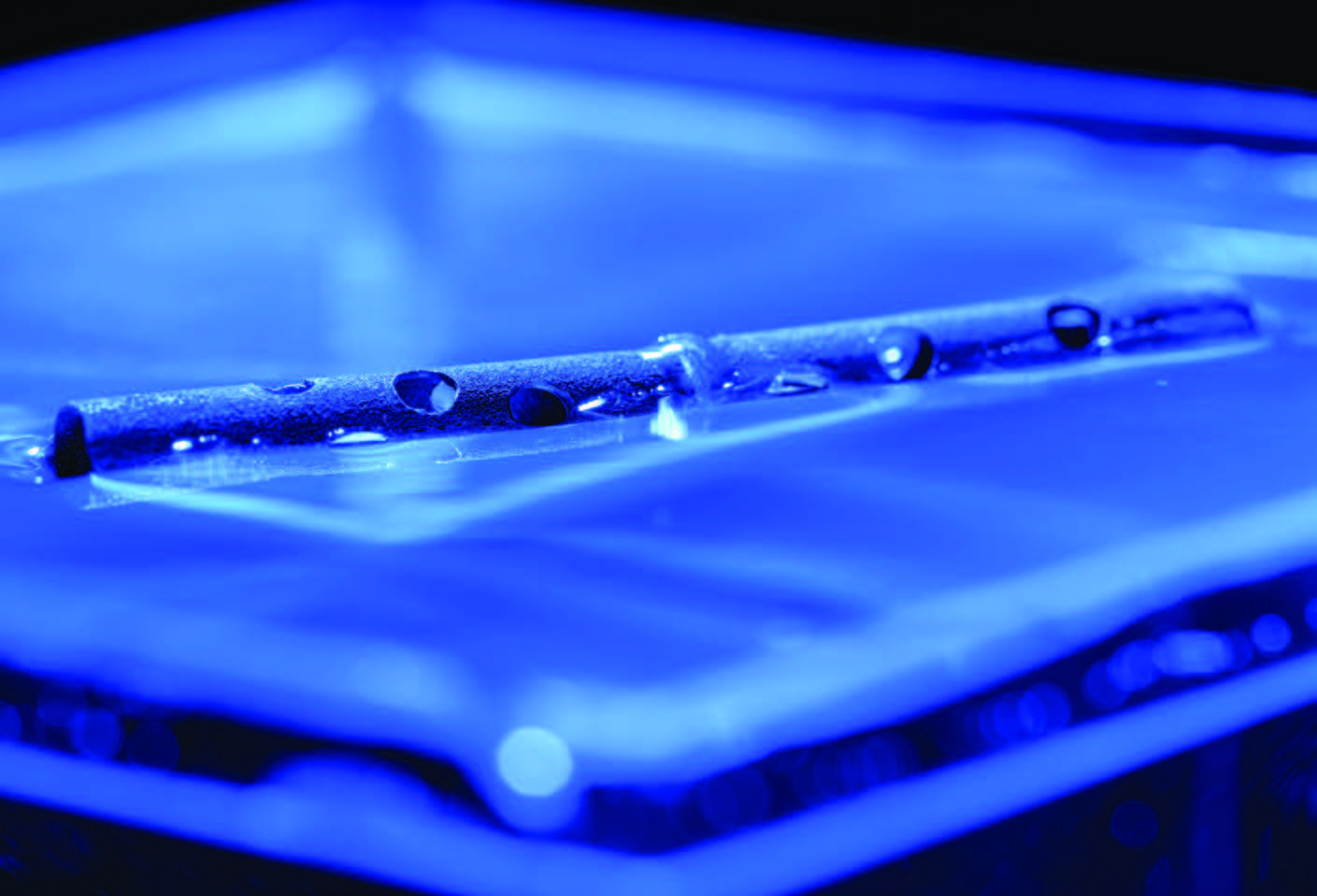 Figure 2. Even drilling several holes into the modified aluminum tube did not reduce its buoyancy in water. Figure courtesy of J. Adam Fenster at the University of Rochester.
For modified aluminum tubes to have any possibility of being used in an ocean environment, they must demonstrate strong corrosion protection against sea water. The researchers evaluated a superhydrophobic tube in synthetic seawater with five times the concentration of normal sea water for 20 days. No degradation was observed, and the underwater buoyancy of the modified aluminum tube remained unchanged during this period.
The researchers determined that widening the inner diameter of the superhydrophobic tube improved interfacial buoyance until a certain point is reached. Guo says, “As the tube’s inner diameter is widened, more air becomes trapped leading to more buoyancy. But at an inner diameter in excess of five millimeters, buoyancy starts to decline rapidly because water is able to infiltrate the tube.”
A raft made of superhydrophobic aluminum tubes was prepared by the researchers and demonstrated excellent buoyancy even in the presence of strong waves and currents. Guo says, “We have proven that this concept is feasible for use in different applications such as acting as a platform for generating electricity from tidal waves and other renewable energy sources.”
This concept may also be used to convert the surfaces of other metals to be superhydrophobic. As a result, the versatility of using this approach to successful modify surfaces to be superhydrophobic may lead to its use in tribological applications.
Additional information can be found in a recent article
2 or by contacting Guo at
chunlei.guo@rochester.edu.
REFERENCES
1.
Canter, N. (2014), “Studying butterfly wings to reduce drag,” TLT,
70 (4), pp. 12-13. Available at
www.stle.org/files/TLTArchives/2014/04_April/Tech_Beat_III.aspx.
2.
Xu, T., Zhan, Z., Deng, Y., Faris, M., Singh, S. and Guo, C. (2026), “Geometry-enabled recoverable floating superhydrophobic metallic tubes,”
Advanced Functional Materials, https://doi.org/10.1002/adfm.202526033.