Did you ever think about thinking? Deep down, we know that our eyes and ears only receive raw inputs that are arrays of light and sound. A module in the brain efficiently draws boundaries around these patterns and identifies them as individual objects. The memory center then compares these images against a library of objects we’ve previously identified from past experience. When the pattern of light from our eye resonates with an object in the library, we become conscious of what object we’re looking at. Most of this happens so efficiently that we only see the world as objects. Looking at my desk, I do not see colors, but pens, paper clips, a keyboard and other quite familiar items. I’ve seen enough pens in my lifetime that I know something is a “pen” whether it is red or blue or even if I can only see the end sticking out behind a piece of paper. I associate the concept of a pen with a broad list of expected characteristics—what it looks like, what it does and how it works.
1 But this only works if we have already characterized the item based on past experience. Despite the existential danger, I would not be concerned if someone placed a piece of antimatter on my desk because I’ve never seen antimatter before.
So how does this relate to automobiles and tribology? STLE’s Certified Lubrication Specialist™ (CLS) exam
2 tests our knowledge on a wide variety of topics related to the lubrication industry. To pass the exam, the student must have a broad mental library of fundamental mechanical systems and lubrication principles. Although it is possible to study every CLS topic on the STLE website,
3 most tribologists have hands-on experience that makes it easier to understand and apply the written information.
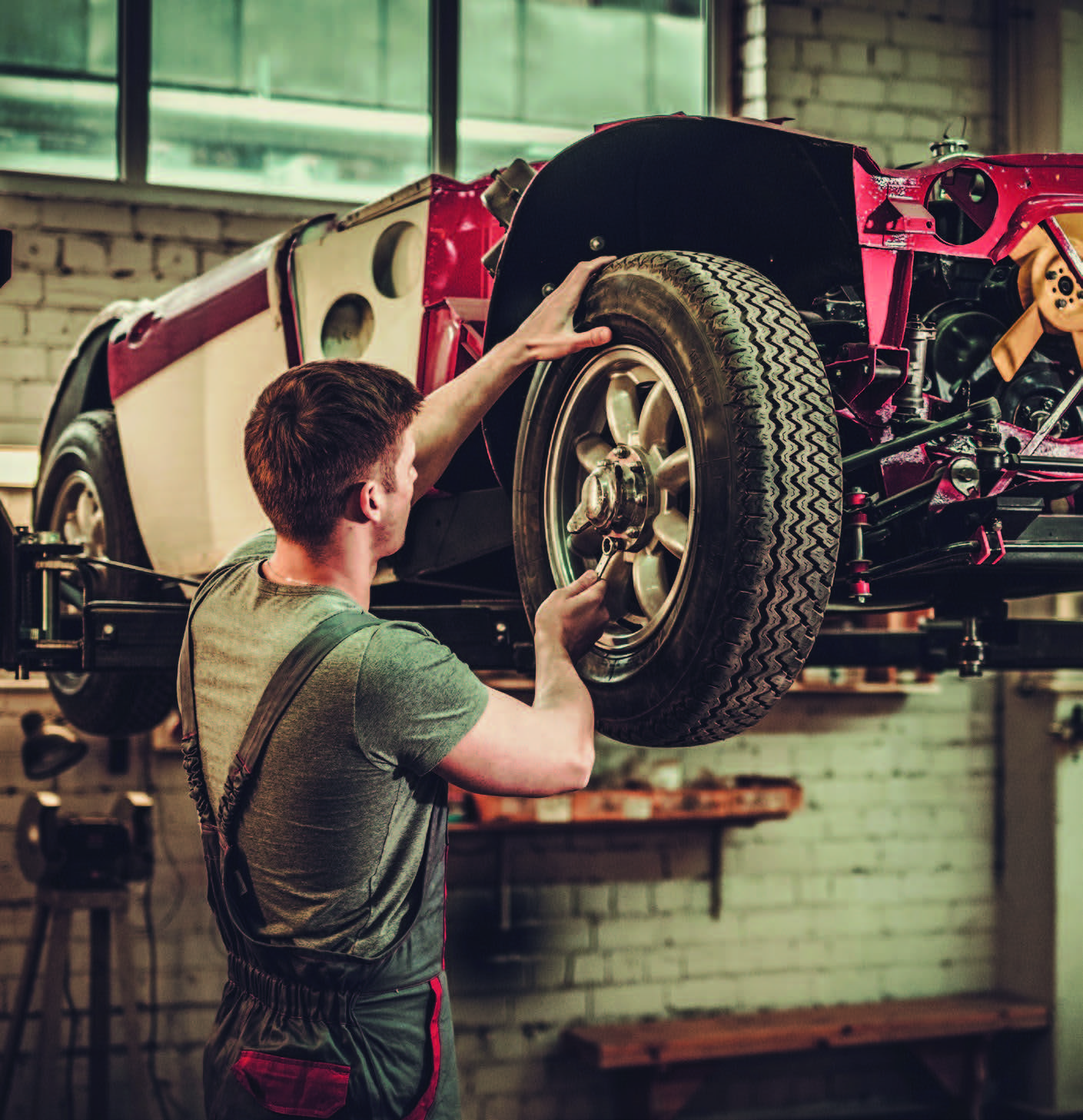
For generations, it was a rite of passage to learn basic automotive maintenance before getting a driver’s license. If you were lucky, you got the keys to the old car that was otherwise headed to the junkyard. We didn’t know it then, but our first car was much more than a status symbol that provided transportation; it was the first step to becoming a tribologist. In the good old days, we needed to know how to shift gears, change the oil, fix a flat tire, operate a jack, jump start a dead battery and manage an overheating engine. Advanced students learned about spark plugs, carburetors, brakes, fuel pumps and wheel bearings. Before leaving high school, many kids already developed a reasonable mental library filled with examples of pneumatics, hydraulics, gears, electronics, friction, heat transfer, combustion and lubrication.
As the baby boomers went on to become tribologists, they would often focus on a specific field yet still retain broader knowledge related to these early lessons. When reading an article in TLT, most tribologists can visualize the operation of a windmill planetary bearing without ever seeing one up-close.
We all enjoy the reliability and comfort of a modern automobile, and few would hand their teenager a wrench to change the spark plugs. Today’s cars are much more reliable, comfortable and efficient, but the price of reliability is that we have stopped training millions of youngsters on the basic tools that Gen Z tribologists need to understand how things work.
I can’t figure out the onboard display on a modern car, but think I could assemble a 1966 Mustang from its constituent parts given a set of tools and plenty of time. If asked to change the oil in a wind turbine, you can bet I would look for a drain plug at the bottom of the pan and make sure I placed a big bucket underneath before opening the plug.
REFERENCES
1.
Ogas, O. and Gaddam, S. (2022),
Journey of the Mind. W.W. Norton & Company.
2.
www.pathlms.com/stle/pages/clsexam
3.
See the CLS Body of Knowledge link at
www.pathlms.com/stle/pages/clsexam
Tyler Housel is a technologist for Hnuco Technologies and is based in Lansdale, Pa. You can reach him at tylerhousel@comcast.net.