Meet the Presenter
This article is based on a webinar titled Structural Superlubricity under Ambient Conditions: A Path to Practical Mechanical Systems with Vanishing Friction, hosted by the American Society of Mechanical Engineers (ASME) Tribology Division and presented by Mehmet Z. Baykara on Jan. 22, 2025. The session presented recent research in which near-zero-friction conditions were achieved at microscopic interfaces, under atmospheric conditions and at room temperature. Courtesy of STLE, this article captures the core insights from this ASME-organized event. For more technical content from the ASME Tribology Division Webinar Series, visit the ASME Tribology Division’s website at www.asme.org/get-involved/groups-sections-and-technical-divisions/technical-divisions/technical-divisions-community-pages/tribology-division.
Mehmet Z. Baykara is an associate professor of mechanical engineering at University of California, Merced, where he leads a research group specializing in atomic force microscopy. He obtained his doctorate degree from Yale University. Prior to joining University of California, Merced, he worked at Bilkent University, Columbia and Harvard. He was a visiting scholar at Stanford in 2024. You can reach him at mehmet.baykara@ucmerced.edu or visit his lab website at https://baykaralab.ucmerced.edu/.

Mehmet Z. Baykara
KEY CONCEPTS
•
Not all aspects of friction are derivable from first principles. Thus, there is a pressing need to better understand the fundamental principles of friction.
•
If structural superlubricity under ambient conditions is indeed possible, we can think about small-scale mechanical systems that operate with vanishing friction, without the use of lubricants.
•
Gold nanoislands exhibit structural superlubricity on graphite substrates, even when the substrates are covered by adsorbed atmospheric contaminants.
Friction is a universal phenomenon. We encounter it in everyday activities as well as industrial processes, and it is a major source of energy “loss,” resulting in a huge economic impact. The empirical equations taught in typical undergraduate physics classes rely on ideal assumptions that often do not hold up under real-world conditions. This limitation arises because the physical principles of friction are governed by complex relationships between multiple structural, environmental and operational parameters.
Historically, the empirical, macroscopic laws of friction were well established by natural philosophers including Da Vinci, Amontons, Coulomb and others. However, not all aspects of these empirically observed friction laws are derivable from first principles because the friction forces acting between two surfaces in relative motion involve the stochastic nature of the structures of the surfaces, as well as uncertainties in various operational and environmental parameters. As such, there is a pressing need to understand more about the fundamental principles of friction if we are to control and predict friction at length and time scales that are relevant to engineering applications.
Mehmet Z. Baykara’s group at University of California, Merced, for the past decade, has been studying the phenomenon of structural superlubricity—an intriguing physical state resulting in nearly vanishing friction forces under specific conditions. Imagine a scenario in which two “egg crate” foam pads are placed on top of each other, with the hills of one in perfect registry with the valleys of the other. This “commensurate” alignment
(see Figure 1a) results in strong resistance to relative motion between the pads, creating a high-friction situation. On the other hand, if one foam pad is rotated or displaced with respect to the other, such that the hills and valleys are not perfectly aligned, we have a structurally “incommensurate” state, and the pads can now slide with relative ease against each other, resulting in greatly reduced friction
(see Figure 1b).
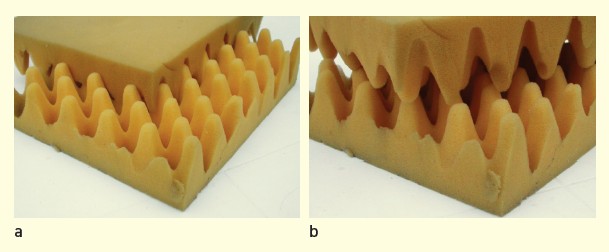 Figure 1. Macroscopic egg crate analogies for (a) commensurate and (b) incommensurate interfacial alignment. Figure courtesy of Jean-Jacques Milan, CC BY-SA 3.0, https://commons.wikimedia.org/w/index.php?curid=289394.
This article is based on an ASME Tribology Division Webinar presented on Jan. 22, 2025, as an invited talk by Baykara. See Meet the Presenter for more information.
From egg crates to atoms
The macroscopic egg crate pad analogy described previously can be extended to the atomic scale, by imagining two clean, crystalline surfaces in contact with each other. The very basic model involves a single-atom slider moving laterally (i.e., sliding) over the periodic potential energy landscape formed by its interaction with a clean crystalline surface. The single-atom slider would initially “sink” into an energy well on the surface of the crystal to minimize its potential energy. It would then require a certain amount of energy for the slider atom to move up an energy hill and situate itself in the neighboring energy well
(see Figure 2).
1
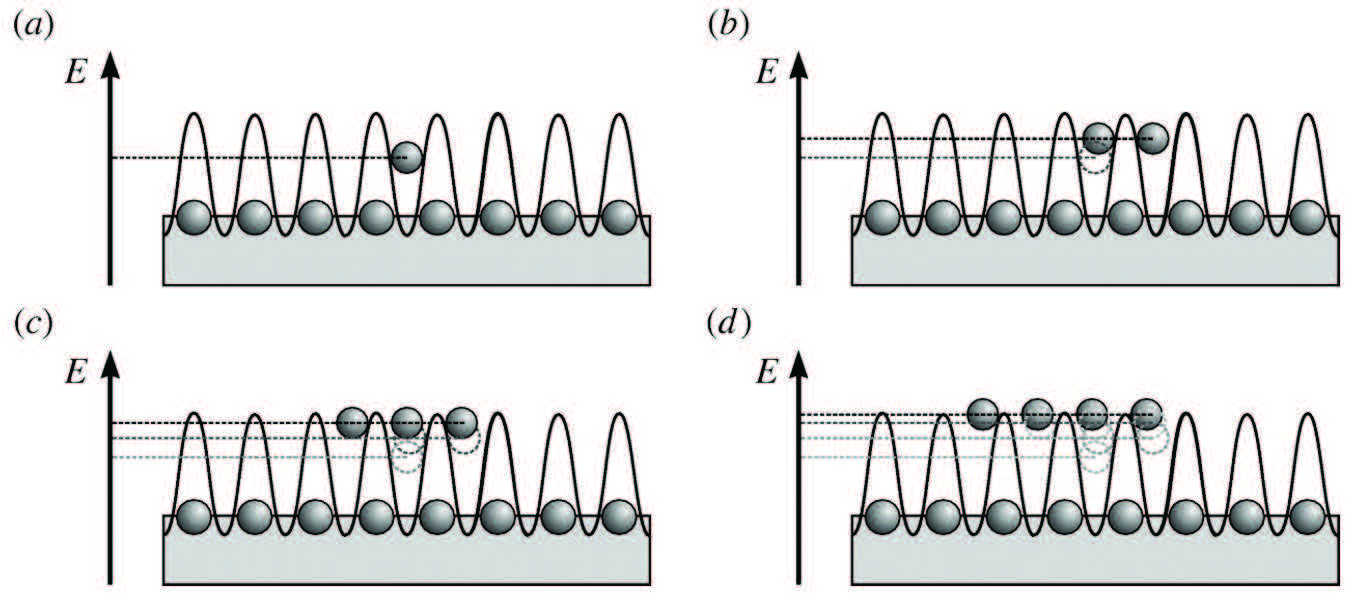 Figure 2. For clean, crystalline, atomically flat interfaces, the per-atom potential energy barrier that impedes sliding decreases as the number of atoms in the slider (and thus, the contact area between the surfaces) increases. Figure courtesy of Ref. 1.
Now, let’s consider a slightly bigger slider, made of two atoms fixed a constant distance apart. If this distance is different than the distances between the atoms of the substrate (i.e., if they are structurally incommensurate), the slider cannot perfectly straddle the energy wells in the substrate. As a result, the slider atoms stay further up on the energy landscape, as they cannot sink to the bottom of the energy wells. Thus, less energy is required per atom to move the two-atom slider over the tops of the substrate’s energy hills. An even larger slider having a greater contact area with the substrate (i.e., a larger number of atoms [
N] on the sliding surface) would have an even lower potential energy barrier per atom than the smaller sliders. The calculated friction force (
Ff) that is expected in such a scenario would grow
sub-linearly with the contact area. This means that the power factor gamma (
g) that determines how fast friction increases with increasing contact area is less than 1. To be precise,
g is expected to vary between 0 and 0.5, depending on structural factors such as the shape of the slider and its orientation with respect to the substrate:
Ff ~ Ng ; g = 0 – 0.5
Structural superlubricity arises as a result of an atomic-scale structural mismatch between two surfaces forming an interface. However, the idealized, theoretical scenario described previously that leads to the sub-linear relationship between friction force and contact area is only valid under strict requirements. First, both surfaces forming the interface must be rigid, such that interatomic distances remain uniform and individual atoms cannot adjust themselves to the contours of the energy landscape during sliding. The two surfaces must also be very weakly interacting; that is, they should not form chemical bonds or otherwise strongly adhere to each other. The two surfaces must also be atomically smooth for the basic calculations leading to structural superlubricity to be valid. Finally, the calculations also assume that there are no foreign molecules at the interface that could interfere with the sliding (i.e., the surfaces are molecularly clean). As recently as the 1990s, superlubricity was thought of as a theoretical exercise because these stringent requirements were seen as a barrier to any sort of practical application.
2
The first experimental results demonstrating that structural superlubricity is not a purely theoretical concept, published in 2004 by Martin Dienwiebel and colleagues, involved moving a graphite flake over a graphite substrate under a dry nitrogen atmosphere.
3 The graphite flake was rotated around an axis perpendicular to the substrate surface, and the resulting friction force was measured at each rotational angle as the flake moved across the substrate. Friction peaked at certain angular values 60 degrees apart, but there was almost no friction at other angles
(see Figure 3). Because of the six-fold symmetry associated with the atomic structure of graphite surfaces, this observation clearly supported the idea of vanishing friction arising from structural incommensurability at atomically flat interfaces under clean atmospheric conditions.
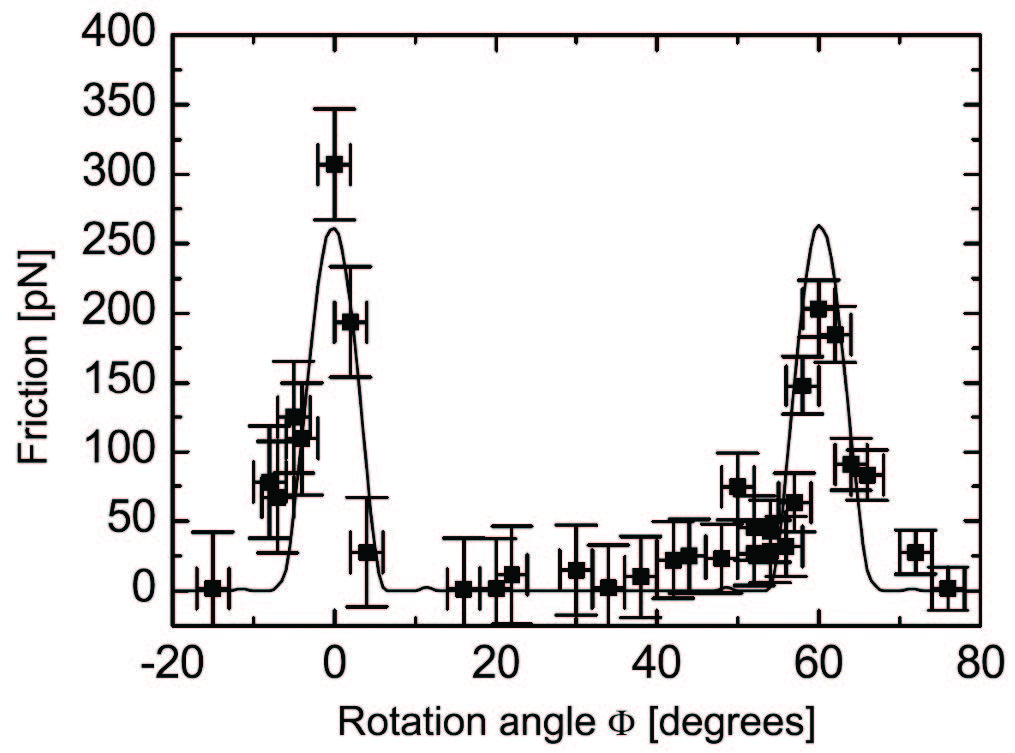 Figure 3. The first experimental results demonstrating structural superlubricity involved moving a graphite flake over a graphite substrate under dry nitrogen. Friction peaked at commensurate alignment angles between the two surfaces. Reprinted figure with permission from Dienwiebel, M., Verhoeven, G. S., Pradeep, N., Frenken, J. W. M., Heimberg, J. A. and Zandbergen, Henny W. (2004), “Superlubricity of graphite,” Physical Review Letters, 92 (12), 126101, https://doi.org/10.1103/PhysRevLett.92.126101. Copyright 2026 by the American Physical Society.
In 2013, Dirk Dietzel and colleagues published their results for nanoscale islands of gold and antimony sliding over a graphite surface under ultrahigh vacuum conditions (at pressures of ~10
–10 Torr).
4 They measured a normalized friction value as a function of the number of atoms in contact (i.e., the contact area) and found a sub-linear relationship
(see Figure 4). The power factor
g fell within the region between zero and 0.5, quantitatively confirming the analytical predictions from the original theory of structural superlubricity.
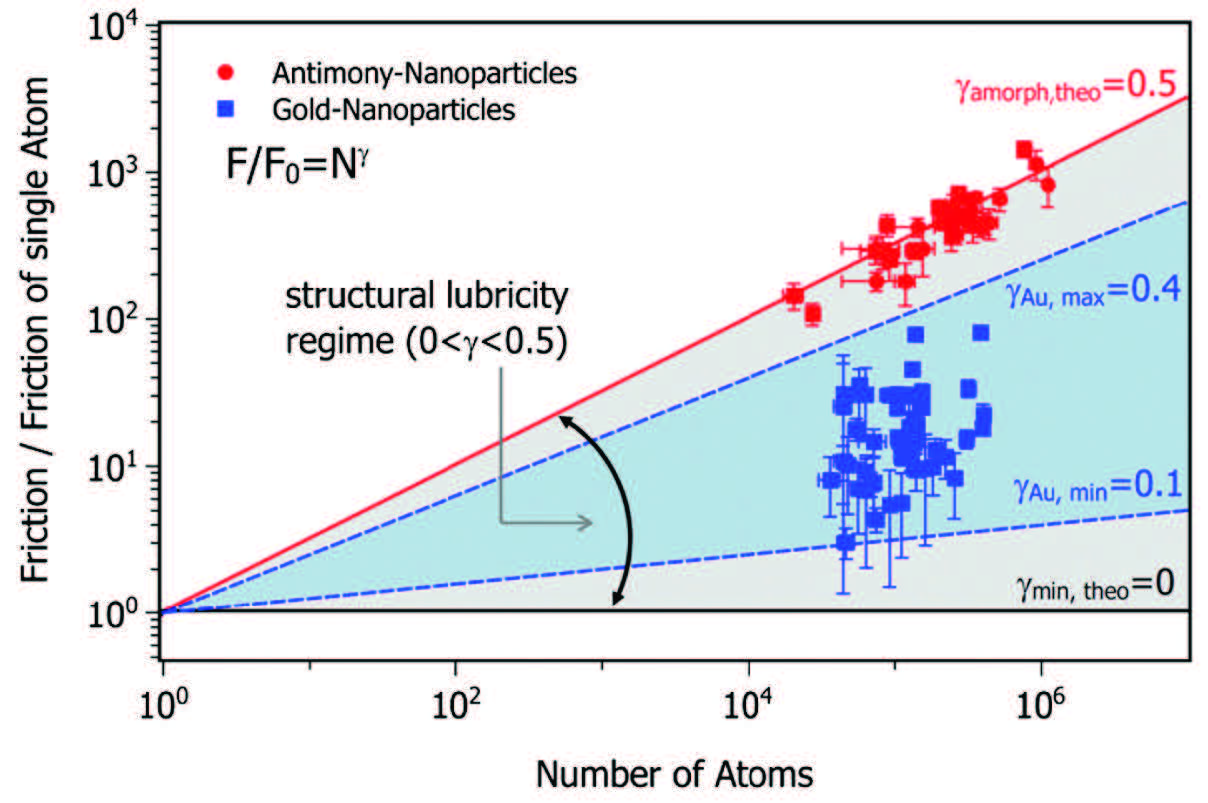 Figure 4. Nanoscale gold and antimony islands sliding over a graphite surface under ultrahigh vacuum exhibited a sub-linear relationship between normalized friction values and the number of atoms in contact. Reprinted figure with permission from Dietzel, D., Feldmann, M., Schwarz, U. D., Fuchs, H. and Schirmeisen. A. (2013), “Scaling laws of structural lubricity,” Physical Review Letters, 111 (23), 235502, https://doi.org/10.1103/PhysRevLett.111.235502. Copyright 2026 by the American Physical Society.
From outer space to ambient conditions
Most engineering applications do not take place under ultrahigh vacuum conditions that mimic those in outer space. Baykara’s group thus wondered if they could observe structural superlubricity under ambient conditions, at uncontrolled humidity, pressure and temperature values found in a typical lab setting. If this would indeed be possible, one could start thinking about small-scale mechanical systems that operate with almost zero friction (and thus, almost zero energy dissipation), without the use of lubricants, opening new avenues for next-generation engineering applications.
Like Dietzel and colleagues, Baykara’s group used gold nanoislands on a graphite substrate, but they performed experiments under ambient conditions. The gold islands were thermally deposited onto the graphite surfaces. Because the step edges of graphite are chemically very active, some gold islands tend to migrate there during synthesis or nucleate there during deposition
(see Figure 5, left). Other gold islands form on top of graphite terraces, away from the edges. The islands have well-defined shapes and various sizes. Transmission electron microscopy (TEM) images of cross sections of these islands show stacked layers of gold atoms
(see Figure 5, right).
5 It’s important to note that at the sizes they used, gold islands are not chemically reactive, so they have two rigid surfaces that are atomically flat and non-adhering.
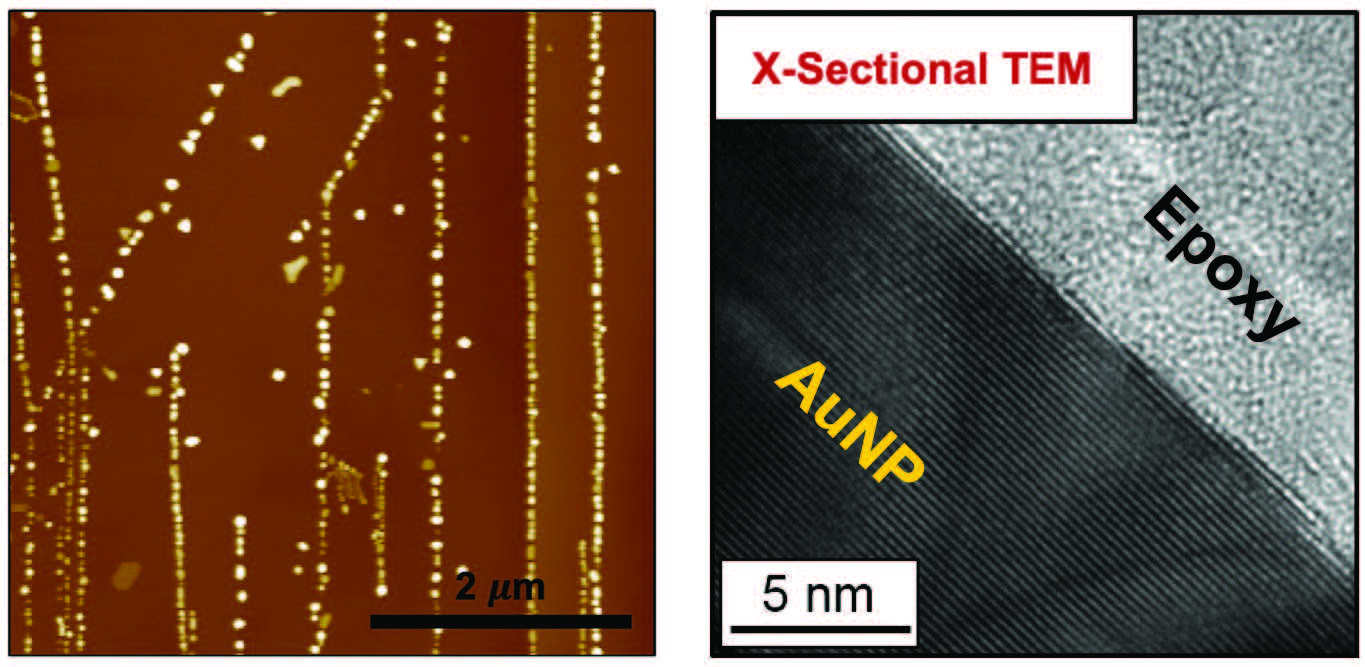
Figure 5. Left: Gold nanoislands thermally deposited on graphite under vacuum preferentially align along graphite step edges. Right: Transmission electron microscope image of the cross-section of a gold nanoparticle (nanoisland) marked AuNP. Figure courtesy of Ref. 6 (left) and Ref. 5 (right).
Baykara’s group used atomic force microscopy (AFM) to measure friction forces while moving nanoislands of various size and shape on the graphite substrate. This technique uses a micro-machined silicon cantilever beam with a cone-shaped, ultra-sharp (nanoscale) tip that points downward toward the sample surface. Piezo scanners control the relative position between the tip of the cantilever and the sample surface in three dimensions with a precision that approaches picometer (10
–12 m) length scales. During conventional AFM operation, the tip scans across the sample surface laterally in light contact, with contact forces on the order of a few nano-Newtons. The tip deflects vertically as it follows the topography of the sample surface. Optical detection of vertical cantilever deflections as a function of tip location is used to produce nanoscale maps of the sample surface topography.
In addition to mapping surface topography, an AFM tip can also be used to manipulate nanoscale objects and measure friction forces. In experiments, Baykara’s group repeatedly placed their AFM tip near specific gold nanoislands and brought it in to where it was touching the edge of the island. Then, they used the tip to push the island across the surface of their graphite substrate. They detected the twisting of the cantilever to decipher the resistance to motion at the island-substrate interface—the friction force. Repeating the experiment on multiple islands of different sizes allowed them to measure the dependence of friction force on contact area.
As Baykara’s group manipulated the gold islands across the graphite surface, the measured lateral forces were less than one nano-Newton. These are very small forces, even considering the small size of the islands. The forces are about two orders of magnitude smaller than those reported in previous studies of antimony islands of similar size under ambient conditions. These are levels of friction that might be expected for structurally superlubric systems under ultrahigh vacuum, but they were working under ambient conditions. That is, the surfaces were not molecularly clean, and they did not control humidity and temperature. The measurements were repeated for more than 30 islands of differing sizes, and the average scaling factor was 0.16, well within the zero to 0.5 range expected for structural superlubricity
(see Figure 6).
5
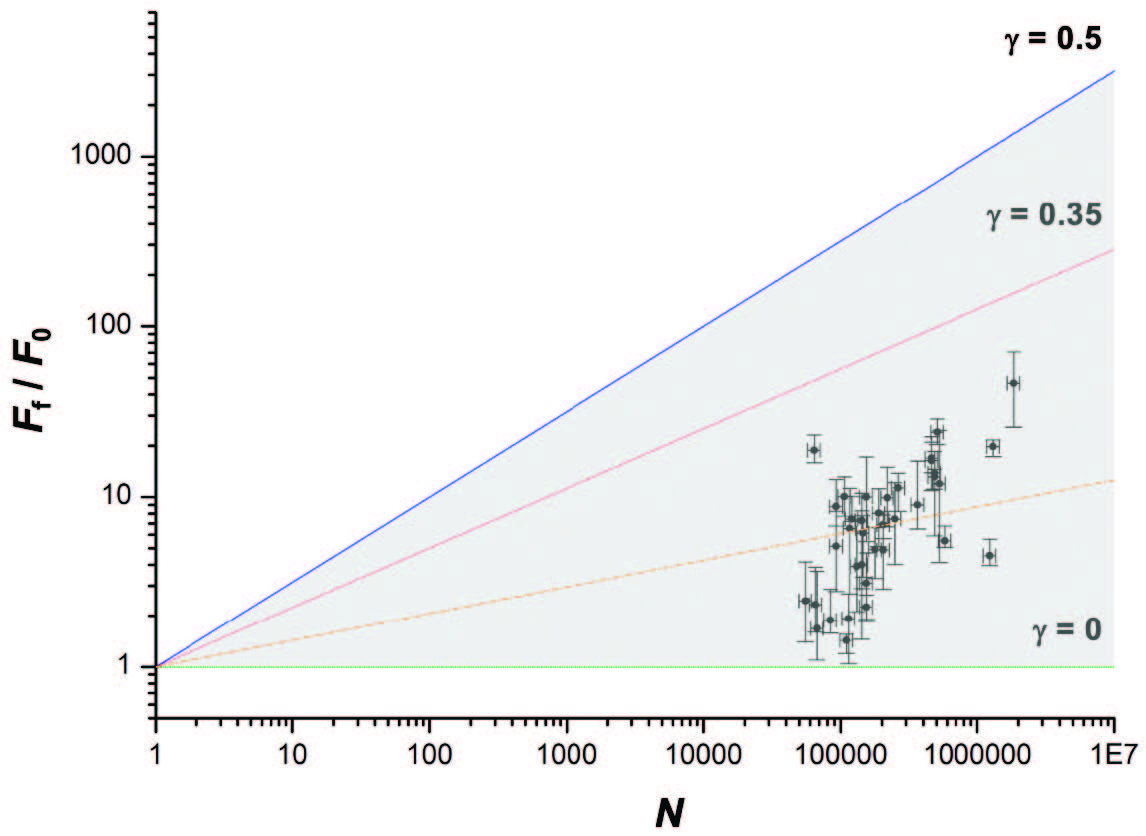 Figure 6. Gold nanoislands manipulated across a graphite surface under ambient conditions exhibited levels of friction that are expected for structurally superlubric systems under ultrahigh vacuum. Figure courtesy of Ref. 5.
These results took the lab, as well as the entire friction community, by surprise. The theoretical prediction of vanishing friction forces due to a sub-linear relationship between friction force and contact area for incommensurate interfaces could indeed be realized under ambient conditions, in the inevitable presence of molecular contaminants. However, it took almost a decade for them and their theoretical collaborators to partially understand why and how this unexpected but very promising observation came to be.
6
Method modifications and molecular modeling
In order to gather additional data to understand the physical reasons behind the observation of structural superlubricity under ambient conditions, Baykara’s group applied a new manipulation technique in which the AFM tip is positioned on top of the island rather than against the side
(see Figure 7). In this configuration, the tip pushes down on the island with a few nano-Newtons of force.
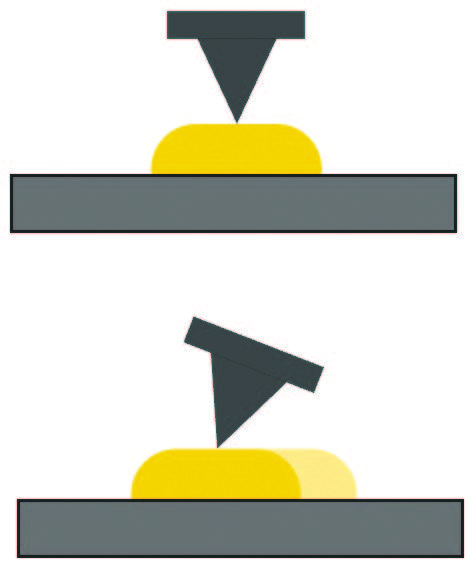 Figure 7. Placing the AFM tip on top of the nanoisland and dragging it (rather than pushing it from the side) allowed multiple measurements to be repeated on the same island.
Moving the tip laterally moves the island with it, because the friction between the tip and the top surface of the island is greater than the friction at the structurally superlubric contact between the island and the substrate. This method enables great control over the speed and direction of motion of the island. The same motion can be repeated many times with the same island because the island is trapped beneath the AFM tip and does not “fly away,” as was often the case in the original set of experiments. This repetition increases the amount of data collected from a single island by about two orders of magnitude.
By calculating multiple average friction values for the same island over multiple scans, Baykara’s group found that the initial scan produced a friction value about an order of magnitude higher than that for subsequent scans. Further, if there is a time lapse of about half an hour or more, and then the scans are resumed on the same island, the friction increases again to the level of the initial scan, followed by a similar drop to lower values. Finally, they often observe spontaneous jumps between these high and low friction “branches” within a single scan. These phenomena, which they termed rejuvenation, aging and friction switches, were observed repeatedly for a large percentage of the islands they tested.
6
Interestingly, the three effects—rejuvenation, aging and switches—largely disappeared after a few days or weeks. During this time, a contamination layer appeared on the samples, consisting of hydrocarbon molecules adsorbed from the ambient atmosphere. Baykara’s group often observed contamination “pools” with thicknesses on the order of 10 Å
(see Figure 8). Over time, the coverage and shape of the pools changed, while heating the samples above 100°C caused the contamination layers to desorb.
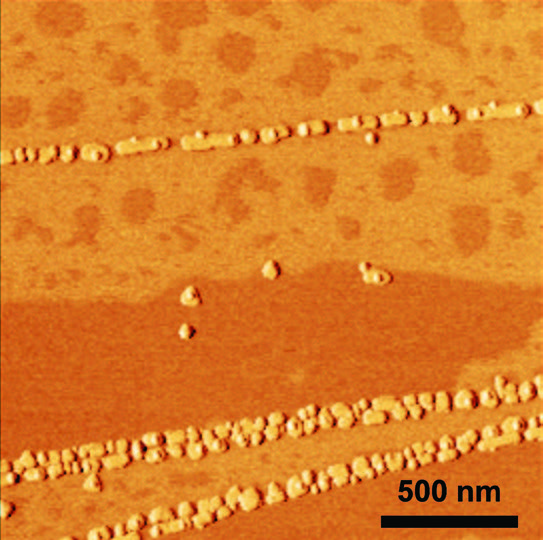 Figure 8. In this AFM phase image, contamination pools (dark orange) are clearly observable after several months of exposure to ambient air. Figure courtesy of Ref. 6, CC BY-4.0.
When they repeated the AFM scans about three weeks after synthesis, with the samples exposed to ambient air over that time period, they observed a significant decrease in the fraction of islands exhibiting rejuvenation, aging and switches. Measurements of shear stress (the ratio of friction to contact area) show very low values, within the regime expected for structural superlubricity, and these values decrease with increasing contact area. Thus, even for contaminated islands, observations quantitatively confirmed structural superlubricity conditions
6 (see Figure 9).
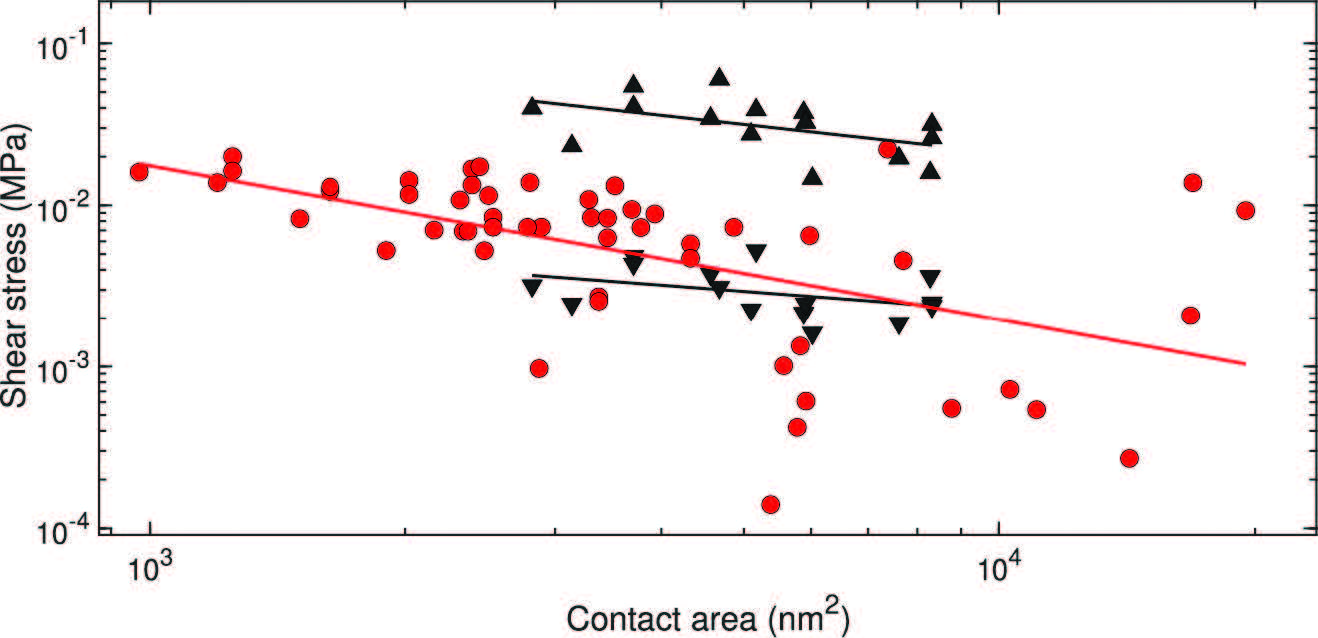 Figure 9. Even contaminated islands exhibit structural superlubricity, as highlighted by the decrease in shear stress values with increasing contact area. Black triangles: lightly contaminated islands exhibiting friction switching (upward triangles for high friction, downward for low friction). Red circles: heavily contaminated islands that do not exhibit aging, rejuvenation or friction switching. Figure courtesy of Ref. 6, CC BY-4.0.
In order to elucidate the physical reasons behind the observations, Dr. Hongyu Gao and Professor Martin Müser at Saarland University performed molecular dynamics (MD) simulations of gold nanoislands on graphite with contaminant layers consisting of representative hydrocarbon molecules. They calculated two possible scenarios. In the first scenario, under partial coverage of the graphite substrate by contaminant molecules, the islands push the contaminant layer around as the AFM tip is moving them. In the second scenario, when there is enough contamination on the graphite surface to cover it completely, the islands glide on top of the contaminant layer.
The simulations indicate that moving the contaminant layer around requires about an order of magnitude more energy than having the island glide on the surface of the contaminant layer. In the gliding scenario, the contaminant molecules arrange themselves at the interface between the substrate and the island in nonrandom orientations, producing a structural incommensurability effect that leads to the very low friction values observed experimentally
(see Figure 10).6
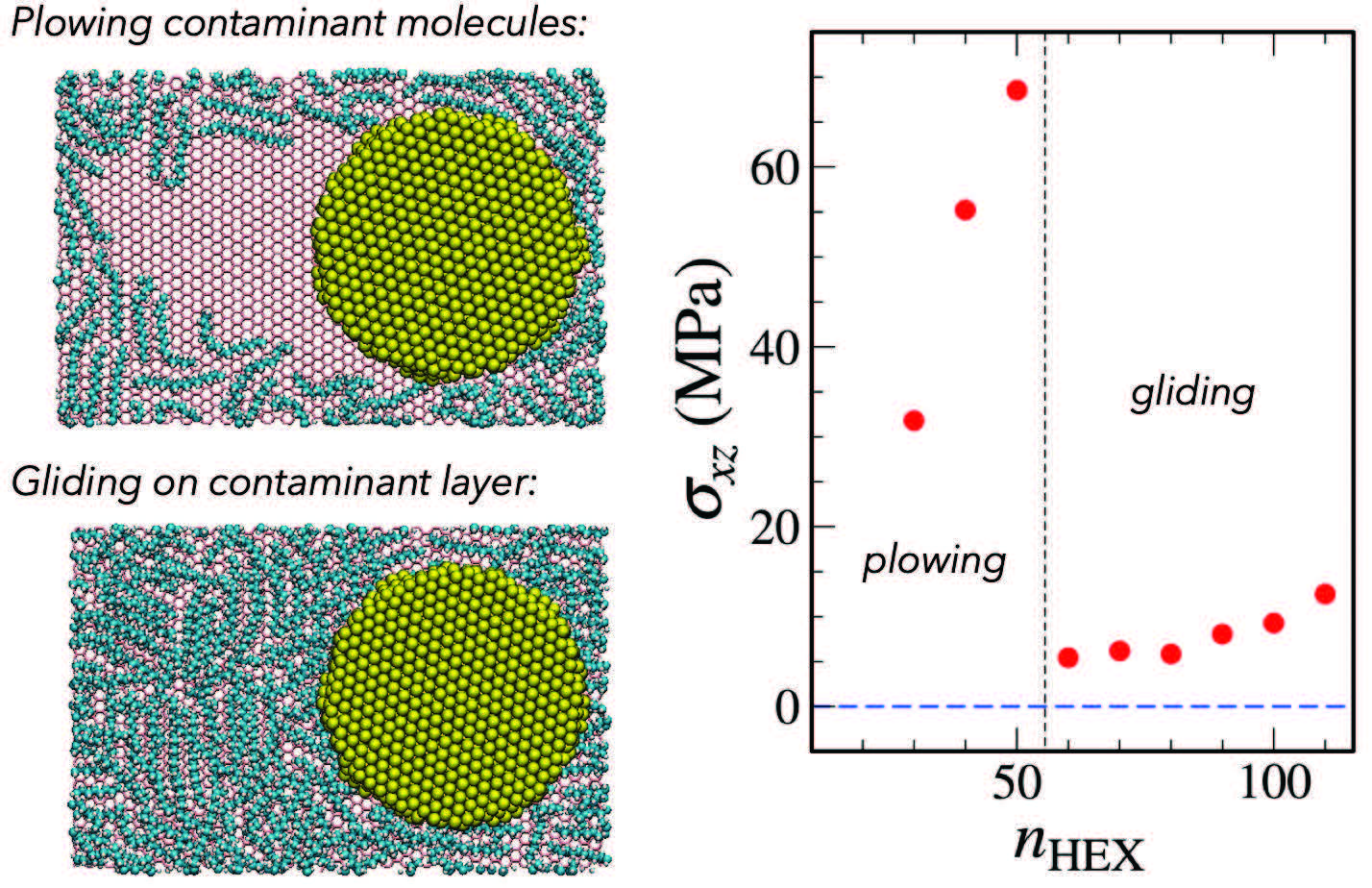 Figure 10. Molecular dynamics simulations indicate that nanoislands can plow through or glide on top of surface contamination layers, resulting in drastically different shear stress values and thus, friction. Figure courtesy of Ref. 6, CC BY-4.0.
Further experiments are needed to more completely understand the robustness of structural superlubricity with respect to other factors including increasing contact size and sliding history. However, observations of structural superlubricity at microscopic length scales that persists even when the surfaces are contaminated offers surprising potential for practical engineering applications. For example, structural superlubricity could enable sliding components in micro- and nano-electromechanical systems to operate with virtually zero energy dissipation, without the need for additional lubrication.
REFERENCES
1.
Hölscher, H., Schirmeisen, A. and Schwarz, U. D. (2008), “Principles of atomic friction: from sticking atoms to superlubric sliding,”
Philos Trans A Math Phys Eng Sci, 366 (1869), p. 1383-1404,
https://doi.org/10.1098/rsta.2007.2164.
2.
Hirano, M. and Shinjo, K. (1990), “Atomistic locking and friction,”
Physical Review B, 41 (17), p. 11837-11851,
https://doi.org/10.1103/PhysRevB.41.11837.
3.
Dienwiebel, M., Verhoeven, G. S., Pradeep, N., Frenken, J. W. M., Heimberg, J. A. and Zandbergen, H. W. (2004), “Superlubricity of graphite,”
Physical Review Letters, 92 (12), 126101,
https://doi.org/10.1103/PhysRevLett.92.126101.
4.
Dietzel, D., Feldmann, M., Schwarz, U. D., Fuchs, H. and Schirmeisen. A. (2013), “Scaling laws of structural lubricity,”
Physical Review Letters, 111 (23), 235502,
https://doi.org/10.1103/PhysRevLett.111.235502.
5.
Cihan, E., İpek, S., Durgun, E. and Baykara, M. Z. (2016), “Structural lubricity under ambient conditions,”
Nature Communications, 7, 12055,
https://doi.org/10.1038/ncomms12055.
6.
Oo, W. H., Gao, H., Müser, M. H. and Baykara, M. Z. (2024), “Persistence of structural lubricity on contaminated graphite: Rejuvenation, aging, and friction switches,”
Nano Letters, 24, p. 12118,
https://doi.org/10.1021/acs.nanolett.4c02883.
Nancy McGuire is a freelance writer based in Albuquerque, N.M. You can contact her at nmcguire@wordchemist.com.