Friction and wear
By Andras L. Korenyi-Both, Contributing Editor | TLT Tribology Fundamentals April 2026
It is helpful to go back to some foundational axioms to understand these concepts.
Friction and wear are two tribological terms that will most likely reign conversations around tribology. Lubrication, of course, is the third term that usually fits this conversation, however that is a topic that requires its own separate discussion. So, let’s start with friction. Friction is a resistive force opposing the motion between two bodies. Friction forces can be found in nature and in moving mechanical assemblies. To describe and understand friction, it is helpful to go back to some foundational axioms.
The French inventor and physicist Guillaume Amontons’ (1663-1705) contributions to science and engineering are bountiful and include gains in the understanding of thermodynamics and scientific instrumentation for measuring pressure and temperature. He was also intrigued by the concept of friction and is credited for establishing the first and second physical laws of friction.
Amontons’ first law of friction states that the force of friction is directly proportional to the applied load. The ASTM G-99 pin-on-disk testing protocol1 still relies on this basic principle to measure friction and wear, and it is the well-known coefficient of friction, with the symbol μ, that expresses this proportionality. μ is equal to the tangential friction force divided by the input force or input load, thus μ is unitless. Amontons’ second law of friction states that the friction force is independent of the area of contact. This axiom is driven by the complex nature of surfaces and more so when two “apparently smooth” surfaces are brought into contact, on the real surface it is only the surface asperities that are touching.
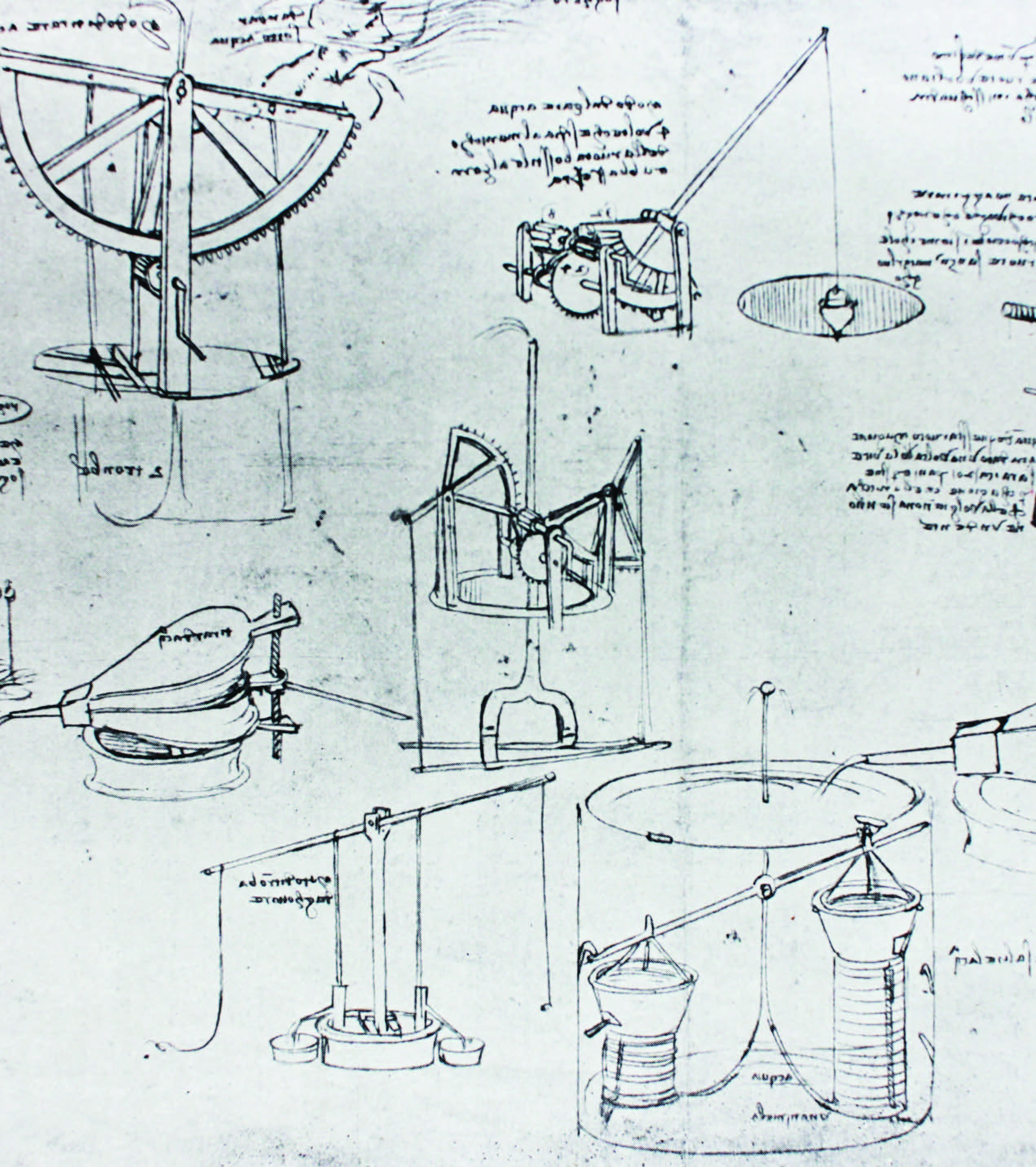
Charles-Agustin de Coulomb (1736 -1806) is also a highly accomplished French physicist best known for establishing the physics of how electric charges interact in terms of attraction or repulsion. Coulomb is also credited for the third law of friction that states friction is independent of velocity. It was also Coulomb that made the important distinction between static and dynamic friction. Though not published at the time, Leonardo da Vinci (1452-1519), in his Codex Atlanticus and Codex Arundel, shows sketches of friction experiments. da Vinci’s work was approximately 200 years before Amontons had discovered the basic principles of friction.2 As if da Vinci’s multitude of accomplishments in science, engineering and art aren’t impressive enough, he was arguably the world’s first documented tribologist.
Unfortunately the three laws of friction, though highly relevant, are only approximate and are just guiding principles that apply to simple dry sliding contacts. In fact, friction can be broken down into several regimes, each with its own static or dynamic force. These regimes include sliding, rolling, fluid and a material’s internal friction each with their own unique sets of behaviors or even a combination of these. Static friction, though often attributed to the interlocking of surface asperities of two contacting surfaces, can also originate from two extremely smooth surfaces, which have a real high contact area allowing for molecular or atomic bonding or mixing. Generally, static friction is greater than or equal to dynamic friction. Dynamic friction can also be referred to as kinetic friction and is the oppositional force experienced by two bodies once the surfaces are actively in relative motion to each other. When both static and dynamic friction repeat at some frequency, the concept of stick-slip is practically realized. In poorly lubricated, not well separated surfaces, as the surface asperities momentarily lock and then release, a vibration is generated. Some common and often annoying examples are squeaky door hinges, squeaky disc brakes or even basketball shoes on an indoor court.
The Amontons-Coulomb models start to break down primarily for lubricated contacts where the Stribeck curve applies governing frictional behavior. Additionally, for very light loads the contact mechanics of surfaces dominate frictional properties, whereas for high speeds friction does in fact depend on velocity. If the operating temperatures are high then tribochemical changes affect the system, and as mentioned earlier extremely smooth surfaces are dominated by adhesive forces.
Friction coefficients are system properties and not material properties and can vary orders of magnitude between systems. With the passage of time, empirical work in the field of tribology has developed new concepts and axioms and allows us to think of friction in some broad categories with assumptions made on the system in which coefficients of friction are derived. Though not absolute, this allows the design or troubleshooting of mechanical systems to have a frame of reference. Within this approximate and estimated frame of reference, on the high end of the coefficient of friction scale is dry steel on steel, which ranges from 0.4 to 0.8. PVD hard coatings dry versus steel range from 0.2 to 0.7; dry film lubricants can be as low as 0.03 to 0.2. Oil lubricated contacts in a full hydrodynamic regime can be 0.001 to 0.01. Absolute coefficients of friction must be measured in situ with careful attention to all the environmental conditions affecting the systems in which these measurements are made.
Friction plots from tribometers, which usually elucidate the coefficient of friction versus distance or time during measurement, will often reveal the system dependance of friction. One can find subtle or sometimes drastic changes in values as a system moves through stages of friction and wear. The first stage is usually a break-in or run-in region or stage, often with higher friction. During this first stage surface asperities across multiple length scales reorganize and realign as the high peaks contact each other. The next stage typically will have lower friction and wear due to stabilizing surface features, and if a lubricant is present tribochemical reactions begin to happen.
During the next stage a steady state develops—here the contact has become conformal, a tribofilm has formed and friction and wear rates are linear, constant and predictable. With solid film lubricants, lubricious material has fully transferred across the interfaces and there is steady slip along laminar plains. Favorable film formation balances with any wear debris or new asperity formation. This is the ideal stage for durability and long life of mechanical components. If, however, there is a change induced into the system, usually from external operating conditions, friction and accompanying wear rises quickly. This often leads to seizure or loss of mechanical functionality and is the end point of the concept of meantime between failure. Friction, as shown is complex in nature, has a profound influence on wear, but unlike friction which is a force, wear is a phenomenon.
Wear is more recognized or obvious versus friction (one of the causes of wear) in our world because it affects daily life, often causing inconvenience; it is understood as a negative event and therefore receives appropriate attention. Durability has grown as humans have evolved and gained a better understanding of wear, its causes and effects. Wear is a progressive material loss caused by external stresses in a system, and in tribological systems wear can be best thought of as alterations that happen primarily on the surface of materials. The phenomenon of wear should not be confused with a material breaking, which is fracture, or a material dissolving, which is corrosion, though wear can, and sometimes does, lead to these other phenomena. A key point to keep in mind is that wear cannot be eliminated in moving mechanical assemblies, just mitigated, because surfaces must engage to transmit the required forces. To best discuss and understand wear in solid engineering systems, it helps to break down systems by materials—metallics, ceramics, plastics and composites. These materials may interact with themselves or with each other. For further understanding we must break down the cause or modes of wear. In no certain order these general modes are impact, erosive, abrasive, chemical, adhesive, fretting and fatigue. Wear, unfortunately, is very complex, and often is a combination of multiple wear modes. This makes the analysis of wear challenging as the worn surfaces are often a result of two or more superimposed integrated wear mechanisms. Most often we start with just two surfaces encountering each other but can end up with multiple different materials or phases as the result of relative motion, i.e., third body wear debris, alloying, etc.
Before wear is mitigated it must be understood. To start to understand wear it is useful to identify the type of wear and then measure it in terms of material loss. Measuring wear, though tedious, is a much simpler task than identifying the type of wear or the root cause of wear. In scientific literature we can find hundreds of equations for the many different types of wear. There is no singular equation that can be used to solve for friction and wear together; however in this introductory article we can look at the two fundamental wear equations that are useful for measuring and understanding wear. The first is the simple model derived by J. F. Archard (1918-1989), a highly accomplished British physicist. The Archard equation is useful for describing sliding abrasive wear and asperity contact.

Q is the volume of wear debris, K is a dimensionless constant, W is the normal load, L is the sliding distance and H is the hardness of the softest surface. To quantitatively relate wear across various modes it is convenient to measure wear and normalize it to key input parameters. This measure is called the specific wear rate (ks) and can just absorb the material’s hardness used in Archard’s equation because we know soft materials wear more than harder materials. The measured volume already reflects relative hardness in the following quantitative specific wear rate formula we often use in tribology labs. Archard’s Q can also be considered volume wear rate. Thus, it is easy to see how the formula for specific wear rate is derived and how useful it is and is expressed as the following equation.

This allows us to have a useful frame of reference for designing around and troubleshooting wear. The specific wear rate is typically expressed as a volume loss, in mm3 normalized to input load multiplied by sliding distance, expressed as newton meters. With a repeated caution that, like coefficients of friction, a wear rate is a system property not a material property. The following examples are a useful frame of reference. The specific wear rate for chalk on a porcelain enamel chalkboard is ~1x10⁻² mm3/Nm, and diamond is ~1x10⁻¹⁰ mm3/Nm. Metals fall into a mid-regime of ~1x10⁻⁵ mm3/Nm and metals with hard protective coatings are typically ~1x10⁻⁶ mm3/Nm, giving an order of magnitude boost in longevity.
For the practitioners of tribology, it is useful to understand the origins or conditions required to have made certain types of wear. Visual standards are very helpful for relative comparative analysis, but to help decipher wear modes or overlapping wear modes knowledge of the conditions that caused the wear is critical. Wear modes can be broadly classified as follows. Impact wear is unique, as a force is repeatedly applied to the same area when two bodies strike each other, wear can vary from mild deformation to severe fracture, depending on the magnitude of the force. Shock waves below the surface are common, and most often impact wear scars are accompanied by some measure of sliding. Erosive wear is caused by solids, liquids or even gases. Solid hard particles can impact on the surface to cause wear, but so can liquid flow or droplets, and cavitation erosion is caused by gas compressing and then rapidly and energetically expanding in a liquid. The angle of impingement has a profound influence on the observed wear. Abrasive wear, a very common form of wear, is a two or three body phenomenon and is caused by cutting, plowing, fatigue or brittle fracture. As interfaces slide or roll past each other abrasive wear is the dominant mechanism because no other specific conditions are required. Chemical wear, especially when accompanied by another form of wear, can be very severe, known as tribochemical wear; common forms are caused by oxidation or corrosion and can be accelerated by high temperatures. Adhesive wear is marked by materials mixing and smearing from asperity junction formation and subsequent transfer of released material, a term often used is galling. Adhesive wear is a high risk when the sliding interface is of the same or similar materials. Fretting wear is when surfaces in contact encounter reciprocating relative motion at a high frequency but a very small amplitude, usually below 100 micrometers of stroke and can cause subsurface fatigue. Finally, fatigue wear is caused by repeated high stress cyclic loading causing severe surface and subsurface damage. Within these major wear modes there are many other mechanistic subtypes and further highly specialized variants that must be understood to diagnose, predict and mitigate wear.
It is the curiously complex and the ubiquitous nature of friction and wear that makes the field of tribology such an interesting pursuit. The field is full of surprises and discoveries that have impact on the world we live in. Tribologists work tirelessly to solve problems that are part of daily complications in everyday life. If friction is too high in our automotive engines, components fail. If the friction between tires and the road surface is too low, we lose grip and may unexpectedly depart from the road surface. Road surfaces wear from erosion, abrasion and impact. We produce, purchase and repair many things as they wear out, and for some things we accept the inevitable worn state. Early in my career, I was invited into the office of a well know tribologist to have a friendly chat, and I saw something that I still often recall—a large black bumper sticker with white lettering that said, “Tribology is Wear Its At.”
REFERENCES
1. ASTM International G-99-05, Standard Test Method for Wear Testing with a Pin-on-Disk Apparatus.
2. Hutchings, I. M. (2016), “Leonardo da Vinci’s studies of friction,” Wear, 360-361, pp. 51-66, https://doi.org/10.1016/j.wear.2016.04.019.
Andras L. Korenyi-Both is Woodward Senior Technical Fellow Tribology at Woodward Inc. in Fort Collins, Colo. You can reach him at andy.korenyi-both@woodward.com.