HIGHLIGHTS
•
Finding a 3D printing technique for dispensing ink using a method known as direct ink writing is challenging.
•
A female mosquito proboscis, an elongated mouthpiece, has the necessary properties to act as a micro-dispense tip for 3D direct ink writing.
•
Regulation of several parameters enabled the female mosquito proboscis to achieve printed line widths that exceeded the performance of commercially available dispense tips by approximately 100%.
3D printing or additive manufacturing is slowly gaining acceptance as the technology continues to improve. This approach constructs parts by using a layer-by-layer process and has been found to be effective in producing complex shapes and designs.
Preparation of parts with specific metal alloys employing additive manufacturing has still proven to be challenging. A recent TLT article
1 discusses how process optimization can be achieved in 3D printing specific metal alloys. The way forward is to use a machine learning technique known as the “Accurate Inverse” process to first determine the specific metal part to be produced from a particular alloy. Next, the artificial intelligence (AI) tool works backward in an inverse approach to identify a set of parameters to use in 3D printing the desired metal part. The machine learning model was trained from a series of experiments used to generate a vast series of data sets. Application of this machine learning model on common stainless-steel alloys led to the need for only a brief training period of one hour to optimize process parameters for forming a specific metal part.
A critical aspect to additive manufacturing is the proper dispensing of the specific ink in the layer-by-layer process. This technique is known as direct ink writing and is an extrusion process that deposits a shear-thinning liquid, paste or gel through a nozzle onto the building part. Justin Puma, graduate student at McGill University in Montreal, Quebec, Canada, says, “Dispensing tips are essential for properly moving ink from a reservoir to a specific part. Currently, the main types of dispensing tips available are derived from glass, metals and plastics which are both not biodegradable. This means that a substantial environmental burden is present with over 4 billion dispensing tips annually.”
An additional issue is that the current dispensing tips do not work well in dispensing inks in high-resolution applications which require diameters less than 100 microns. Those dispensing tips used are also very expensive.
Puma and his colleagues including Dr. Changhong Cao, Canada Research Chair in Small-Scale Materials and Manufacturing in the department of mechanical engineering at McGill University, turned to natural materials to find a more cost-effective solution. He says, “There is a history of utilizing biohybrid engineering to integrate biotic materials into engineering systems. Researchers have successfully integrated a biofuel cell battery on the back of a live cockroach to power environmental monitoring.”
Certain animals and plants have micro-dispense tips that have the potential to be used in micro-dispense applications. Puma says, “Candidates need to be able to provide the right mechanical, geometrical and structural properties to be considered. One other aspect is that a specific micro-dispense tip must also not be fragile which would make it sensitive to vibrations that can adversely affect performance.”
The researchers have now identified a potential micro-dispensing tip from the female mosquito.
 3D necroprinting
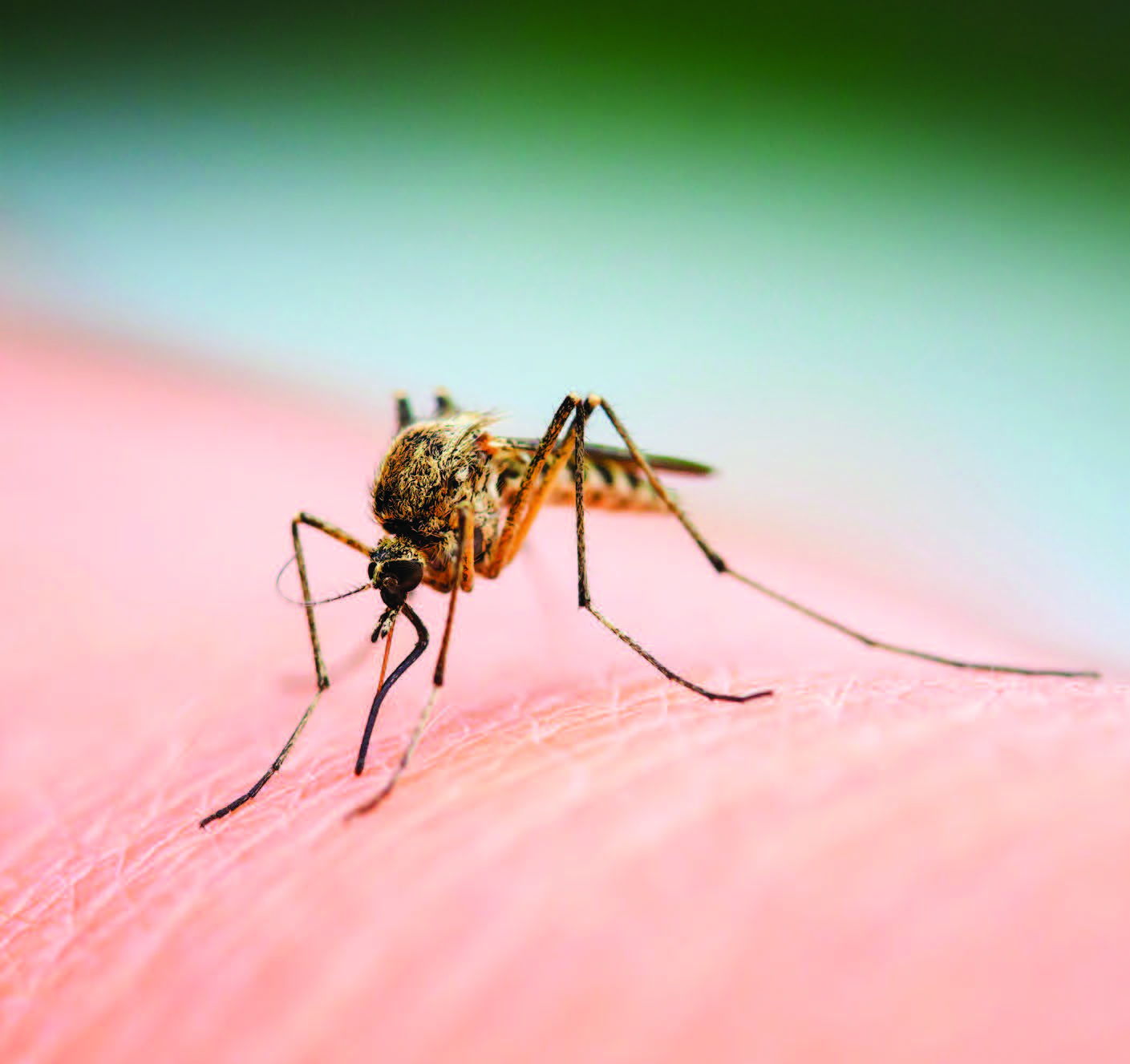
Female mosquitoes feed on hosts by puncturing skin and locating blood vessels to find their food. To conduct this strategy a female mosquito has a probiscis which is an elongated mouthpiece that conducts this function. Puma says, “The female mosquito probiscis has the necessary properties including stiffness, being nearly straight and having the ability to handle vibrations to also be useful as a micro-dispense tip for 3D direct ink writing. From a dimensional standpoint, the female mosquito probiscis is two millimeters in length, has an inner diameter between 23-25 microns, and an outer diameter of 40 microns making this natural material potentially useful for 3D printing. In contrast, a human hair has a diameter of 60 microns.”
The female mosquito proboscis was identified after the researchers evaluated a series of biological micro-dispense tips found in nature. Puma and his colleagues found that this mosquito derived appendage exhibited the best combination of mechanical and structural properties. One key parameter is inner diameter which is necessary to achieve high printing resolution. The researchers designated this technique as 3D necroprinting.
An image of the 3D necroprinter is shown in Figure 2.
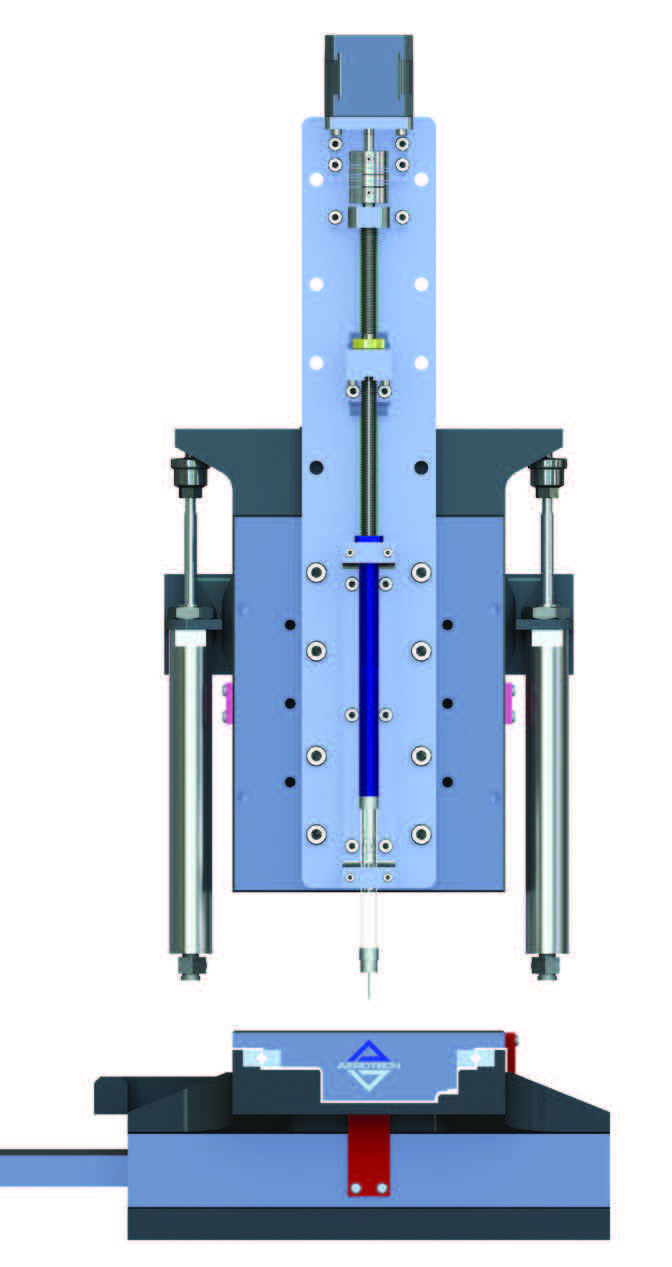 Figure 2. This 3D necroprinter, that utilizes a female mosquito proboscis as a micro-dispensing tip, demonstrated superior performance in printing line widths as fine as 20 microns in width. Figure courtesy of McGill University.
Initial testing of the female mosquito proboscis was conducted by extruding several bioinks. During testing with a specific bioink gel, the researchers found that the micro-dispense tip can occasionally fracture at the outlet and in its upper section. Puma says, “The first failure mode occurred because we set up our experiments to print in mid-air leading to the formation of a blockage impeding flow to the tip outlet. Eventually, the continuous stress loading produced a series of microfractures that propagated through the micro-dispensing tip. If the apparent viscosity of the ink is too high, this leads to the second failure mode caused by excessive backpressure that exceeds the material strength of the proboscis.”
The researchers overcame these difficulties by regulating the print height, ink flow, pressure and by applying an adhesive onto the female mosquito proboscide to reinforce the strength of the micro-dispensing tip. 3D necroprinting achieved printed line widths as fine as 20 microns which significantly exceeded the performance of commercially available dispense tips by approximately 100%. Fluid extrusion was effectively accomplished because the mosquito proboscis dispensing tip is able to handle internal pressures of approximately 60 kilopascals. High-resolution 3D printing of such complex structures as the honeycomb structure, a maple leaf and bioscaffolds encapsulating cancer cells and red blood cells was also achieved.
From a durability standpoint, Puma indicates that the female mosquito proboscis is effective for at least two weeks. He says, “We have seen that only 20% will fail at that point.”
The finding that female mosquito proboscides micro-dispensing tips can be used in 3D printing opens up a lot of potential applications according to Cao. He says, “We are working to improve the performance of the micro-dispensing tips by coating them with a ceramic to stiffen the extruder. This may enable us to work with other inks such as metals. Our work with female mosquito proboscides is also leading us to develop a skin cream that once applied, may prevent mosquito bites.”
Additional information on this study can be found in a recent paper
2 or by contacting Cao at
changhong.cao@mcgill.ca.
REFERENCES
1.
Canter, N. (2025), “Optimization of additive manufacturing using AI,” TLT,
81 (7), pp. 12-13. Available at
www.stle.org/files/TLTArchives/2025/07_July/Tech_Beat_I.aspx.
2.
Puma, J., Yang, Z., Johnston, E., Zhang, Z., Lan, X., Zhang, L., Hou, H., He., Z., Afify, A. and Cao, C. (2025), “3D necroprinting: Leveraging biotic material as the nozzle for 3D printing,”
Science Advances, 11 (47), DOI: 10.1126/sciadv.adw9953.