Bonus Content for STLE Members
Art of Tribology
By Nicole Gleeson, TLT Editorial Coordinator | TLT STLE Insights April 2026
STLE is showcasing—for the second time—a photo project at the 2026 STLE Annual Meeting: Innovating Through Tribology & Lubrication of visually striking images and designs derived from tribology and lubrication research. This initiative highlights the unexpected beauty within the field of lubrication, friction and wear, celebrating the artistic side of scientific discovery.
We invite everyone to submit their most captivating tribology-related images for display at the conference. Images can be varied—from high quality SEM images to unusual lab instrumentation setups to 3D simulation models and more.
Posters—which include the image, description and submitter name—will be displayed in designated areas throughout the STLE Annual Meeting, offering attendees a unique perspective on the artistry behind tribology research.
This year, attendees can vote on their favorite submission. The winner will be featured in an upcoming issue of TLT.
At the 2025 STLE Annual Meeting in Atlanta, Ga., the inaugural Art of Tribology was a great success, with submissions related to a diverse variety of topics adding a captivating conversation spot to the event’s registration area. As we look forward to bringing the display back for 2026, here’s a look back at a few stand-out submissions from last year.
Reimagined Wear Evolution by Daniel Miliate and Abrar Faiyad, University of California, Merced
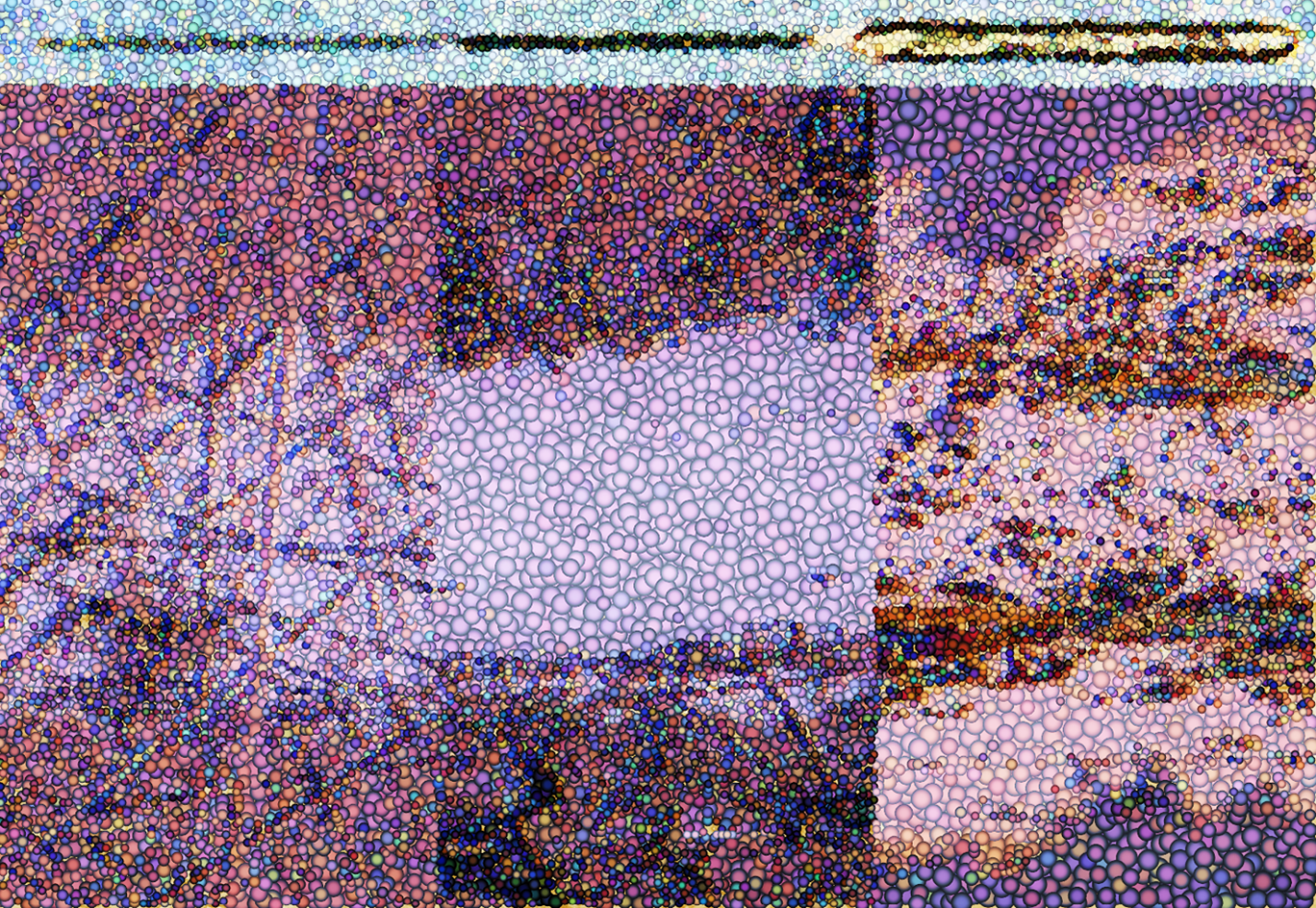
This piece visualizes data from a ball-on-flat stripe tribological test. The sequence of images, shown from left to right, captures the progressive wear of a MoS-coated material at one, 100 and 10,000 cycles. The upper blue section presents a macroscopic view of the wear tracks, while the lower section reveals a magnified perspective. Each of the three lower images is approximately 100 um across. This work was made possible through support from the NSTGRO24 fellowship, with experiments conducted at NASA’s Jet Propulsion Laboratory.
High Viscosity Li-Complex Grease on Tapered Roller Bearing by Dwaine (Greg) Morris and Loan Vo, Shell Global Solutions Int BV
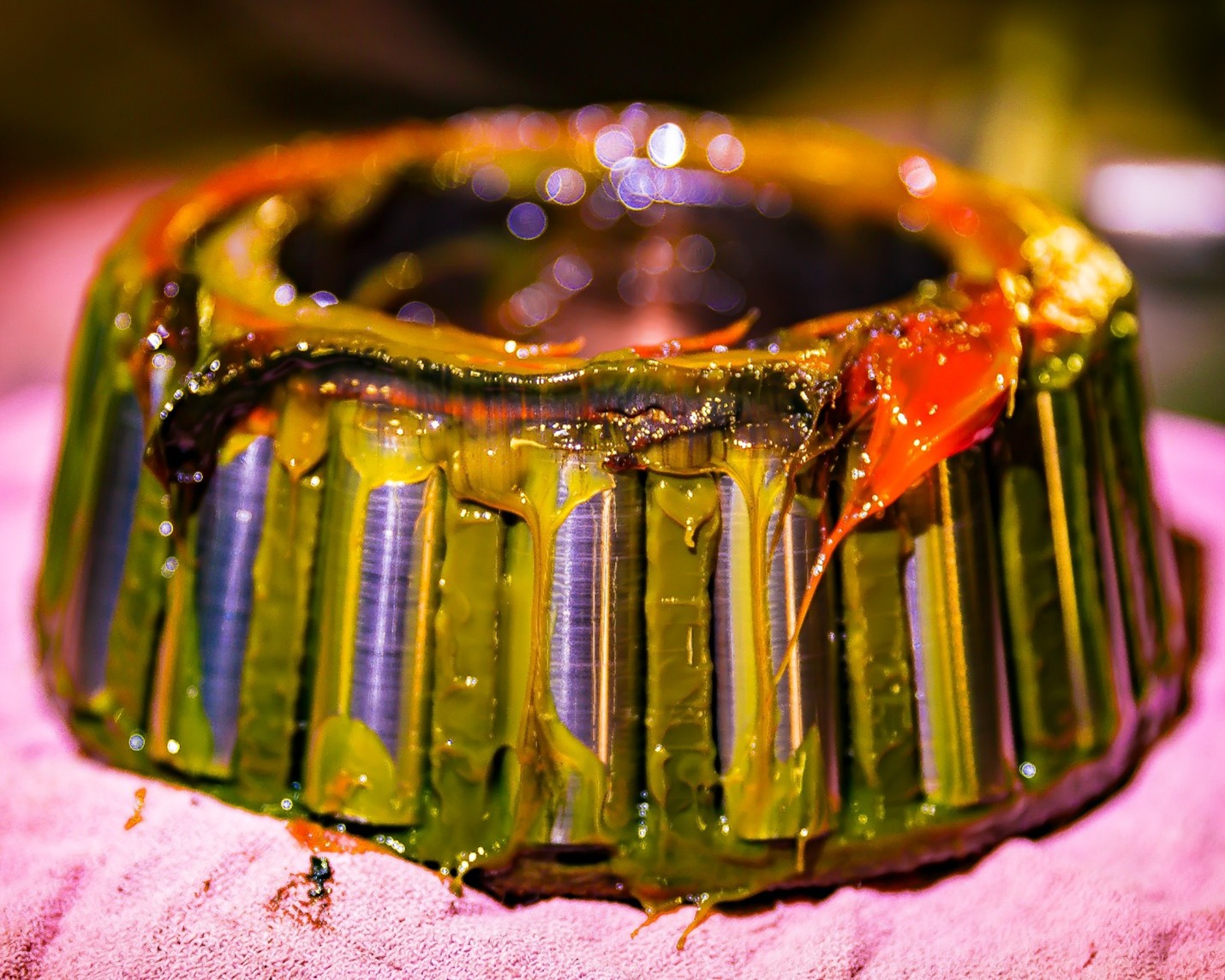
This is a tapered roller bearing from a wood pellet mill that is processing wood into pellets for home heating and commercial power. The bearing is being lubricated with a high viscosity lithium complex, extreme pressure (EP) grease. The excessive continuous operating temperature (115°C to 130°C), moisture from steam, particulate ingress and high load ratio (C/P~ 3.5) make this a very difficult lubrication challenge. The particulate ingress in the application is visible through the discolored grease at the bearing edge. You also see bokeh in the light at the top and left side of the picture (soft round circle of reflected light).
Cryogenic Rheology Testing of Valve Seats by Carlos Sanchez, Southwest Research Institute
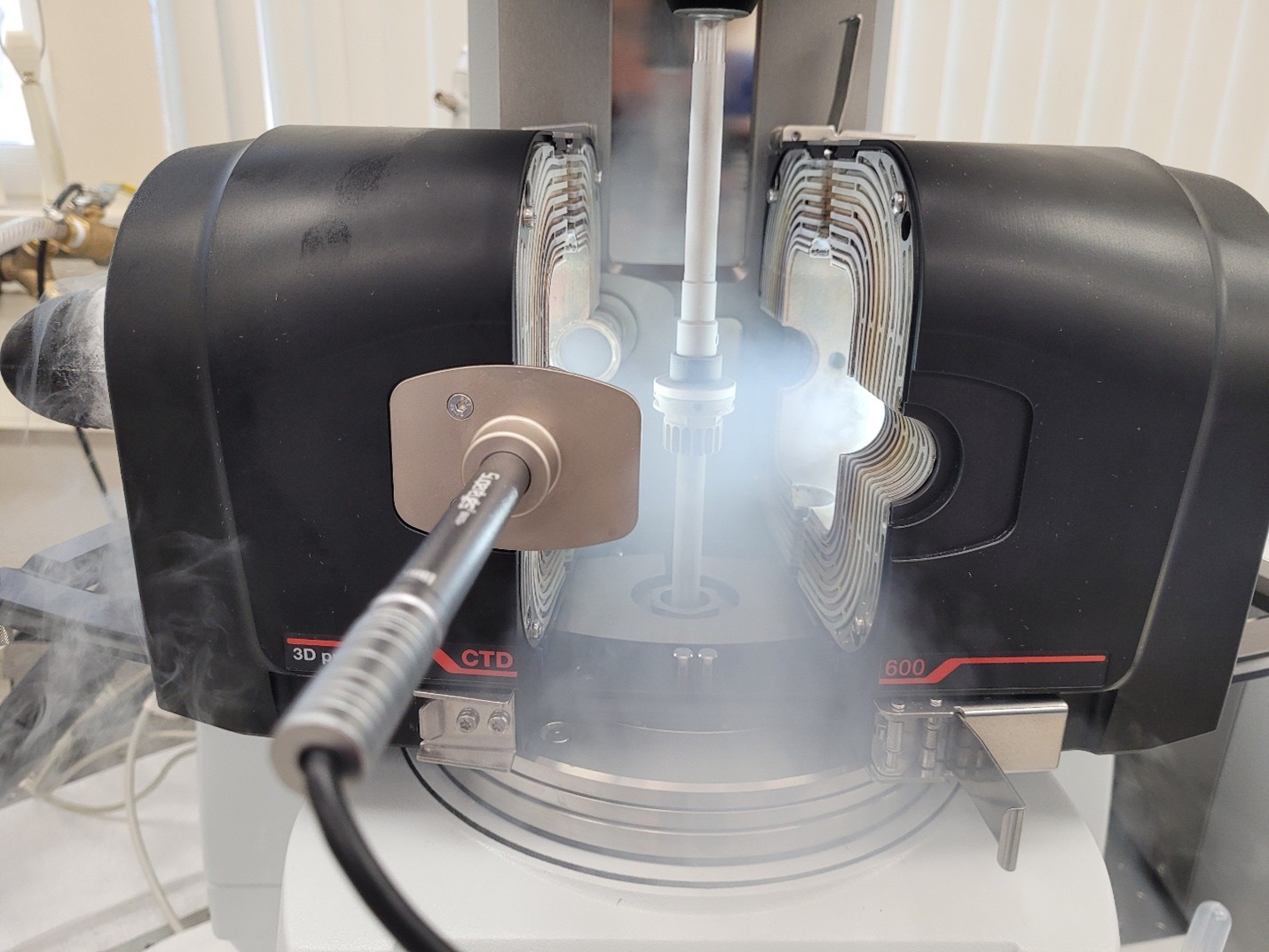
Rheology can be used to understand the behavior of a wide range of materials, whether they flow or not. This picture comes from a client project where we investigated the sticking behavior of valve seat materials under extreme cold conditions. A test was designed using parallel plates, one being coated in the rubber material. Liquid nitrogen was used to bring the materials down to the operating temperature of the valves. The test profile measured when the valves froze to the lower surface and how much force was required to break the bond. A camera was used to monitor the progress. Opening the test chamber at EOT reveals the icy plates and a rush of cold vapor.
Grease Branches by Jack Janik and Rob Jackson, Auburn University
Janik, J. R., Saha, S., Jackson, R. L., and Mills, G. (January 20, 2025). “Rheological and electro-pitting performance of electric vehicle motor greases with various nanoparticle greases,” ASME. J. Tribol. May 2025; 147 (5): 051110, https://doi.org/10.1115/1.4067489.
Butterfly Proboscis by Catherine Fidd, Florida State University
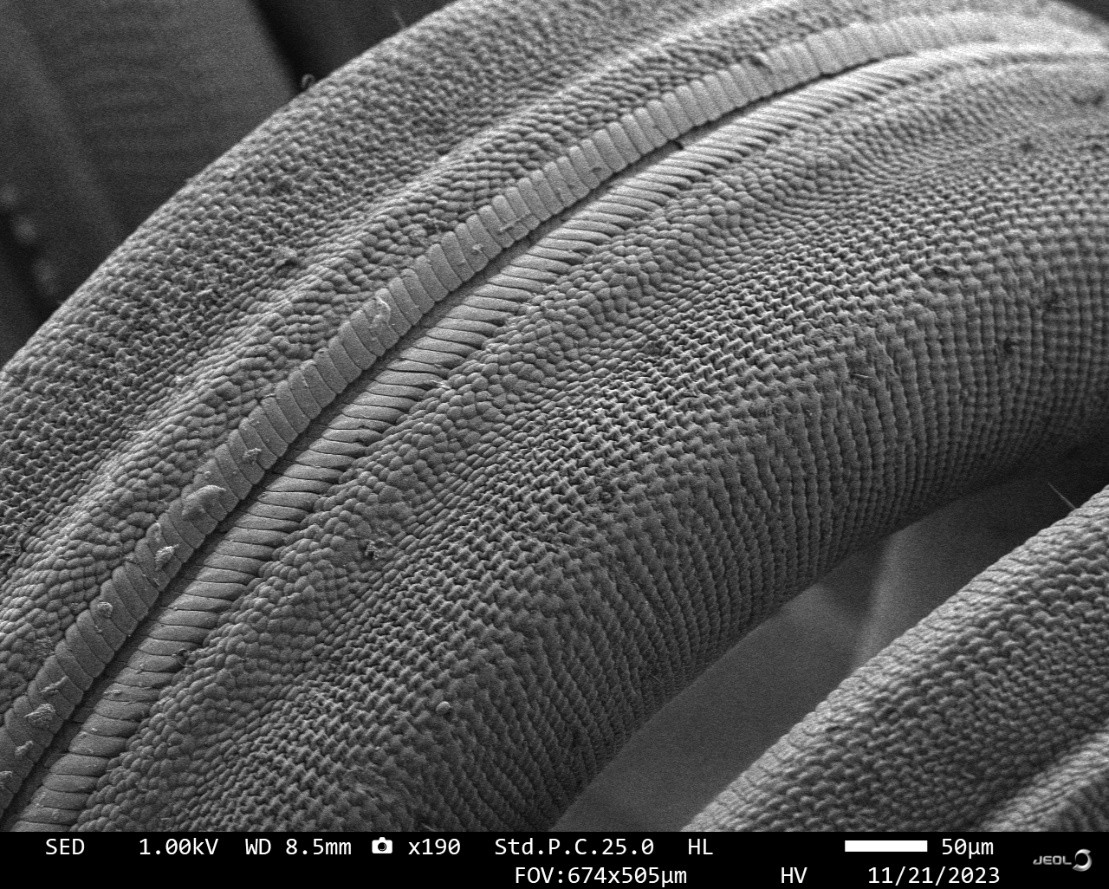
This is a scanning electron microscope (SEM) image of a butterfly’s proboscis, the feeding tube used to suck up liquids. The flexible tube, naked to the human eye, has a complex topography. Current manufacturing abilities still have humans inferior to animal microstructures designed over millions of years of evolution. Therefore, preserving, appreciating and studying the flora and fauna and their respective microstructures is imperative to advancing engineering design.
From mesmerizing microscopy to unexpected artistry in real-world applications, the Art of Tribology reveals the striking visual side of lubrication, friction and wear. Building on the success of its debut at the 2025 STLE Annual Meeting, this unique showcase returns in 2026 to spark curiosity, conversation and inspiration throughout the conference. You can still enter your submission for the 2026 Art of Tribology; click here to learn how.
These standout images offer just a glimpse of the creativity and insight on display—experience the full exhibition, connect with the minds behind the work and be part of the conversation by joining us at the 2026 STLE Annual Meeting: Innovating Through Tribology & Lubrication. Register today at www.stle.org/annualmeeting.