A history of the STLE Certified Lubrication Specialist™ (CLS) certification
By Doug Sackett, CLS, MLT, and Dr. Bill Tuszynski | TLT STLE History March 2026
This was just the start of a great certification program.
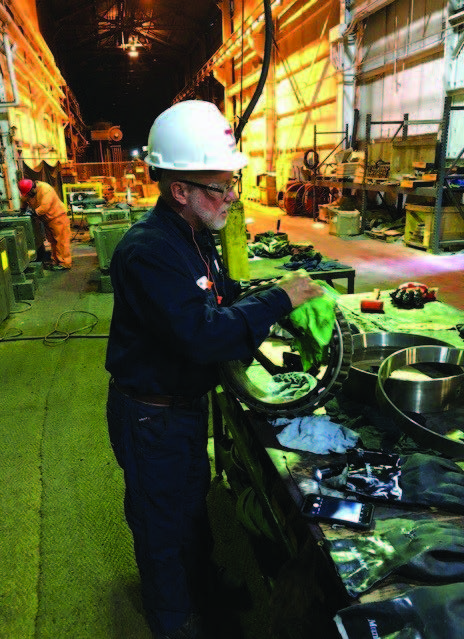
The STLE CLS certification is designed to combine tribology and field knowledge certification for field services technicians who provide technical support, including recommendations and problem-solving support, for all areas of lubrication.
The following article was adapted from a 2001 chapter in that year’s version of the “STLE CLS
TM Committee Operating Manual” by Richard E. Rush.
By the early 1990s, there was a growing consensus that some form of recognition was needed for those active as lubrication engineers due to:
1.
Most people in those positions are self-taught and need some formal recognition.
2.
A great variability exists in the knowledge of individuals in this group due to no agreement on what this person should know.
3.
Many people selling lubricants have little or no training and need to be brought to a minimum competency level.
The initial driver was the dwindling number of practitioners with that title in the steel industry. Tom Lantz, then of Wheeling-Pittsburgh Steel, sent a letter to the editor of Lubrication Engineering (now TLT) calling for the establishment of a certification program. There was sufficient interest for the STLE Executive Committee to approve the establishment of an ad-hoc committee to investigate the development of a certification program in January 1991.
The original committee was comprised of Tom Lantz (chair) Rick Smith, Dan McCoy, Dick Rush and Larry Cole as voting STLE members. Non-voting STLE members were STLE Past President Wayne Coursey and Steve Lemberger. Coursey served as liaison to the STLE Presidential Council while Lemberger acted as liaison to the STLE Education Committee.
After receiving their charter, the committee set to the task of designing the certification criteria. These were established as a minimum of three-years’ experience and continuing employment in the lubrication field as certified by a letter from the candidate’s employer combined with a passing grade on the CLS exam.
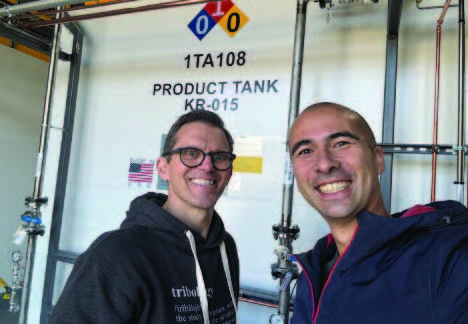 Lake Speed Jr. and Rafe Britton providing onsite education and learning opportunities as CLS holders.
The CLS exam was designed for the applied, hands-on individual who must keep industrial machinery operating and, therefore, the exam is intentionally practical with very little theory.
The next step was to design the test. One of the first decisions was to use an essay-type format rather than multiple choice, although fill-in-the-blank questions were added. While more difficult to grade, essay questions were felt to provide a better picture of how well the test-taker knows the material. It was agreed that partial credit would be given. The exam was set at 150 questions with test-takers given three hours to complete the exam. A passing score is 70% minimum or 105 points out of 150. The exam was converted to multiple choice in 2011 to facilitate ease of grading and to remove any need for judgement on the part of the grader.
After significant debate, Table 1 shows the 16 areas that were chosen to be covered in the exam.
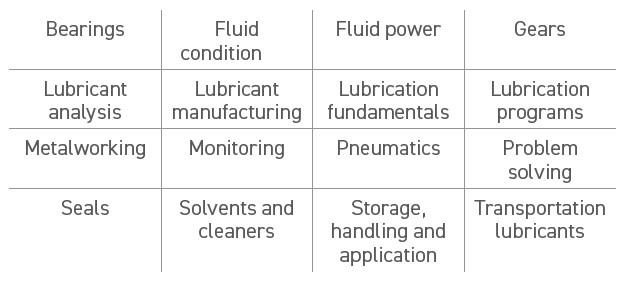 Table 1. CLS exam topic areas
The committee then solicited subject-matter experts in each area to provide candidate questions. A large number were received and reviewed to select 150 questions appropriate to the expected level of expertise of the candidates. The rest were held in reserve for future exams, with some of the more involved questions set aside for an “advanced” certification exam. A team of graders was recruited, and metrics for assigning partial credit was put in place along with procedures for requesting a re-grade and for re-grading the test should an examinee question their score.
The exam was given for the first time at the 1993 STLE Annual Meeting in Calgary, Alberta, Canada, to a select group of 25 “guinea pigs.” The group was chosen from practicing engineers, and 18 achieved a passing grade—a higher percentage than would be seen in the future. One of the goals in choosing this select group was to get feedback about the questions. One glaring omission was that the questions almost totally ignored the metric system in stating units. This was quickly corrected for subsequent tests.
An important consideration was to make sure that at no time would any of STLE’s educational offerings “teach the test.” While the subject matter of short courses and other educational materials would, of necessity, include topics that would be included in the exam, there would be no effort to focus of topics based on their inclusion in the exam. It was also agreed that all committee members and graders must be CLS certified. The committee also established requirements for continuing education and participation in STLE and related industry events as a condition for maintaining CLS certification.
Over the years, there have been several important issues dealt with that have come up. These have included the need to protect the integrity of the exam. The validity of the exam and how quickly it was accepted by the industry was a surprise to us. Some of the major oil companies even made successful completion of the exam as a requirement for qualifying for certain positions.
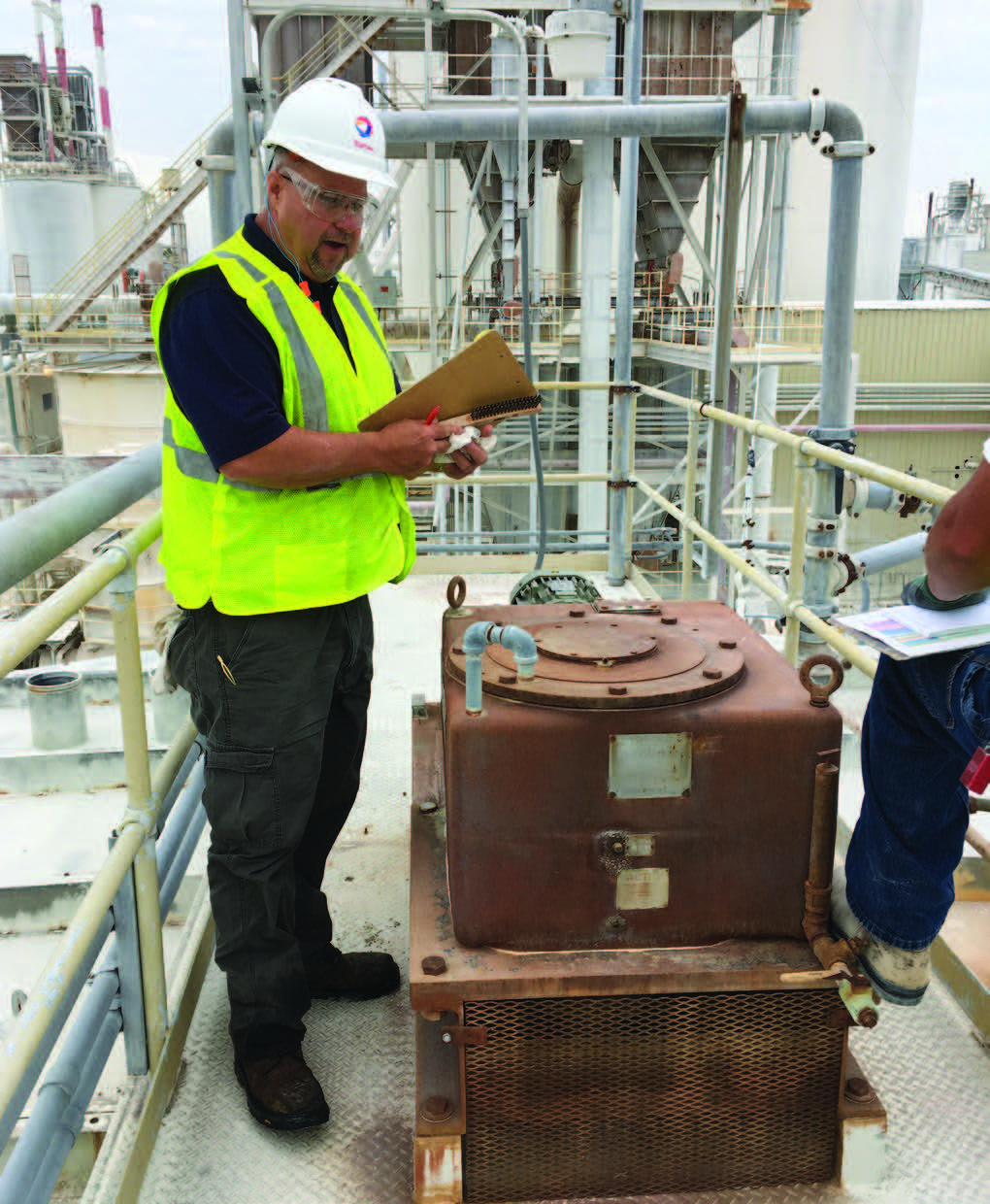 A CLS-certified specialist can provide asset assessments and recommendations to ensure the proper products are being utilized in the application. Onsite asset reviews are needed to compile the conditions and environment.
The validity and integrity of the exam have been questioned, and, to date, the exam has passed all challenges to it. Because of the success of the CLS program, other certification programs have sprung up in the field. In addition, outside companies have tried to benefit from the program by starting their own certification programs or providing training to pass the CLS exam.
The STLE CLS Committee is now made up of 16 knowledgeable industry STLE CLS certified members that oversee reviewing the question database, current relativity of the questions and also reviewing exams results to ensure all questions are monitored for pass/fail rate.
The CLS program has grown ever since its adoption in the early 1990s. Since then, a total of 5,829 individuals have sat for the exam with 3,312 achieving a passing grade and CLS certification. The STLE Oil Monitoring Analyst™ (OMA) and Oil Monitoring Specialist (OMS) certifications were added in 1999 and 2000, and the STLE Certified Metalworking Fluid Specialist™ (CMFS) certification was added in 2013, respectively. The STLE Oil Monitoring Expert (OMX) certification was added recently in 2025 as well. The history of the CMFS certification will be the subject of a future article in this series. For more information on STLE certifications, visit
www.stle.org/certifications.
Doug Sackett is senior technical advisor at Dilmar Oil Co. You can reach him at doug@dilmar.com. Dr. Bill Tuszynski is partner at The Unami Group, LLC. You can reach him at w.tuszynski@unamigroup.com.