The world is racing to build digital infrastructure at an unprecedented pace. Every search, stream or artificial intelligence (AI) model query runs through a data center, an invisible engine room that powers modern life. But this digital progress has a flip side: energy consumption.
Globally, per a report by International Energy Agency (IEA),
1 data centers already consume close to 1.5% of all electricity, and this figure is expected to double by 2030 as AI, edge computing, crypto mining and 5G connectivity expand.
The challenge is stark. Tech companies promise to make operations carbon neutral even as computing loads skyrocket. Their solution? Green energy. To sustain cloud expansion responsibly, hyperscalers are investing heavily in renewable sources, particularly wind and solar power, to feed their ever-hungry servers.
Among these, wind energy can possibly emerge as a beneficiary, though it competes with other green sources like solar power. It’s reliable, scalable and increasingly cost-competitive. And, polyalphaolefins (PAOs) can be a great enabler in this transition as their role is vital in driving the geared-wind turbines seamlessly.
PAOs: The silent force behind a wind turbine
Wind turbines are among the most demanding mechanical systems ever engineered. Each geared wind turbine contains gearboxes, bearings and hydraulic systems that must operate flawlessly for decades, often in harsh, remote and temperature-extreme locations. Offshore turbines face salty humidity, arctic installations deal with sub-zero winds and desert units endure scorching heat.
Under such stress, conventional mineral-based oils struggle to maintain film strength and oxidation resistance. This is where synthetic lubricants, formulated primarily from PAOs, offer tremendous value. PAO-based oils (more specifically m-PAOs) offer excellent thermal stability, oxidative resistance and low-temperature fluidity, making them indispensable for the efficiency and reliability of modern wind farms.
Per Kline’s study Lubricant for Wind Turbines: Global Market Analysis and Opportunities,
2 a typical geared wind turbine requires up to 500-800 liters of gear oil, expected to last seven to 10 years with minimal maintenance. Each unplanned oil change or gearbox failure can mean significant downtime and logistical cost, particularly offshore, where maintenance visits can cost tens of thousands of dollars.
Thus, the choice of lubricant becomes not just an engineering decision but a strategic sustainability lever. PAO lubricants extend service life, reduce frictional losses and contribute to overall energy efficiency, amplifying the carbon benefits of renewable power.
Digital growth boosts renewable growth, which fuels lubricant growth
The connection between the digital and the molecular worlds is deeper than it seems. As data centers commit to sourcing electricity from renewables, they indirectly create a cascading demand for wind energy installations. Every gigawatt of new wind capacity translates to hundreds of turbines, each a new consumer of PAO-based lubricants.
Per the IEA, the global power consumption for data centers would grow from around 300 TWH in 2020 to around 1,300-1,350 TWH in 2035.1 Wind energy is slated to be one of the key beneficiaries of this growth.
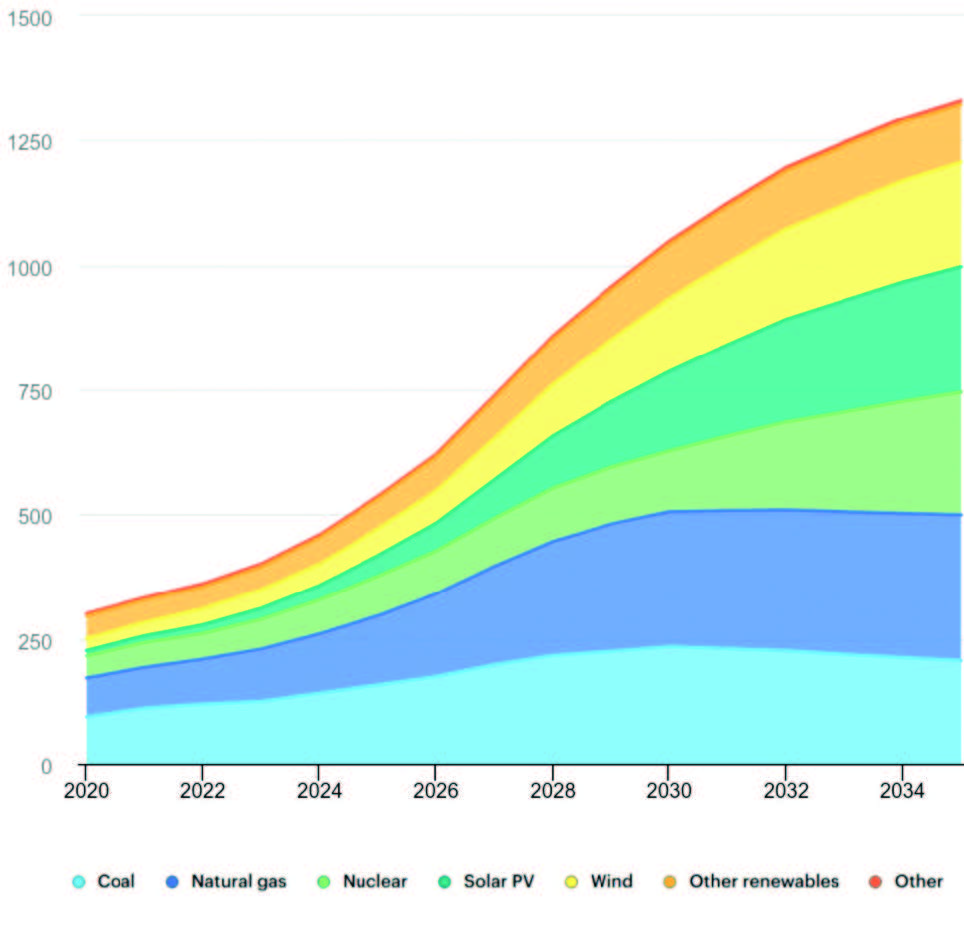
Figure 1. Sources of global electricity generation for data centers, Base Case, 2020-2035. Figure courtesy of IEA (2025), Energy and AI, IEA, Paris www.iea.org/reports/energy-and-ai, License: CC BY 4.0.
In other words, the greener the cloud, the stronger the tailwind for synthetic lubricants. What began as a push for decarbonizing the digital sector is now creating a parallel growth story in the lubricant supply chain.
Globally, wind energy capacity is projected to more than double by 2035, according to Kline’s Lubricant for Wind Turbines
2 and additional analysis, with new installations across North America, Europe, China and India. This expansion could drive a multi-fold increase in demand for high-performance synthetic lubricants, not just in turbines but also in ancillary equipment like transformers, hydraulic systems and cooling units.
For the lubricant industry, particularly producers of Group IV base oils (PAOs), this is a market evolution too significant to ignore.
This could translate into significant opportunities for lubricant marketers given the strong growth in data center market.
The unsung hero of sustainability
PAOs represent the pinnacle of synthetic hydrocarbon chemistry. Produced from linear alpha olefins through controlled polymerization, PAOs have uniform molecular structures that deliver superior lubricity, oxidation resistance and viscosity-temperature behavior compared to conventional mineral oils.
Their key attributes, low volatility, oxidative stability, shear resistance and excellent flow at sub-zero temperatures, make them ideal for wind turbines that experience variable operating conditions.
From a sustainability perspective, PAOs also offer long-drain intervals, meaning less lubricant consumption and waste over the turbine’s lifetime. Fewer oil changes translate into lower emissions from maintenance logistics, reduced resource extraction and smaller overall environmental footprints.
The industry is also seeing the emergence of bio-based PAOs (Bio-PAOs) derived from renewable feedstocks. These molecules retain the same superior performance while further lowering lifecycle carbon intensity, creating a compelling case for wind farm operators striving for deeper decarbonization.
PAO is the gold standard for formulating lubricant for wind turbines. Growth in wind energy will directly contribute to PAO’s growth.
A new market blowing in the wind
The lubricant industry, long tied to automotive and industrial markets, is witnessing a structural shift. As electrification and decarbonization reshape mobility and manufacturing, wind energy offers a durable and fast-growing alternative demand base.
Kline’s analysis shows that leading PAO producers have already expanded PAO production capacities, anticipating rising use in both industrial and renewable applications. Meanwhile, lubricant formulators are collaborating with wind-turbine OEMs to develop custom formulations that can endure the extremes of next-generation turbines, where gearboxes handle higher torques and taller tower heights.
Tougher gear oils will demand even tougher additives. As wind turbines evolve to handle higher loads, harsher climates and longer drain intervals, additive chemistry will become the next competitive frontier. This opens opportunities not only for lubricant formulators but also for additive manufacturers developing new antiwear, antioxidant and extreme-pressure systems tailored for next-generation synthetic oils.
The future market may likely see:
•
Accelerated demand for Group IV (PAO)
•
A shift toward low-carbon and circular PAO production pathways
•
New technical partnerships between energy producers, lubricant formulators and data-center operators
•
Greater emphasis on carbon accounting across the lubricant life cycle
Interestingly, the lubricant industry’s push toward PAO is not just about performance; it’s about strategic alignment with global sustainability narratives. Wind power isn’t only about electrons; it’s about ecosystems. Each stage, from the turbine blade to the drop of oil, forms part of a cleaner industrial chain that ultimately keeps digital economies humming.
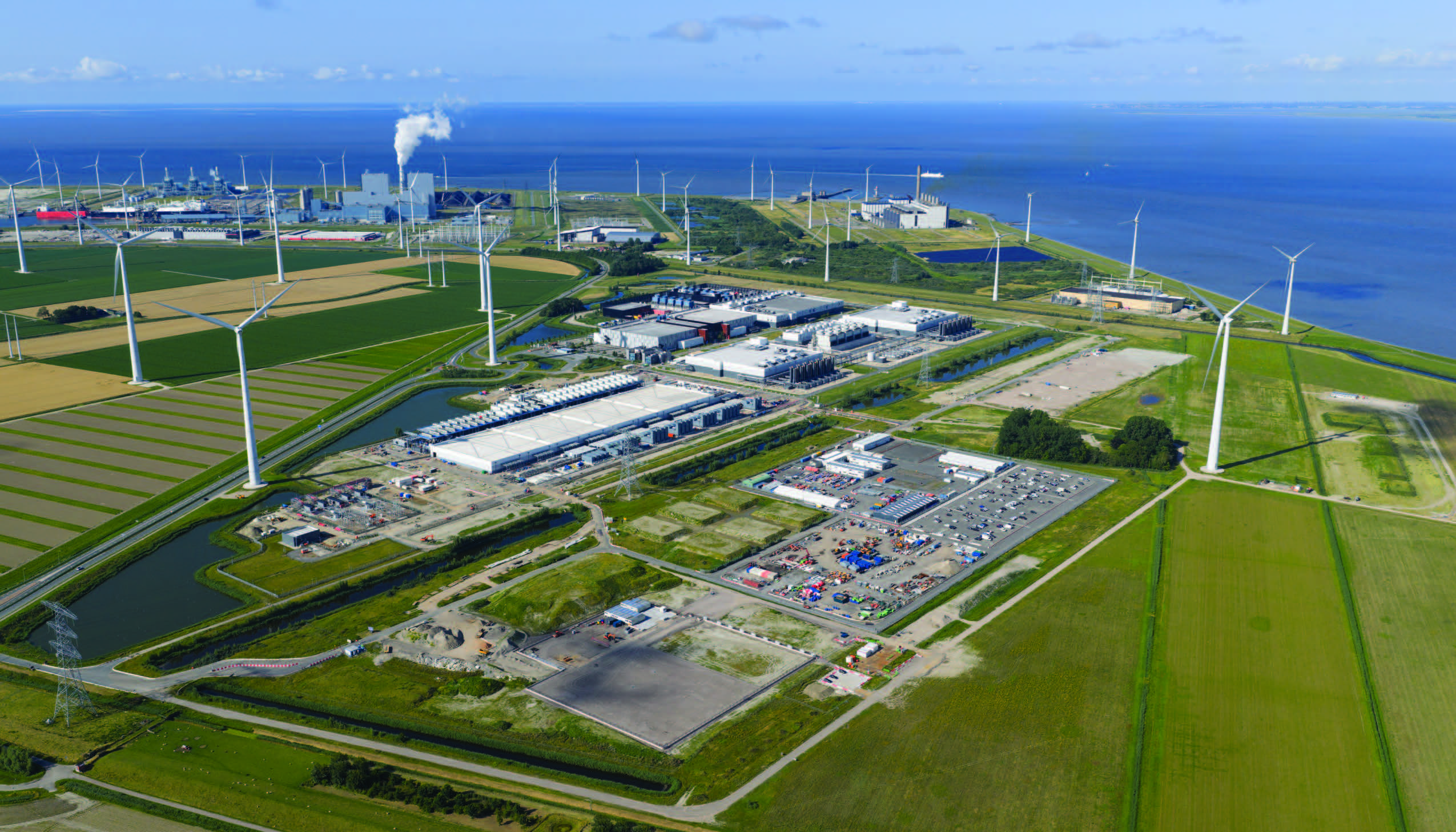 The digital cloud needs a molecular backbone
As the world digitizes and decarbonizes in parallel, the connective tissue between these megatrends lies in chemistry. The cloud may appear virtual, but it rests on tangible, engineered systems powered by both electrons and molecules.
In that sense, the energy transition and the information revolution are not separate stories; they are two sides of the same coin. As observed earlier, a growth in data centers across the world will create new demand for wind energy and hence that for PAO-based synthetic lubricant. PAOs and their next-generation lubricants could thus become critical enablers of the “green cloud,” a concept where sustainability and technology reinforce each other in a virtuous cycle.
Final thought
The lubricant industry’s role in the renewable revolution is often overlooked; it could be a strong enabler of the green cloud. As data centers demand more power and the world responds with greener wind energy, PAOs will keep the turbines turning and keep the cloud greener.
REFERENCES
1.
www.iea.org/reports/energy-and-ai/energy-demand-from-ai
2.
https://producthub.klinegroup.com/energy/lubricants-for-wind-turbines-global-market-analysis-and-opportunities
This article is adapted, by permission, from Kline & Company, Inc. To read the original article, visit www.klinegroup.com.
Anuj Kumar Singh is Industry Manager at Kline + Company in the Energy practice. You can reach him at anuj.kumar@klinegroup.com.
Hareesh Nalam is Project Manager at Kline + Company in the Energy practice. You can reach him at hareesh.nalam@klinegroup.com.
Kline + Company is an international provider of world-class advisory and high-quality market intelligence for the energy and lubricant industries. Learn more at www.klinegroup.com.