TLT: Tell us about your work and how you started to work in transparent functional coatings.
Dr. Lu: My work on transparent functional coatings began during my master’s degree studies focused on thermochromic vanadium dioxide coatings prepared by the sol-gel method. This research was conducted under the guidance of Prof. Fuxi Gan and Prof. Lisong Hou at the Shanghai Institute of Optics and Fine Mechanics, Chinese Academy of Sciences, Jiading, Shanghai, China. The successful completion of my master’s degree fostered my strong interest in transparent functional coatings using the sol-gel technique.
I then pursued my doctorate degree at the Institute of New Materials, Saarland University, Germany, under the supervision of Prof. Helmut K. Schmidt. The doctoral research concentrated on sol-gel optical coatings, specifically on lead sulfide (PbS) quantum dots embedded in sol-gel coatings on glass substrates aimed at enhancing non-linear optical performance and manganese-doped zinc sulfide (ZnS) quantum dots in sol-gel coatings for photoluminescence applications. In my doctoral work, I synthesized lead sulfide and zinc sulfide nanocrystals with an average size of approximately 3 nm within transparent sol-gel coatings.
In my current role, I have contributed to the development of various transparent functional coatings, including anti-reflective coatings, anti-glare coatings, anti-fingerprint coatings and easy-to-clean coatings for computer and smartphone touchscreen displays, all prepared via the sol-gel method; self-cleaning coatings on glass and plastic substrates designed for sensors used in autonomous driving; hard coatings for optical plastic lenses by the sol-gel method; and photocatalytic titania coatings and transparent conductive oxide coatings, specifically fluorine-doped tin oxide (FTO), applied on glass substrates using chemical vapor deposition. This extensive experience highlights my expertise in sol-gel processing and functional coatings tailored for optical and electronic applications on various substrates.
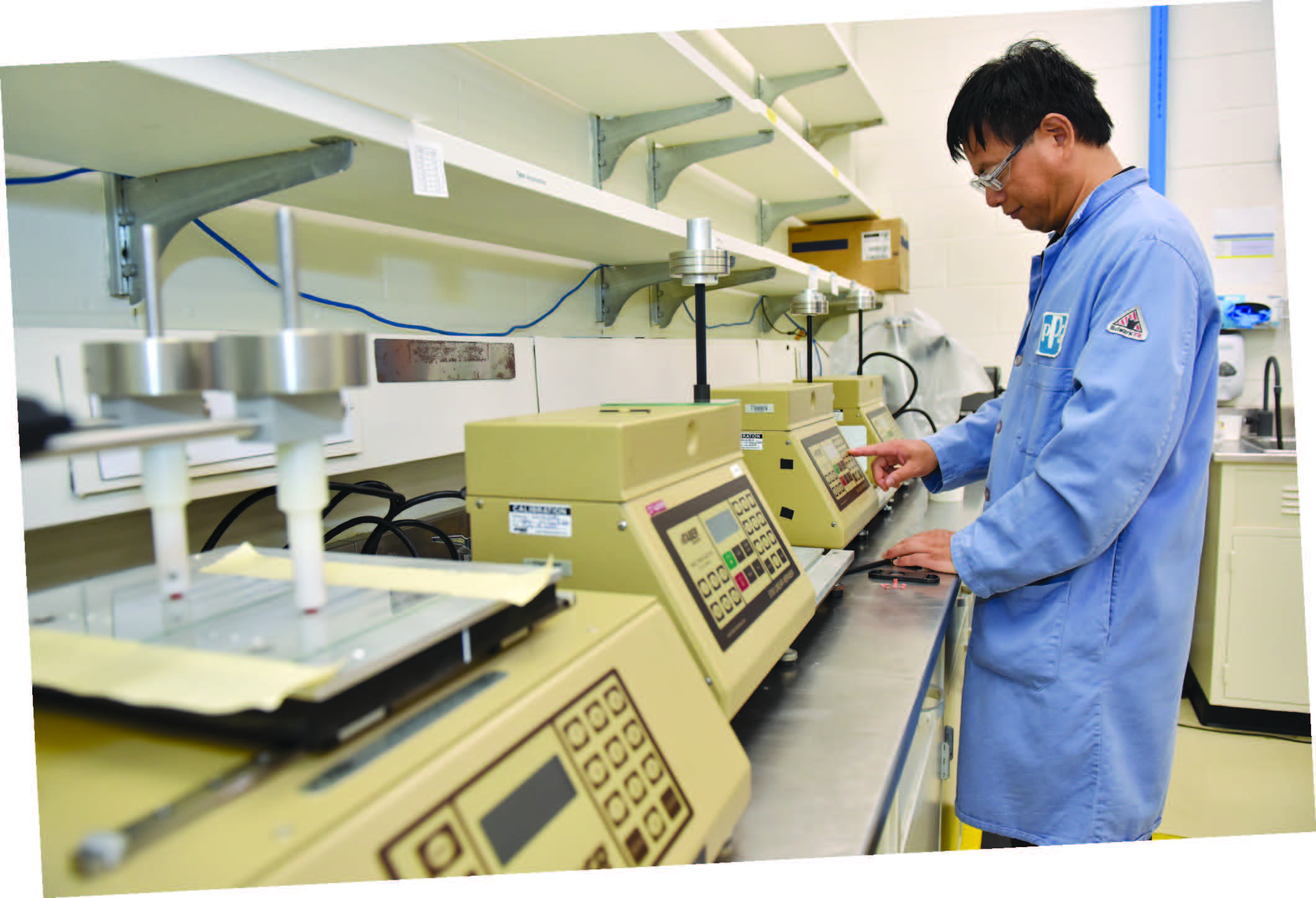 Dr. Songwei Lu conducted the linear scratch resistance test on easy-to-clean coatings in the laboratory in 2018.
TLT: What is sol-gel coating?
Dr. Lu: A sol-gel coating is an inorganic-organic hybrid coating produced via a wet-chemistry process. The process begins with a “sol,” which is a colloidal suspension formed by hydrolyzing a metal oxide precursor, commonly a silane compound. This sol undergoes polycondensation reactions to form a three-dimensional “gel” network. The gelation can occur before, during or after the application of the coating onto a substrate using techniques such as dip-coating, spin-coating, spray coating or slot-die coating.
Following the coating application, the gel is solidified into a durable solid film through thermal or radiative curing. The fundamental chemical steps involved in sol-gel coating formation include:
•
Sol formation: Preparation of the initial colloidal solution from metal oxide precursors.
•
Hydrolysis: Reaction of the precursors with water to form hydroxyl groups.
•
Condensation: Polycondensation reactions between hydroxyl groups leading to the formation of metal-oxygen-metal (M–O–M) bonds, building the gel network.
•
Gel formation: Transition from a liquid sol to a solid gel network.
These steps may occur sequentially or overlap, with hydrolysis and condensation sometimes proceeding simultaneously, particularly during the curing phase. This flexibility in reaction timing allows for control over the coating’s microstructure and properties.
Sol-gel coatings are predominantly based on silane chemistry, with alkoxysilanes such as tetraethyl orthosilicate (TEOS) being commonly used metal oxide precursors. Besides silanes, other metal oxide precursors employed in sol-gel processes include titanium iso-propoxide, zirconium (IV) n-propoxide, tin (IV) tert-butoxide and vanadium (V) oxytri-iso-propoxide. These precursors undergo hydrolysis and condensation reactions to form the gel network.
To accelerate these reactions, an acid or base catalyst is typically required during the sol-gel process. Catalysts help control the rate of hydrolysis and condensation, enabling better control over the coating structure and properties.
However, some precursors, such as vanadium (V) oxytri-iso-propoxide, are highly reactive with water or moisture and can react violently without the need for added catalysts. This reactivity necessitates careful handling and precise control of reaction conditions during sol-gel synthesis involving such precursors.
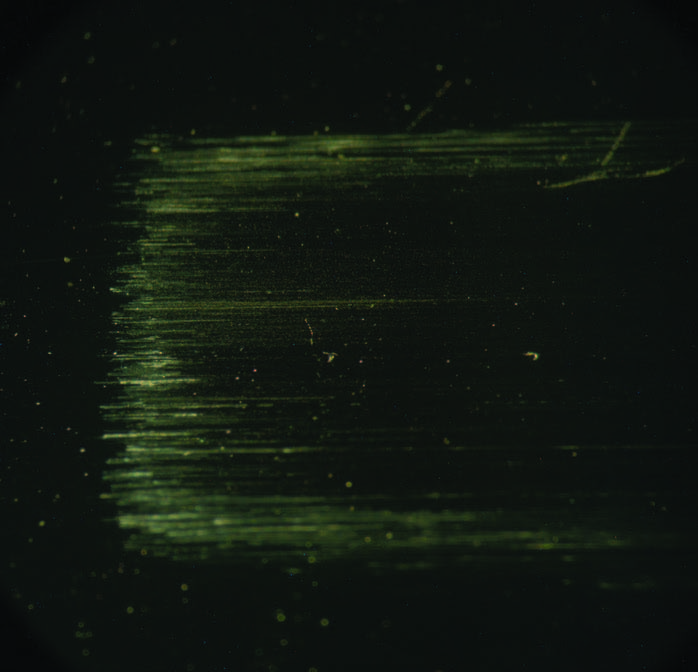
 Linear scratch resistance testing results of (left) uncoated glass substrate, and (right) easy-to-clean coatings coated glass substrate after 6,000 cycles using 1 kg load and #0000 steel wool. Acknowledgement: This figure was first published in Journal of Sol-Gel Science and Technology, volume 87, page 108 in 2018 by Springer Nature.
TLT: Where is it used and how is it better than traditional coatings?
Dr. Lu: Sol-gel coatings have found extensive industrial applications across various sectors due to their versatile properties and cost-effectiveness. Key applications include:
•
Non-stick cookware coatings: Providing durable, food-release surfaces.
•
Anti-ice coatings: Applied on airplane pilot windows to prevent ice formation.
•
Primer coatings: Used on metal substrates to enhance corrosion protection.
•
Adhesion promotion coatings: Applied on plastic substrates to improve bonding with other materials.
•
Hard coats: For eyewear lenses, enhancing scratch resistance and durability.
•
Anti-reflective coatings: Used on optical lenses and windows to reduce glare and improve clarity.
•
Easy-to-clean coatings: Facilitating maintenance and cleanliness on various surfaces.
•
Anti-glare coatings: To reduce glare on glass windows for privacy, on touchscreens to reduce screen glares.
•
Anti-fingerprinting coatings: Applied on computer and smartphone touchscreens, including automotive displays, to improve user experience.
•
Self-cleaning coatings: Used on sensors for autonomous driving to maintain sensor performance by repelling dirt and contaminants.
Advantages of sol-gel coatings over traditional coatings include:
•
Low manufacturing cost: The wet chemistry process is economical and its solution method is scalable.
•
High purity: High purity raw materials lead to high purity sol-gel coatings.
•
Excellent adhesion: Particularly when cured at elevated temperatures, ensuring strong bonding to glass substrates.
•
Chemical and environmental resistance: Providing durability against harsh conditions.
The sol-gel process is especially effective for producing transparent functional coatings on both glass and plastic substrates, making it a preferred method for advanced optical and protective coatings in various industries.
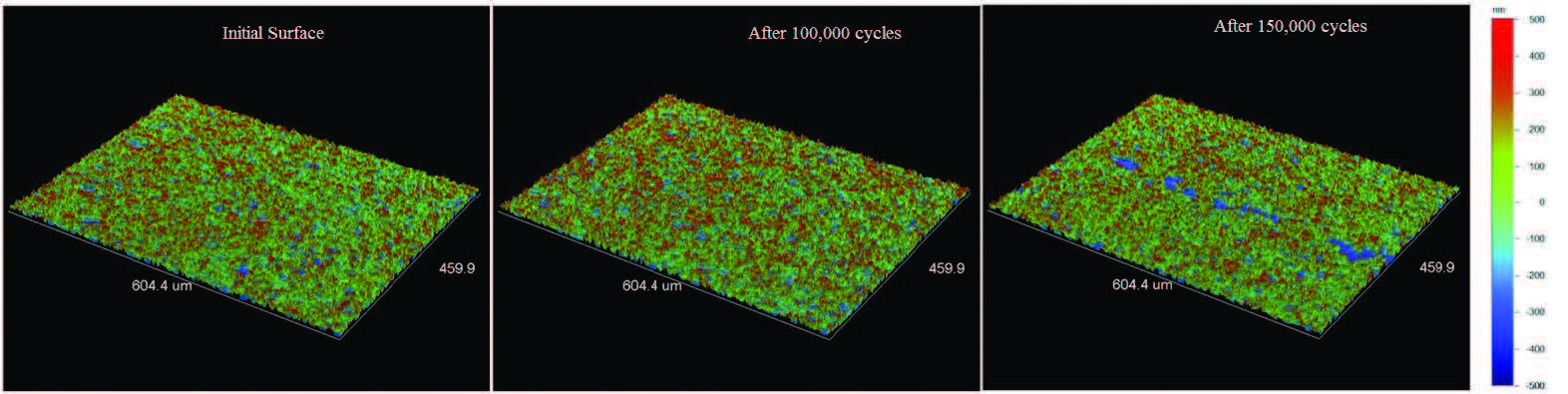 Stylus pen scratch on easy-to-clean coatings and anti-glare coatings stack on glass substrates after 100k and 150k cycles with a stylus pen under 500 g load.
TLT: What is the challenge of sol-gel coating?
Dr. Lu: The sol-gel coating process, while advantageous in many respects, faces several challenges:
•
Limited precursor options: The range of suitable metal oxide precursors is restricted, and some of these precursors can be expensive, which may increase overall production costs.
•
Storage stability issues: Sol-gel sols often suffer from limited long-term storage stability because hydrolysis and condensation reactions can continue over time, leading to premature gelation or changes in sol properties.
•
Mechanical performance limitations: Sol-gel coatings tend to have high network porosity, especially when cured at low temperatures. This porosity can result in poor mechanical strength and reduced durability of the coatings.
•
Application scaling difficulties: Applying uniform sol-gel coatings on large-area substrates presents technical challenges, including maintaining consistent thickness, avoiding defects and ensuring uniform curing across the entire surface.
Addressing these challenges is critical for expanding the industrial applicability and performance reliability of sol-gel coatings.
TLT: How do you use tribology in the development of sol-gel coating?
Dr. Lu: My work on developing fluorinated silane-based easy-to-clean coatings for computer and smartphone touchscreens focused primarily on optimizing scratch resistance and coefficient of friction (COF) for ultra-thin hydrophobic coatings (10-15 nm thickness). These coatings must withstand frequent finger touches over the device lifespan, requiring stringent durability and tactile performances.
The key performance specifications are:
•
Scratch resistance: Measured by steel wool abrasion using a linear abraser with 1 kg load and #0000 steel wool. The samples must endure at least 5,000 abrasion cycles. After abrasion, static water contact angle (WCA) must remain above 100°, indicating retained hydrophobicity.
•
COF: Measured with a COF tester and force gauge. The target COF is approximately 0.03 for smooth finger glide. While the initial formulations had higher COF, the improved formulations consistently achieved ~0.03. COF was monitored during development but was not a formal production specification.
During the development of the easy-to-clean coatings, there were several key challenges affecting steel wool abrasion data consistency:
•
Relative humidity (RH) sensitivity: An early version of fluorinated silane coatings degraded rapidly under steel wool abrasion when RH exceeded 50%, failing durability specs. Higher humidity accelerated coating degradation, highlighting the need for humidity-stable formulations.
•
Coating solution storage stability: One early version of coating solution passed lab tests but developed white fluffy polymeric precipitates during overseas shipment at winter temperatures constantly as low as -20°C. This precipitation reduced steel wool wear durability, emphasizing the importance of solution stability under varying storage and transport conditions.
•
Substrate cleanliness: In a normal procedure, glass substrates were cleaned using caustic baths, followed by multiple deionized (DI) water rinses and warm air drying, then plasma treatment to ensure hydrophilic, pristine surfaces.
Contaminated glass substrates, often due to ink on the backside from prior steps, were difficult to clean and caused coating failures in steel wool abrasion tests.
There were also alternative scratch resistance tests:
•
Rubber Eraser Abrasion Test: Conducted with a hard rubber eraser (~5 mm diameter, embedded abrasives) under 1 kg load on the linear abraser. Coatings must pass 3,000 to 5,000 cycles while maintaining static WCA above 100°.
•
Stylus Pen Scratch Test: Designed for touchscreens using stylus pens (e.g., signature capture devices, tablets).
•
Test setup: Linear abraser with 1 kg load on the stylus pen. The coating surface was examined by an optical profiler after every 5,000 cycles for possible scratches. While anti-glare coatings alone can only pass 30,000 cycles without scratches, the easy-to-clean coatings stacked on anti-glare coatings passed up to 100,000 cycles without stylus pen scratches, demonstrating superior durability.
TLT: Could you summarize your career in transparent functional coatings and give your advice to young researchers who work in this field?
Dr. Lu: My career in transparent functional coatings has evolved progressively from academic foundations to impactful industrial applications. Starting with successful research during my master’s and doctoral studies, I gained a strong scientific grounding that propelled myself into the field. In my current role, I took on project responsibilities focused on developing transparent functional coatings for both glass and plastic substrates. My work notably contributed to the commercialization of easy-to-clean coatings and anti-glare coatings characterized by high scratch resistance and low friction, specifically tailored for touchscreen applications. These achievements not only advanced the company’s product portfolio but also enriched the scientific community and my own professional growth.
Over time, my interests have deepened in the development of transparent functional coatings with a particular focus on optimizing their optical and mechanical properties, reflecting a mature and specialized expertise in the field.
TLT: What is the No. 1 piece of advice you would give to a person who might be interested in starting a career in the lubricants industry?
Dr. Lu: My advice to young researchers in transparent functional coatings:
•
Follow your passion: Begin by listening to your heart and identifying what truly motivates you within the field of transparent functional coatings. Genuine interest is the foundation of sustained success.
•
Explore and align your interests: Use your motivation to explore various aspects of the field and align your skills and career choices with the roles and environments that you find most engaging. This alignment enhances job satisfaction and professional fulfillment.
•
Develop critical skills: Once motivated, focus on building the essential technical and analytical skills needed to excel in coating development, characterization and application.
•
Stay open-minded and persistent: The field requires long-term dedication. Being open to new ideas and persisting through challenges will help you navigate the complexities of research and development.
•
Value long-term commitment: Recognize that success and satisfaction come after many years of hard work and continuous learning.
FOR FURTHER READING
1.
Lu, S., Zhao, Y. and Hellerman, E. A. P. (2025), “Evaluating the self-cleaning performance of UV durable hydrophobic coatings for sensor signal enhancement of autonomous vehicles under inclement weather,”
Journal of Coatings Technology and Research, 22, pp. 1537-1555. Available at
https://doi.org/10.1007/s11998-024-01059-3.
2.
Lu, S., Zhao, Y. and Hellerman, E. A. P. (2024), “UV-durable self-cleaning coatings for autonomous driving,”
Scientific Reports, 14, 8066. Available at
https://www.nature.com/articles/s41598-024-58549-y.
3.
Lu, S., Shao, J. and Wu, F. (2022), “Industrial applications of sol-gel derived coatings,” J
ournal of Sol-Gel Science and Technology, 114, pp. 87-97. Available at
https://doi.org/10.1007/s10971-022-05988-6.
4.
Lu, S., Shao, J., Martin, D. C., Li, Z. and Schwendeman, I. G. (2018), “Commercialization of sol-gel based transparent functional coatings,”
Journal of Sol-Gel Science and Technology, 87, pp. 105-112. Available at
https://doi.org/10.1007/s10971-018-4694-y.
5.
Lu, S. W. and Schmidt, H. K. (2004), “Nanostructures, optical properties, and imaging application of lead-sulfide nanocomposite coatings,”
International Journal of Applied Ceramic Technology, 1 (2), pp. 119-128.
6.
Lu, S. W. and Schmidt, H. K. (2007), “Photoluminescence and XPS analyses of Mn²⁺ doped ZnS nanocrystals embedded in sol–gel derived hybrid coatings,”
Materials Research Bulletin. Available at
https://doi.org/10.1016/j.materresbull.2007.04.010.
7.
Lu, S., Hou, L. and Gan, F. (1999), “Surface analysis and phase transition of gel-derived VO₂ thin films,”
Thin Solid Films, 353 (1-2), pp. 40-44.
8.
Lu, S., Hou, L. and Gan, F. (1997), “Structure and optical property change of sol-gel derived VO₂ thin films,”
Advanced Materials, 9 (3), pp. 244-246.
9.
Lu, S., Hou, L. and Gan, F. (1993), “Preparation and optical properties of phase change VO₂ thin films,”
Journal of Materials Science, 28, pp. 2169-2177.
You can reach Dr. Songwei Lu at slu@ppg.com.