HIGHLIGHTS
•
Extracting and recycling transition metals from lithium-ion battery cathodes has the potential to be more cost effective than extracting and refining these metals from their raw ores.
•
A new approach involves upcycling a nickel lean cathode such as NMC111 to the nickel-rich polycrystalline cathode, 83Ni utilizing over 92% of the recycled transition metal.
•
Durability testing over 500 cycles found that recycled 83Ni maintains its initial discharge rate at a level close to that of pristine 83Ni.
The significant growth of electric vehicles is leading to a rising demand for battery components such as the metals required for use in cathodes. Examples of some of these metals include nickel, cobalt and manganese. Some of these metals are difficult to obtain as mining them presents challenges from cost, supply chain and sustainability standpoints.
As a result, interest is growing in finding cost effective strategies for recycling cathode metals once the lithium-ion batteries have reached the end of life (typically eight to 10 years). The value of recycling can be measured by comparing how recycled transition metals can be extracted from a lithium-ion cathode versus extracting these metals from their raw ore. For example, one ton of battery-grade cobalt can be extracted from five to 15 tons of spent lithium-ion batteries. In contrast, 300 tons of raw ore are required to process one ton of battery-grade cobalt.
Besides finding new techniques for extracting metals from lithium-ion batteries, there must be an assurance that recycled metals perform at a comparable level to virgin metals. In a previous TLT article,
1 Yan Wang, William Smith Foundation Dean’s Professor in the department of mechanical and materials engineering at Worcester Polytechnic Institute in Worcester, Mass., led a study to determine the performance of recycled cathode materials. Hydroxides of nickel, manganese and cobalt were recovered at a rate greater than 90%. Standard lithium-ion batteries were then prepared using these metals with lithium carbonate to synthesize cathode materials, which is known as NMC111. Evaluation testing was conducted through the use of the U.S. Advanced Battery Consortium (USABC) Plug-in Hybrid Electric Vehicles protocol. Superior results were achieved with the recycled metals.
The current methods for recycling cathodes from spent lithium-ion batteries have trade-offs. Dr. Jiahui Hou, postdoctoral researcher, working with Professor Wang at Worcester Polytechnic Institute, says, “The two main commercialized techniques are pyrometallurgical and hydrometallurgical. The former needs to operate at high temperatures (between 800-2,000°C), which is energy-intensive and generates substantial greenhouse gas emissions. The latter requires a large quantity of organic solvents and acids, and a long processing time. The expense in using these materials and the possibility for the generation of hazardous wastewater makes hydrometallurgical an inefficient process highlighting the need for further optimization and improvement.”
One other technique known as direct recycling is very strict in sorting and separating the anode to obtain specific battery cathode components, according to Hou. Direct recycling has moved beyond the lab scale and is entering pilot and limited commercial deployment, though not yet at full industrial scale comparable to hydrometallurgy.
A new approach relying on upcycling of spent cathode materials has now been demonstrated to be feasible for commercialization.
Upcycled nickel-rich polycrystalline cathodes
Professor Wang’s team demonstrated that a nickel lean cathode such as NMC111 can be upcycled to the nickel-rich polycrystalline cathode, 83Ni while utilizing over 92% of the recycled transition metal
(see Figure 2). Hou says, “Lower nickel cathodes have served industry well, but their energy density is limited. The market is now shifting to higher nickel cathodes, which offer higher energy densities and lower cost. This results from the higher concentration of nickel in the cathode combined with the lower treat rate of cobalt. 83Ni is an example of a nickel-rich polycrystalline cathode with greater than 83% nickel content.”
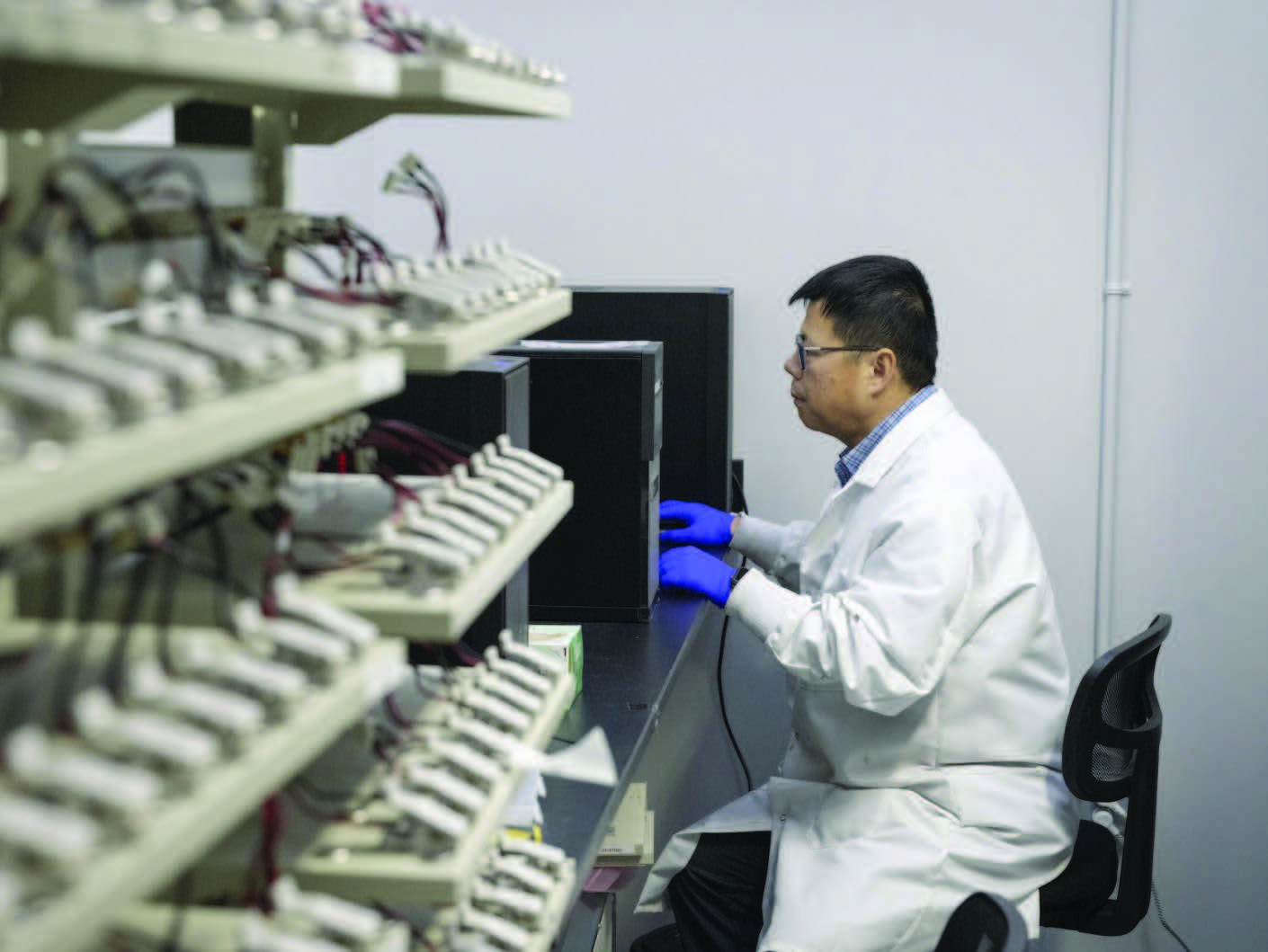 Figure 2. Professor Yan Wang led a team that demonstrated upcycling a nickel lean cathode to a nickel-rich polycrystalline cathode can be achieved with little difference in performance. Figure courtesy of Worcester Polytechnic Institute.
The researchers used a combination of hydrometallurgical and upcycling methods to produce a precursor of 83Ni cathode material. Hou says, “We started by cutting, shredding and sieving mixed spent lithium-ion batteries to isolate cathode powders, carbon and graphite, which are obtained from the anode. This mixture is subjected to leaching using sulfuric acid and hydrogen peroxide, which dissolves the cathode metals removing them from the carbon and graphite. Adjusting the pH and the use of recycled nickel sulfate and virgin cobalt sulfate led to the nickel, manganese and cobalt being present in solution at the desired ratio for use in a recycled cathode. A co-precipitation reaction is then conducted using an ammonia solution as the complexing agent for 12 days at 55°C.”
The 83Ni cathode material is prepared by introducing lithium hydroxide monohydrate followed by sintering at 450°C for five hours and at 825°C for 10 hours under argon protection. Hou says, “The layered structure of the recycled 83Ni was evaluated by X-ray diffraction, and the spherical morphology was verified by scanning electron microscopy. Elemental analysis data confirmed that the recycled material contained the desired ratios of nickel, manganese, cobalt and lithium. Impurities such as aluminum, copper and iron were present at levels similar to pristine 83Ni. Focused ion beam scanning electron microscopy analysis indicated that recycled 83Ni has a comparable porosity.”
Electrochemical analysis confirmed that recycled 83Ni exhibited comparable performance to pristine 83Ni. Durability testing over 500 cycles found that recycled 83Ni maintained approximately 88.77% of its initial discharge rate which was close to that of pristine 83Ni (87.42%). Further testing using 2 ampere-hours capacity was conducted for recycled 83Ni, and its capacity retention was impressively maintained at 85.81% after over 850 cycles. These results affirm that recycled 83Ni offers a performance comparable to pristine 83Ni, underscoring the effectiveness of the recycling process in preserving key electrochemical properties.
The researchers conducted a techno-economic analysis to determine the feasibility of this hydrometallurgical upcycling method and the reduction in greenhouse gas emissions compared to the traditional hydrometallurgical recycling and direct upcycling processes. Hou says, “Energy consumption for this new recycling technique is comparable to hydrometallurgical and direct upcycling. We found that recycling using our upcycling method reduces greenhouse gas emissions by nearly 14% compared with the traditional hydrometallurgical recycling process. Furthermore, our approach achieved the highest profitability, driven by the production of high-value nickel-rich cathode materials and transition metal by-products.”
Future work will involve scaling up this recycling technique. Hou says, “We will also integrate this cathode recycling with graphite recovery to produce a complete set of reusable battery electrodes.” Additional information can be found in a recent article or by contacting Colleen Wamback, director, Public Relations, Market Communications at Worcester Polytechnic Institute, at cbwamback@wpi.edu.
REFERENCES
1.
Canter, N. (2022), “Performance of recycled cathode materials in lithium-ion batteries,” TLT,
78 (2), pp. 16-17. Available at
www.stle.org/files/TLTArchives/2022/02_February/Tech_Beat_III.aspx.
2.
Hou, J., Meng, Z., Ma, X., Wang, Z., Kim, J., Yang, Z., Wen, J., Sultanov, M., Akin, M., Thakur, M. and Wang, Y. (2025), “Upcycling mixed spent Ni-lean cathodes into Ni-rich polycrystalline cathodes,”
Energy Storage Materials, 80, 104386.