KEY CONCEPTS
•
Low-viscosity base stocks (<4 cSt at 40°C) are significant contributors to energy efficiency, system cleanliness and regulatory compliance in many lubrication and metalworking systems.
•
Performance of low-viscosity fluids is defined not by viscosity alone, but by molecular structure, which affects solvency, volatility, polarity and additive response.
•
Emerging synthetics such as gas-to-liquid, coal-to-liquid and diesters enable superior oxidation stability, purity and biodegradability; they do require precise formulation balance to accommodate limitations in solvency and cost.
As demand grows for lower-viscosity fluids that deliver high performance while meeting increasingly tight environmental standards, the choice of base stock has become a critical factor for formulators.
There are seven classes of low-viscosity base stock—each with a flash point around 100°C and kinematic viscosities below 4 cSt at 40°C. These low-viscosity fluids include:
•
Naphthenic solvents. They provide high solvency power and excellent additive compatibility, making them effective in metalworking and process formulations. However, they tend to exhibit lower oxidation stability and can darken or degrade under extended high-temperature periods.
•
Isoparaffinic and dearomatized solvents. These are exceptionally clean, low-odor and low-toxicity and are valued for worker safety and environmental compliance. Their main limitation is relatively weak solvency, which can reduce additive effectiveness in demanding formulations.
•
Ether solvents. Characterized by very low viscosity and strong carrier capability, these are widely used in specialty cleaning and process fluids. They can, however, show limited oxidative and thermal stability particularly in high-temperature or long-service applications.
•
Linear alpha olefins (LAOs). LAOs offer outstanding low-temperature flow properties and excellent purity, making them useful in cold-weather lubricants and synthetic formulations. Because they are non-polar, solvency and additive compatibility are limited when compared with more polar base stocks.
•
Normal paraffins. These fluids burn cleanly with a very low aromatic content, making them prime candidates for environmentally conscious applications. However, they perform poorly at low temperatures and provide limited solvency for polar additives or contaminants.
•
Gas-to-liquid (GTL) and coal-to-liquid (CTL) solvents. These are produced synthetically via gas- or CTL conversion. They feature high purity, low volatility and excellent oxidation resistance. Drawbacks include higher production costs and growing concern over carbon intensity and sustainability.
•
Diesters. These fluids deliver exceptional lubricity, biodegradability and polarity, which results in strong film formation and additive solubility. The downsides are their high cost and potential seal and material compatibility issues.
So, while similar in viscosity, these fluids differ markedly in chemical structure; influencing properties such as solvency, volatility, polarity, pour point, biodegradability, environmental compliance, additive compatibility, toxicity and cost-performance balance.
General performance: Strengths and limitations
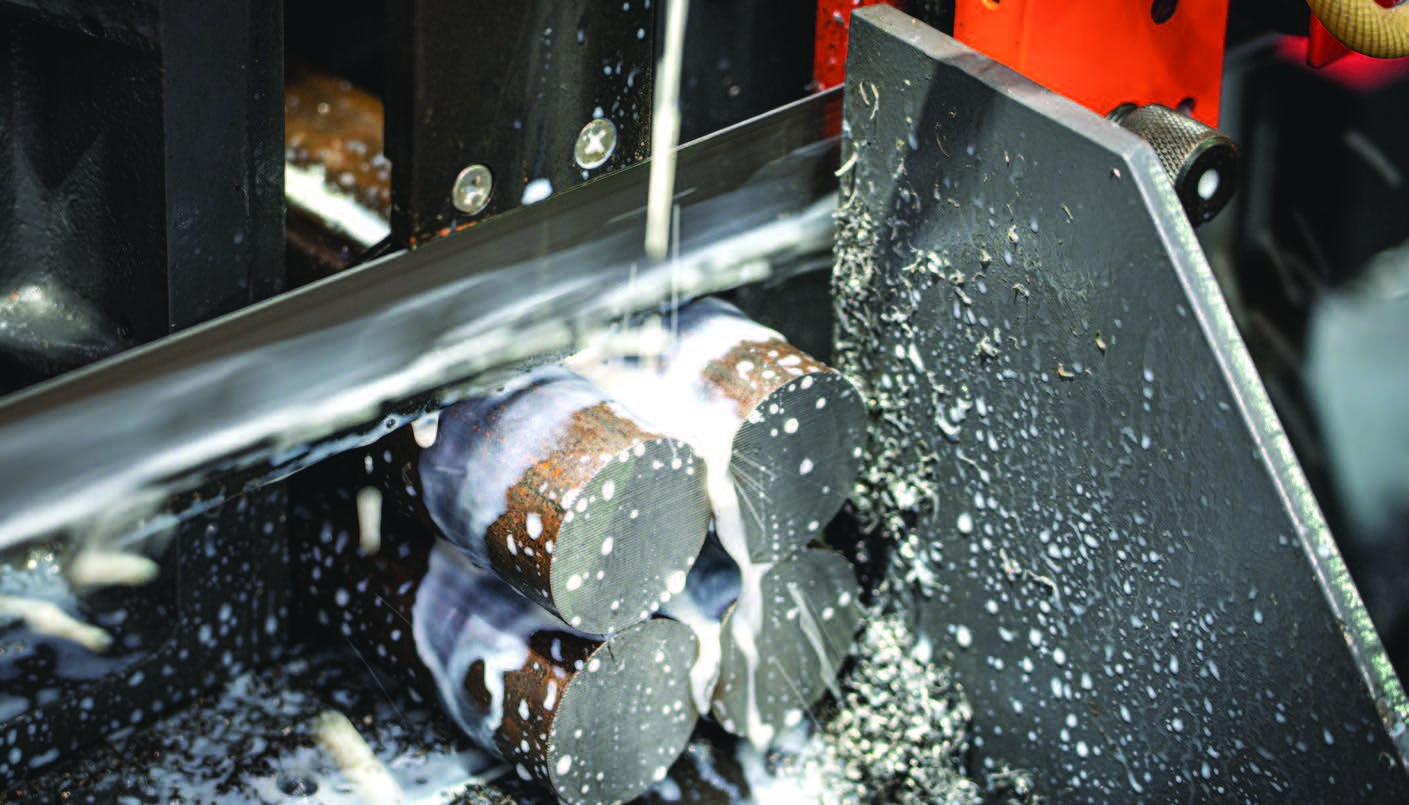
Low-viscosity base oils are redefining performance standards, particularly in metalworking and rolling applications. By improving cooling efficiency, film uniformity and surface cleanliness, they allow manufacturers to achieve higher machining precision and cleaner operations—all while using less energy.
At the same time, increasingly strict environmental regulations and the demand for workplace safety are defining how these fluids are formulated and applied. The challenge for formulators is to balance efficiency with stability—leveraging the cooling and wetting advantages of low-viscosity fluids while minimizing misting, evaporation and thermal degradation. Success depends on understanding how base oil chemistry—particularly polarity, flash point and additive response—affects performance across different machining conditions.
Joanna Sniegoska, senior technical MWF specialist, ML Lubrication GmbH, observes, “Low-viscosity base stocks enable modern metalworking fluids and rolling oils to achieve high cooling efficiency across tool-workpiece interfaces, deliver significant wetting properties providing uniform film formation, excellent filterability, faster air release, lower oil residues and higher workpiece cleanliness.”
Metalworking fluid design has advanced considerably in response to stricter environmental, energy efficiency and occupational safety standards. Now formulators typically rely on various hydrocarbon-based fluids for low-viscosity metalworking oils since they are more cost-effective, while esters and ethers are used less frequently due to their high raw material costs. Each base stock type offers advantages but also presents drawbacks, including lower flash points, higher evaporation rates and reduced heat capacity per unit volume.
“Understanding these advantages and limitations is crucial in developing high-performance low viscosity metalworking fluids and rolling oils to deliver high thermal efficiency and long-term durability in demanding applications,” Sniegoska adds. “Target viscosity of base stocks ISO VG 4 or below is best where cooling, cleanliness, wetting and a fine surface finish are critical. Low viscosity fluids are used in high-speed, low-load machining such as grinding, reaming and finishing operations and cold rolling of aluminum, copper and stainless steel.”
Sniegoska goes on to explain that, in hydrocarbon base fluids, increased polarity induced by a higher content of naphthenic and aromatic hydrocarbons enhances additive solubility, wetting and cleaning properties, but it also leads to a lower flash point, higher evaporation loss and poorer viscosity–temperature behavior. On the contrary, low-polarity hydrocarbons such as GTL and CTL base oils offer clear advantages, including higher flash points, reduced evaporation loss and improved viscosity index.
She advises, “When formulating metalworking fluids with GTL or CTL base oils, additive systems must be optimized to restore desired wetting, cleaning and solubility characteristics. GTL- and CTL-based metalworking fluids can achieve viscosities below 4 cSt at 40°C and flash points between 120°C and 140°C, delivering excellent performance in grinding and precision machining applications.”
Selection criteria
Per Sniegoska, the optimal selection of low-viscosity base stocks without compromising on performance, low-mist, long-term stability and cleanliness with minimum maintenance can be achieved by selecting GTL and CTL base stocks with the right balanced co-additives system. When working in the low-flash regime approximately 100°C and kinematic viscosity below 4mm2/s at 40°C, anti-mist additives and antioxidants to reduce mist and vapor emission need to be considered along with installation of a proper ventilation system for worker safety, especially during long production runs and under high-speed demanding machining conditions. To reduce smoke and evaporation the preferable flash point of the fluid should be target between 120°C -140°C, if possible, and with Noack volatility from 10% to 20% (DIN 51381-1, at 150°C) as a minimum when heavy misting is expected.
“From a safety point of view, it is also crucial to follow the local regulations on occupational exposure limits, handling, storage and transport of the metalworking fluid and rolling oils and—without a doubt—the local disposal waste legislations,” she concludes.
 Additive response and long-term stability
Additive performance is one of the most critical factors for reliability and lifespan of lubricants and metalworking fluids. While viscosity determines flow behavior, it’s the polarity of the base oil that governs how well performance additives—such as antiwear (AW), extreme pressure (EP) and corrosion inhibitors—dissolve, disperse and interact with metal surfaces. The chemistry behind this interaction plays a defining role in oxidation stability, deposit control and overall cleanliness. Understanding how different base oils affect the additive response enables formulators to fine-tune lubricants for optimal balance between solvency, durability and environmental performance and price.
“Base oil polarity governs the solubility and dispersion of additives such as EP, AW and corrosion inhibitors,” Sniegoska says. “Naphthenic base stocks provide excellent additive solvency due to their high polarity but compete strongly with the additives for the metal surface, disturbing boundary film formation and reducing additive response and efficiency. Furthermore, they create oxidation instability, producing acidic deposits.”
On the other hand, isoparaffinic and CTL/GTL base stocks exhibit limited additive solvency but offer superior additive response for enhanced performance as well as optimum oxidation resistance resulting in excellent long-term stability, ideal for clean-running long sump life aiming for both performance and sustainability.
“To improve solvency of additives of isoparaffinic and GTL, co-base boosters (for example, naphthenic base stocks or polar esters) should be considered,” Sniegoska asserts. “With high saturate additive content, particularly low-viscosity isoparaffins and GTL would offer superior oxidation resistance creating a uniform molecular structure that minimizes free radical initiation and sludge formation.”
Regarding the pros and cons of these naphthenic, GTL and CTL base stocks, the balance of viscosity, volatility and polarity dictates overall fluid performance. Naphthenic oils typically offer strong wetting but suffer from reduced additive response and limited oxidative life. While GTL fluids provide exceptional cleanliness, higher additive response, lower evaporation loss and low mist at the cost of solvency.
A closer look at four classes of low viscosity base oils
Although low-viscosity fluids may appear similar in specifications, their chemical origins and molecular structures deliver very different performance profiles. Each class of base oil brings unique advantages and limitations in terms of solvency, oxidation stability, cold-flow behavior and environmental compatibility. A clear understanding of these distinctions helps formulators tailor the best balance of performance, cost and sustainability. Following are four major categories of low-viscosity base stocks examined in detail.
Naphthenic base oils
STLE member Prof. Thomas Norrby, technical manager – Lubricants & Electrical Industry, sales & marketing technical support & development, Nynas AB (publ), Sweden, defines naphthenic base oils as high-performance base oils with a very wide viscosity range that includes ultra-low viscosities around 3-5 cSt at 40°C. “Naphthenic low-viscosity base oils or solvents have improved low temperature fluidity, since they are practically wax-free, and do not have a pronounced cloud point,” he says. “This removes much of the contribution to rapid viscosity increase by wax formation at low temperature, which adds a substantial non-Newtonian contribution to kinematic viscosity. Being wax-free also means a lower pour point.”
He continues, “The second major advantage has to do with solvency. With a much lower aniline point than paraffinic oils of the same viscosity, additives such as viscosity index (VI) improvers can be dissolved in higher amounts and also stay in solution at a low temperature over extended periods of time. This is key for application in low-viscosity, very high VI fluids such as Arctic grade hydraulic, aviation and shock absorber fluids.”
New refining technologies
Per Norrby, oxidation stability and color stability have greatly improved since the introduction of high-pressure hydro-treater units at refineries. The oxidation stability correlates well with the aromatic content, and by hydrotreating to a desired level, predictable oxidation stability properties of the base oil are possible.
“Nitrogen in the form of heteroatoms in the distillate contributes to poor color and poor oxidation stability, which is very thoroughly removed by the hydrotreatment,” he says. “As for sulfur, some sulfur-containing molecular types are very beneficial for oxidation stability, since they are naturally occurring secondary antioxidants. So, sulfur removal is done with this in mind, and the desired end point is not always ultra-low sulfur (for example, < 20 ppm).”
Environmental issues
The chemical regulation landscape is no different than it is for well-processed paraffinic base oils, Norrby explains. Mineral oils are not based on renewable raw materials, but are very readily recycled, so collection and proper re-refining results in a much lower product carbon footprint and has a big impact on the bottom line from a sustainability perspective. “Low-viscosity naphthenic oils offer solubility characteristics approaching those of high-solvency aromatic solvents such as toluene,” he says. “As solvents face increasing regulatory restrictions due to environmental and health concerns, naphthenic low-viscosity oils can serve as effective alternatives in many formulations.”
Norrby emphasizes that very good fluidity and high solvency are the key benefits. Naphthenic blends very well with PAO 2, for example, it has a much-improved solvency, with a much lower base oil blend aniline point, than for PAO 2 alone, with very attractive low-temperature properties. Ultimately, naphthenic base oils remain a major base oil group at around 10% of the total base oil market.
He concludes that, by providing solvency and low-temperature performance in an increasingly paraffinic base oil landscape, naphthenic base oils will remain a vital and important base oil type for the foreseeable future, especially as the traditional Group I refineries (anther traditional source of high-solvency base oils) diminish.
Diesters
Common diesters (i.e., esters of a diacid) such as adipates or sebacates are low viscosity, biodegradable esters showing excellent low temperature properties. They have been used extensively as a polarity agent, to ensure additive solubility and seal compatibility in non-polar base fluids such as PAOs.
Siegfried Lucazeau, global marketing and project manager, Industry & Automotive, NYCO, Paris, points out, “They may also be used to improve low temperature properties in greases, as well as in driveline fluids where some of them also deliver low traction coefficient benefits. Additionally, such esters tend to show lower volatility levels than PAOs—even though the latest generations of PAOs are now partly closing the gap.”
He does note that diesters are not the only available technology for consideration where polarity and biodegradability are important. Other classes of esters, such as monoesters and neopolyol esters, also exhibit low volatility and biodegradability. “Neopolyol esters, in particular, show a much better viscosity-volatility ratio, as well as a greatly improved resistance to oxidation,” he says.
One area of concern with low-viscosity diesters is their aggressiveness to elastomers, when used as a major formulation component. “Such esters are indeed plasticizers; this feature is actually useful to swell seals in non-polar base fluids, but turns out to be a potential issue in a full ester base fluid, since elastomer swell and mechanical properties may then be badly impacted,” Lucazeau reports. “Again, the use of neopolyol esters will have a milder effect on elastomers, ensuring acceptable compatibility levels with seals. Esters do have an impact on some elastomers, due to their polarity. The average aniline point of esters revolves around 10°C, indicating possibly strong interactions with polar elastomers when compared to hydrocarbon base fluids. The aniline point is the lowest temperature at which equal volumes of aniline (an aromatic amine, chemical formula C₆H₅NH₂) and a hydrocarbon or solvent are completely miscible (form a single phase). Generally speaking, compatibility with FKM or fluorosilicones is excellent, H-NBR will show good compatibility and high-nitrile nitrile butadiene rubber (NBR) should be acceptable for use in esters.” FKM is a type of fluoroelastomer, a synthetic rubber material known for its exceptional resistance to heat, chemicals and oils.
Lucazeau adds that, since viscosity is a powerful contributor to compatibility, low viscosity esters will show a significant impact, and this should always be evaluated when using heavy treat rates of esters in a formulation. However, specific chemical structures may mitigate the impact on elastomers, even on low viscosity products.
Hydrolytic instability is rarely a concern in most applications, since it requires specific conditions to be significant such as massive water ingress or continuous water contamination, along with temperatures nearing 100°C for extended periods of time. As with elastomers, specific chemical structures can improve resistance to hydrolysis. Another aspect to consider is the ability of esters to retain their lubricating performance even when markedly hydrolyzed.
Sustainability and cost
According to Lucazeau, analysts predict the share of esters in the mix of base fluids used for lubrication will grow in coming years. Drivers for the increased use of esters include:
•
Regulation that makes the use of environmentally acceptable lubricants mandatory
•
Increased consumer awareness about environmental impact
•
Concern over climate change and requirements for producers to show reduced carbon emission
•
Market demand for non-fossil-based products, etc.
“Esters, because they may be biodegradable and non-toxic to the environment, use carbon of renewable origin, have a low carbon footprint (in some cases) and contribute to improved energy efficiency and reduced carbon emissions, are becoming increasingly popular,” Lucazeau says. “However, these drivers remain small when compared to mega-drivers such as the booming demand for air-conditioning in Asia. Esters are costly, and even though the growth of esters is significant, it is not yet widely used and will probably remain niche for a long time since users are not yet prepared to pay a premium for environmentally acceptable lubricants—unless their use becomes mandatory, as with the Vessel Incidental Discharge Act (VIDA).” VIDA streamlines and strengthens the regulation of discharges incidental to normal vessel operations by establishing uniform federal standards under the U.S. Environmental Protection Agency (EPA) and U.S. Coast Guard, replacing overlapping state and federal requirements.
When considering the use of low viscosity base fluids, esters (not only diesters) appear to have important features: they do offer ultra-low viscosity levels, while maintaining low volatility and excellent lubrication properties. “While this may not be obvious at high viscosity, it clearly becomes evident at low viscosity where most traditional base fluids will behave like a solvent rather than an actual lubricant,” Lucazeau summarizes. “This makes esters excellent performance base fluids for the formulation of e-axle fluids, coolant and dielectric fluids, and even some specific engine oils—or more generally, any lubricant aiming at improving energy efficiency through reduced viscosity.”
Linear alpha olefins (LAO)
C14 LAO is an LAO with 14 carbon atoms—its common name is 1-tetradecene. It is preferred for offshore drilling base fluids due to its low toxicity and high biodegradability. In addition to these properties and due to its low dielectric constant and high oxidation stability, it is widely used for electrical discharge machining (EDM) fluids. It performs relatively poorly in low temperatures.
According to Serkan Horasan, business manager L&MWF, Azelis, Turkey, C14 LAOs have higher volatility when compared with normal paraffins, but lower volatility when compared with GTL solvents. C14 LAOs also have higher solvency power when compared with normal paraffins.
Horasan explains that since 1-tetradecene is non-polar, it may cause solvency problems when polar additives are needed in formulation. Although 1-tetradecene is considered biodegradable, due to slow or incomplete degradation, it can cause some problems, which should be taken into account by formulators.
“We can also say that GTL solvents have better solvency power when compared with C14 LAOs,” he adds. “GTL solvents demonstrate the best low-temperature fluidity whereas C14 LAOs are moderate and normal paraffins have the worst low-temperature fluidity.”
Coal-to-liquid (CTL)
CTL solvent is high-purity paraffinic fluid based on the Fischer–Tropsch process. The Fischer–Tropsch process is a chemical reaction that converts carbon monoxide and hydrogen (syngas) into liquid hydrocarbons such as diesel, gasoline and waxes using metal catalysts. Its unique synthetic composition, with no aromatics, naphthenic, sulfur and nitrogenous content, is designed to enhance performance over conventional solvents in many applications.
Qingcai Liu, chief engineer, Shanghai NACO Lubrication Co., Ltd., notes most CTL solvents are mixed with linear and branched chain hydrocarbon, with some CTL solvents being high-purity branched isoparaffin due special treatment.
So, what differentiates CTL solvents from traditional paraffinic and isoparaffinic base fluids in terms of performance and consistency?
Liu explains that the main difference for CTL solvents is short-chain branched isoparaffin.
“Traditional paraffinic solvents are derived from crude oil refining,” Liu says. “They may retain trace amounts of aromatics or sulfur components, which can affect their stability and environmental friendliness. The main difference from naphthenic in is traditional paraffinic solvents. The popular isoparaffin solvents are hydrogenated oligomers of isobutene. The typical products are dodecane and isohexdecane. They are synthesized high-purity isoparaffin. In addition to being low-odor, they have a low pour point and proper viscosity, and are highly safe. Basically, isoparaffin solvents are high-branched with very low pour point.
“Relying on its ultra-high purity (almost free of impurities such as sulfur and aromatics), excellent low-temperature fluidity and chemical stability, isoparaffinic solvent oils still occupy an irreplaceable position in high-end fields that require extremely strict solvent-performance requirements. We do think they are the top solvents in the market.”
Liu observes that CTL solvents have good cold-flow properties and oxidation stability, but not as good as isoparaffin. In terms of pour point, the typical pour point of CTL solvents is around 45°C -50°C, and with isoparaffins it is -70°C.
“Leveraging its advantage in large-scale production, CTL technology enables continuous large-scale operation in industrial applications,” Liu says. “This characteristic directly drives up the output of CTL solvent oils, facilitating stable and sufficient market supply to effectively meet the high-volume demands for solvent oils in industries such as chemical engineering, metal processing and coatings. From a performance perspective, CTL solvent oils feature a regular molecular structure, and their key indicators—including density, viscosity, volatility and solubility—are highly similar to those of isoparaffinic solvent oils. This performance similarity allows CTL solvent oils to directly replace isoparaffinic solvent oils in most applications.”
By contrast, isoparaffinic solvent oils are mainly produced through chemical synthesis, with common processes including olefin oligomerization and hydroisomerization. These processes have strict requirements for reaction conditions and catalyst performance. “Limited by technical complexity and equipment investment, most of these production lines can only achieve small-to-medium-scale output, making it difficult to form large-scale production capacity in line with CTL technology,” Liu says, adding, “I think the biggest barrier to widespread CTL adoption is the carbon footprint.”
Conclusion
Low-viscosity base stocks continue to play a vital role in the evolution of industrial lubricants, offering a pathway toward greater energy efficiency, environmental compliance and cleaner machining performance. Their advantages—superior cooling, lower friction and enhanced film formation—are driving significant gains in precision and process stability across metalworking, rolling and specialty lubrication applications. That said, these benefits must be carefully balanced against challenges such as volatility, additive solubility and oxidation control. Advances in refining and synthesis technologies, particularly in GTL, CTL and ester-related formulations, are addressing these issues by providing purer, more stable and more sustainable base fluids.
As industries shift toward high-efficiency, low-emission operations, the most successful formulations will strategically combine complementary base stocks—leveraging the solvency of naphthenics, the polarity of diesters, and the oxidative stability of GTL and CTL fluids—to achieve long-term performance with minimal environmental impact.
Sniegoska concludes, “The use of low-viscosity base oils has expanded significantly in industrial lubrication due to the demand for improved energy efficiency, cleaner operations and reduced emissions. Modern low-viscosity base stocks deliver significant performance advantages in metalworking and rolling oil formulations through improved cooling, flow, filterability and cleanliness. However, additional challenges appear in terms of additive solubility, volatility and oxidation stability. The successful design of low-viscosity metalworking fluid and rolling oils has to provide balanced fluid dynamics and energy efficiency. Understanding the interplay is crucial to achieving both process efficiency and operational cleanliness in modern machining environments.”
Jeanna Van Rensselar heads her own communication/public relations firm, Smart PR Communications, in Naperville, Ill. You can reach her at jeanna@smartprcommunications.com.