Beneath the surface
By Farida Ahmed Koly | TLT Scholarship Essay January 2026
Observing metal interface in real time is challenging but essential for understanding the interaction.
Jeanie S. McCoy Scholarship
The Jeanie S. McCoy Scholarship is awarded annually to a deserving woman pursuing an undergraduate or graduate degree program focusing on careers in tribology. This scholarship started in 2019, administered by the STLE Presidential Council, that was created to honor STLE Life Member Jeanie McCoy, who was a member of STLE for more than 66 years, joining in the early 1950s when the lubrication industry was clearly male dominated. McCoy passed away in July 2019.
The 2025 recipient is Farida Ahmed Koly, a doctoral candidate at University of Delaware.
As a requirement for receiving the McCoy scholarship, students must submit an essay for publication in TLT discussing their goals, plans and interests in pursuing a future career in the field. For more information about the scholarship, visit www.stle.org.
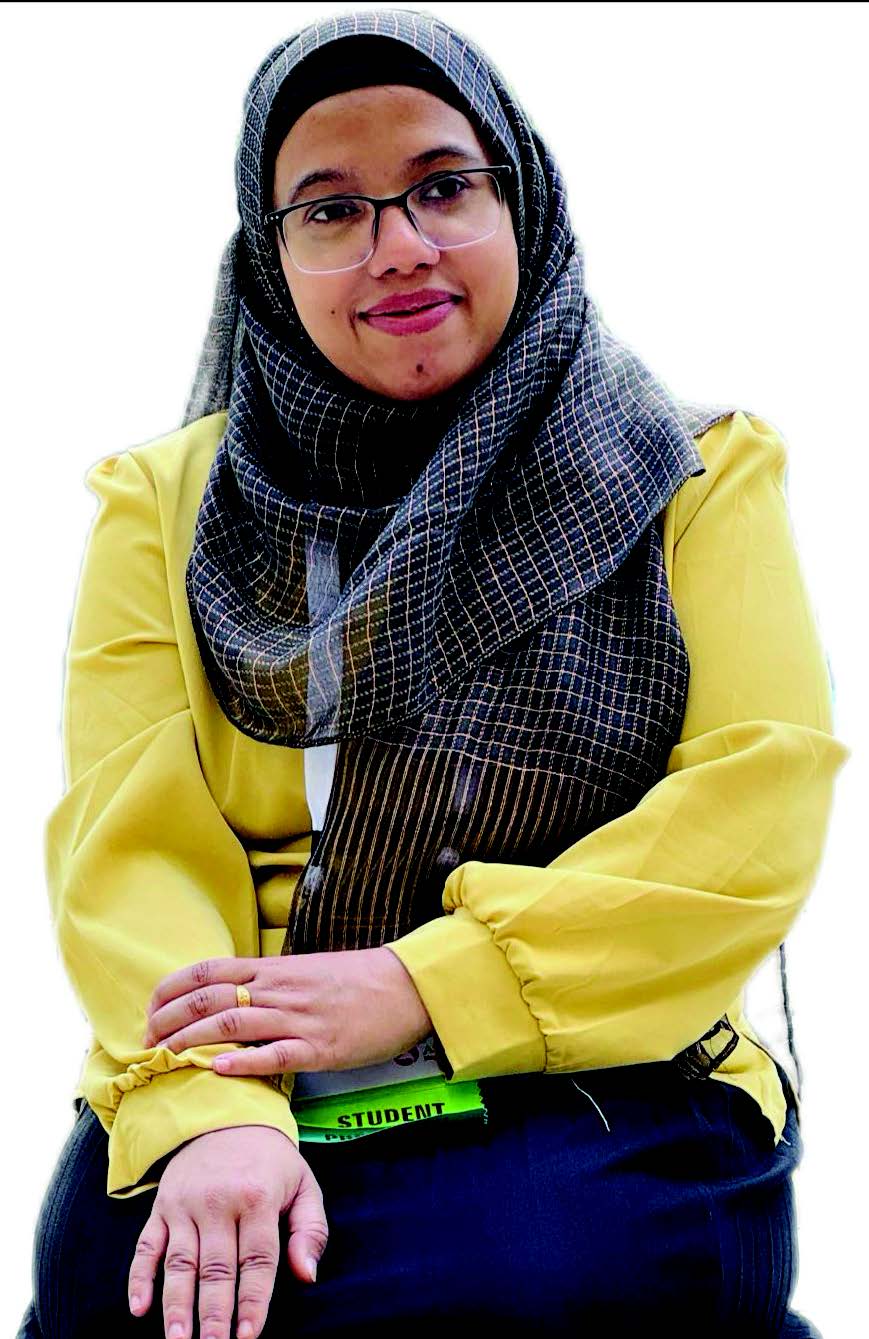
Farida Ahmed Koly
Standing on our back veranda, I often gazed at the broken, lifeless cars in the junkyard behind our house, wondering, “What’s wrong with them? Why are they just sitting there, lifeless?” Little did I know, these musings would lay the groundwork for my fascination with moving systems and interfaces.
This passion drove me to rank first among 130 students in the top mechanical engineering program in Bangladesh, where only eight were female. That achievement fueled my ambition and brought me to the U.S. to pursue a doctoral degree. When we think about moving systems, lubrication is essential, it keeps them running smoothly. But when it fails, real challenges arise. My research zeroes in on scuffing, a type of lubrication failure marked by sudden friction spikes and severe surface damage.
Traditional studies often rely on post-failure analysis, missing real-time steel-on-steel interactions. Observing these interactions in real time is challenging, as metal isn’t transparent. This fundamental question, what truly happens beneath the surface? drives my work. Scientists have also sought answers, using steel on sapphire to observe scuffing
in situ. Their findings indicate that debris transfer to the stationary surface initiates scuffing, leading to increased friction, localized temperature rises and a phase transformation from a harder to a softer form. However, the sapphire-steel interface does not accurately replicate real-world conditions, as interactions between sapphire and steel differ significantly from practical steel-on-steel contact.
To bridge this gap, my research employs synchrotron X-rays to penetrate steel and observe scuffing in real time. To conduct the experiment, we chose the state-of-the-art Advanced Photon Source at Argonne National Laboratory. Working with such a facility presented several technical challenges. The first challenge was to maximize X-ray interaction primarily with the contacting material (signal) and minimize interaction with the bulk (noise). Second, the synchrotron beam size, which was 50 μm x 30 μm (W x H), needed to be smaller than but comparable to the contact area for the same reason.
Under the guidance of STLE member Dr. David Burris at University of Delaware’s Tribology Laboratory, known for its innovative custom-built instruments, I designed a new instrument and method. This marked the first attempt in the field of tribology to study steel-on-steel scuffing in real-time. Our method utilizes a crossed-cylinder configuration with a thin (500 μm) stationary component and a thick (25 mm) migratory component, producing a small (~200 μm) contact width to maximize X-ray interaction within the contact’s stress field. Benchmark tests conducted on self-mated 52100 steel under “oil-off” lubrication conditions revealed consistent scuffing, significant plastic deformation and nanocrystalline refinement to a depth of 10 μm from the surface on the stationary surface.
In situ X-ray diffraction (XRD) revealed markedly increased full-width half maximum (consistent with grain refinement), decreased compressive strain in the normal direction and increased compressive strain in the frictional direction at the onset of scuffing. This work has been submitted for publication and two papers are in preparation.
Looking ahead, I aim to understand the relative influence of the stationary and migratory surfaces in the scuffing response. When using self-mated materials as stationary and migratory surfaces, we cannot differentiate the transfer flow direction between the surfaces. I hypothesize that “scuffing resistance should depend strongly on the material’s orientation.” To test the hypothesis, my proposed approach involves using a steel and alumina pair, with one as the stationary and the other as the migratory surface, then reversing their roles in testing. Understanding a problem is the primary requirement before seeking a solution. I am confident that after this study, we will better understand scuffing and be able to design materials and fuels to tackle it effectively.
You can reach Farida Ahmed Koly at faridakoly@gmail.com.